We demystify Garmin's 2026 generation of entry-level running watches to help you decide which is best
Garmin’s watch lineup has always been a bit of a puzzle. And just when you think you’ve got your head around the hierarchy, the brand unleashes a new running watch duo to mix things up.
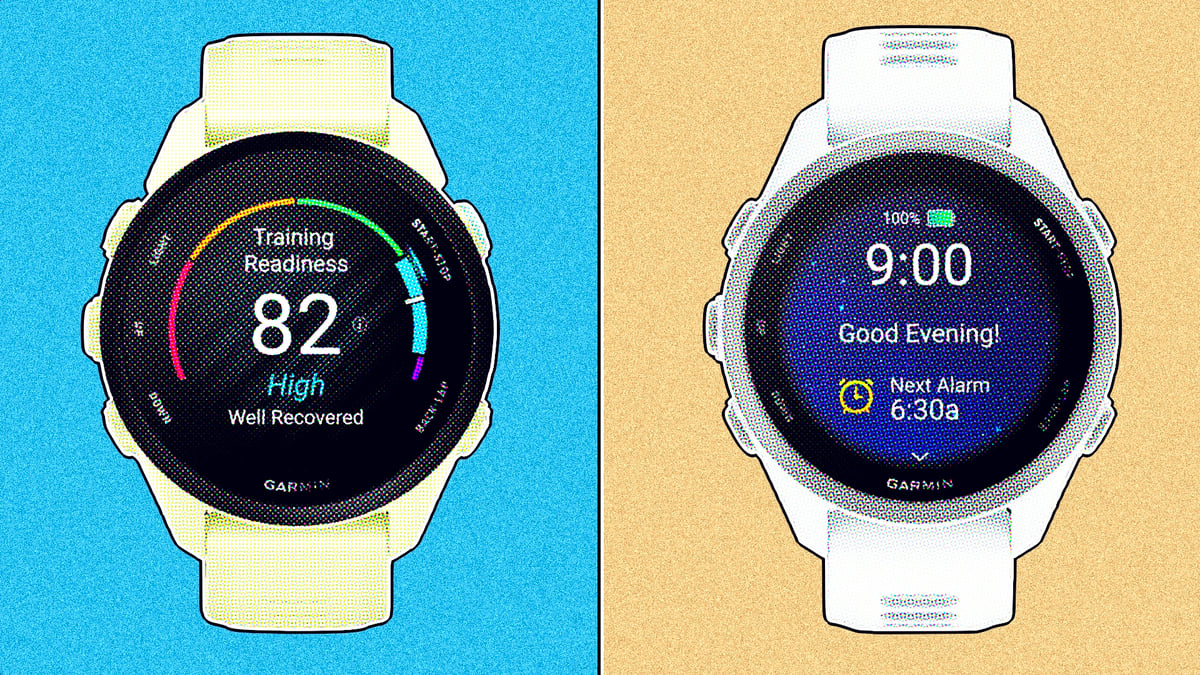
Luckily, we’re here to explain things. Whether you’re choosing your first running watch or looking to upgrade from an older model, both the Garmin Forerunner 70 and the Forerunner 170 are superb options.
Launched simultaneously in May 2026, these two devices are virtually identical on paper. They share the same physical footprint, the same 1.2-inch AMOLED screen, and the same fundamental tracking sensors.
Yet there is a $50/£40 gap between the base models, stretching to $100/£80 for the music-enabled version of the 170.
While we’re putting the finishing touches on our full reviews, we're using the official specs (and our deep experience with Garmin’s software ecosystem) below to map out the key differences. Check back in a few weeks, when we'll offer our updated, definitive breakdown of the two watches.
Key specs comparison
| Garmin Forerunner 70 | Garmin Forerunner 170 | Garmin Forerunner 170 Music | |
| Price | $249.99 / £219.99 | $299.99 / £259.99 | $349.99 / £299.99 |
| Display | 1.2-inch AMOLED | 1.2-inch AMOLED | 1.2-inch AMOLED |
| ‘Smartwatch’ mode battery | Up to 13 days | Up to 10 days | Up to 10 days |
| Garmin Pay (NFC) | No | Yes | Yes |
| Offline music support | No | No | Yes (Spotify/Amazon) |
| Training Readiness / Status | Yes | Yes | Yes |
| Optical sensor | Elevate Gen 4 | Elevate Gen 4 | Elevate Gen 4 |
1. Pricing and versions
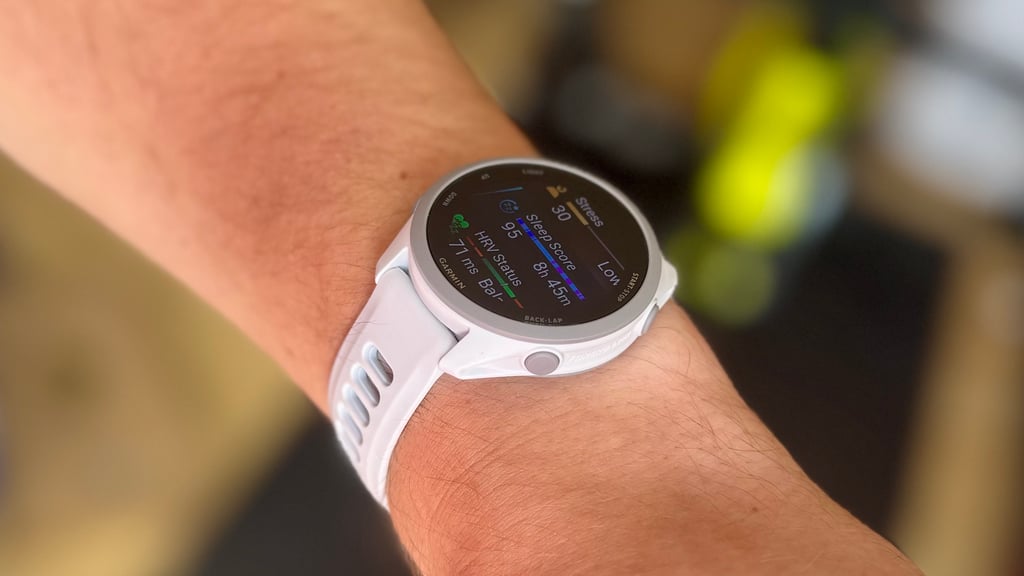
At the more budget-friendly end of the spectrum, the price is always one of the most important factors—so let’s consider the financial damage first.
The Forerunner 70 arrives at $249.99 / £219.99, making it the default budget choice in the 2026 catalog. It’s a launch that’s been a long time coming—essentially a replacement for the Forerunner 55, which debuted way back in 2021.
If you step up to the Forerunner 170, the price climbs to $299.99 / £259.99. If you want to run phone-free with your Spotify playlists, though, you have to buy the Forerunner 170 Music at $349.99 / £299.99. Or, perhaps, consider the Forerunner 165 range.
This means Garmin is charging you a $50 premium just to have contactless payments on your wrist, and a whopping $100 premium over the base 70 for music.
In 2026, when basic smartwatches under $150 routinely offer NFC and offline music as standard, this tiered strategy on basic smart features remains one of our biggest bugbears with the brand. But, still, rather that than the tracking features.
2. Hardware and sensors
Despite the UI upgrade on both models, Garmin has played it safe under the hood—but that’s not necessarily a surprise.
Both watches still use the older Gen 4 Elevate heart rate sensor rather than the newer Gen 5, and, while you get access to the brand’s All Systems GPS tracking, you’ll naturally have to pay more for its dual-frequency Multi-Band GNSS. Side note: you can read about the difference in our full guide to Garmin GPS settings.
You’ll also have to upgrade to mid- or top-range Garmin devices like the Forerunner 570/970 or Venu 4 to access more advanced health features like on-demand ECGs or skin temperature variation alerts.
It’s a pure sports tracker, and the health features remain basic on both models.
3. Surprising battery life estimates
Possibly the most surprising detail of this launch is the battery life. The budget 70 model offers up to 13 days of battery life in smartwatch mode, while the more expensive 170/170 Music offers only up to 10 days.
While both watches share the same core processor, the premium model loses three days of endurance. This is almost certainly due to the background overhead of the NFC chip (for Garmin Pay) and the extra Wi-Fi/storage hardware required for the Music edition.
Still, it doesn’t change the overall charging routine too much. With either watch, you have more than enough juice—on paper, at least—to power a heavy week or so of training. That’s plenty good enough in our book.
Of course, we’ll verify these estimates in real-world testing and update this section, but we assume from previous experience that the 70 will still have that extra day or so of use compared to the 170.
4. Training features and UI
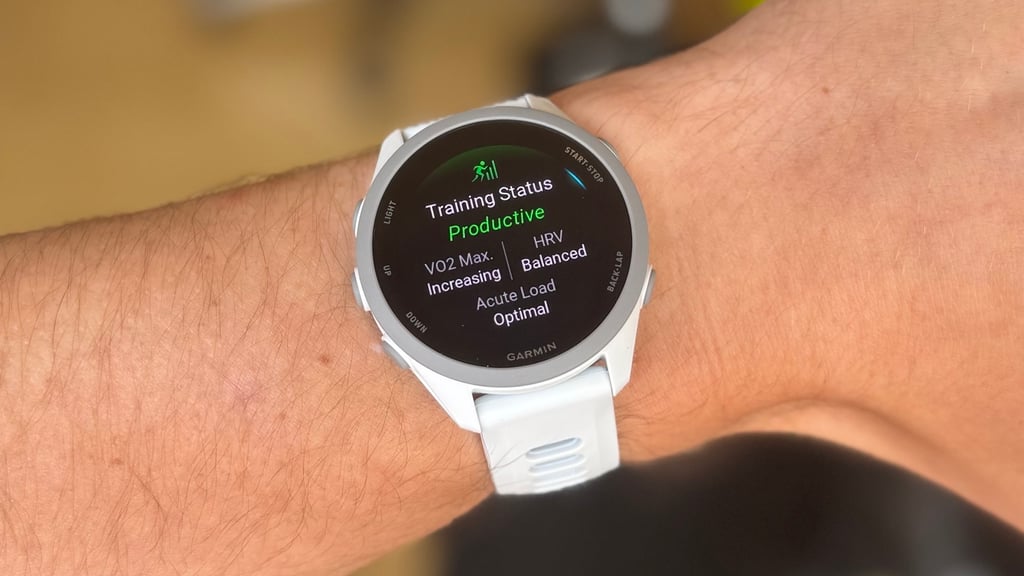
Historically, Garmin would strip its budget watches of pretty much all premium software to force you to upgrade. Mercifully, that practice is less harsh this time around.
Both the Forerunner 70 and 170 run on the new Garmin OS—the exact same polished interface found on the high-end 570 and 970. This brings a much sleeker look, faster performance, and smoother navigation to both watches.
It also means the budget 70 gets the exact same premium software widgets as the 170. That means there’s room for Quick Workouts (which generate and customize running sessions based on time and intensity goals), the Sleep Coach, Health Status, and the Evening Report.
Perhaps most importantly, users have access to Training Readiness and Training Status, two core tools that inform overall fitness.
By keeping the features identical, Garmin has made the 70 an astonishingly good value proposition. You don't lose any training insights by opting for the cheaper watch.
5. Garmin Pay
One of the only core differences between the 70 and the standard 170 is Garmin Pay. If you opt for the 70, you are locked out of contactless payments.
How much this matters depends entirely on where you live. In the US, Garmin Pay is widely supported by major banks. In the UK and Europe, bank compatibility remains pretty spotty.
If your bank isn't on Garmin’s supported list, you’re effectively paying an extra £40 for an NFC chip you won't get any use out of. So, check your bank's compatibility before making the jump.
Early verdict: Which should you choose?
On paper, the Forerunner 70 looks like the standout winner in terms of pure value.
Relative to the rest of the market, it’s still a pretty penny to pay for an entry-level running watch, and the pricing puts it in direct competition with the Coros Pace 4 (released last November).
Yet, by offering the same software metrics, a polished OS, and top-tier widgets as the $249 base model, Garmin has made it hard to justify the extra outlay for the Forerunner 170.
Unless you absolutely know you’ll use Garmin Pay on your wrist, or you’re willing to pay the massive $100 premium for the 170 Music, the 70 gives you the exact same performance—with potentially an extra bit of battery life—for a chunk less cash.
But, even then, you could opt for the Forerunner 165 instead and still get a great watch.