- Reasonable price
- Boasts various smart features
- Wi-Fi and Bluetooth connectivity
- Battery-operated
- Lacks advanced biomarker tracking
Tracking weight alone doesn’t provide a full picture of your body composition or overall wellness. That’s why many people are turning to smart scales for deeper insights into their bodies, like muscle and bone mass, water percentage, and more.
One option that has gained quite some attention is eufy Smart Scale P3. While it’s on a more budget-friendly side, it surprisingly offers smart features you wouldn’t see in its counterparts.
Intrigued to know if these features really hold up, I put P3 to the test over several weeks to see if this affordable device can truly measure up to competitors like Withings Body Comp, Garmin Index S2, RENPHO Smart Scale, and Hume Health Body Pod.
| Product | eufy Smart Scale P3 |
| Connectivity | Wi-Fi and Bluetooth |
| App | eufyLife (iOS and Android) |
| Metrics tracked | 16 (weight, BMI, body fat %, muscle mass, heart rate, etc.) |
| Battery | 4 x AAA batteries |
| Multi-user support | Unlimited profiles |
| Supported platforms | iOS 12.0+ and Android 5.0+ |
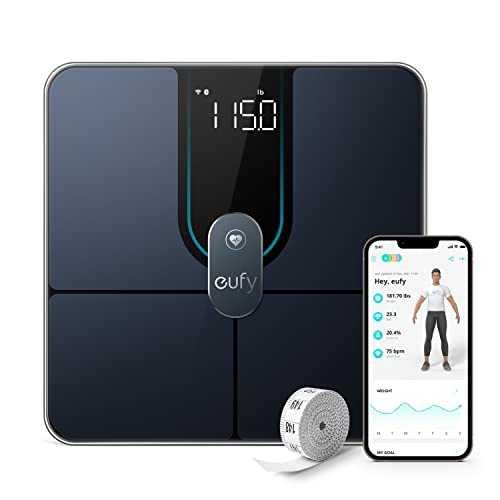
What makes eufy Smart Scale P3 stand out?
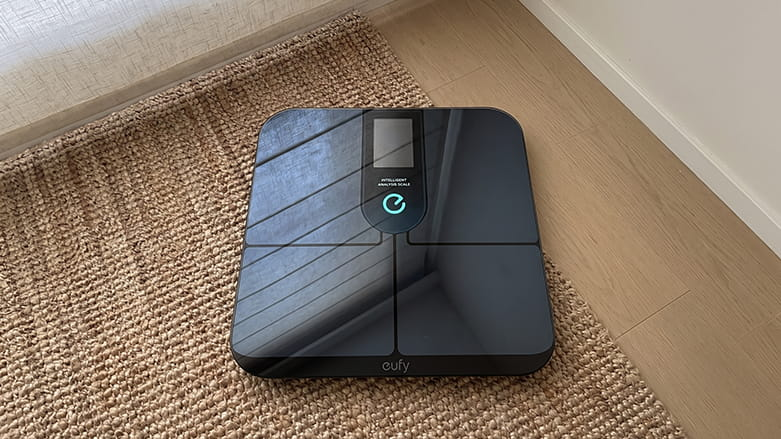
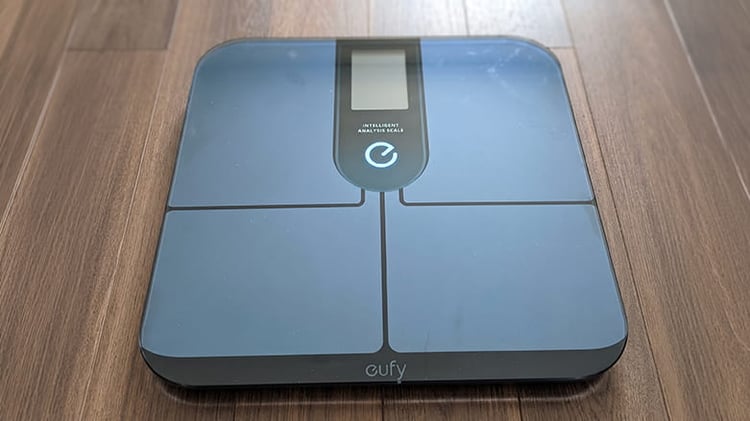
At first glance, I couldn’t help but notice that eufy Smart Scale P3 has the same premium feel as much pricier models. While it tracks fewer metrics than high-end alternatives, it covers 16 essential measurements that are more than enough for the everyday user. These include weight, muscle and bone mass, water percentage, and BMI. What sets it apart from cheaper competitors is that it also tracks advanced stats like protein levels and heart rate.
I was truly surprised to learn its price, considering how many impressive features differentiate it from low-end options. Most unique among them is the 3D body model displayed in the app, which changes shape alongside your actual body. Seeing such a visual representation can be a more effective motivator than a standard graph.
The app goes a step further by including a calorie tracker and AI-powered recommendations, tools that even high-end competitors frequently lack. This takes the guesswork out of your nutrition, which is crucial for reaching your fitness goals.
Additionally, it syncs via Bluetooth and Wi-Fi, so your data is transferred to your app even if your phone is out of Bluetooth range. It’s also customizable. If you're pregnant or have a pacemaker, you can easily switch to simple mode, which is just one of several specialized modes available.
I don’t want to get ahead of myself, but from the amount of premium features this scale offers, I think that it may be worth spending a little more on over entry-level models.
Design and setup
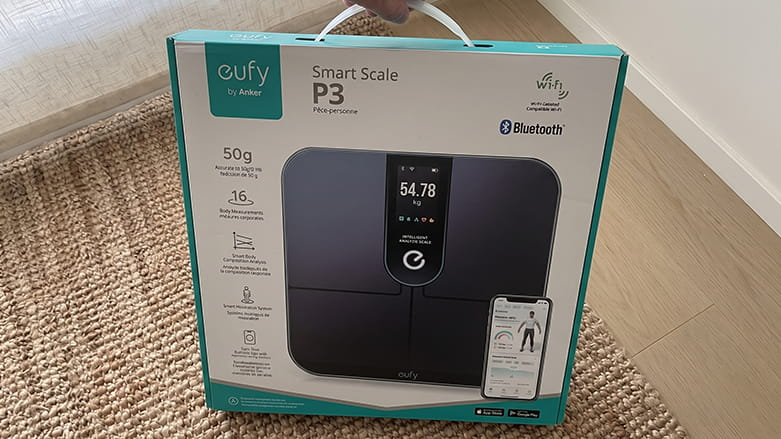
Once you open the box, you get the scale, a manual, and four AAA batteries. While it’s good that you won’t have to rummage through your house for stray batteries, it’s not ideal that the device isn’t rechargeable. Since the batteries last only around 3–4 months, you’ll find yourself replacing them quite often. This feels both inconvenient and a bit wasteful, especially nowadays when most devices are rechargeable.
Nevertheless, the setup itself was seamless, just like with any other scale I’ve tried. I started by turning on the device, creating my profile, and pairing it with my phone via Bluetooth. Afterward, I connected it to my Wi-Fi so I could always find my data in the app even when my phone is out of reach.
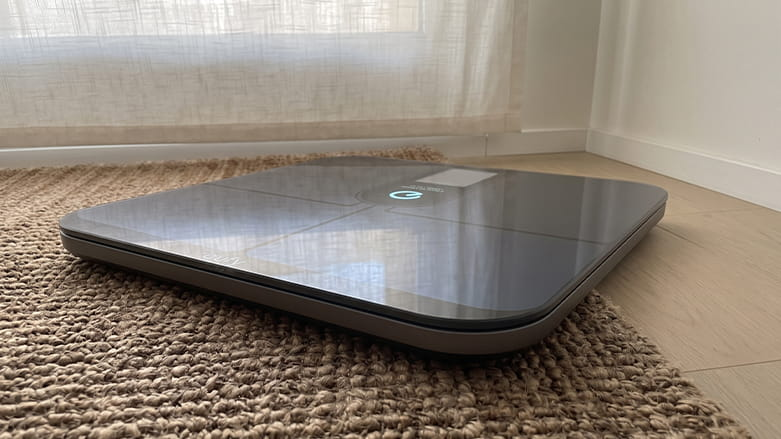
As I stepped onto the scale to measure myself, I could really appreciate the scale's build quality and how sturdy it was. For extra stability, the device has two strips on either side, which is a thoughtful addition most scales skip. It’s also big enough to fit larger feet comfortably and has a weight limit of 440lbs (200kg).
After the measurement is complete, the colorful, comprehensive display shows you your readings and even motivational messages to keep you going. It’s bright and big enough so you can comfortably look at it from a distance.
The app experience
When you open the app, it straight away shows a 3D model of you alongside some of your body composition data. To me, it seems that the dashboard was created for beginners rather than data enthusiasts, as the layout is very clean and simple.
Under the trends section, you can dive deeper into your wellness data and see your progress over weeks, months, and years. You can also set a goal, and the app will adjust your 3D avatar to show what you might look like after achieving it. While setting your goal, don’t forget to set your weight, body fat, and target date.
As already mentioned, you can also find a built-in calorie tracker, which allows you to add meals, search the database, and save your favorites.
One thing to note is that the heart rate sensor doesn’t work automatically, so be sure to turn it on in the app settings.
The data is presented in graphs, which aren’t complicated to interpret. Overall, I really enjoyed the clean design of the app. It was informative, and I found the health insights useful because they helped me make sense of the data. I didn’t feel overwhelmed or confused while using it.
Exploring further, I found that you can share your data with Apple Health, Google Health, and Fitbit by clicking on your user graphic, selecting care, navigating to the third-party section, and selecting the service you want to integrate.
Additionally, you can add multiple family accounts within the app. Based on the weight recorded, the scale will automatically recognize which family member is weighing themselves.
How accurate is it?
In terms of weight, the brand claims to ensure accuracy down to 0.1lb (50g) thanks to high-pressure sensors and special coating, which makes the whole surface conductive.
When it comes to body composition metrics like body fat percentage, muscle mass, bone mass, and water weight, the measurements are more estimates than precise numbers. The same applies to any other smart scale, as the BIA technology is limited. It uses mild electrical current to estimate your body composition, meaning your hydration, recent meals, and even skin temperature can skew the numbers.
To make your readings as accurate as possible, there are a few things you can do, like remain consistent with your weigh-ins and repeat them at the same time of the day. It’s also advised to weigh on a stable surface, wear minimal clothing, have an empty stomach, and use the bathroom beforehand.
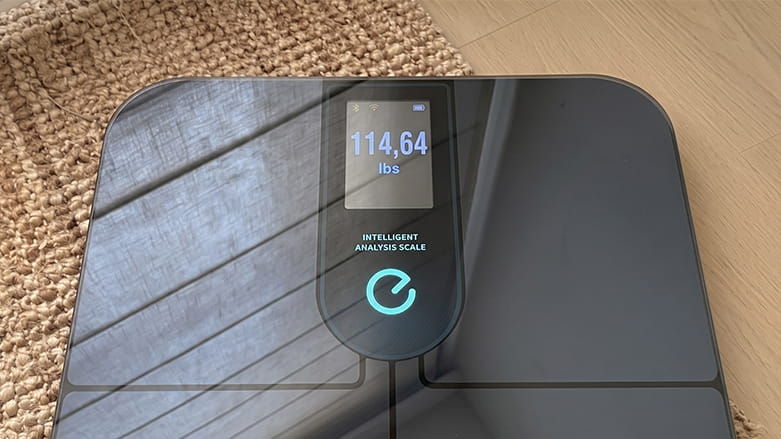
Even though this may improve your reading accuracy, it’s still better to use the scale to track any wellness or fitness trends instead of relying on the numbers.
Since I didn’t complete a DEXA scan before using it, I can’t really vouch for its accuracy. However, I did test it by simply stepping on and off the scale multiple times in a row, and it gave me the exact same number without any fluctuations.
Beyond that, the measurements were stored neatly in the app and, over time, clearly showed my upward and downward trends. Plus, I found the biomarkers useful in my everyday life. They estimated whether I should work on my muscle mass more and what my rough daily calorie intake should be—and that was what mattered to me to reach my wellness goals.
Living with the Smart Scale P3
Having tested products for quite some time, I've learned that nothing becomes a part of your routine unless you make at least a slight effort to fit it conveniently into your day. So to stay consistent and get the most accurate results possible, I set a specific time every day when I knew I'd actually use the scale. For me, this was the first thing in the morning after waking up.
Once I established this routine, sticking to it was easy. What made it even easier was the comprehensive display, which allowed me to see my wellness trends without picking up my phone. Not to mention, it’s customizable, so you can see the health data that is important to you.
The Wi-Fi syncing was also very helpful. I knew my data from every weigh-in would automatically appear in the app without needing my phone nearby. The syncing was highly reliable, too. No weigh-ins were ever missing, and the data showed up in the app shortly after I stepped off the scale.
I also tested the multi-user function with my partner, and the scale differentiated between us without any issues. Our weight difference is quite substantial, though, so if you share this scale with someone very close in weight, your experience might vary.
The feature I was most surprised to use daily was the calorie tracker. I hadn’t used one before, but after having one available, I became curious to compare my daily calorie intake against my basal metabolic rate. It really helped me estimate whether I needed to adjust my meals and exercise.
One slightly frustrating thing was keeping the scale clean, as dust or water drops can affect body composition results. Other than that, I can definitely see myself using this scale long-term. It is simple to use and effortlessly fits right into my daily routine.
Is it worth the money?
Probably the best thing about this scale is that all the smart features packed into it won’t break the bank. Not only does it come with a budget-friendly price compared to other scales offering similar features, but the app and your data aren’t hidden behind additional costs or subscriptions either. It’s truly a one-and-done purchase.
Plus, it comes with a 15-month warranty, which also includes a 30-day money-back guarantee you can use if you are not completely satisfied with the product.
When comparing its value with premium competitors like Withings Body Comp or Garmin Index S2, this scale measures even more metrics and delivers detailed insights for a fraction of the cost.
While the RENPHO Smart Scale and other eufy scales are slightly cheaper, eufy Smart Scale P3 packs significantly more smart features, which is worth paying extra for in my eyes. Ultimately, it offers great value compared to what’s currently on the market.
Who should (and shouldn't) buy it?
I see this smart scale being a solid choice for the everyday user looking to keep an eye on their wellness. It tracks 16 essential metrics, providing more than enough data for anyone curious about their overall wellness or working toward specific goals.
For me, paying a little extra is well worth it for the smart features. However, if you are someone who is only interested in knowing your basic weight data, you could definitely save money by going for a cheaper, simpler model.
For athletes and serious fitness enthusiasts, this scale might not be enough, as it lacks more advanced metrics relevant to them—like segmental body composition or detailed cardiovascular tracking.
Overall, I’d say people who don’t specifically care for smart features can skip this scale and go for a budget option, while heavily fitness-focused users should look into more advanced models. This leaves this scale suited for the everyday user who wants a smart, affordable, and reliable way to track their daily wellness trends.
Other smart scale reviews:
Withings Body+ review: Still the best smart scale for everyday tracking?
Oxiline smart scale review: More than just a weight tracker?
Hume Health Body Pod review: More than just a smart scale?
Withings Body Scan review: Most precise scale I’ve ever tested?
Verdict: Should you buy eufy Smart Scale P3?
During my testing, eufy Smart Scale P3 surprised me by outperforming cheaper and even some premium options while keeping a relatively reasonable price tag. I really liked that it’s packed with smart features that are actually useful rather than being empty additions.
Its accuracy and data syncing also proved highly reliable, while the app delivered helpful AI-powered insights without steep pricing or hidden subscription fees.
Overall, it’s a solid choice for everyday users seeking a scale with genuinely useful smart features. However, consider skipping it if you don’t specifically care for the intelligent add-ons or if you’re a data enthusiast looking to track more advanced metrics.