- Can track 31 body composition metrics
- The app doesn’t require a subscription
- Lifetime warranty
- Official app is primarily for US users
- Sometimes fails to save readings
- Full scan takes longer than some competitors
Smart scales have become popular fitness gadgets in recent years. As more people pay attention to their wellness, stepping on a scale is no longer just about seeing your weight. Today, smart scales promise insights into everything from body fat, muscle mass, to metabolic health, and hydration.
After trying out the Hume Health Body Pod, I wanted to see what other smart scales could do. That's how I came across Oxiline Scale MD Pro. To be honest, I picked it because it costs less than many other smart scales. I was curious if a more affordable option could still give wellness insights without sacrificing quality.
In this review, I'll focus on the Oxiline smart scale’s design, accuracy, and its app experience. Since I try to test as many fitness devices as I can, my goal is simple: to help you decide if this scale is right for your wellness routine or if your money would be better spent on something else.
| Product name | Oxiline Scale MD Pro |
| Price | $179 |
| Dimensions | 12 × 11 × 1.5 in (30.5 × 28 × 3.8 cm) |
| Connectivity | Bluetooth |
| Metrics tracked | Up to 31 body measurements like weight, heart rate, heart index, BMI, body fat, visceral fat, subcutaneous fat, body water, muscle mass, muscle rate, bone mass, protein, body age, fat-free body weight, and skeletal muscle. |
| Battery life | About 1 month with two readings per day. |
| Multi-user support | Supports multiple user profiles with automatic user recognition. |
| Supported apps | Oxiline App, Apple Health, Google Health. |
A surprisingly thoughtful design
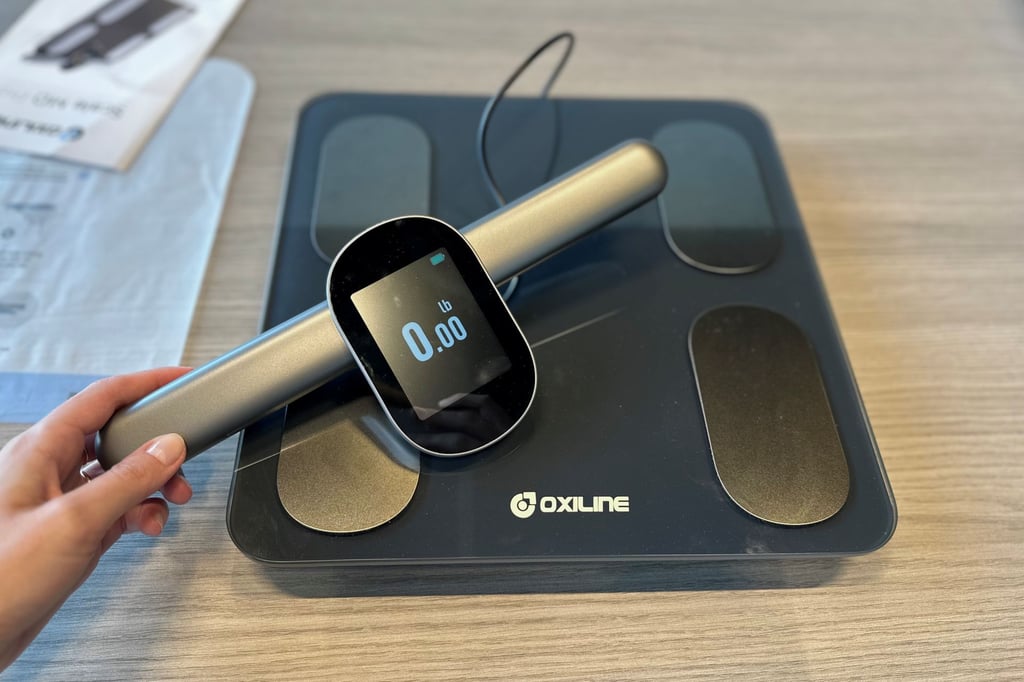
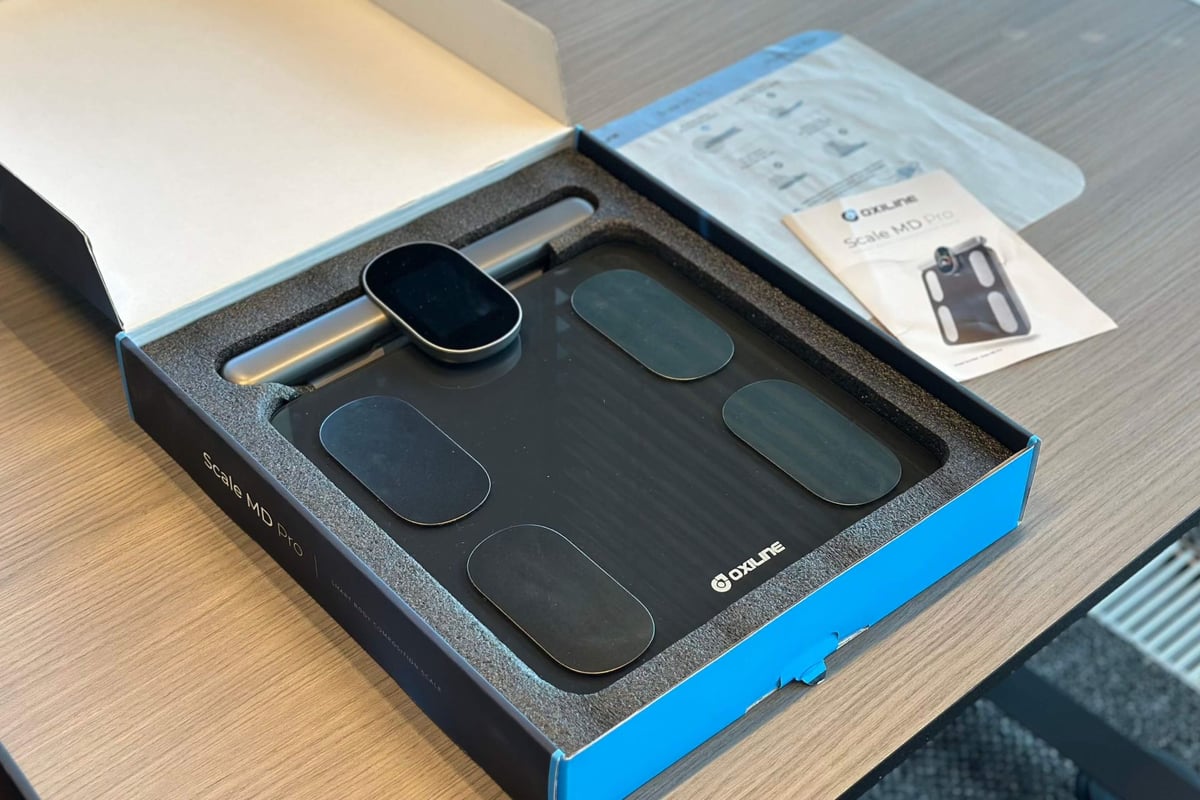
What makes the design stand out is the display placement. Instead of forcing you to look down at numbers on the scale, Oxiline places the screen directly on the handle. You don't have to squint, bend over, or grab your phone to see your results. Everything is displayed right in front of you while holding the handle.
The display shows eight main metrics in real time. If you’re in a rush, you can quickly check your weight, body fat, muscle mass, and other important numbers without opening the app. Later, if you want more details, you can look at the full breakdown on your phone.
Battery life
Oxiline says one charge lasts up to a month if you weigh yourself twice a day. In my experience, that seems accurate. I never had to worry about battery life during daily use.
There were occasional measurement errors that required me to repeat scans. I'll talk more about those later in the review, but every extra measurement uses a little more battery. Even so, I found the battery performance more than adequate for a device that most people use only a few minutes each day.
What does the Oxiline smart scale actually measure?
Oxiline Smart Scale tracks 31 body composition metrics, fewer than Hume Health Body Pod's 40+ measurements. However, most people do not need extra data.
If your goal is to monitor main wellness and fitness metrics, Oxiline covers the essentials. These include weight, body fat percentage, muscle mass, BMI, body water percentage, and bone mass. These numbers are what most people focus on when trying to lose fat, build muscle, or maintain a healthy lifestyle.
However, it’s important to remember that many of these measurements should be viewed as trend indicators rather than precise medical data.
How does Oxiline measure all of this?
Like most modern smart scales, Oxiline uses Bioelectrical Impedance Analysis (BIA). This means the scale sends a small electrical signal through your body and uses the response to estimate body composition.
What makes Oxiline different from many entry-level scales is the handle. Most budget models use electrodes only under your feet, so they primarily analyze your lower body. Oxiline adds sensors in the hand grip, allowing it to collect information from both your upper and lower body.
The app experience depends on where you live
One of the biggest surprises I discovered while testing the Oxiline smart scale had nothing to do with the scale itself. It was the app.
The official Oxiline Health app is intended for users in the United States and isn't designed for people in other regions, including the European Union and European Economic Area.
That's a bit of a problem. Let's say you somehow get your hands on the scale while living in Europe, you won't be able to use the official app. Instead, you'll have to rely on a third-party app called Fitdays.
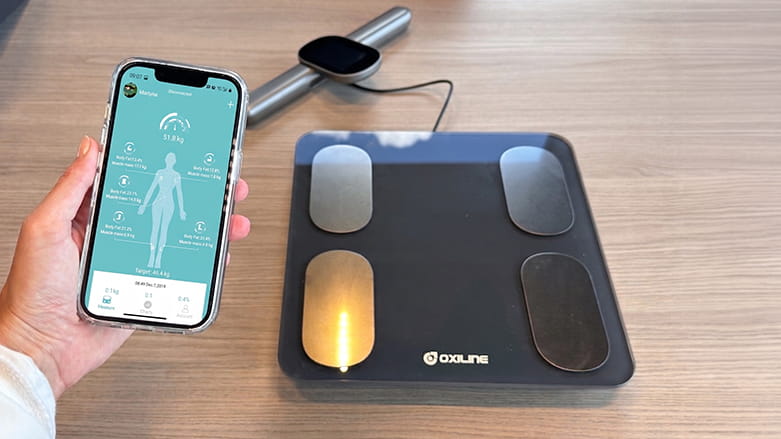
For testing, I tried Fitdays, and my experience wasn't great. The app frequently disconnected from the scale after setup and often required re-pairing. I also found it frustrating that accidental weigh-ins or misreads couldn't be deleted, since a bad reading in your history can affect your long-term trend charts with no easy way to remove it.
Is the Oxiline Health app any better?
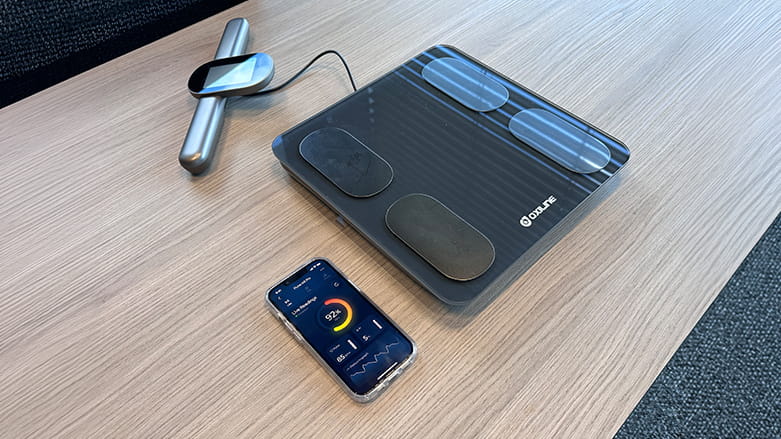
Thankfully, the experience with the Oxiline Health app was better.
You create an account, find the scale via Bluetooth, and connect it within minutes. During testing, I had a few minor connectivity hiccups, but nothing like the issues with Fitdays.
I also prefer the design. It feels more polished and premium. By comparison, Fitdays felt outdated and clunky. Honestly, it sometimes looked like an app that hadn't been updated in years.
What daily use is actually like
One thing I noticed almost immediately is that Oxiline Scale MD Pro isn't as quick as Hume Health Body Pod. Once you step on the scale and grab the handle, the full-body scan can take up to two minutes.
During that time, you need to stay still and keep both hands firmly on the handle. If you move too much or let go with one hand, the measurement can fail, and you'll need to start over.
I found the best approach was weighing myself first thing in the morning before breakfast. This keeps measurements more consistent day to day. Since food, water intake, and exercise affect body composition readings, comparing measurements taken at different times isn't helpful. So, if you already ate or exercised, I would recommend skipping your measurements.
Great for families and shared households
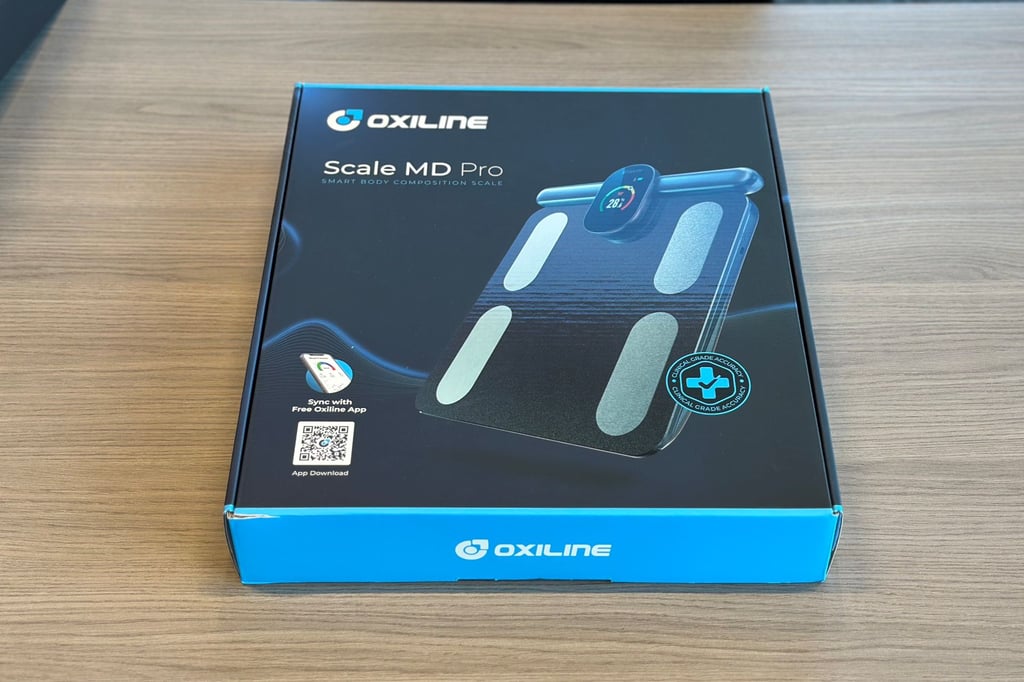
A nice bonus is that the Oxiline Health app supports multiple user profiles with automatic recognition. That means several people can use the same scale without manually switching accounts every time. Families and fitness enthusiasts will likely appreciate this feature.
The little things that got on my nerves
My biggest frustration, like with Hume Pod, is that the app must be actively running to save your full body composition data. Otherwise, you'll only see your weight and the other seven metrics on the scale's display.
I could probably forgive that because Oxiline costs less than the Hume Body Pod. However, what was harder to ignore were occasional measurement and syncing errors.
With Fitdays, incorrect readings sometimes ended up saved in my history. This usually happened when a scan was interrupted midway or when the app lost connection during the process.
The Oxiline Health app handled things better, but there were still times when a scan failed to save, and I had to repeat the entire process. When a measurement already takes a couple of minutes, doing it twice gets tiring quickly.
Does it deliver reliable data?
Oxiline makes ambitious claims about Scale MD Pro. According to the company, the scale uses dual-point impedance through hands and feet to reduce estimation errors and provide medical-grade measurements.
While the handle may give the scale access to more data than many entry-level competitors, I would be careful about taking ‘medical-grade’ at face value.
Should you treat smart scale results as medical-grade measurements?
Absolutely not, and I will provide one example to explain why. I found a study analyzing the accuracy of 165 consumer body composition scales using BIA technology.
The researchers found that while these devices may provide useful estimates, many measurements rely on algorithms that manufacturers don't fully disclose. In other words, the scale isn't directly measuring your body fat or muscle mass. It estimates those values based on electrical signals and proprietary calculations.
What I noticed during testing
Overall, my experience was positive. Weight measurements were consistent, and long-term trends matched my lifestyle changes.
However, I noticed occasional fluctuations that didn't seem logical. Some days, muscle mass or body fat estimates jumped more than expected despite no major routine changes.
This isn't unique to Oxiline; it's a common limitation of most BIA-based scales. Because of that, I found weekly and monthly trends more useful than day-to-day numbers.
A quick word of caution
Research suggests that frequent weight monitoring may harm some people's relationship with their body, especially those with body image concerns or anxiety about weight.
For many, smart scales may be a useful motivational tool. But if stepping on a scale causes stress or anxiety instead of helping you build healthier habits, consider speaking with a healthcare professional before using one.
Does the price justify what you get?
Oxiline Scale MD Pro currently costs $179, though that’s the discounted price. However, looking at Oxiline's lineup, it seems like a solid deal.
The cheaper Scale XS Pro costs $169 but measures only 16 body metrics, whereas the MD Pro nearly doubles that number and adds the handle-based measurement system.
The value gets even better when you consider what's included. Oxiline offers a 30-day money-back guarantee, giving you time to decide if the scale fits your routine. Even more impressive is the lifetime warranty, which is rare in the wellness and fitness gadget space.
No subscription required
If a lifetime warranty didn’t impress you, maybe this one will add the ‘wow’ factor. You buy the scale, download the app, and that's it. Unlike some wellness products, the Oxiline Health app doesn’t require premium memberships to access your measurements or data.
How does Oxiline Scale MD Pro compare to the competition?
The closest competitor I've tested is Hume Health Body Pod. It is more expensive but tracks additional metrics and offers an app available worldwide rather than mainly in the U.S. If you enjoy diving into as much wellness data as possible, Hume Pod may be the better choice.
Then there's Withings. Its Body Comp scales cost around $199.00 and track a similar number of metrics, but don't include a handle. From testing smart scales, I've learned that the handle matters because it lets the device measure both the upper and lower body.
If you want a Withings model with a handle, the price jumps to around $399.00. From a pure value perspective, that's where Oxiline starts looking very attractive.
Verdict: Should you buy Oxiline Smart Scale?
After testing the Oxiline smart scale, I had mixed impressions. It's not the most polished smart scale I've used, since occasional measurement errors and syncing issues can be frustrating.
Still, when everything works as intended, it may deliver useful body composition data at a reasonable price. That is the biggest strength of Oxiline Scale MD Pro.
The handle-based design, 31 body metrics, no subscription fees, and lifetime warranty make it competitive against much more expensive rivals. If you can accept a few hiccups, the Oxiline smart scale offers plenty of insight without a premium price tag.
References:
-
International Journal of Medical Informatics.
-
Current Obesity Reports.
-
Current Opinion in Clinical Nutrition and Metabolic Care.