

AYO and Luminette both use light therapy, but one has stronger research behind it
Some of our team members have already tested and written about light therapy glasses separately, so it was time to put two of the biggest names head-to-head.
We decided to look at AYO and Luminette 3 to see which makes more sense for everyday use. Both devices use light therapy to support your body’s natural rhythm and aim to improve morning alertness, energy levels, and sleep timing.
However, they take slightly different approaches. AYO feels like a modern wellness gadget for people interested in performance and daily optimization. Luminette has built a stronger reputation around traditional light therapy and sleep routines.
For this comparison, we examined how both glasses work in real life, including comfort, daily use, and which type of user each suits best.
| Luminette 3 | AYO | |
| Weight | 1.80oz (51g) | 1.1oz (31g) |
| Light type | Blue-enriched white light | Blue light |
| App support | No | Yes |
| Battery life | 10–12 sessions | 7–10 sessions |
| Prescription glasses compatibility | Yes | No |
| Warranty | 2 years | 1 year |
| Official website | Visit Luminette 3 | Visit AYO |
First impressions: Light therapy glasses from the future?
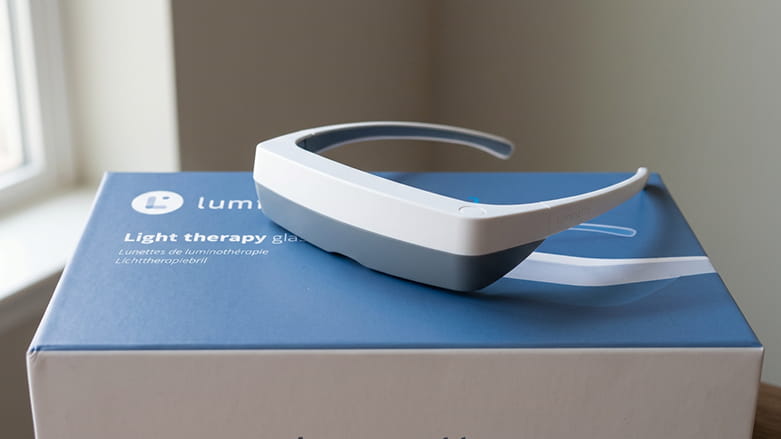
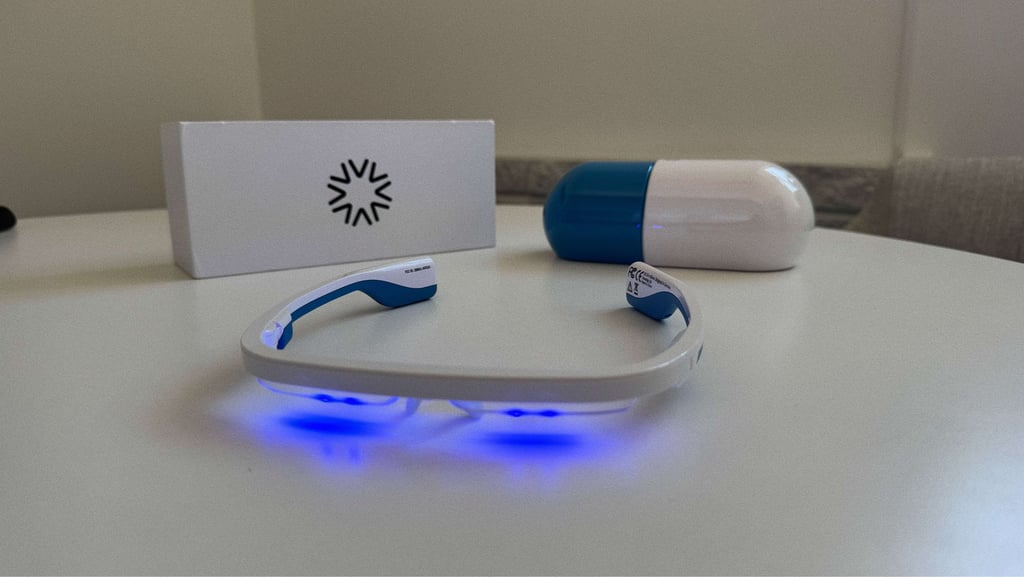
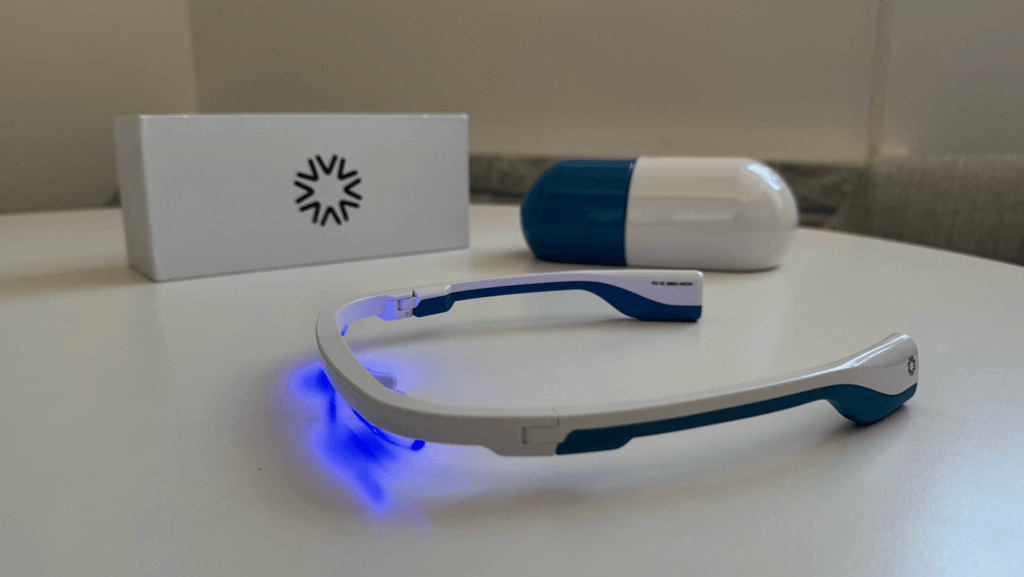
Out of the box, both AYO and Luminette give off a futuristic feel. They look less like traditional glasses and more like something from a sci-fi movie.
Despite the technology inside, both are lightweight and designed for comfort. At 1.80oz (51g), Luminette feels airy on the face. And if that is too much, AYO weighs just 1.1oz (31g).
Because of that, during testing, it was easy to forget they were there. It’s gentle like a feather against your face, except it won’t cause any itching.
However, there was one design detail we liked more about Luminette. It was the color choice. You can pick blue, pink, or green frames, which is a nice touch if you care about matching your style.
Built for wearing while doing things
Both AYO and Luminette are designed to fit into your day without forcing you to stop what you’re doing. They use a raised design with nose support, keeping the glasses slightly away from your face.
You can wear them while working, reading, having breakfast, or doing other everyday tasks. They don’t feel like devices that require a dedicated session where you must sit still and wait.
Can you wear them over regular glasses?
This is where we noticed a bigger difference. Thanks to Luminette’s higher position on the nose, wearing it over prescription glasses felt easier. Your glasses sit underneath without blocking the light too much, and your vision stays clear.
With AYO, it’s a bit more complicated. While the glasses can fit over regular frames, the frame of your everyday glasses may block some light. Additionally, if your glasses have blue-light-filtering lenses, some of the emitted light might be diminished, because AYO only uses blue light.
Winner: Luminette 3
Light therapy technology: What actually makes them different?
Wearable light therapy glasses deliver bright light directly to your eyes, potentially supporting your body’s regulation of the circadian rhythm.
The idea is simple: light exposure, especially in the morning, signals your brain to feel more awake and alert. Unlike traditional light therapy lamps, where you sit in front of a bright light box for a set time, devices like AYO and Luminette are designed to move with you.
You can wear them while making breakfast, checking emails, or getting ready for the day. The biggest difference is how the light reaches your eyes.
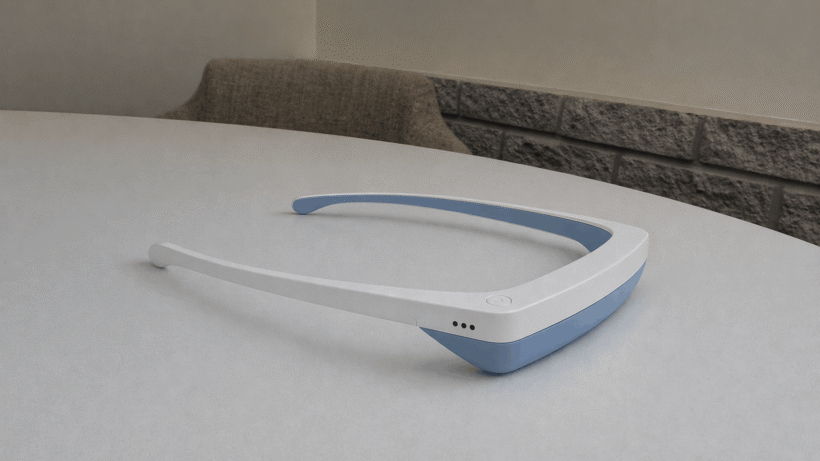
Luminette uses blue-enriched white light directed from above, similar to natural sunlight entering your eyes. This positioning provides light exposure while keeping your vision clear.
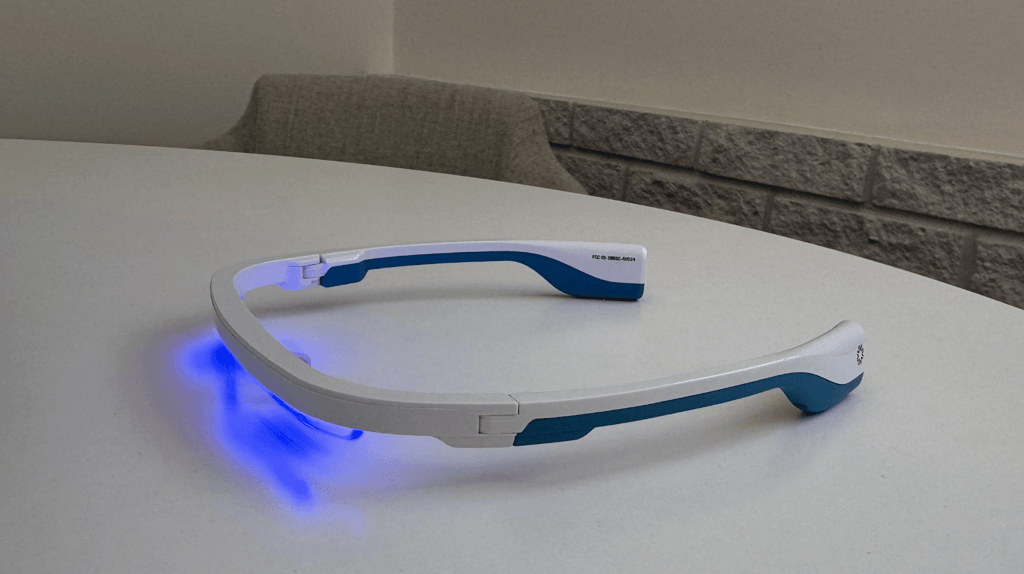
AYO takes a different approach as it uses blue light from the sides of the frame. This still provides direct light exposure, but the experience feels different because the light source sits closer to your peripheral vision.
Scientific credibility: Do light therapy glasses actually have research behind them?
Light therapy glasses are often marketed to improve alertness, support better sleep timing, and help with issues like jet lag by adjusting your internal clock. But how much evidence supports these claims?
We decided to review the research on both Luminette and AYO to see how strong the science really is.
Luminette: A longer research history
Luminette makes its research really easy to find. On its website, the brand lists studies dating back to 2013, with 19 studies currently available. Even though research is connected to the company, it still shows how the device has been tested over time.
For example, one early study followed 25 radiotherapy staff who worked in environments with little natural daylight. Participants used Luminette for one month and then had one month without light exposure.
During the months using Luminette, they reported lower daytime sleepiness and improvements in some well-being measures compared with months without light therapy.
Moreover, recent research has examined how bright light therapy affects mood and circadian rhythm. It suggested that Luminette may help improve depressive symptoms in people with bipolar depression when used alongside standard treatment. However, researchers noted that more studies are needed to fully understand the effects.
AYO: Promising, but harder to verify
AYO also highlights its science-backed approach, but the research is not as clearly presented as Luminette’s. We would prefer companies making scientific claims to make their supporting studies easier to find.
That said, digging deeper reveals some research. One clinical trial using AYO blue-light glasses found that participants experienced small but statistically significant improvements in self-reported fatigue symptoms.
Another study looked at personalized light therapy devices for people with irregular schedules, such as Navy submariners. Researchers found that carefully timed light exposure may help improve sleep timing, reduce fatigue, and support adjustment to demanding work schedules.
Which one has stronger evidence?
It’s difficult to say which brand is more scientifically proven because many studies involve company support.
However, Luminette has the advantage in transparency. Its research is easier to find and has a longer history of published studies. For us, that makes Luminette slightly easier to trust from a research perspective.
Winner: Luminette 3
What wearing AYO and Luminette is actually like
For our testing, we followed the recommended routine and used both AYO and Luminette 3 in the morning. Everyone on our team put on the glasses after waking up and used them for around 20 minutes.
The only adjustment was for people who wear prescription glasses. For them, Luminette 3 was easier to test because its design sits better over regular glasses.
Did we notice any improvements?
It’s hard to say which one works better. A proper clinical study would be needed for that. Still, we can share observations our team made during regular use.
To be honest, the feedback was similar for both devices. Most people agreed that after using one of the glasses, they felt less sleepy during the day and didn’t need to reach for coffee immediately upon waking.
Mood improvements are harder to measure. But I guess if you feel more awake and less tired, your overall mood can naturally improve.
Which one is easier to stick with?
According to our team, both AYO and Luminette are easy to include in a daily routine. They don’t require much effort because they move with you instead of keeping you tied to one spot.
You can wear them while doing normal morning activities, which makes consistency easier. As someone on our team said, ‘a device only works if you remember to use it.’
Winner: Draw
Battery life comparison
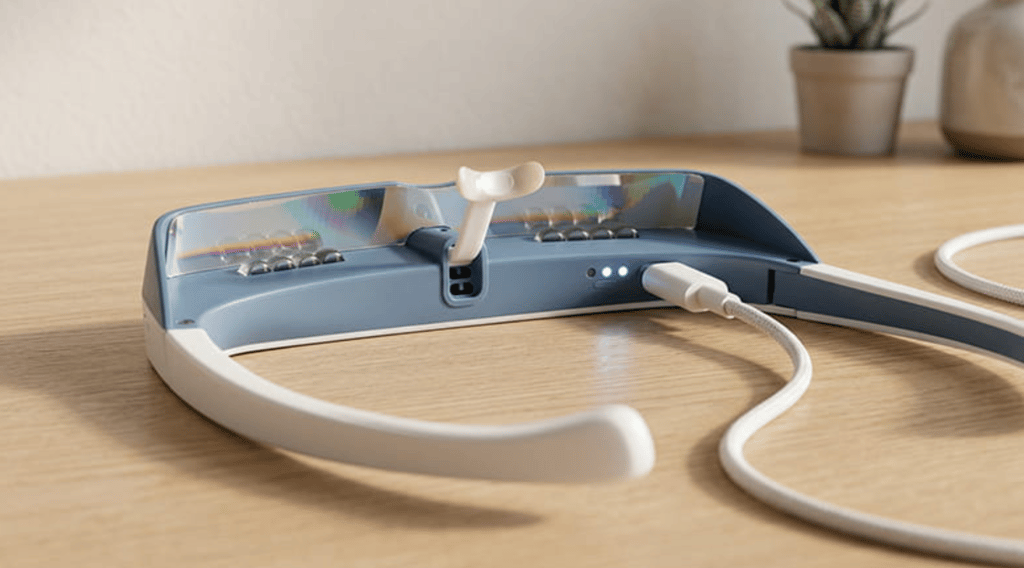
Luminette offers three intensity modes: 500 lux, 1000 lux, and 1500 lux, which control how strong the light is. The higher the intensity, the shorter your session. At the maximum 1500 lux setting, a session lasts around 20 minutes, typically giving you about 10–12 sessions per full charge.
AYO takes a slightly different approach. It runs fixed 20-minute sessions (unless you adjust it through the app), then automatically turns off. On a full charge, this usually results in around 7–10 sessions.
Although Luminette has a small edge in battery efficiency, especially with shorter or lower-intensity sessions, both devices last long enough that you won’t need to charge them constantly.
Winner: Luminette 3
Is there an app to control sessions?
Both devices come with companion apps, but their roles differ. Luminette technically has an app, but it hasn’t been updated frequently.
Although glasses support Bluetooth, they are mainly designed to work independently. You can turn them on, set your session, and start using them without relying on your phone.
AYO places more emphasis on its app, using it for progress tracking. To keep the comparison fair, we mainly tested both devices without focusing on the apps.
The core experience comes from wearing the glasses, not interacting with software. The apps are an extra layer rather than something that changes how the light therapy feels day to day.
Winner: Draw
Which offers the stronger overall package?
At the time of writing, AYO is about $90 more expensive than Luminette, which makes a noticeable difference when comparing the two.
Moreover, Luminette offers a 2-year warranty, while AYO has a 1-year warranty. That extra coverage adds confidence if you plan to use the device daily over a longer period.
There is also a small but interesting difference when buying multiple units. For example, if you purchase a second pair of Luminette as a gift, you can get a discounted bundle price, saving up to $80. What a bargain.
The price becomes even more appealing when you add the fact that Luminette has a stronger research base.
Winner: Luminette 3
Verdict: Which light therapy glasses should you choose?
From our comparison, it’s really clear that we slightly lean toward Luminette 3. Despite that, it doesn’t mean you shouldn’t consider AYO if your preferences are different from ours.
Even though both devices work in a similar way, there are some key differences between them. Because of that, we made a short list of why you should choose one or the other.
Choose Luminette 3 if:
- You want better overall value for money
- You prefer broader research history and studies
- You want more flexible light intensity modes
- You prefer battery efficiency and warranty support
Choose AYO if:
- You prefer a lighter, more minimal design
- You like a more modern, tech-style wearable
- You want a fixed 20-minute session format
- You don’t mind paying a bit more
As an Amazon Associate we earn from qualifying purchases. Product prices and availability are accurate as of the date/time indicated and are subject to change. Any price and availability information displayed on Amazon at the time of purchase will apply to the purchase of this product.
4 resources
- Impact of the use of Luminette on well-being at work in a radiotherapy department. Cancer Radiothérapie: Journal de la Société Française de Radiothérapie Oncologique.
- Personal light treatment devices: a countermeasure to improve sleep, fatigue, and circadian misalignment in an operational setting. Sleep Advances.
- A series of personalized virtual light therapy interventions for fatigue: Feasibility randomized crossover trial for N-of-1 treatment. JMIR Publications.
- Bright light therapy in the morning or midday for the treatment of nonseasonal depression in bipolar disorder (LuBi): A dose-escalation phase 1/2 randomized double-blind trial. The Journal of Clinical Psychiatry.