Hume Health Body Pod review: More than just a smart scale?

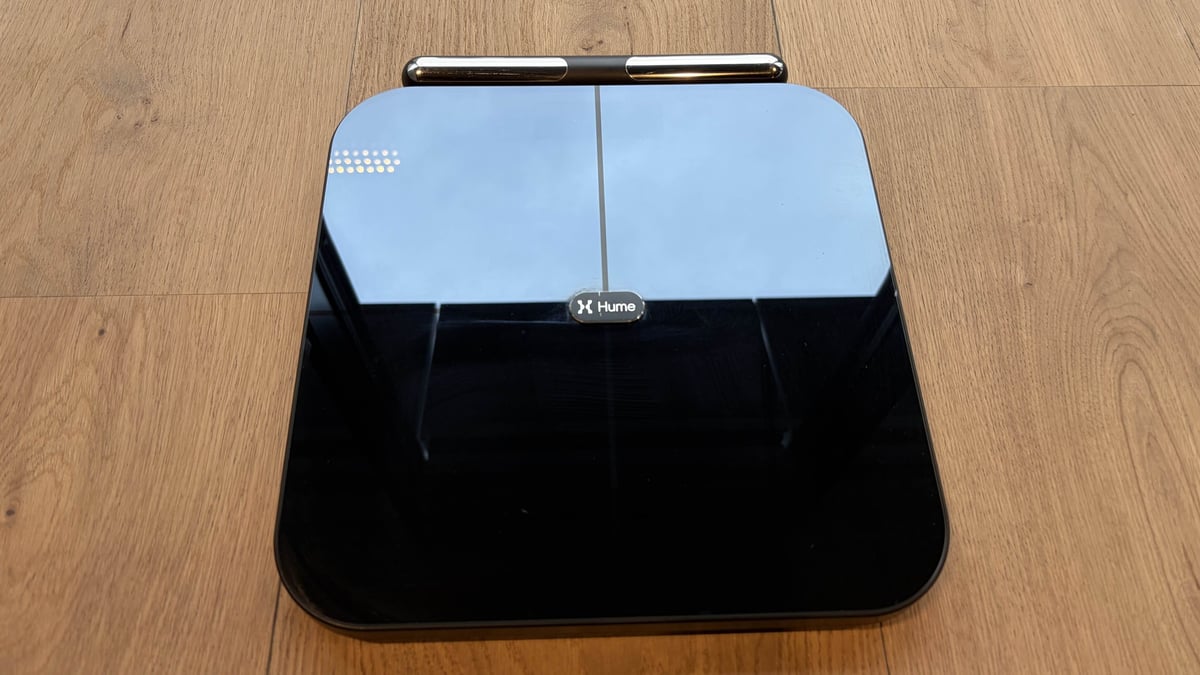
Hume Health first caught Wareable teams' attention when we tested Hume Band, a fitness tracker focusing on overall wellness metrics. We liked it so much that we decided to include it in our list of best fitness trackers.
However, Hume’s ecosystem doesn’t stop at wrist-based tracking. The company also offers Hume Health Body Pod, a smart scale designed to provide a deeper look at your body composition.
Unlike traditional scales that simply show your weight, body composition scales can reveal body fat percentage, muscle mass, water levels, and other wellness metrics. That made me wonder: Does Hume Body Pod live up to the same hype as Hume Band? I just wanted to find out whether it provides meaningful information, as it claims to do.
That said, keep reading this review to see if it's worth buying as an additional tool alongside your Hume Band to better understand your wellness.
| Product name | Hume Health Body Pod |
| Price | From $183.04 |
| Metrics tracked | Tracks muscle gain, fat loss, visceral fat, metabolic age, and 41 other metrics |
| Weight capacity | From 6.6 lbs (3 kg) to 400 lbs (181.4 kg) |
| Connectivity | Bluetooth |
| App compatibility | Hume Health app for iOS and Android; can connect with Apple Health and Google Health |
| Subscription | Optional Hume Plus subscription ($9.99/month) |
| Battery life | Up to 1 year per charge |
| Warranty | 1-year warranty included; optional extended 10-year warranty |
A scale that looks more like gym equipment
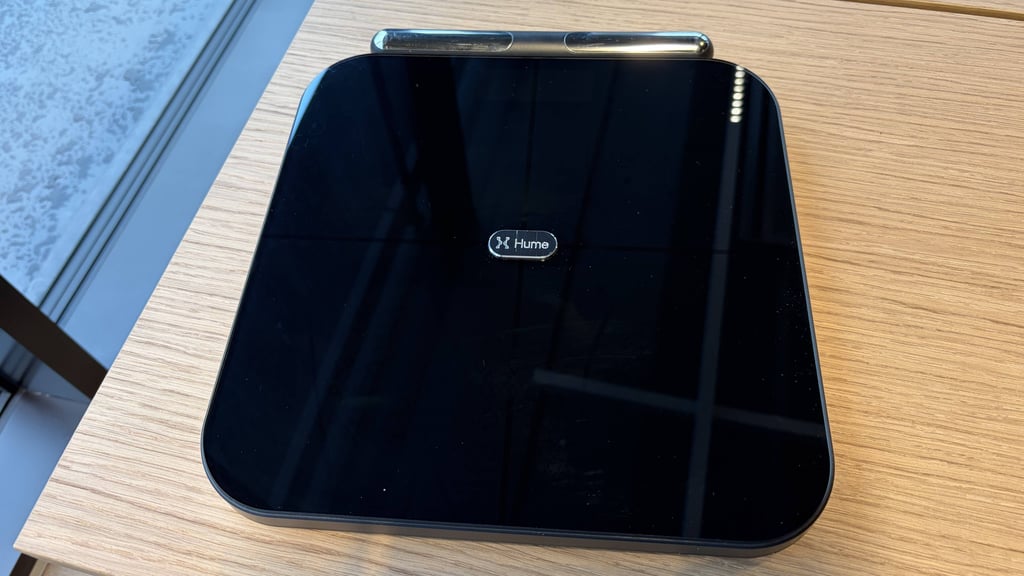
Hume Health Body Pod surprised me the moment I took it out of the box. The tempered glass surface, sturdy build, and handle attachment give it a professional gym equipment vibe rather than a typical bathroom scale. If you have a home gym, it would fit right in alongside your other fitness gear.
I also appreciated the charging setup. According to Hume, a single charge can last up to a year. That sounds impressive and makes sense since most people step on a scale once a day.
Unfortunately, I can't fully verify that claim because I only tested Body Pod for about a month. Still, during that time, I didn't have to think about charging it once.
What makes the Body Pod different from a regular smart scale?
At first glance, the Hume Health Body Pod looks like any other smart scale. But once you dig deeper, it's clear that Hume Health offers much more than simple weight tracking.
The biggest difference is the amount of data you get. Instead of only showing your weight and body fat percentage, Body Pod tracks more than 40 body composition metrics, including muscle mass, visceral fat, body water, protein levels, metabolic age, and more.
Compared to some competitors, Hume Health offers better value for the additional metrics it provides. Take Withings, for example. The company offers several smart scales, but to access the most advanced body composition measurements, you'll typically need to spend more than the Body Pod costs.
The scale also fits neatly into the Hume Health ecosystem. If you're already using the Hume Band, all your data lives in the same app, giving you a better picture of your wellness rather than viewing activity tracking and body composition separately.
Why the handle matters
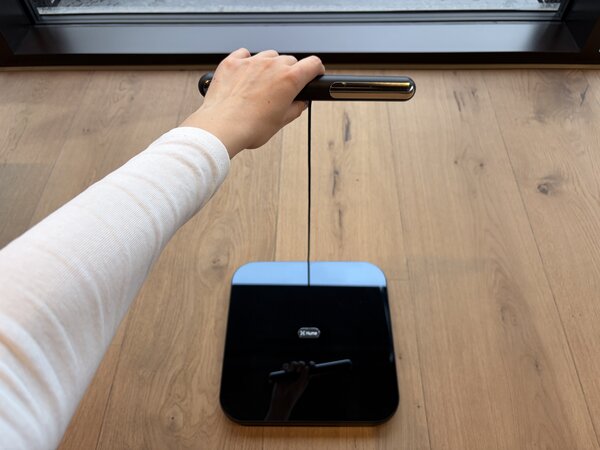
You might not think the handle matters, but it is the main feature that separates Body Pod from many budget smart scales.
Most entry-level smart scales use electrodes only under your feet. Hume Health Body Pod adds sensors in a hand grip, allowing it to measure both your upper and lower body. Simply put, the device collects more information because it analyzes your entire body rather than just your lower body.
This is the same approach used by premium body composition brands like InBody. Even Withings offers scales with and without handles, and the handle-equipped model provides more measurements.
Getting started with the Hume Health Body Pod
Setting up the Hume Health Body Pod is simple, even if you've never used a smart scale before. First, download the Hume Health app. Once it’s done, the scale is automatically detected via Bluetooth, and pairing takes only a few seconds. After connecting the device, enter your age, height, gender, and weight.
And now you're ready for your first measurement. Just make sure the scale is on a hard, flat surface. Step on it barefoot—no socks or slippers—and lift the handle while standing still. The scan takes only a few seconds. When finished, all your measurements sync automatically to the app.
The main dashboard shows your most important wellness scores and body composition details. If you want to know more, you can check out all 45 measurements. Each one comes with a trend graph, so you can easily track changes over time rather than just looking at a single result.
Living with the Hume Health Body Pod
Out of all the wellness and fitness devices I’ve tried, the Hume Health Body Pod is the quickest to use. Just step on the scale, pick up the handle, and your measurements show up in seconds.
However, you need to build one habit: weigh yourself at the same time every day. I recommend doing it first thing in the morning. Before checking your phone or eating breakfast, step on the scale.
The reason why is simple. Our weight fluctuates throughout the day depending on what we eat, how much water we drink, and whether we've exercised. These changes affect body composition measurements.
If you forget your morning weigh-in and only remember after a large breakfast, it’s better to skip that day than add inconsistent data to your trends.
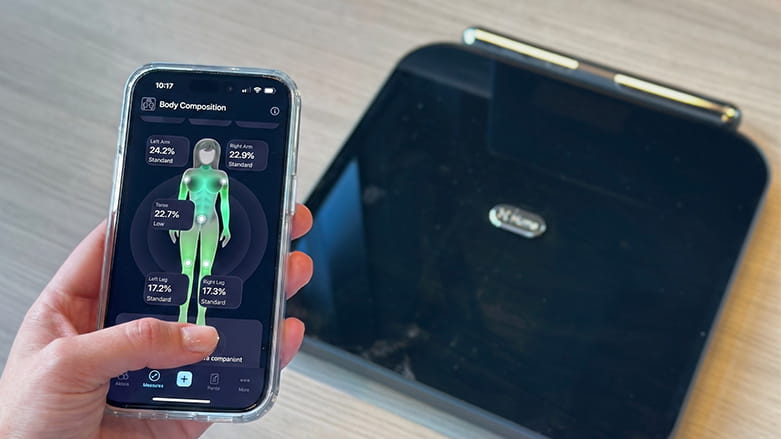
Multi-user support
If multiple people in your household want to use the scale, there’s no need to splurge on additional ones.
Hume Body Pod supports up to 24 user profiles on a single scale. It can recognize them based on their body composition and automatically sync measurements to the correct account in the Hume Health app.
The small frustrations I couldn't ignore
While my first impressions were positive, I noticed a few issues after using the scale for weeks.
The biggest was reliability. Most of the time, measurements took only a few seconds. But some days, after stepping on the scale and waiting for the scan, I got an error message. That meant I had to start over, sometimes even multiple times. It’s frustrating when you’re half awake and want to get on with your day.
Another one of my complaints is the app connection. I assumed that in 2026, a smart scale would automatically sync data whenever Bluetooth is on. Unfortunately, Body Pod doesn’t work that way.
To get the full measurements, my phone had to be nearby and the Hume Health app open before stepping on the scale. Otherwise, you only get basic weight measurements.
I wouldn’t mind if all smart scales worked like this, but they don’t. For example, Withings automatically syncs measurements to the cloud over Bluetooth without you needing to manually open the app. It’s not a dealbreaker, but it’s one area where the Hume Pod experience could be smoother.
How accurate is the Hume Health Body Pod?
Accuracy is probably the biggest question people have before buying any smart scales. Hume Health makes a bold claim here. According to the company, Body Pod was validated by an independent clinical team and showed a 98% correlation with DEXA scans for measuring fat-free mass and body fat percentage.
That sounds impressive, but I can't personally verify it. DEXA is widely considered the gold standard for body composition analysis, and I wasn't about to book a DEXA scan just to compare results.
My own experience
When I tried it myself, the weight measurements seemed accurate. But for things like body fat percentage, muscle mass, and other body composition numbers, it's tough to tell if the results were truly correct.
What I did notice was that the trends made sense. As I started going to the gym consistently and paying closer attention to my diet, I saw small improvements in lean mass and slight reductions in body fat.
What does the research say?
Looking beyond Hume's research, I found an independent study that analyzed the accuracy of 165 consumer body composition scales using Bioelectrical Impedance Analysis technology.
The researchers concluded that while these devices may provide useful estimates, many measurements are based on algorithms that manufacturers don't fully disclose. Because of that, you should use smart scales more as a device for tracking changes over time rather than for clinically precise numbers.
Precautions
One final note: Daily weigh-ins aren't for everyone. A review suggests that frequent weight monitoring may affect how some people feel about their bodies. If you struggle with body image, disordered eating, or anxiety around weight, it may be worth speaking with a healthcare professional before making daily weigh-ins part of your routine.
Is the Hume Body Pod worth the price?
At the time of writing, the Hume Health Body Pod costs $183.04 with a discount. You can also subscribe to Hume Plus for $9.99 per month if you want additional wellness insights.
I don't think the subscription is essential if you're only using the Body Pod. The scale already provides plenty of information on its own. However, if you use Hume Band as well, having both devices connected in the same ecosystem makes Hume Plus more appealing because it combines data from both to deliver broader wellness insights.
Hume also includes a one-year warranty with every Body Pod. Moreover, if you're worried about long-term durability, you can add a 10-year protection plan for $35. The company also offers a 45-day return policy, so if the scale doesn't meet your expectations, you can send it back. Another bonus is that Hume offers free worldwide shipping, which isn't always the case with wellness products.
Even after all these perks, I still think it’s a lot of money for a scale. There are plenty of smart scales on the market that cost under $100. The question is whether the extra data and features justify the higher price.
Probably not if you're happy only tracking your weight and basic body composition. In that case, a cheaper smart scale will likely do everything you need. However, if you’re interested in advanced features, the price of Body Pod becomes more reasonable.
For example, a Withings scale with similarly advanced body composition features often costs more. So while the Hume Health Body Pod isn't cheap, I can understand why it’s priced that way.
Verdict: Should you buy the Hume Health Body Pod?
If a friend asked me whether they should buy the Hume Health Body Pod, my answer would be: it depends on what you're looking for.
If you just want to know your weight, save your money. Many cheaper smart scales can do that. Body Pod only makes sense if you're interested in things like body fat, muscle mass, visceral fat, and tracking those numbers over time.
I also wouldn't pretend it's perfect. Having to open the app before weighing yourself can get annoying. For a scale at this price, I expect a smoother experience.
That said, if you're working on your fitness, trying to lose fat, build muscle, or understand your body better, I see the value. It's a device you'll appreciate if you use the data.
-
International Journal of Medical Informatics.
Collecting health-related research data using consumer-based wireless smart scales.
-
Current Obesity Reports.
Self-Weighing: Helpful or harmful for psychological well-being? A review of the literature.