Red light therapy (RTL) has come a long way from a niche wellness interest to a widely sought-after option for various concerns, including pain management. Today's devices are more accessible and are targeted for various discomforts: from post-workout muscle soreness to arthritis pain.
While at-home red light therapy devices aren't a substitute for medical treatment, some users report improvements when used consistently. This is also supported by academic research—while it is definitely not a miracle cure, some potential benefits include reduced inflammation and improved recovery. Thus, no wonder that red light therapy may be a tool in your pain management kit.
Our team evaluated various products designed for red light therapy for pain, and we've compiled our top picks based on effectiveness, ease of use, and overall feedback. It is important to remember that the results of these devices may differ depending on the underlying cause of your discomfort; thus, we recommend speaking with a medical professional beforehand.
Quick picks: Best red light therapy devices for pain relief
- Novaa Light Pad XL: Best for muscle soreness and recovery support
- NovaaLab Light Pad: Best for joint pain
- Kineon MOVE+ LED & Laser: Best for knee pain
- Megelin ContourLux Light Therapy Belt: Best for torso area support
- MitoQUAD™ Wavelength Belt: Best for lower back pain
Best red light therapy devices for pain relief compared
| Device | Wavelengths | Lasers vs. LEDs | Near-infrared support | Coverage area | Session time | Price |
| Novaa Light Pad XL | 660nm, 850nm | LEDs | Yes, 850nm | 23.6" x 19.7" | 20 minutes | $599.90 |
| NovaaLab Light Pad | 660nm, 850nm | LEDs | Yes, 850nm | 16.3" x 7.9" | 20 minutes | $314.91 |
| Kineon MOVE+ LED & Laser | 660nm, 808nm | Lasers and LEDs | Yes, 808nm | Not specified | At least 5 minutes | $499 |
| Megelin ContourLux Light Therapy Belt | 635nm, 660nm, 808nm, 830nm, 850nm,1064nm | LEDs | Yes, 808nm, 830nm, 850nm, and 1064nm | Not specified | 20–30 minutes per area | $279 |
| Mito Red Light MitoQUAD™ Wavelength Belt | 630nm, 660nm, 810nm, 850nm | LEDs | Yes, 810nm and 850nm | 22" x 5" | 20 minutes | $349 |
Novaa Light Pad XL
Best for: Muscle soreness, faster recovery
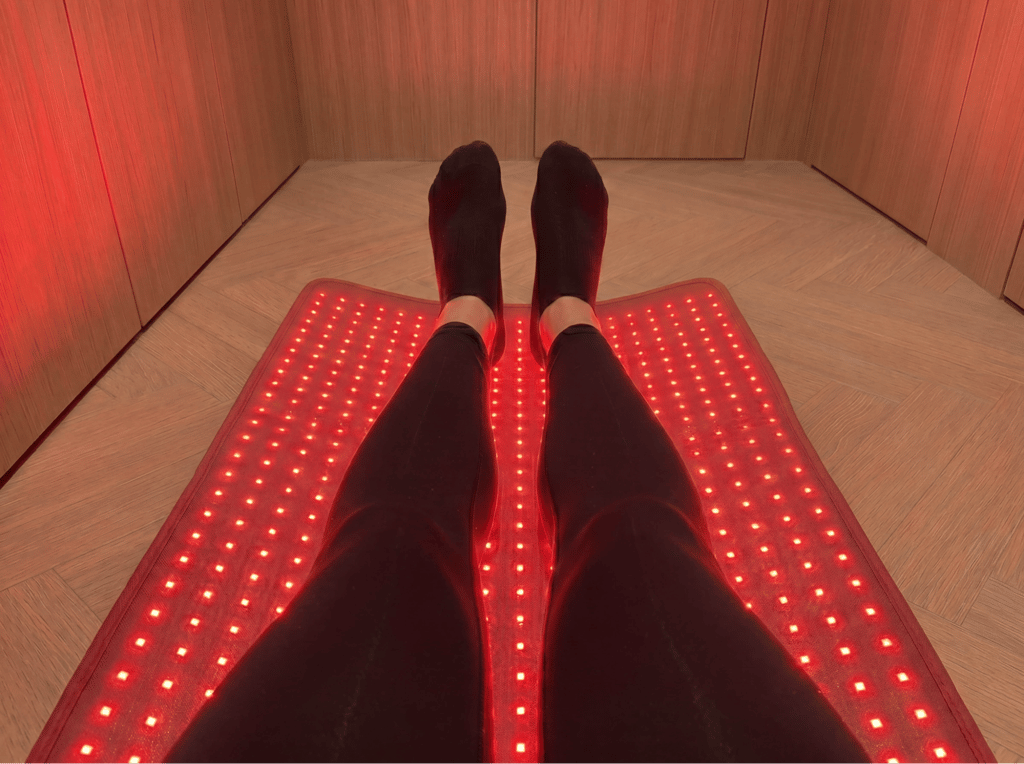
- Wavelengths: 660nm (red) and 850nm (near-infrared)
- Certifications: CE, RoHS
- Coverage: Wide wrap-style design, built for larger muscle groups and broader areas
- Price: $599.90
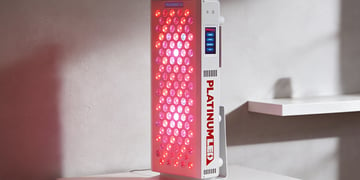
Light Pad XL is the bigger version of Light Pad by NovaaLab. So, if you are targeting larger areas of your body, this one is an obvious choice. It is also a flexible pad, so you can wrap a large portion of your legs in one session, which makes it particularly useful for post-workout recovery when soreness isn't limited to one small spot.
Our team has also tested it for back pain, as it is easy to adjust for that: simply drape the pad on the chair or sofa, and sit down.
It doesn't generate uncomfortable heat, so sessions feel passive rather than intense, which makes it easy to keep up with daily. Where the regular Light Pad wins on precision, the XL wins on coverage—if your issue is tight hamstrings after a long run or a stiff, achy back after a desk day, you're going to feel the size difference.
Again, just like with any red light therapy device, the results may vary, and consistency is crucial. Other than that, we found NovaaLab Light Pad XL to be super easy to integrate into one’s routine, and if you need a larger device, this is our recommendation.
- Larger size for more coverage
- Both red and near-infrared wavelengths
- Easy to operate
- Expensive option
NovaaLab Light Pad
Best for: Joint health support
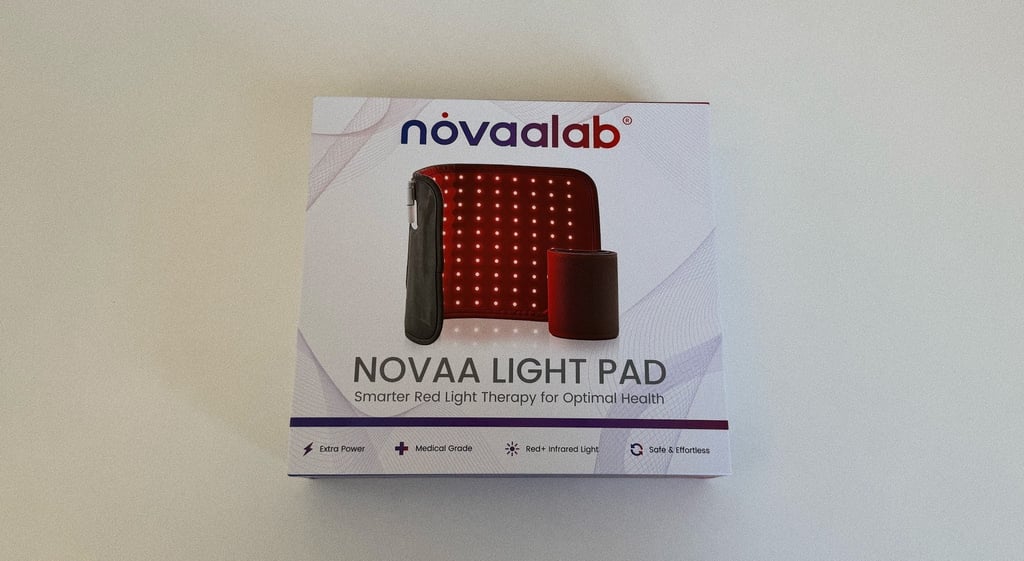
- Wavelengths: 660nm (red) and 850nm (near-infrared)
- Certifications: CE, RoHS
- Coverage: Targeted, wrap-style design (not full-body)
- Price: $314.91
NovaaLab takes the second spot because it offers amazing value for the price: being one of the most affordable products on the list, it still performed well for our team. It is a flexible pad that can be wrapped around your knee, ankle, or elbow, and we think it would suit those looking to address joint pain.
But one caveat: given its size, if you are looking to use it on larger body areas like your back or legs, it might not be the most efficient choice. This is not to say that it is not doable; our team members were able to use it for leg soreness after workouts, but it will take a longer time to apply the red light therapy to all desired areas.
But if you don’t see this as a disadvantage, Light Pad performed well in our testing: for instance, one of our team members reported less muscle soreness 3–5 weeks after starting to use the device. Keep in mind that the results from red light therapy will vary greatly, so keep your expectations realistic.
- Budget-friendly
- Both red and infrared light
- Easy to use
- Might be too small for some
Kineon MOVE+ LED & Laser
Best for: Targeted knee sessions
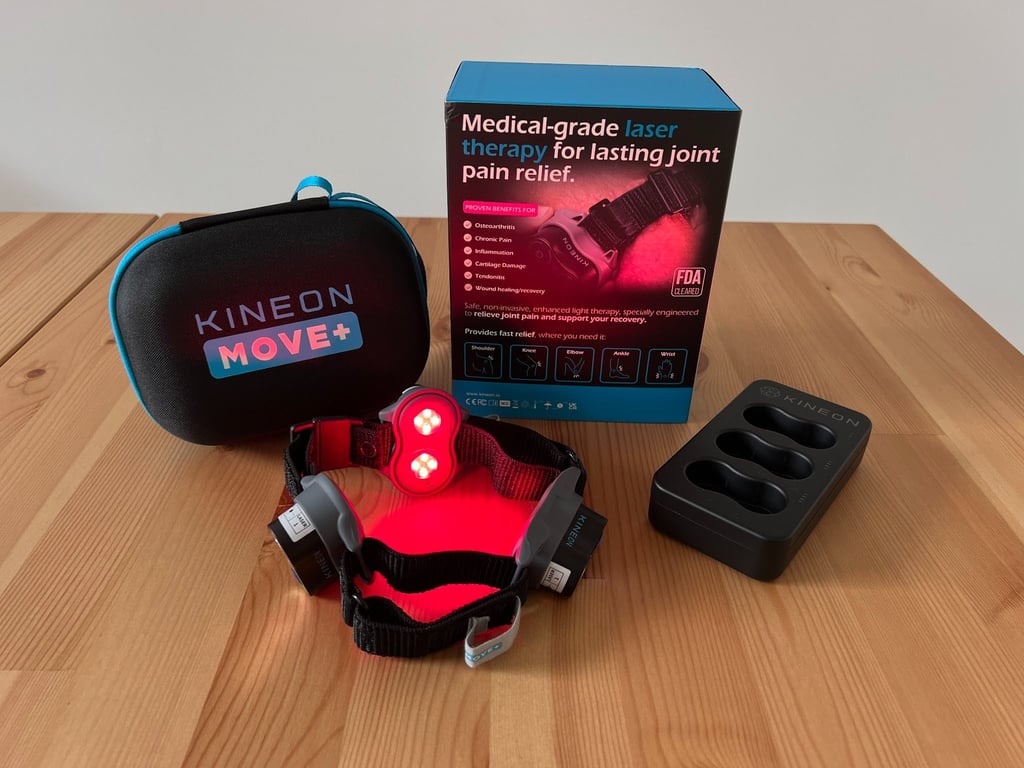
- Wavelengths: 660nm (red LEDs) and 808nm (near-infrared lasers)
- Certifications: FDA-cleared, CE, RoHS
- Coverage: Targeted wrap, built for joints—not full-body
- Price: $499
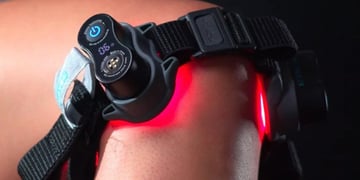
What sets the MOVE+ Pro apart from every other device on this list is the laser. Most RLT pads run on LEDs only—Kineon adds 808nm near-infrared lasers. Whether that translates to meaningfully better results is still something research is trying to answer, but it's a more sophisticated approach than LED-only wraps, and some red light therapy enthusiasts prefer to have lasers for potentially deeper penetration.
Our team member tested it for three months on a knee with chronic pain. The first couple of weeks were subtle: less morning stiffness, slightly easier movement day to day. By weeks three and four, those small improvements started feeling more consistent.
The brand promotes this device as a versatile option that can be applied to any body part, but, being honest, we didn’t find other applications as easy to execute. While you can adjust the module, that takes time. For areas such as the lower back, we preferred using a belt or a pad. However, if you want a more targeted approach and no restrictions on movement during a session too, Kineon has a clear advantage over a regular RLT pad.
- Sessions starting 5 minutes per day
- Uses lasers alongside LEDs
- Compact, portable, and stays put during sessions
- Has an app for tracking purposes
- Limited application possibilities
- Quite expensive considering the covered area
Megelin ContourLux Light Therapy Belt
Best for: Targeting torso area
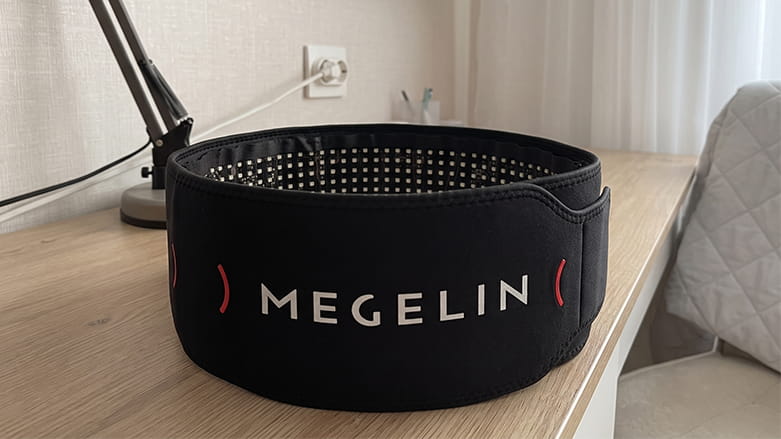
- Wavelengths: 635nm and 660nm (red), 808nm, 830nm, 850nm, 1064nm (near-infrared)
- Certifications: FDA-registered
- Coverage: Targeted belt-style wrap
- Price: $279
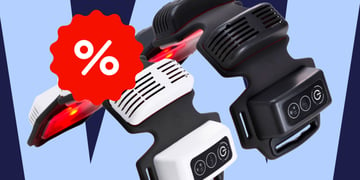
Megelin stood out to us as a nice option if you’re dealing with lower back, waist, or abdomen discomfort. It’s shaped like a belt, with velcro straps allowing you to wrap it around your torso without restricting movement.
We must mention that it’s not limited to that area—you can use it as a pad on wider body parts or wrap it around your legs and arms.
One thing that immediately catches your eye is the number of wavelengths: 635nm,660nm, 808nm, 830nm, 850nm, 1064nm. In theory, this may give you a broader range of red and near-infrared light, though remember that more isn’t equal to better.
Also, the belt includes three modes. Besides continuous light, you can switch between 10Hz and 40Hz pulse programs, giving you slightly more control of your session. Since it runs on a built-in rechargeable battery, you can move around the house while the belt is on you for those.
What we didn’t like, though, was the brand's ambitious claims around body contouring and cellulite reduction. While red light therapy has been studied for many wellness applications, some of Megelin’s offered benefits don’t have very strong evidence. In our testing, we found that the belt may be useful for muscle soreness and some pain management, but you shouldn’t focus on its cosmetic promises.
- Affordable price tag
- Doesn’t restrict movements
- Broad range of red and near-infrared light
- No valid certifications presented on official website
Mito Red Light MitoQUAD™ Wavelength Belt
Best for: Lower back support
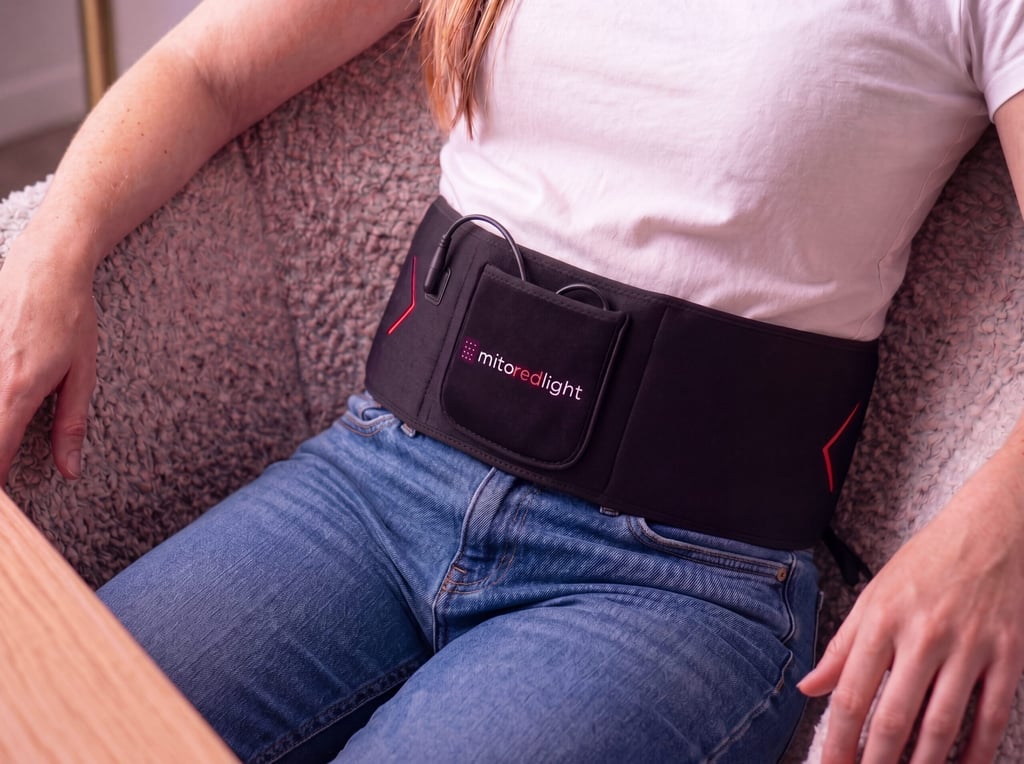
- Wavelengths: 630nm, 660nm (red) and 810nm, 850nm (near-infrared)
- Certifications: FDA-registration, IEC 60601
- Coverage: 22" x 5" belt-style design
- Price: $349
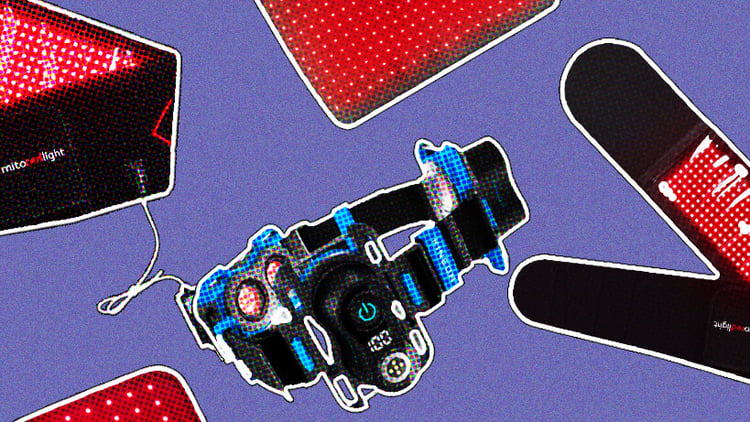
Usually, RLT devices run two wavelengths: MitoQUAD runs four. That’s not as many as the Megelin option, but these wavelengths seem more thoughtfully selected rather than simply adding more. The combination of 630nm, 660nm, 810nm, and 850nm means you may be getting a broader spread across both surfaces in a single session, which is probably the main reason it earned a spot here.
Megelin and Mito’s RLT belts are actually quite similar. Where MitoQUAD takes the edge is its TriChip technology, meaning each diode contains three independent LED chips that are designed to deliver light more efficiently to the area. The 18mW/cm² is international as well, since the belt sits directly on your skin.
The main drawback? At a $349 price tag, you get a plug-in device, meaning you won’t be able to walk freely with it during sessions. For those who find this inconvenient, you can purchase an additional external power bank, though that brings the total cost up to $429.
- 4 wavelengths
- Belt format is a natural fit for lower back sessions
- Adjustable intensity and wavelength combinations
- Lower irradiance than other products on the list
- Belt format limits the application possibilities
How we tested red light therapy devices
Our team combines product research with hands-on testing to evaluate each device.
During the initial product research phase, we compared device specifications such as wavelength output, power density (irradiance), whether the product includes both red and near-infrared light, and coverage area. We also selected products that offer a balanced combination of usability and performance for at-home use.
For this article, we also considered safety indicators, such as whether a device has FDA clearance or CE marking, as well as built-in features like timers and adjustable intensity settings.
During the testing phase, we wanted to see how these red light therapy devices perform in real-life use. We assessed ease of use, session practicality, comfort, and reported effectiveness, keeping in mind that results may vary by individual.
For products like red light therapy devices, we also spend a significant amount of time reviewing academic literature and comparing device specs with what the brand communicates.
How red light therapy may help relieve pain
Red light therapy uses specific wavelengths that may help with pain. While research is still evolving, several mechanisms have been proposed by academics. Keep in mind that there is no clear-cut answer on how RLT works, and the proposed mechanisms remain theoretical.
May reduce inflammation
According to research, red and near-infrared light therapy may influence mitochondrial function and reduce pro-inflammatory cytokines. Too many cytokines may lead to excessive inflammation, making red light therapy a potentially beneficial intervention for managing it.
May improve circulation
Emerging research suggests that red and near-infrared light therapy may improve local microcirculation and blood vessel function through nitric oxide-related mechanisms. This may lead to vasodilation (widening of blood vessels), increasing blood flow, and potentially improving oxygen delivery in the treated area.
May support recovery
Exercise causes oxidative stress—and while it is not dangerous, you need time to recover from it and may experience muscle soreness after a workout. Early research suggests that red and near-infrared light therapy may reduce oxidative stress, thereby aiding recovery.
Why near-infrared light matters
Near-infrared light may penetrate deeper into your tissues, reaching muscles and joints that visible red light cannot. Besides that, most studies on photomodulation have used combined wavelengths, red and near-infrared, so using only red light might not be as effective.
What types of pain may red light therapy help with?
Research on photobiomodulation, the clinical term for red and near-infrared light therapy, spans a wide range of pain conditions. Evidence quality varies, and most researchers note that more high-quality trials are needed, but here are some areas that have been reported in the peer-reviewed literature.
Arthritis and joint pain
As suggested by an umbrella review of meta-analyses, photomodulation may reduce pain intensity in knee osteoarthritis, and the certainty of evidence was rated from low to moderate. Keep in mind that the researchers were careful to flag it as a complement to treatment, not a replacement.
Muscle soreness and exercise-related pain
If you've seen commercial fitness centers adding red light therapy panels to their facilities, it's no coincidence—this adoption is backed by emerging studies. Red and near-infrared light therapy may support muscular recovery after workouts in healthy people and reduce pain in injured athletes.
Chronic pain conditions
RLT has been studied for several chronic pain conditions, including fibromyalgia and non-specific neck and knee pain. Again, most studies suggest that it may be used as an adjunct tool, not the sole treatment. For example, many fibromyalgia studies evaluated red light therapy alongside exercise programs rather than as a standalone intervention, with several reporting greater improvements in pain and physical function than exercise alone—although exercise was still considered to be the most significant contributor in pain management.
How to choose the best red light therapy device for pain relief
Before we go into the details, keep in mind that RLT is an emerging field, so many questions remain unanswered. This is why tips on choosing the right product may sound vague and unhelpful—but science doesn’t yet have an answer to what works best.
Panel vs. wearable vs. handheld devices
Panels cover more surface area but require you to stand or sit in front of them for the full session. Wearables wrap directly onto the target area, making them easier to use regularly but limiting you to one spot at a time. Handhelds give you control over positioning but require you to hold them the entire session. For pain relief specifically, wearables tend to win out in terms of convenience, especially if you want to target one specific area.
Red light vs. near-infrared wavelengths
Red light may be more suitable for more superficial issues, while near-infrared is believed to penetrate deeper. Most quality devices include both. The exact wavelengths are also something you shouldn’t worry too much about because we still don’t have a consensus on what works best.
Session area and coverage
Be realistic about what you're targeting. A small joint, like a knee or elbow, doesn't need a full pad. However, if you are looking to add red light therapy sessions into your routine for other reasons, a larger device may be more suitable—although, of course, they will also cost more.
Safety certifications
FDA clearance is a good indicator to look for when shopping for RLT devices. It suggests the product has gone through some level of regulatory review. CE and RoHS certifications are an added plus. Keep in mind that none of these guarantees any specific results.
How to use red light therapy for pain relief
As RLT is just emerging, there are no official guidelines on how to use it for the best results. Consequently, much of the available online guidance may lack a scientific foundation, as researchers have yet to resolve many of the questions needed to establish comprehensive protocols.
Session length and frequency
Most devices recommend 10–20 minutes per area. More is not better—stick to the guidelines. Too much may lead to side effects such as irritation.
Positioning tips
For wearables, direct skin contact matters. For panels, distance affects intensity; check your device's recommended range.
When to expect results
Realistically, at least three to four weeks of consistent use before anything noticeable.
Common mistakes to avoid
Do not use RLT as a standalone treatment for any of your conditions. It is not intended to cure or treat any of the conditions, and is used as an add-on to your current treatment plan.
What red light therapy cannot fix
Red light therapy is not intended to be used as a treatment for any medical conditions. In other words, you should follow your regular plan even if you add RLT to your routine—it is considered an adjunct therapy.
Current evidence doesn't support it as a solution for nerve-related issues, and using it alone may delay care that actually matters. For any condition you may be experiencing, the right call is always to a medical professional first; then, you may consider RLT if your provider thinks it is a suitable choice for you.
RLT shows promise in potentially supporting recovery alongside a proper treatment plan: reducing inflammation, easing mild pain, or improving circulation in targeted areas. Think of it as something that may help you feel better but not something that heals the underlying cause.
Other red light therapy reviews:
Best red light therapy mats: Ideal for users seeking full-body coverage
Best red light therapy panels: Learn about highly adaptable red light therapy devices
Best red light therapy for hair loss: Find out how red light therapy may help hair growth and how to choose the best product
Final verdict: Which device should you choose?
The right red light therapy device comes down to what you're actually trying to cover and how realistically you'll use it every day.
If you're dealing with a specific joint or smaller problem area, NovaaLab Light Pad or Kineon MOVE+ Pro are strong options. For broader areas like the lower back or larger muscle groups, Megelin ContourLux Light Therapy Belt, NovaaLab Light Pad XL or MitoQUAD Belt make more sense.
No device on this list is a standalone fix, and it is always best to consult your healthcare provider before incorporating RLT into your routine.
Red light therapy mask: FAQs
Based on our research and hands-on testing, Novaa Light Pad XL offers a solid red light therapy device for pain management. It is easy to incorporate into one’s routine, has amazing coverage, and targets wide areas of the body you may need pain support the most.
Not necessarily. In most studies, both red and near-infrared light were used together. So if you are thinking about using light therapy for pain, it is recommended to use both wavelengths of light.
It may. Research on knee osteoarthritis suggests that red (usually combined with near-infrared) light may reduce pain intensity. Remember that light therapy is intended as a supplementary tool for pain and should always be used alongside, rather than as a replacement for, your existing medical treatments.
You may notice subtle changes within three to four weeks of consistent use, with more improvements building over six to eight weeks. Results vary depending on the condition, the device, and how regularly you use it.
For specific guidance on frequency, follow your device's manufacturer's instructions: recommendations can vary. Generally speaking, many manufacturers do suggest regular, consistent use for best results.
Yes, in our opinion, they are great additions to the pain management toolkit. Evidence suggests RLT may support pain relief and recovery when used consistently, although it's not a dramatic or fast-acting fix.
References
- Systematic Reviews. Effects of photobiomodulation on multiple health outcomes: an umbrella review of randomized clinical trials.
- Nitric Oxide. Photobiomodulation and nitric oxide signaling.
- Lasers in Medical Science. Low-level laser therapy (LLLT) in human progressive-intensity running: effects on exercise performance, skeletal muscle status, and oxidative stress.
- International Wound Journal. Effects of Near Infrared Light on Surgical Wound Healing: A Systematic Review and Meta‐Analysis.
- Lasers in Medical Science. Photobiomodulation therapy for the improvement of muscular performance and reduction of muscular fatigue associated with exercise in healthy people: a systematic review and meta-analysis.
- Journal of Strength and Conditioning Research. Effects of Photobiomodulation on Pain and Return to Play of Injured Athletes: A Systematic Review and Meta-analysis.