We compare Hoolest and Pulsetto vagus nerve stimulation devices to help you choose the right fit
Both Hoolest and Pulsetto are designed with the intent to assist in reducing stress, lowering anxiety, and improving sleep by stimulating the vagus nerve and potentially supporting the nervous system.
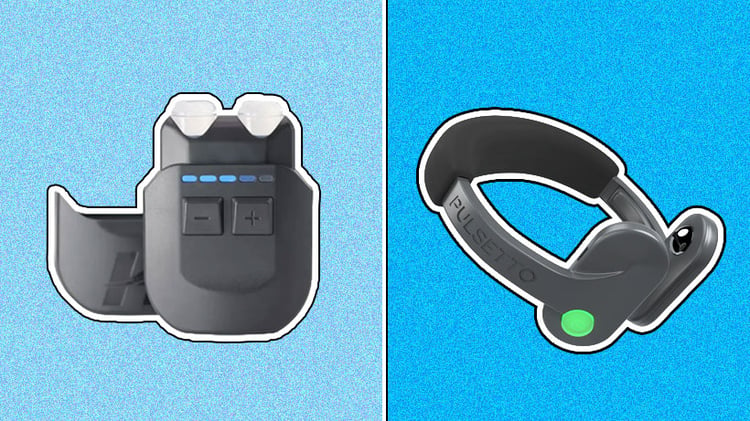
The main difference between them lies in their approach to vagus nerve stimulation (VNS). Pulsetto, featuring a neckband design, offers a more guided, wellness-focused experience, ideal for those looking to sit back and relax.
Meanwhile, Hoolest, a handheld device, focuses on a simpler and more direct simulation experience, favorable to those who look for simplicity in their devices.
While the tech may sound promising, it’s important to note that VNS is not an overnight cure for stress, burnout, or anxiety. It may help to support your nervous system, but it’s not a standalone solution for your overall wellness.
Read on for the Wareable team’s experience with these devices, covering everything from design and comfort to price and overall value.
| Spec | Pulsetto Lite | Hoolest VeRelief Prime |
| Rating | 4.5/5 | 4/5 |
| Price | $278 | $159.20 |
| Design type | Hands-free neckband | Handheld wand |
| Stimulation type | Bilateral (both sides of the neck) | Unilateral (one side of the neck at a time) |
| Power output | 12–46 volts | 10 volts |
| Session length | 4–10 minutes | 5 minutes per side |
| App integration | App | No app |
| Official website | Visit Pulsetto | Visit Hoolest |
Pricing, subscriptions, and long-term value
Pulsetto is the more premium option of the two, priced at $278. While you can use the app it's paired with for free, you also have the option to upgrade to the Premium Membership, which costs an additional $139 per year.
This unlocks several benefits, including three extra stimulations, 11 unique meditations, 54 breathing exercises, and 1,200 positive affirmations. The premium tier also provides advanced tracking tools like CNS tap testing, CNS insights, and wearable device connections.
In terms of buyer protection, Pulsetto includes a 30-day money-back guarantee and a two-year warranty.
When purchasing the Hoolest VeRelief Prime, you can choose between two bundles. The VeRelief Prime plus Stress Protection Plan costs $159 upfront, alongside an $11 monthly subscription. This plan delivers two pairs of fresh gel tips each month and includes a lifetime warranty on your device. You can cancel the subscription anytime, at which point your device reverts to a standard one-year warranty calculated from your original delivery date.
Alternatively, the Lasting Relief Bundle costs $329 upfront without a subscription. It comes with a 12-month supply of gel tips, a 60-day money-back guarantee, and a one-year warranty.
All things considered, Pulsetto's premium price seems worth it for us because you can operate it hands-free and stimulate both sides of your neck at once. Plus, their sales model feels a bit more straightforward than Hoolest's.
However, if you’re looking for a direct, handheld device to target exactly where you feel your stress is stored, Hoolest is still a solid alternative.
Winner: Pulsetto
Design, comfort, and daily usability
Pulsetto and Hoolest take different approaches to design and usability. Ultimately, that’s a good thing, as it allows them to appeal to their own separate crowds.
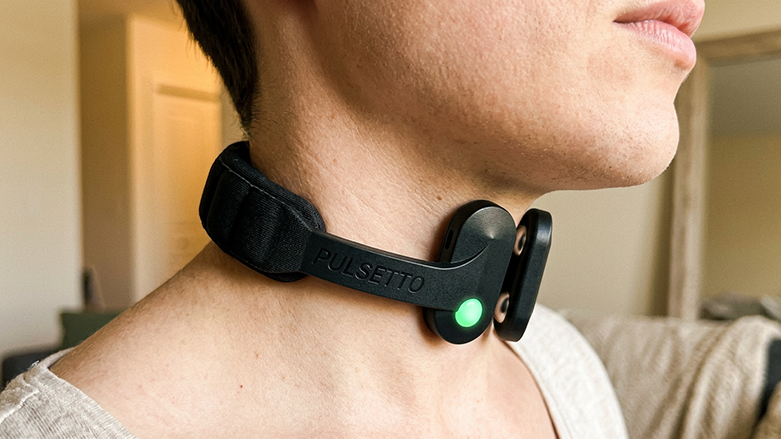
Pulsetto comes in the form of a neckband, offering a hands-free experience you really can’t beat for convenience. With this device, you can simply choose a setting in the app, sit back, and relax—no active effort is needed.
Even though it requires an app to use, it works seamlessly. We were truly impressed by how fast it pairs with any phone. With other Bluetooth wearables, you usually have to wait or finesse the connection, but not with Pulsetto.
The neckband shape also allows the device to stimulate both sides of the vagus nerve at the same time. In contrast, with a handheld device, you typically only target one area at a time. Plus, the Pulsetto neckband is flexible, easily widening to comfortably hug any neck size. Additionally, it’s incredibly lightweight—so much so that you wouldn't even notice you were wearing it if not for the nerve-stimulating sensation.
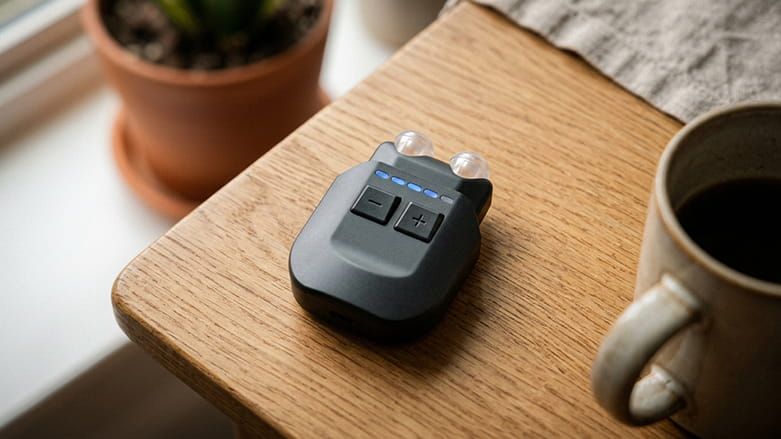
By comparison, Hoolest is a simpler, handheld device that doesn’t require an app and can be used on any part of the body where you might feel tense. It’s so simplistic it doesn’t even have a traditional power switch. It activates as soon as you take the lid off. Hoolest features five strength modes that you can adjust by pressing a plus or minus button.
Unlike Pulsetto, it uses gel tips to stimulate. While innovative, you have to replace them every month, which adds to an ongoing cost.
That said, Hoolest is much more compact than Pulsetto. Our team members confidently take it with them everywhere without worrying about damaging it. With Pulsetto, on the other hand, we worried that it might bend or break during transport. But this concern can be eliminated by buying a travel case separately for $37.
The biggest hurdle we faced when using Hoolest is getting the placement right. With Pulsetto, the device naturally sits right on the vagus nerve, whereas with Hoolest, we’re always doubting whether we’re holding it in the correct spot. Plus, you have to manually cover each side of your neck, which gets quite time-consuming.
After testing both of them, we see ourselves sticking with the Pulsetto device, as you simply can’t beat a hands-free experience. It’s just easier to live with and integrate into a routine that already has many things going on.
Winner: Pulsetto
Technology, stimulation style, and scientific credibility
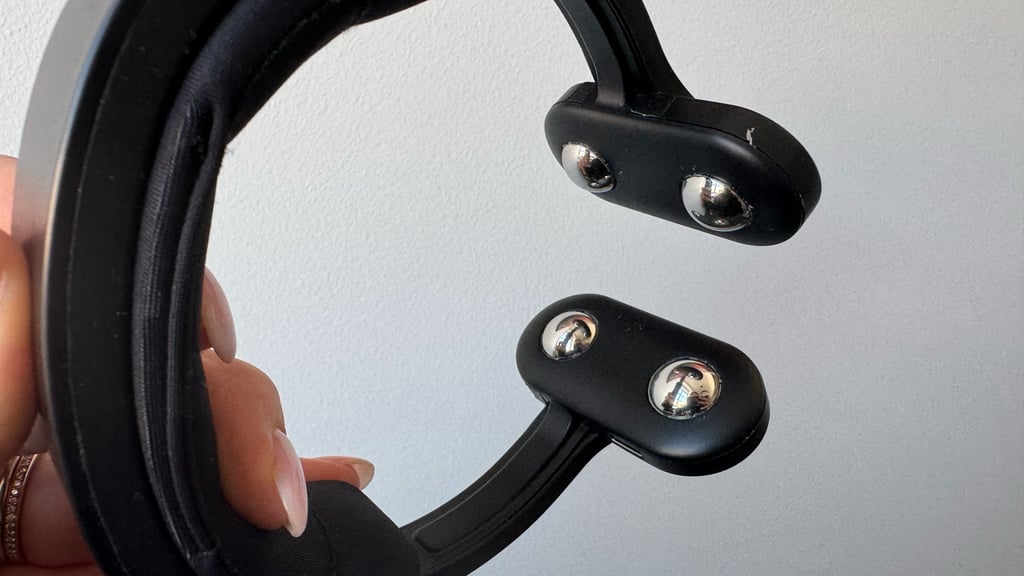
While both devices deliver electrical stimulation to the vagus nerve, they use different approaches to pass the current. Pulsetto features metal contact points that require you to apply a gel before wearing the neckband. Meanwhile, Hoolest uses proprietary, pre-moistened pads that eliminate the need for gel, though these tips must be replaced monthly.
They also differ in strength. Pulsetto is much more powerful, with an electrical output ranging from 12 to 46 volts. In contrast, Hoolest only goes up to 10 volts, providing a gentler buzzing sensation.
Another major difference is the software. Hoolest keeps things simple with just buttons and no app. On the other hand, Pulsetto uses an app to offer guided sessions, which is user-friendly and makes for a great onboarding experience. The app also shows useful insights like battery life, sleep scores, your latest HRV, and stress levels.
We usually dislike downloading new apps, but we actually enjoyed using Pulsetto's app for our daily sessions. While Hoolest's simple buttons get the job done, we liked having wellness metrics easily accessible in one place.
Despite these differences, their stimulation styles are quite similar. Instead of sending a continuous stream of electricity to the nerve, they pulsate to potentially avoid the nerve from adapting to the stimulation. Though their specific pulse patterns differ, the basic approach is the same.
Which feels more evidence-driven?
Pulsetto and Hoolest rely heavily on existing research on vagus nerve stimulation, but they also have real-world studies conducted using their own devices. For instance, Pulsetto was used in a 2025 peer-reviewed study with 37 participants that found it may help reduce stress levels and improve sleep quality.
Hoolest has been involved in several clinical studies and was designed more from an academic research perspective than from a consumer wellness one, like Pulsetto. In those clinical trials, Hoolest showed some potential to help people support anxiety and panic states.
However, it’s worth mentioning that the science behind these devices is still preliminary and needs further research to fully confirm their effects.
Ultimately, we lean more toward Pulsetto since it’s more powerful than Hoolest, doesn’t require buying replacement parts, and has a helpful app. In my eyes, all of this makes it a convenient wellness device if you’re looking to support your nervous system.
Winner: Pulsetto
What using Hoolest and Pulsetto actually feels like
Probably just like you now, we didn’t know what to expect before trying these devices. But there’s nothing to worry about. We found that both devices provide a subtle buzzing sensation, almost like fizzy water flowing through your veins (that’s the best comparison we can make).
Even for beginners, we didn’t find the experience too intense with either option. Just be careful not to jump straight to intensity level 9 with Pulsetto, as you need to build up to that. Overall, using each device felt relaxing.
That said, we found Pulsetto easier to use since it’s a hands-free device. We could sit back and relax without worrying about holding it in the right spot. Even at work, we could just pop it on anytime we felt a wave of stress coming on without having to think about it too much.
However, the Hoolest device is handheld, which is great for a more direct stimulation feel, but not so much for the hands. We noticed they would get a bit tired after a full 10-minute session of targeting both sides.
How long before you notice effects?
It took us a week of consistent use to notice subtle effects. After the first use, we hadn't noticed any difference, and we weren’t expecting it. With wellness devices, you usually have to maintain consistency over a longer period of time.
The first thing we noticed while using Hoolest and Pulsetto is that some of our team members reported sleeping better and finding it easier to fall asleep faster. Several also said they woke up feeling more refreshed, even on Mondays, which are notoriously bad days sleep-wise for a lot of people.
After a few weeks, some testers reported feeling less anxious when unexpected or urgent issues popped up at work or in their personal lives. The stress didn’t evaporate entirely, but they said they could manage it better and didn't dwell on it for as long. These observations were also reflected in their Pulsetto apps, which showed lower stress scores compared to when they first started.
Although these are the Wareable team’s personal experiences, it’s important to mention that the benefits that we were experiencing might not be the same for everyone, as every situation is different.
Winner: Pulsetto
Safety, side effects, and beginner-friendliness
While wearable vagus nerve stimulation (VNS) devices like Pulsetto and Hoolest are generally considered safe when used as directed, some users may experience side effects, such as tingling or skin sensitivity.
This can sometimes be resolved by choosing a lower power setting. Both Pulsetto and Hoolest allow you to customize the intensity of your session. However, Pulsetto offers nine levels to choose from, while Hoolest only has five. Because of this wider range, Pulsetto tends to feel gentler, making it a more suitable choice for beginners. Hoolest feels more direct and intense, so you might need to play with the settings to find a comfortable level.
Please keep in mind that these devices aren’t suitable for everyone. You should consult with your healthcare provider before using one, especially if you fall into vulnerable categories—like being pregnant, having a pacemaker, or dealing with heart or neurological conditions.
Winner: Pulsetto
Who should choose each device?
If you're still not sure which device is the right fit for you, this quick comparison should clear up any doubts and help you decide.
Choose Pulsetto if:
- You want a beginner-friendly VNS device
- You prefer guided sessions
- You care about app experience and consistency
- You care most about ease of use
Choose Hoolest if:
- You prefer a simpler setup
- You want less app involvement
- You like a more minimal experience
Verdict: Which is better overall?
Overall winner: Pulsetto
During our testing, we found Pulsetto to be the better fit for most users thanks to easier daily use, better onboarding and app experience, and overall more approachable wellness sessions. We believe it’s a more realistic option that you’ll find easier to stick with.
That said, Hoolest still makes sense for users who prefer simplicity and minimalism.
Ultimately, which device you choose to support your nervous system depends on your daily habits and preferences, so pick the one that you see fitting into your routine the easiest.
-
International Journal of Imaging Systems and Technology.
-
Pulsetto.
-
Hoolest.