Best light therapy glasses (2026): Wareable picks for sleep, mood, and eye comfort


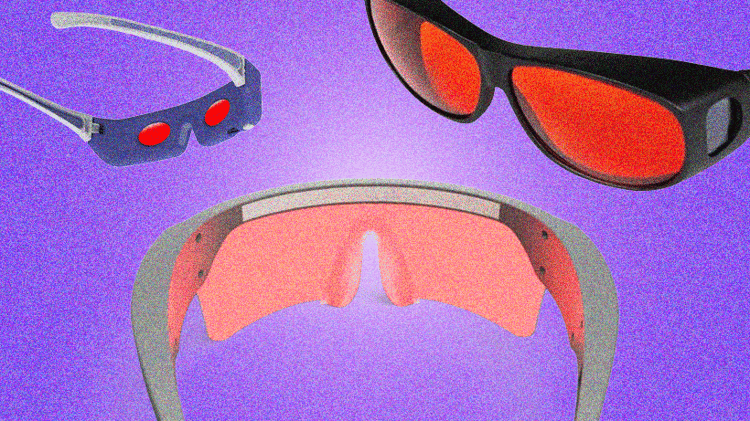
We’ve tested the best light therapy glasses—here are our top picks for consistent results and easy routine fit
Unlike light therapy panels, masks, and lamps, light therapy glasses are designed to slip right into your everyday routine. You can wear light therapy glasses while working, commuting, or going through your morning routine. We found that this level of convenience is exactly what makes light therapy glasses so attractive.
With consistent use, we saw that light therapy glasses may be useful for supporting sleep and circadian rhythms, supporting mood during darker months or low daylight exposure (SAD), and improving daytime energy levels. Some brands also add reduced eye strain to their roster, but this is a secondary benefit.
That said, you should keep your expectations realistic when using light therapy glasses. As we found out, these devices do not guarantee instant results, and their effectiveness hugely depends on consistent daily use over time.
In this guide to the best red light therapy glasses, we’ll share our top choices based on factors that really matter to you: your goal (sleep, energy, or mood), the type of light used, comfort while wearing, and overall ease of use.
How we tested light therapy glasses
Our light therapy glasses testing relied heavily on real-life scenarios and usability, rather than brand claims or lab tests. For this review, our criteria were:
- Effectiveness. We evaluated light intensity (known as lux), wavelength, and the impact each device had on our sleep, mood, and energy levels over time.
- Comfort and wearability. Comfortable fit, no pressure points, adjustability, and whether the glasses can be worn while moving were very important factors to us.
- Safety. We also checked each device against eye safety standards and light exposure types.
- Battery life and portability. How often we had to charge the device and how well it fit into our commuting packs were also things we noted.
- Usability. Our internal usability review included checking timers, automation, app support, and the overall ease of starting and maintaining routine therapy sessions.
- Value for money. Last, but not least, we compared features and performance consistency against price and competition.
We tested each device for over a month, wearing the glasses during morning routines, while commuting, or working at a desk. This way, we found light therapy glasses that were most practical to us and fit easiest into our existing routines.
Quick summary: Best light therapy glasses
- Luminette 3: Best light therapy glasses overall for consistent results and ease of use
- Re-Timer 3: Best for sleep improvement and circadian rhythm adjustment
- AYO+: Best light therapy glasses for SAD and boosted energy with a convenient app
- Pegasi 2: Best budget light therapy glasses
- Meinno: Best portable light therapy glasses with a compact design
Light therapy glasses compared
We’ve placed all the top light therapy glasses side by side so you can easily compare them.
| Device | Intensity (lux) | Battery life | Session time | Weight | Best for |
| Luminette 3 | 1,500 lux | 10 to 12 sessions | 20 to 60 minutes | 65g | Overall performance |
| Re-Timer 3 | ~500 lux | 4 to 6 sessions | 30 minutes | 75g | Sleep regulation |
| AYO+ | ~250 lux | 9 to 10 sessions | 20 minutes | 32g | SAD and energy levels |
| Pegasi 2 | ~500 lux | 3 to 5 sessions | 30 minutes | 48g | Price-to-value |
| Meinno | Unspecified | 5 to 7 sessions | 20 to 30 minutes | 65g | Ease of use |
Luminette 3
Best for: Overall performance and ease of use
- Price: Mid-tier ($199)
- Light spectrum: Blue-enriched white light
- Battery life: Up to 12 sessions
- Recommended session time: 20 to 60 minutes
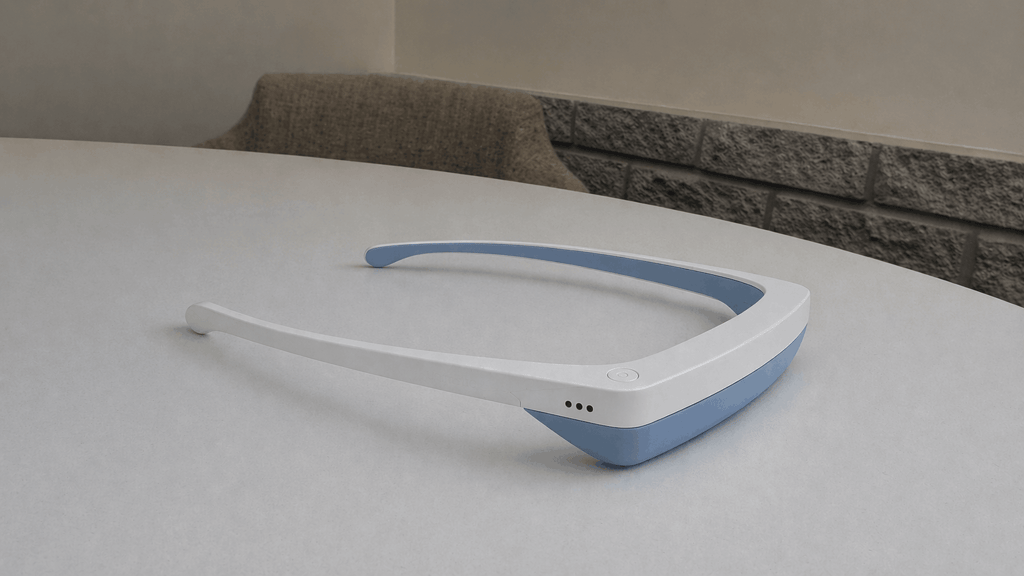
After testing and comparing the Luminette 3 light therapy glasses, we placed this device right at the top of our list for consistent results, comfortable wear, and a very reasonable price. In daily use, the Luminette 3 felt like a device built to last rather than just yet another wellness fad.
What appealed to us the most was that it uses high light intensity while still allowing you to go about your day during the sessions. The top-mounted light system sits just above the line of sight, so you can easily read, work, and move around while wearing the Luminette 3 glasses.
In real-world routines, its ease of use and comfortable wear put Luminette 3 right in that sweet spot where you can actually incorporate it into your daily life and get tangible results. After all, consistent use is what determines whether light therapy can work at all. We also thought that the adjustable intensity levels added a ice touch of customization.
That said, Luminette 3 is not perfect either. The device’s design is definitely on the functional side, making it look like a medical device rather than something you’d really want to wear in public. The brightness may also feel a bit intense to beginner users, especially during the first sessions at higher settings.
Despite its very few caveats, the Luminette 3 is one of the most balanced options available. Using it consistently helped us improve our perceived sleep quality and energy levels, so if you need a versatile light therapy glasses option, the Luminette 3 should also give you similar results.
- Strong, effective light output
- Comfortable for longer sessions
- Reliable battery life
- Bulky design
- Brightness may need getting used to
Re-Timer 3
Best for: Sleep regulation
- Price: Premium-tier ($220)
- Light spectrum: Green and blue light
- Battery life: Up to 6 sessions
- Recommended session time: Around 30 minutes
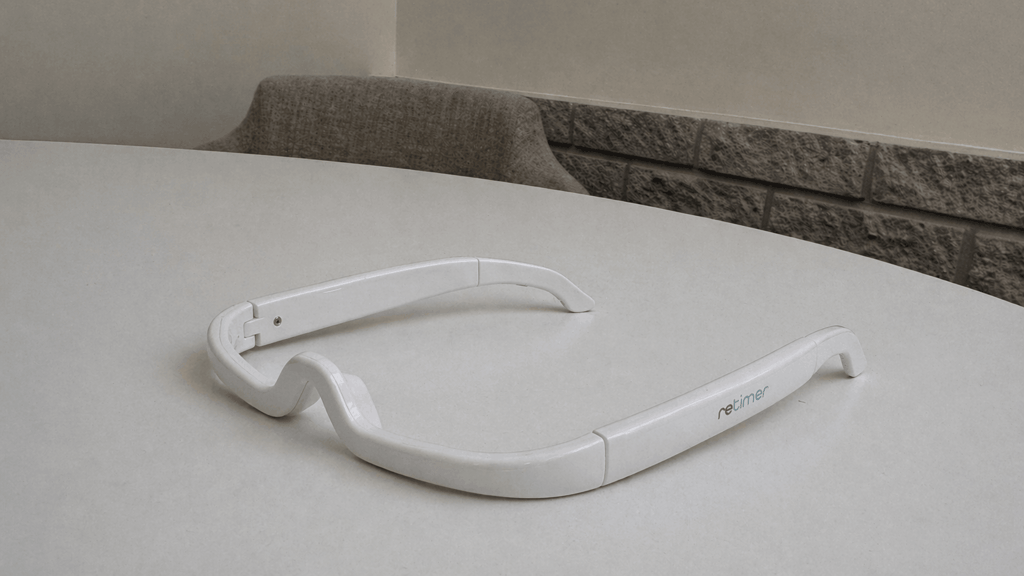
Re-Timer 3 takes a slightly different approach than other light therapy glasses on our list—instead of projecting light from above, its design delivers light from below the eyes. For you, this means a more natural light delivery, which may be better at improving circadian rhythm signaling. This alone makes Re-Timer 3 our top light therapy glasses choice for sleep regulation.
In practice, the light delivery method and the combination of blue and green light make Re-Timer 3 less versatile, but more targeted to sleep issues. When testing it, we saw some improvements for delayed sleep phase, jet lag, and other situations that negatively affect sleep, as Re-Timer 3 seemed to alleviate most of our sleep-related discomforts.
However, with a bulkier, futuristic design and a weight of about 75 grams, the Re-Timer 3 seemed among the least comfortable light therapy glasses for us, especially during longer sessions. Additionally, we found that wearing the glasses interfered with desk work at times, so they may be better suited for dedicated sessions.
Given Re-Timer 3's sharp focus on improving sleep and regulating circadian rhythms, and paired with its mid-tier price, we thought it would be best for users prioritizing sleep correction rather than a general energy boost. Overall, the Re-Timer 3 is definitely one of the more purpose-built light therapy glasses options on our list.
- Designed specifically for sleep improvement
- Unique light delivery system
- Effective for consistent routines
- Heavier than competitors
- Less suited for multitask use
AYO+
Best for: improved energy levels
- Price: Premium-tier ($299)
- Light spectrum: Blue light
- Battery life: Up to 7 sessions
- Recommended session time: Around 20 minutes
AYO+ offers app support to guide your sessions, and we really liked how well it fit into our routines. We thought the app-driven approach might appeal to users who want data and easy accountability, together with consistent results and usability.
Although we could easily use the AYO+ without downloading the dedicated app, we found that having it made the experience more thorough and well-rounded. For example, the app offers guided sessions and provides convenient time tracking, which can be very beneficial to first-time light therapy glasses users. And, if you’re an experienced user, you may still find the app helpful, as it can adjust your sessions based on your goal—boosting energy, adjusting sleep, or improving focus.
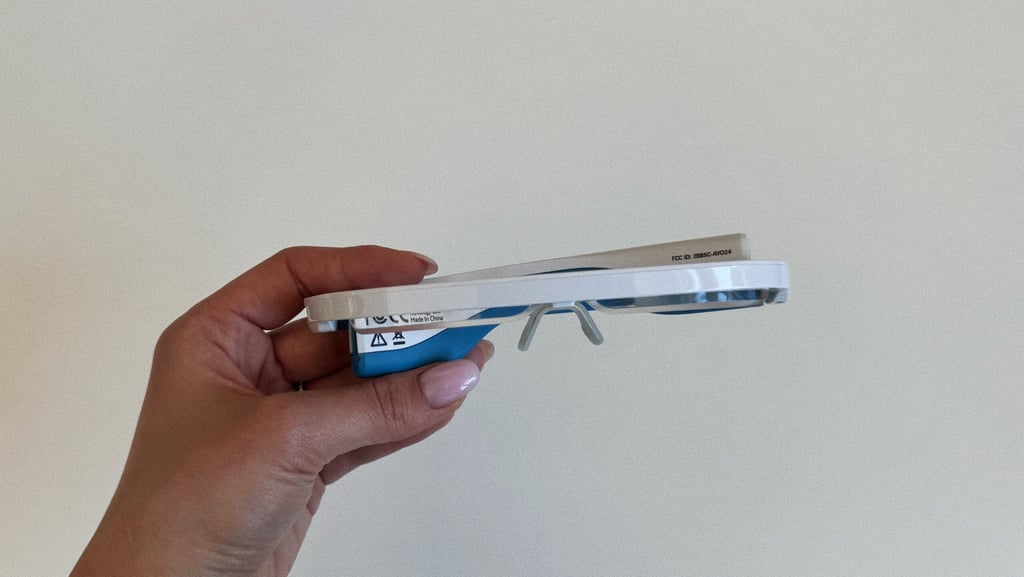
As for comfort, we liked the slim, lightweight AYO+ design, which meant the glasses did not bother us during longer sessions and allowed us to go about our day.
However, AYO+ is not without its shortcomings. For example, it offers the lowest light intensity levels of any device on our list, which means you will need to be extra careful about maintaining your routine if you want consistent results. Additionally, we thought some users might find the app dependency somewhat limiting, especially if they do not care about session tracking or structured programs.
Overall, AYO+ helped improve our energy levels and SAD symptoms, and it’s likely you’ll get similar results with these light therapy glasses, too. Additionally, this device will cater to users who appreciate an app-driven approach and want a pair of glasses that really won’t interfere with their usual routines.
- App-driven approach for session tracking
- Lightweight and comfortable to wear
- Targets energy levels and SAD
- Requires using a dedicated app for the full experience
- Higher price point
Pegasi 2
Best for: Price-to-value choice
- Price: Budget-tier ($139.99)
- Light spectrum: Blue-green light
- Battery life: Up to 5 sessions
- Recommended session time: Around 30 minutes
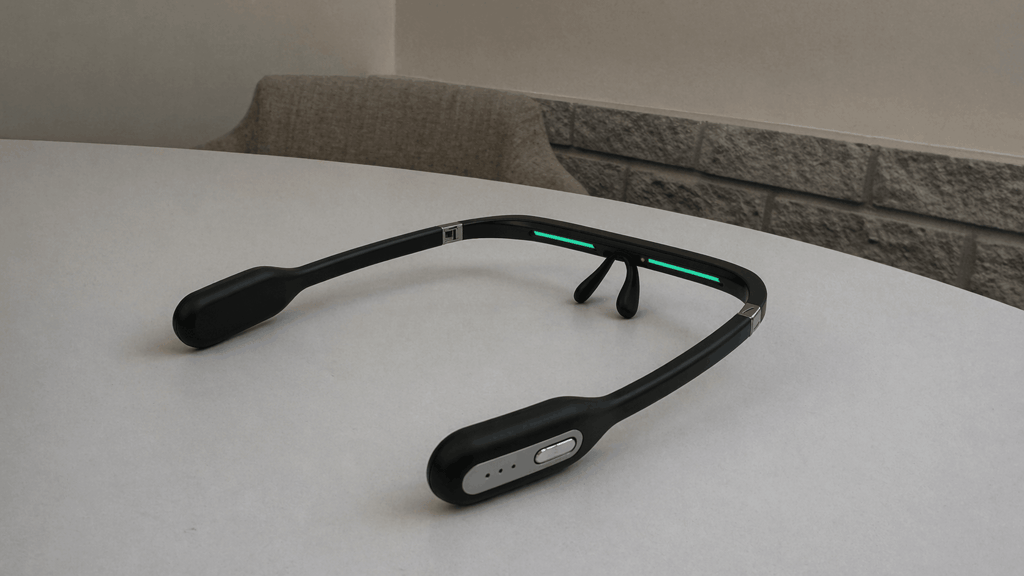
Pegasi 2 is our top price-to-value light therapy glasses choice, as it combines an attractive price with excellent functionality. The device’s deliberately simple design with no app, no advanced settings, and minimal setup cuts its price, but does not sacrifice effectiveness.
During our month-long test wear, we found that Pegasi’s simplicity works well when you’re just starting light therapy or want a device that integrates into your routine without much thought or preparation. The lightweight design also enhances the glasses’ usability, and we had no problems wearing them while working or going about our day.
But while Pegasi 2 is a truly excellent budget choice, it falls short in design refinement, especially compared to premium devices on our list. Additionally, the glasses are simply not as strong as higher-end models, and more experienced users may find the lack of customization a caveat. Plus, while the glasses lasted up to 5 sessions on a single charge for us, that is still shorter than some of our other choices, so you will have to plug them in a bit more often.
However, despite the shortcomings, after wearing Pegasi 2 for a month, we did notice an improvement in our energy levels and sleep quality. So, if you’re looking for a no-fuss, budget-tier device that will help you sort moderate sleep and energy issues, Pegasi 2 is highly likely your top choice.
- Combines good price and quality
- Easy to use with minimal setup
- Suitable for energy boost and sleep improvement
- No advanced settings
- Less polished design
Meinno
Best for: Ease of use
- Price: Budget-tier (from $59.99)
- Light spectrum: Low-intensity blue and blue-enriched white light
- Battery life: Up to 7 sessions
- Recommended session time: Around 20 minutes
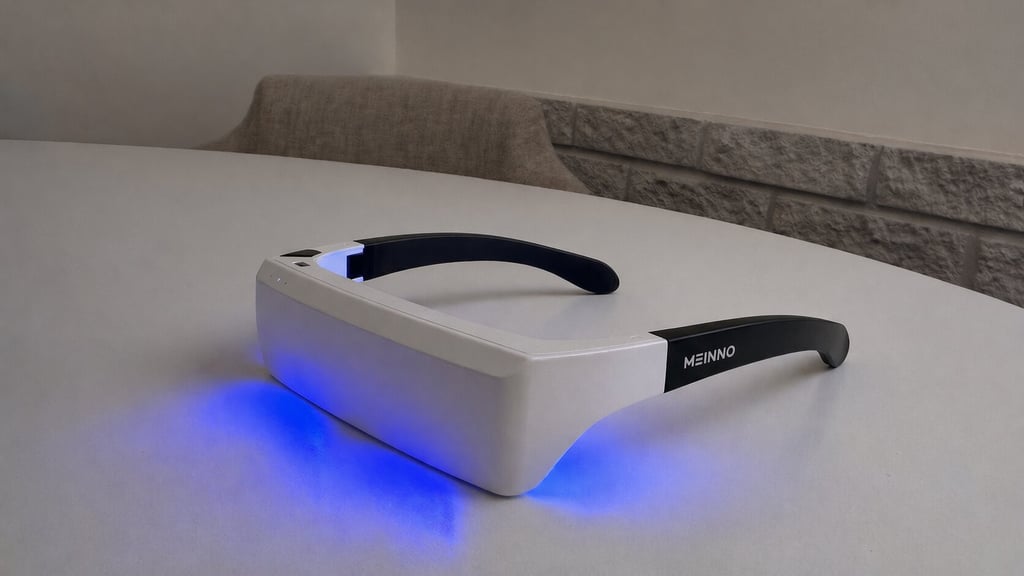
The Meinno light therapy glasses are probably the most practical option for users who are always on the go or travel often. We found that the minimal design is perfect for carrying the glasses with you at all times. This also makes the Meinno highly suitable for those who do not have a planned routine and do their sessions catch-as-catch-can.
After wearing Meinno for a month, we can firmly say it is one of the more comfortable pairs, despite weighing 65g. This meant there was no discomfort wearing them even during prolonged sessions. This might also be an important factor for users who find that bulkier glass designs put too much pressure on their faces.
Naturally, the Meinno glasses aren’t perfect, and what bothered us the most was the lack of clear light and wavelength specifications. This makes it harder to compare Meinno’s effectiveness out of the box, especially when pitted against mid- or premium-tier light therapy glasses.
Overall, our Meinno test period resulted in greater daytime alertness and some improvement in sleep quality, but we thought this device would best suit users who are ultimately looking for convenience. In that case, the Meinno light therapy glasses are excellent, and you are likely to find them easy to use, no matter where life takes you.
- Very lightweight and comfortable
- Highly travel-friendly
- May improve sleep quality
- Limited technical details
- Less known brand
When should you use light therapy glasses?
When testing light therapy glasses, we noticed one very important thing: to achieve the expected results, timing seemed to matter much more than session length. So, we dug deeper and found out that using them at the right moment in your day has a much greater impact than simply wearing them for longer. Here are our tips considering light therapy glasses session timing:
- Morning use is the most effective way to boost your energy levels and increase alertness. As blue and white light suppresses melatonin, wearing the glasses after waking may have the greatest impact on your energy levels and circadian rhythm.
- Evening use should be reserved for light devices only, as this light color supports a more gradual wind-down before sleep. If used in the morning, they might make you feel sleepy during the day. Most glasses on the market focus on daytime stimulation, rather than evening relaxation.
Travel and jet lag are also common light therapy glasses use cases, and if your aim is to support your usual routine, we advise using such devices right after you wake up. This way, the glasses might help you adjust to your new timeline more smoothly and with less discomfort.
One last thing to remember is to avoid using devices with bright blue or white light before your planned sleep time, as they might interfere with it.
Who are light therapy glasses for?
Light therapy glasses are well-suited for anyone whose daily routine does not align well with natural daylight exposure. While light therapy glasses are not essential to everyone, they can provide a noticeable difference in sleep quality and energy levels with consistent use.
So, light therapy glasses are most often used by:
- People who have irregular sleep schedules and can benefit from additional light exposure to stabilize their circadian rhythm over time. This includes anyone who struggles to fall asleep or wake up at consistent hours.
- Shift workers, especially those who work early mornings, late nights, or on a rotating schedule. They may find themselves in a situation where getting natural daylight becomes unreliable. In this case, wearable light therapy glasses can be especially helpful.
- Frequent travelers who may also benefit from light therapy glasses, as they can help adjust their sleep schedule and manage jet lag more effectively.
- People affected by low daylight, especially during long winter months, who may find light therapy glasses effective for improving energy levels and mood stabilization.
- Desk workers and heavy screen users, especially those who spend most of their day indoors, may also benefit from light therapy glasses, which can improve daytime alertness.
Light therapy glasses vs. lamps vs. masks
Light therapy glasses are simply a type of light therapy device that delivers a specific light exposure. However, besides different designs, glasses, lamps, and masks usually serve different purposes, too.
Glasses are designed for convenience and easy incorporation into daily routines. Since they’re wearable and hands-free, we found them easy to use while working or moving around. Additionally, light therapy glasses are usually intended to improve energy levels and sleep regulation.
Meanwhile, the design of light therapy lamps allows them to provide a stronger overall light output. Such devices are used both in clinics and at home. However, from our experience, they provide much less convenience, as they require staying in one position during therapy sessions. Nonetheless, while they’re less flexible in daily use, they can be used to treat various conditions, including skin problems, deeper tissue issues, and even to improve circadian rhythms.
Light therapy masks serve a different purpose and are typically used for skincare rather than for mood improvement or sleep pattern regulation. That said, they are also usually highly portable and offer hands-free use.
So, to sum it up, if your goal is to improve mood, sleep, and daytime energy, then light therapy glasses are likely the optimal choice thanks to their specialization and ease of use. Lamps may be more suitable for higher-intensity sessions, and masks are not really relevant for targeting sleep-based issues.
Red light vs blue light: What’s the difference?
Red and blue light serve entirely different purposes. Here’s a quick guide to help you understand the differences.
Blue or blue-enriched white light is intended for use during the morning routine. We found that this light color suppresses melatonin production, signaling to your body it is time to wake up. Consistent use of blue light improved our daytime alertness, energy levels, and sleep quality. However, it is really important to remember that blue light should be used only in the mornings, as evening use might delay falling asleep.
Red light, on the other hand, is usually meant for evening use. This light color has minimal impact on melatonin levels, and we found it to be much less disruptive to sleep. Overall, red light is much better suited to nighttime relaxation than to daytime energy boosts. Additionally, red light is more often used to treat skin problems than to target sleep issues.
How to choose light therapy glasses
Choosing the right light therapy glasses is not very complicated and mostly boils down to how well the specific device fits into your routine, rather than its specifications. From our own experience, the thing that makes any device most effective is how well we stick to a routine while using it. However, if you need help choosing light therapy glasses, we have some pointers for you:
- Set your goal. If you want to improve sleep timing or boost daytime energy, blue or blue-enriched white light glasses are the best choice. If you want your device to help you with evening relaxation, then you will need glasses that support red light. However, the latter are much less common.
- Consider comfort and wearability. Light therapy sessions typically last around 30 minutes, so factors such as glasses’ weight, fit, and pressure points are much more important than you might have thought.
- Note the ease of use. Some light therapy glasses rely on apps and guided programs, while others are essentially a push-button experience. Both are reliable choices, but we recommend basing your choice on whether you prefer structure or simplicity.
- Check portability and battery life. If you plan to use your glasses while traveling or commuting, portability and battery life should be major factors in choosing the right device.
Ultimately, any light therapy glasses you choose should always reflect their price in usability, consistent results, and build quality, rather than an extensive list of promises.
Other red light therapy reviews:
Best under-eye red light therapy devices: Top devices compared
Best red light therapy for acne: Top devices for clearer skin
Best red light therapy devices: Tested picks for skin, pain and recovery
Best red light therapy wands: Tested picks for targeted skin treatments
References
-
Harvard Medical School.
-
Sleep Foundation
-
Mayo Clinic
-
Journal of Clinical Sleep Medicine
-
Chronobiology International