- Strong battery performance for a Wear OS smartwatch
- Premium design materials for more affordable price
- Complete Wear OS 6 suite with Google Gemini
- HyperOS skin lacks the polish of rivals
- High-end medical-grade features are absent
- Not officially available to purchase in the US
Ever since Google rebooted its wearable platform with Wear OS 3 back in 2021, the ecosystem has struggled to deliver a consistent crop of entry-level devices. While the mid-level and premium tiers have been packed with choices from Google, Samsung, and others, the budget landscape of Android smartwatches has largely been filled with last-generation hardware.
Aspiring Wear OS users looking to spend less have had to settle for outdated tech. Xiaomi has been the only brand really willing to dip into the more affordable range—but even then, devices like the last-gen Xiaomi Watch 2 (2024) have historically struggled to keep pace with Google's annual software updates.
Now, with a jump in generation—and a confusing leap in the naming convention—the Xiaomi Watch 5 arrives to refresh the platform's budget-friendly offerings. Boasting the relatively modern Wear OS 6 and the brand’s latest HyperOS overlay, it pitches itself as a feature-packed smartwatch.
Yet, in a market where Google and Samsung command more advanced software and control, does this watch finally establish itself as the go-to budget hero for Android users, or is it a compromised return for Xiaomi? Below is our full review after real-world testing.
Value and competition
Though it's not quite as cheap as its predecessor, the Watch 5's value is still the primary hook—particularly for Android users wary of the steep prices commanded by the latest flagship models. By positioning itself comfortably below the standard entry-level cost of its main competitors, Xiaomi has created a compelling middle ground. At least on paper, that is.
When you weigh it against the options from Google and Samsung, the choice comes down to your priorities. Opting for the Watch 5 saves you a significant chunk of change, and you still get access to all the essential modern smartwatch features: Google Gemini, offline Google Maps, and contactless payments via Google Wallet.
However, you're trading off the far more advanced software available on Google's Pixel Watch or Samsung's Galaxy Watch line, which offers the likes of integrated SOS safety features, Ultra-wideband (UWB) support, advanced health sensors, and the option of a cellular model.
There is also a major geographic caveat to consider. For buyers in the United States, the Watch 5 is not officially available. While it can be imported via third-party retailers, this instantly complicates the buying experience, as you'll have to contend with potential shipping delays and the lack of a localized manufacturer warranty. For those in Europe and other global markets, however, it's much more readily available.
Design and display
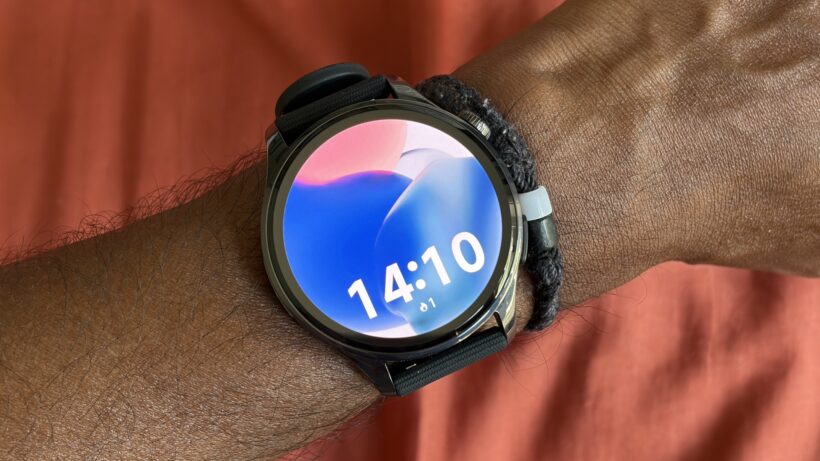
A consistent pattern with Xiaomi’s smartwatches has been that, despite their solid build, they haven't elicited much excitement. Unfortunately, this trend persists with the Watch 5.
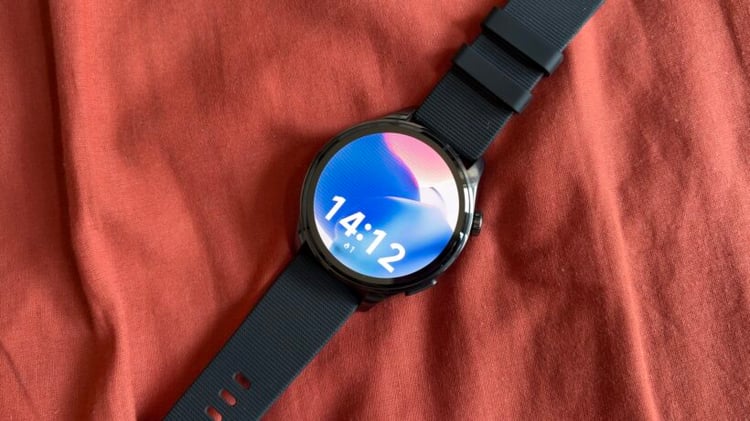
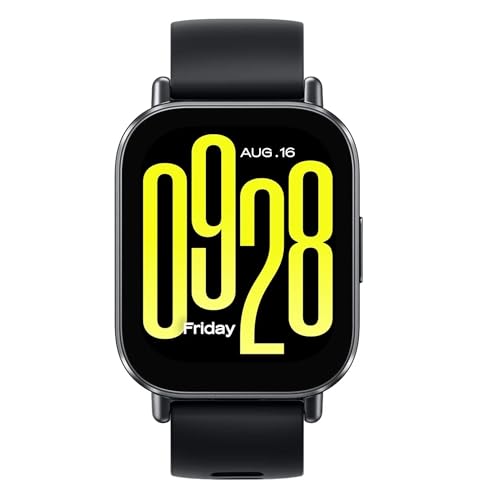
The watch is available in two color options: all-black or juniper green straps, both paired with a 47mm 316L stainless steel case. The black model features a darker steel finish and a fluorubber strap that’s comfortable to wear, though somewhat plain.
We would have preferred a more inventive design, but it largely follows a common, proven smartwatch style adopted by many others.
Premium materials for less
Another intriguing element is the choice to use sapphire glass on both the front and back of the watch case. While it's typical to see sapphire glass on the screens of higher-end smartwatches, it’s uncommon to find this more scratch-resistant material on the back of the watch, as well.
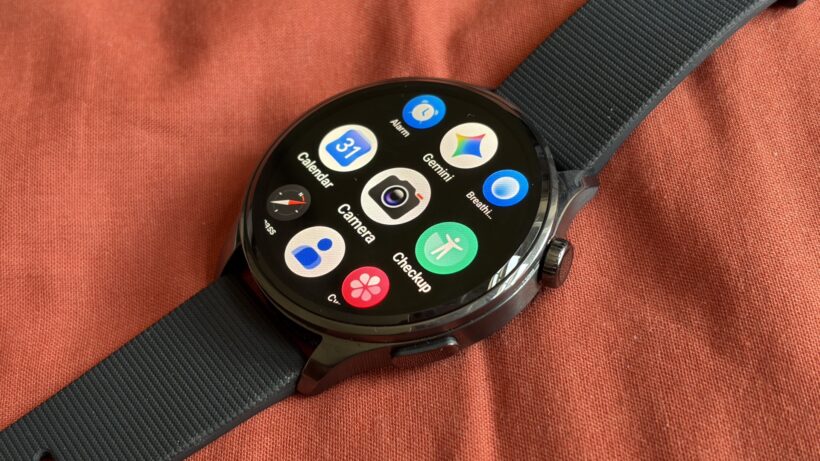
The display is a 1.54-inch AMOLED with 480 x 480 resolution and a peak brightness of 1,500 nits. For reference, the 45mm Google Pixel Watch 4 has a 1.4-inch AMOLED screen with 454 x 454 resolution and can reach 3,000 nits—and Samsung’s Galaxy Watch 8 boasts both a higher resolution and a brighter display.
Basically, spending slightly less money gives you a decent but not top-tier display. It never seemed like a screen that’s significantly worse in brightness or sharpness in our testing, though.
The physical buttons and their placement signal a change from the last-gen Xiaomi Watch 2 (2024) and Watch 2 Pro (2023). There’s now a digital crown that adds a traditional watch element to the control setup, a welcome addition that makes interacting with the watch software much nicer.
Like other Xiaomi smartwatches, the Watch 5 also has a 5 ATM water-resistant rating, which means it can be submerged in water up to 50 meters. It’s designed to be a watch you can swim with, whether that’s in the pool or the sea—but you'll have to spend considerably more on a watch that can reach much greater depths.
Smartwatch features
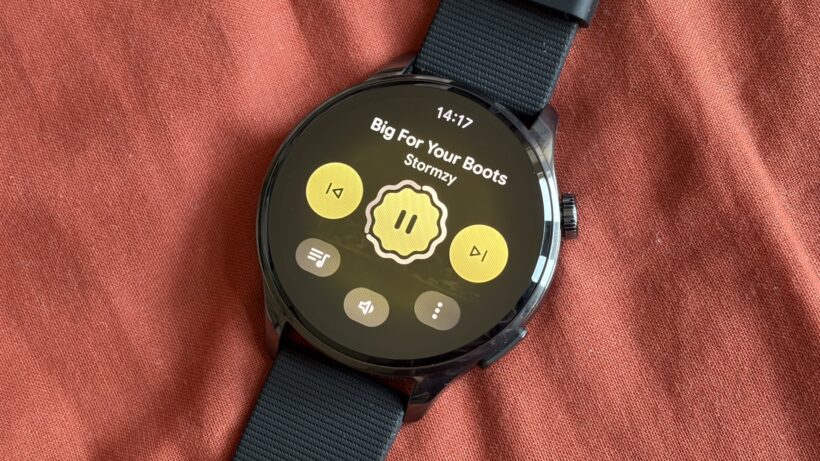
The Watch 5 runs on Wear OS 6, so not the just-announced Wear OS 7, which has only rolled out to Google’s Pixel Watch so far. The Xiaomi Watch 2 shipped with Wear OS 3.5 and was later updated to Wear OS 4, but this latest version still offers a far more up-to-date Wear OS experience.
Xiaomi maintains smooth operation by combining a Qualcomm Snapdragon W5 Gen 1 chip with a BES2800 low-power processor. This configuration is similar to that of the OnePlus Watch 2 and OnePlus Watch 3, contributing to significantly better battery life.
The UI on the Watch 6 differs from that of other Wear OS smartwatches. Xiaomi overlays its HyperOS skin on Wear OS here, making it feel like a 'proper' Xiaomi device. Whether this is the best skin for Wear is debatable; we believe Google’s Pixel Watch has the cleanest and sleekest interface. Though navigation is smooth on the Watch 5, it doesn't offer the same premium, sophisticated feel as Google, Samsung, or even OnePlus’ implementations.
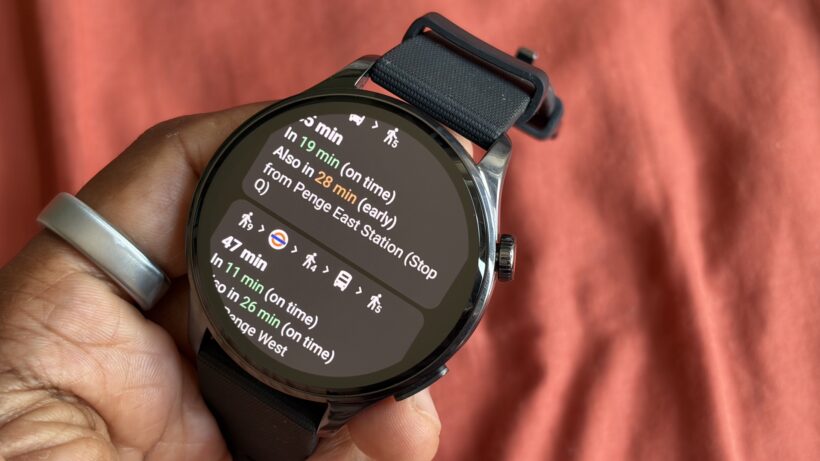
Features such as viewing notifications, swiping through widgets, and navigating the main menu are simple and intuitive. The interface also, as is this big draw here, combines Xiaomi’s native apps with Google’s offerings.
The Google gamechanger
As we've said many times with this latest crop of Wear OS devices, Gemini is a significantly enhanced smart assistant compared to Google’s standard Assistant—and the access to the Play Store provides a wide selection of third-party apps that expand the smartwatch’s capabilities. Either one of those is reason enough to pick the Watch 5 over the brand's cheaper Watch S5, which runs on its proprietary OS.
Xiaomi’s brand identity is prominent through features like custom watch faces and gesture controls, designed for situations when touching the screen or buttons is inconvenient. It offers a wide range of gesture commands, such as snapping, pinching, rubbing fingers, shaking, or flipping your wrist, enabling functions like silencing alarms or managing calls. Xiaomi’s focus on gesture control is extensive and well-integrated into everyday use.
Health and sleep tracking
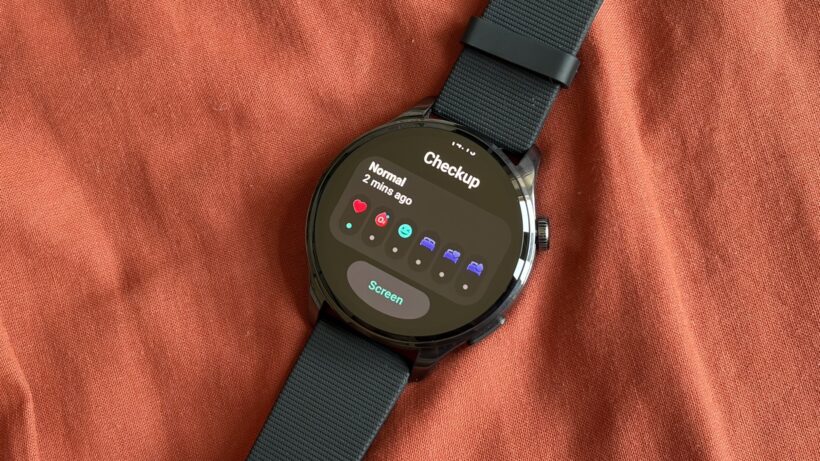
Xiaomi is in charge of the features that track vitals like heart rate and help you take some time for guided breathing to keep calm. So, unlike fellow Wear OS watches, you won’t find an ECG sensor or the ability to monitor blood pressure.
Alternatively, you can continuously monitor heart rate, stress, and SpO2 levels, including women’s health features. The onboard optical sensor also measures multiple metrics, allowing quick checks of heart rate, sleep, and stress without needing to examine each one separately.
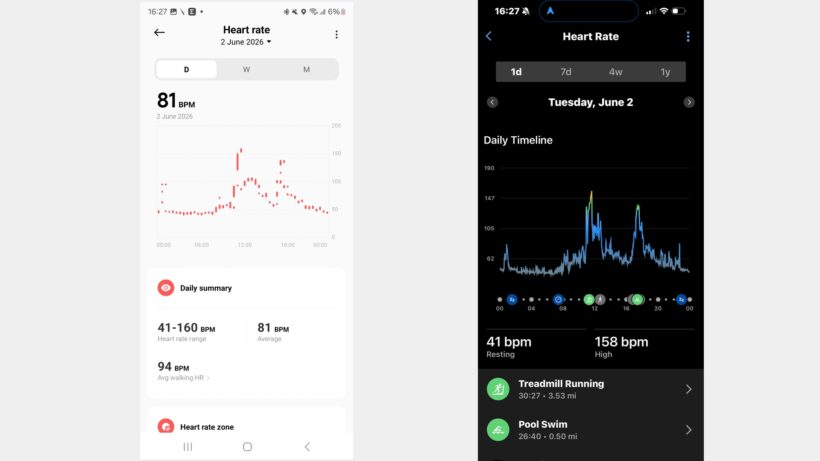
As usual, we focused on the device's passive heart rate tracking to initially gauge the accuracy of its optical sensor for monitoring other biometric data. And it generally performed well—it didn't throw up any unusually high readings, and the daily heart rate ranges also compared well to Garmin.
For sleep tracking, you have a dedicated app on the watch to review the most recent night’s sleep and core sleep stats from the past 7 days. In the Mi Fitness app, you’ll see an assessment of your sleep quality, a breakdown of sleep stages, and be assigned a sleep animal.
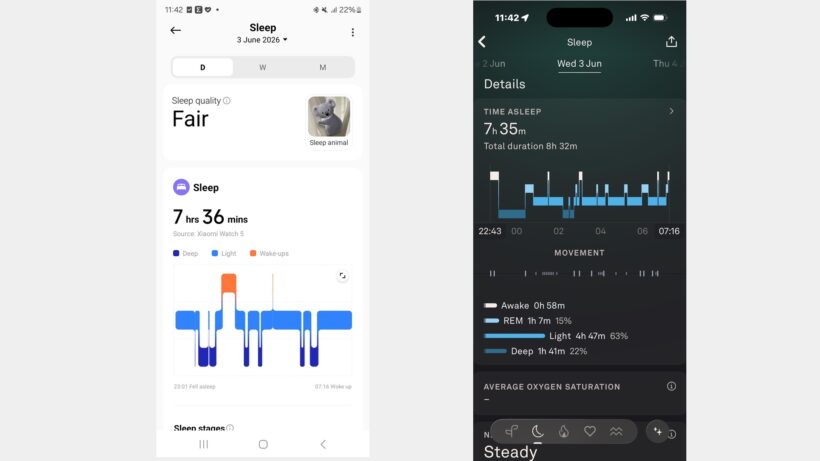
You’ll also discover sleep analysis and tips to improve your bedtime decisions. We’ve used the Watch 5 together with an Oura Ring 5, and, for metrics like total sleep, deep sleep duration, and average sleep heart rate, the data generally showed consistent results across most nights.
Xiaomi’s sleep interpretation and suggestions still come across as clunky, however—an issue we've highlighted about the Mi Fitness app plenty in the last couple of years. Certain parts simply require better organization.
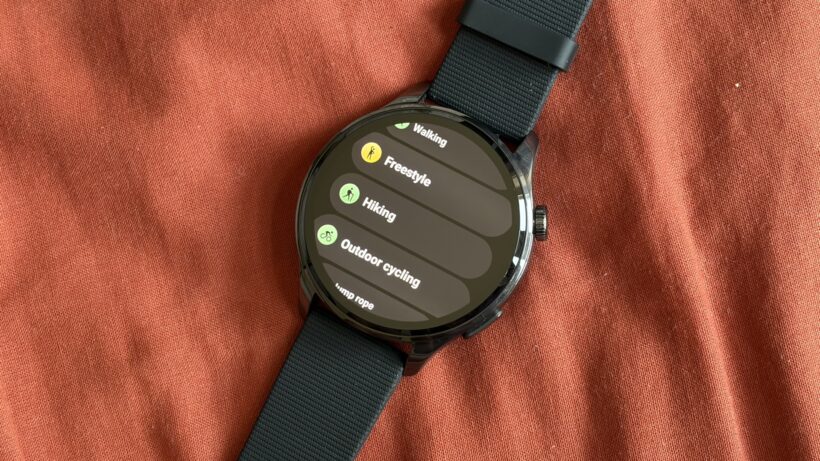
Xiaomi offers over 150 sports modes and utilizes dual-frequency GPS technology for precise positioning. It also provides full offline maps and navigation to keep you on track during large hikes and similar activities.
We tested the Watch 5 through runs, swims, and general gym workouts. In the pool, it accurately tracked metrics such as distance, stroke recognition, and stroke counts, aligning closely with two other swim trackers, including the gold-standard FORM Smart Swim 2 Pro.
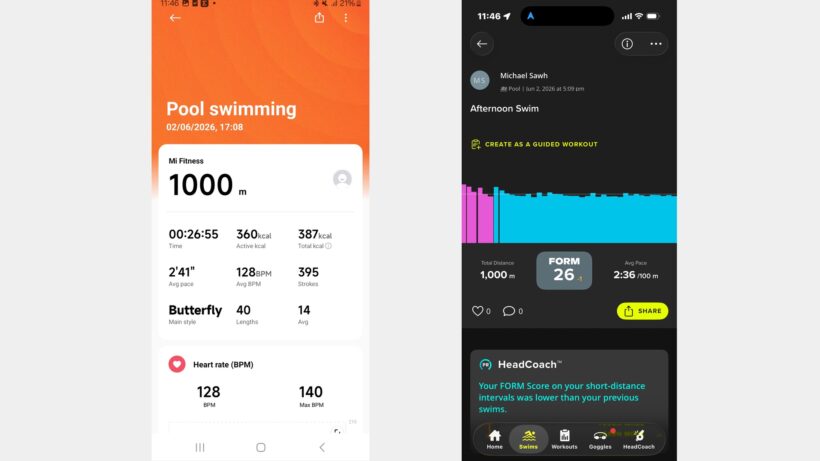
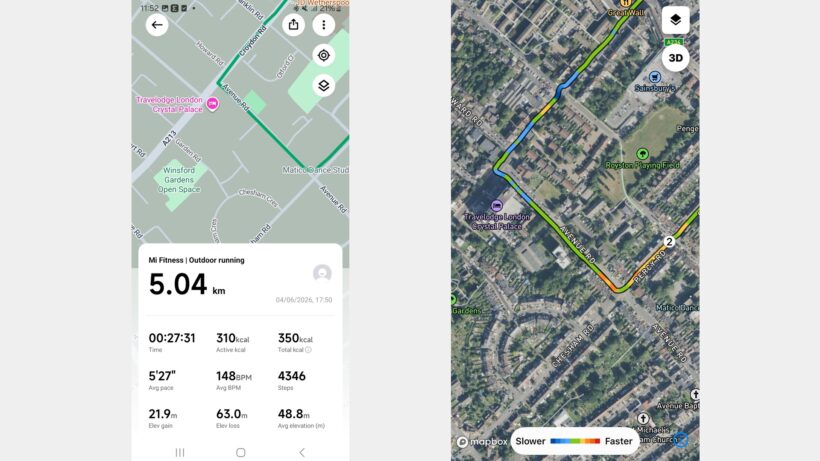
During outdoor runs, the GPS performed reliably against the Garmin Forerunner 970, providing consistent distance and pace data and delivering good heart rate readings that matched expectations.
Additionally, users can connect external Bluetooth heart rate monitors for more precise exercise heart rate measurements.
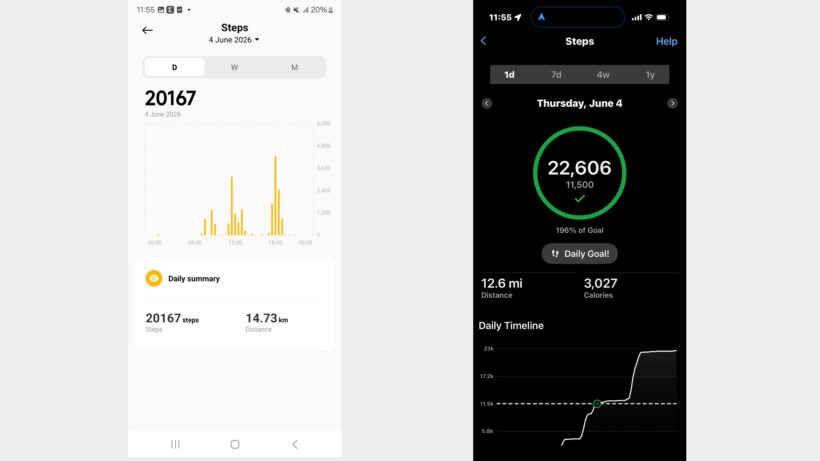
If you care about simply tracking your daily steps, we found the Watch 5 was often a few thousand steps off compared to two other trackers we wore alongside it.
Xiaomi also doesn’t offer anything major in terms of features that can give you a big motivational kick to keep moving throughout the day, beyond simple inactivity-alert prompts.
If you enjoy big adventures and prefer not to constantly check your phone to survey your surroundings, you can sync maps to the Watch 5. This mapping support complements the Google Maps feature you already have. Designed for hikes and exploration, it showcases apps on a large, bright display.
This offers better mapping support than the far more expensive Samsung Galaxy Watch Ultra (though this is rumored to be being replaced this summer). Still, while it's good that the feature is on board, the process of downloading and syncing map regions is slow, with one region taking over 30 minutes to download.
Battery life
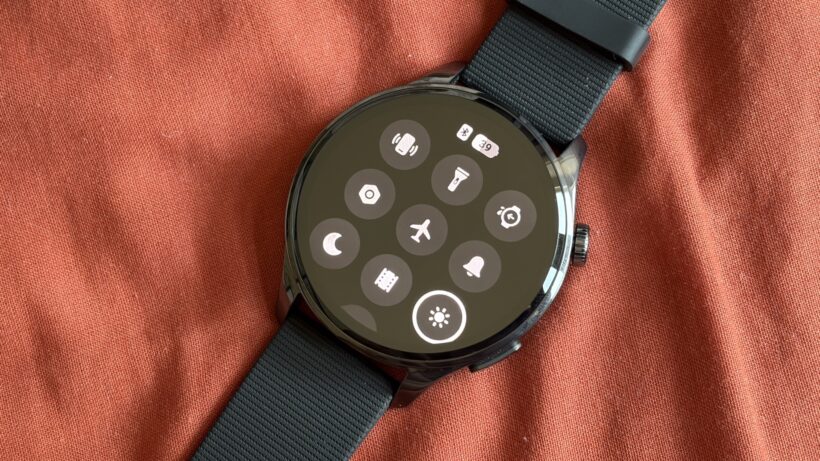
Historically, battery life has been somewhat of an Achilles' heel on cheaper Wear OS smartwatches—but the brand has engineered a genuine breakthrough here. By packing a massive 930mAh silicon-carbon battery into the case and combining it with the dual-chip processor architecture, the Watch 5 furthers what we thought was possible from a Wear OS smartwatch.
If you use the watch in its default Smart Mode—with continuous health tracking enabled but the Always-On Display (AOD) turned off—the Watch 5 easily lasts 6 full days on a single charge.
Even for power users who enable the Always-On Display, stream music over Bluetooth, and track daily GPS workouts, you can still confidently expect a solid 3 to 4 days of endurance.
The clubhouse leader—for now
Given that this is a market where premium Wear OS watches—or at least those released in 2025—struggle to last three full days, this is a big achievement. And while it may be matched or topped by other Android-only watches arriving in 2026, it completely alters the user's charging routine.
There's also the dedicated Power-Saving Mode that disables continuous vitals and shuts down Wi-Fi/Bluetooth while maintaining basic timekeeping and step tracking. In this low-energy state, the watch can last a whopping 18 days.
The only slight drawback is the charging setup. The watch relies on a proprietary magnetic pogo-pin dock, and a full charge from dead takes approximately 90 minutes. And, as ever, there's no support for Qi wireless charging, meaning you'll need to remember to pack the specific cable for longer trips away from home. Still, given the potential for week-long battery life, those charging stops will be few and far between.