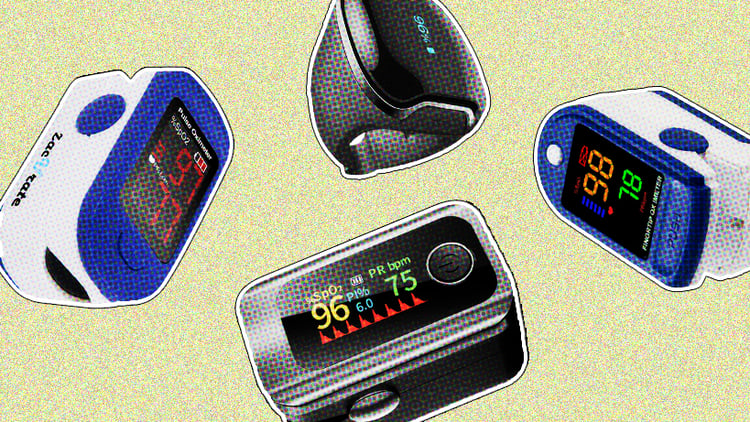
We tested the most talked-about pulse oximeters—here’s what’s actually worth your attention
Smartwatches have made heart rate and blood oxygen saturation (SpO₂) tracking part of everyday life. And to be fair, they are useful for most people who want to monitor their activity.
However, if you’re serious about training, whether running, going to the gym, or exercising at higher altitudes, you might want more detailed information. That’s where pulse oximeters come in.
These small devices measure your heart rate and SpO₂. They give you another way to understand how your body responds during exercise and recovery. Also, they may help people who need to keep an eye on certain health conditions (but only with a doctor’s guidance).
With so many pulse oximeters available, choosing the right one can be confusing. That’s why we tested some of the most popular options to see which are worth considering and which you can skip.
Quick picks: Best pulse oximeters
- Oxiline Pulse XS Pro: Best overall pulse oximeter
- Oxiline Pulse 9S Pro: Best for simple, no-app readings
- NovaMedic Pro: Best alternative to premium pulse oximeters
- Zacurate 500BL Fingertip Pulse Oximeter: Best budget-friendly pulse oximeter
- Wellue O2Ring-S Oxygen Monitor: Best ring-style pulse oximeter for overnight tracking
How we tested pulse oximeters
Over the past two months, we tested five of the most discussed at-home pulse oximeters to see which are worth using.
At least one person from our team tried each device, which helped us pay attention to how they work in daily life. During testing, we paid attention to comfort on the finger, reading speed, ease of reading the display, and whether the design feels practical.
We also compared pulse oximeter heart rate readings (we weren’t able to do that with SpO₂) with results from blood pressure devices. However, this doesn’t mean it was a scientific study or a clinical accuracy test. We did it out of curiosity to see how closely the numbers matched.
That said, if you are considering a pulse oximeter due to health concerns or unusual readings, we recommend speaking with a healthcare professional first. These devices may be useful tools as long as they don’t replace medical advice.
Oxiline Pulse XS Pro
Best overall pulse oximeter
- SpO₂ measurement: Yes
- Pulse rate monitoring: Yes
- Display type: OLED color display
- App support: Oxiline Health app, Apple Health, Android Health integration
- Battery life: AAA batteries (24 hours with continuous operation)
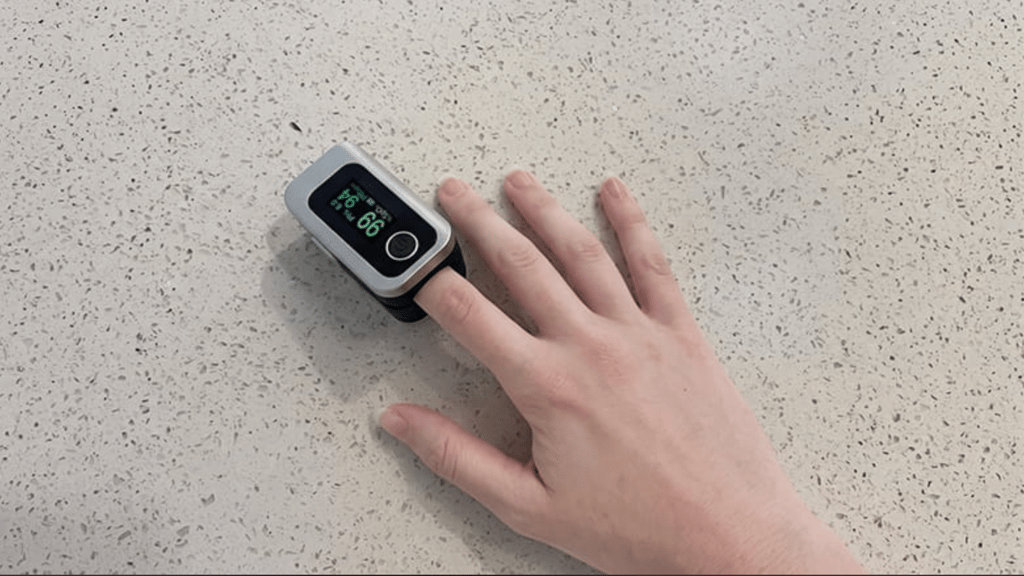
Oxiline Pulse XS Pro took our top spot because it delivered a strong overall experience. During our testing, the heart rate readings closely matched blood pressure monitoring devices. Again, this was not a scientific accuracy test (we only compared results out of curiosity), but seeing consistent results made us feel more confident about the device.
Another big plus is how fast it works. Just put it on your finger, wait a few seconds, and your SpO₂ and pulse rate show up on the screen. It’s handy if you’re in a rush, about to go for a run, or want to check your numbers after working out.
We also liked that the data doesn’t stay only on the device. Your readings can sync with the Oxiline Health app, where you can store unlimited measurements and track changes over time.
If you notice unusual trends, you can export your data into a PDF report to share with your doctor. Plus, support for third-party apps like Apple Health makes it easier to keep everything in one place.
However, we will admit, it’s not the cheapest pulse oximeter on the market, but the smoother experience, app support, and build quality justify the higher price.
- Fast readings within seconds
- Accurate-feeling results during our comparison
- Stores unlimited data in the app
- More expensive than basic pulse oximeters
Oxiline Pulse 9S Pro
Best for simple, no-app readings
- SpO₂ measurement: Yes
- Pulse rate monitoring: Yes
- Display type: OLED color display
- App support: No Bluetooth or app connection
- Battery type: AAA batteries
And now we have another pulse oximeter from Oxiline. What can we say—the brand clearly focuses on delivering devices that do the basics well.
Pulse 9S Pro scored higher than many other pulse oximeters we tested, but didn’t take the top spot like its bigger sibling, Pulse XS Pro. Here is why.
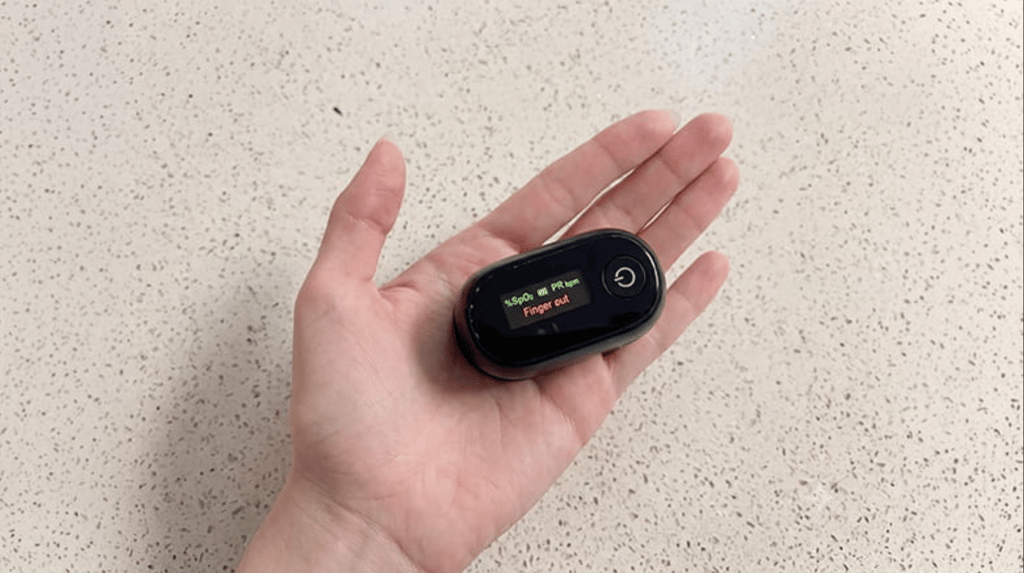
During testing, the readings were similar to those from blood pressure monitoring devices. However, the biggest difference is that this is a much simpler pulse oximeter.
Pulse 9S Pro is made for quick, one-time checks. You put it on your finger, see your SpO₂ and pulse rate, and that’s it. There’s no Bluetooth or app, so you can’t track your trends over time. For us, this seemed like a downgrade from Pulse XS Pro.
Still, that doesn’t mean it’s a bad choice for everyone. Some people don’t want another app collecting their data. If you just want to check your numbers on the spot, Pulse 9S Pro works well.
- Reliable readings during our comparison
- Simple and easy to use
- Good option for occasional checks
- No Bluetooth connectivity
- No long-term tracking (for some people)
NovaMedic Pro
Best alternative to premium pulse oximeters
- SpO₂ measurement: Yes
- Pulse rate monitoring: Yes
- Display type: Digital LED display
- App support: No app connection
- Battery type: AAA batteries
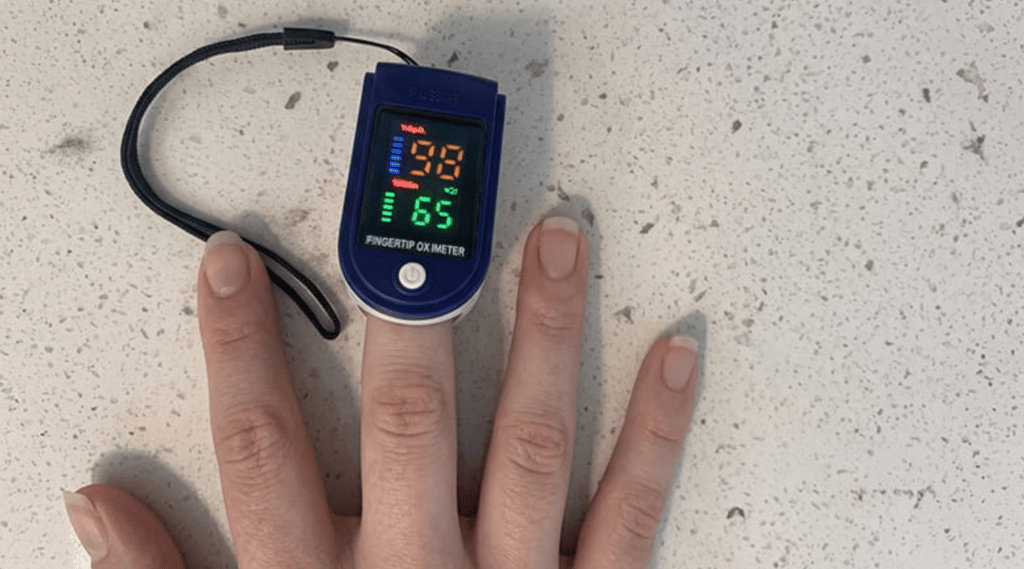
Now we move away from Oxiline and introduce the NovaMedic Pro pulse oximeter. Let’s clear the air right away: it doesn’t feel as polished as the Oxiline models above.
The first thing we noticed was the design. Compared to the more premium options, NovaMedic Pro feels simpler and more budget-focused.
We also noticed that some readings didn’t match blood pressure monitoring devices as closely as the Oxiline models. However, these differences were occasional and not something that completely changed our experience.
So why did it make it to the list? Well, NovaMedic Pro still deserves attention because of its price. It costs significantly less than the two Oxiline options we tested. For that lower cost, you still get the main features most people want: SpO₂ and pulse rate measurements.
That said, if you want a simple device for occasional checks and don’t need app features or advanced tracking, NovaMedic Pro is a practical choice. It may not feel like the most premium option, but it delivers the basics without making you spend more than necessary.
And if you are looking for an even more budget-friendly option, keep scrolling—we tested another cheap pulse oximeter that is worth considering.
- Much cheaper than premium options
- Simple and easy to use
- Provides the main measurements you need
- Design materials feel more basic
- No app or data tracking (for some people)
- Some readings were less consistent during testing
Zacurate 500BL Fingertip Pulse Oximeter
Best budget-friendly pulse oximeter
- SpO₂ measurement: Yes
- Pulse rate monitoring: Yes
- Display type: LED digital display
- App support: No app connection
- Battery type: AAA batteries
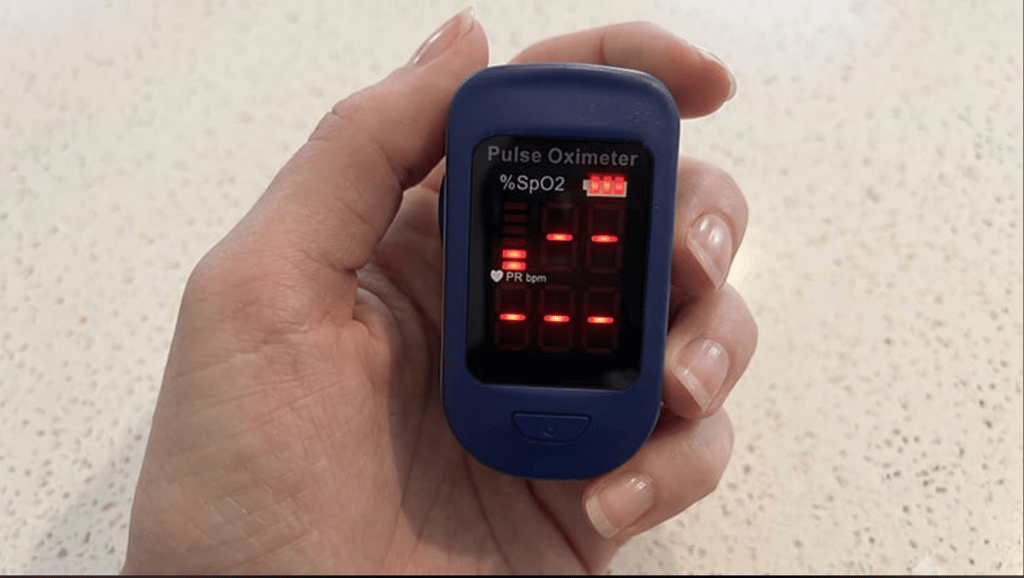
As promised, here is our most budget-friendly option—Zacurate 500BL Fingertip Pulse Oximeter. This device is for people who want a simple way to check their SpO₂ and heart rate numbers without spending much.
Just don’t expect a premium design. Zacurate 500BL has the lowest price on our list, and the design reflects that. It feels more like a basic home gadget than a polished fitness device.
This one suits people who occasionally want to check their pulse rate and SpO₂ levels rather than serious athletes seeking detailed tracking or the most consistent measurements. If you train regularly and want to follow trends over time, we recommend investing in one of the more advanced options above.
However, for occasional use, Zacurate 500BL makes sense. It’s affordable and doesn’t pressure you to use it daily to justify the purchase.
- Lowest price option on our list
- No app or setup required
- Basic design and build quality
- No data tracking or app support (for some people)
- Not ideal for serious fitness users
Wellue O2Ring-S Oxygen Monitor
Best ring-style pulse oximeter for overnight tracking
- SpO₂ measurement: Yes
- Pulse rate monitoring: Yes
- Display type: OLED display
- App support: ViHealth app
- Battery life: Rechargeable battery
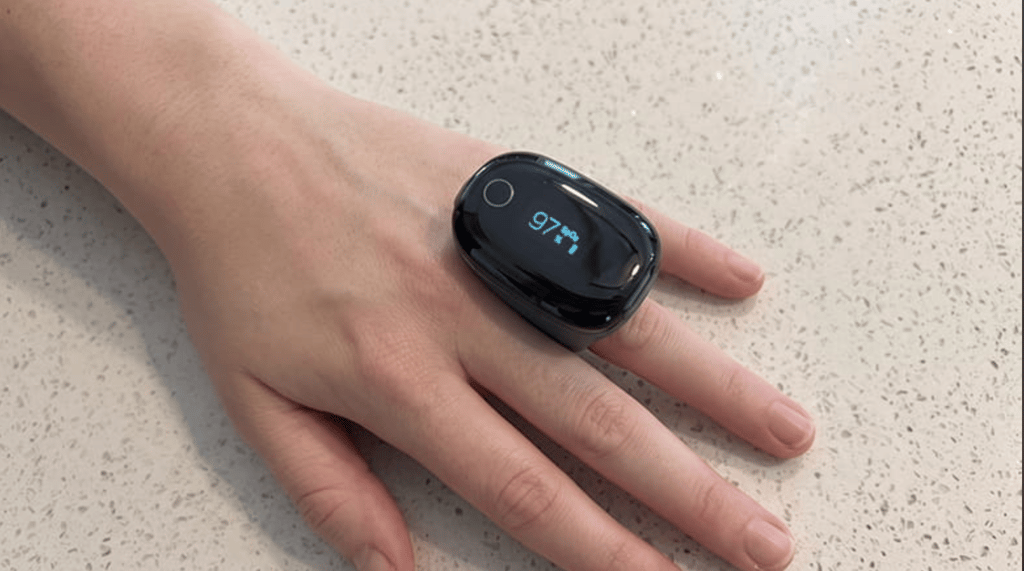
And we’re down to the last device on our list, but it is definitely not the least interesting one. The main reason Wellue O2Ring-S stands out is that it takes a different approach.
Instead of a traditional fingertip pulse oximeter, it has a ring-style design made for longer wear. We included it because it focuses on tracking patterns rather than quick spot checks.
The idea is simple: wear it overnight, wake up, and review your heart rate and SpO₂ data from your sleep. It can store up to 10 hours of data, which you can transfer to the ViHealth app for a closer look.
Another useful feature is custom alerts. If your SpO₂ drops below a set level or your heart rate goes above your chosen limit, the ring vibrates to notify you.
However, this type of monitoring is not for everyone. It requires dedication. Because of that, if you want a quick check once in a while, a traditional pulse oximeter will probably be enough. But if you want to see how your numbers change overnight, the ring design makes sense.
- Designed for overnight comfort
- Monitors extended sessions
- Has custom vibration alerts
- More expensive than basic pulse oximeters
- Requires wearing it overnight for insights
Pulse oximeters compared
| Device | SpO₂ measurement | Pulse rate monitoring | FDA-cleared | App support | Battery type | Price range | Best for |
| Oxiline Pulse XS Pro | Yes | Yes | Yes | Oxiline Health app, Apple Health, Android Health integration | AAA batteries | Premium | Best for overall tracking and app-based insights |
| Oxiline Pulse (S Pro | Yes | Yes | Yes | No | AAA batteries | Premium | Best for simple, no-app readings |
| NovaMedic Pro | Yes | Yes | Yes | No | AAA batteries | Budget-friendly | Best for affordable everyday checks |
| Zacurate 500BL Fingertip Pulse Oximeter | Yes | Yes | No | No | AAA batteries | Budget-friendly | Best for occasional, ultra-budget use |
| Wellue O2Ring-S Oxygen Monitor | Yes | Yes | Yes | ViHealth app | Rechargeable battery | Premium | Best for overnight and continuous monitoring |
Pulse oximeter vs. smartwatch blood oxygen tracking
Nowadays, we rely on smartwatches for all kinds of wellness data. We check our heart rate during workouts, look at our sleep score in the morning, and many of us keep an eye on our SpO₂ levels.
But how much should you trust those readings? Well, even though both smartwatches and pulse oximeters estimate blood oxygen using light, they measure it differently.
How do smartwatches measure blood oxygen?
A smartwatch shines a light on your wrist and measures the light that bounces back to the sensor. This is called reflectance oximetry.
The light only travels a few millimeters into the skin, so the watch relies on blood vessels close to the surface. However, the wrist has fewer capillaries than the fingertip and more tissue between the sensor and blood vessels. As a result, readings may be affected by movement, a loose-fitting watch, tattoos, skin tone, or bright ambient light.
That does not mean smartwatch SpO₂ readings are useless. They are still helpful for tracking overnight trends or noticing gradual changes over time.
How does a pulse oximeter work?
A fingertip pulse oximeter uses a different approach called transmission oximetry. Instead of measuring light reflected back, it shines light through one side of your fingertip and detects it on the other.
The fingertip works well for this purpose because it has many small blood vessels under the skin. Light can pass through the tissue here, providing a stronger, more reliable signal than sensors placed on the wrist.
While we are not saying that pulse oximeters are perfect, they are typically the better choice when you want the most accurate reading possible.
How accurate are pulse oximeters?
Pulse oximeters are generally accurate, especially when blood oxygen levels are between 90% and 100%. However, no device is perfect. Even FDA-cleared pulse oximeters can be off by a few percentage points.
Their accuracy tends to decrease when oxygen levels fall below 90%. That’s why healthcare providers consider pulse oximeter readings alongside symptoms rather than relying on a single number.
How to use a pulse oximeter?
Many things can affect your results, so using the device the right way is important. Start by putting your finger all the way into the device and keeping your hand steady while it measures. Even small movements can get in the way of the light passing through your fingertip.
If your hands are cold or you have poor circulation, there may be less blood flow to your fingers, which can make it harder for the sensor to get a good signal. Dark nail polish, acrylic nails, or gel manicures can also block some of the light and affect the reading.
The quality of the device is important too. If the battery is low, the sensor is dirty, or the pulse oximeter is not well-made, your results might not be as reliable.
What should you look for in a pulse oximeter?
Accuracy and consistency. You want readings that stay stable when you measure several times in a row. Small changes are normal, but big swings can indicate the device isn’t reliable.
Display quality. A bright, clear screen makes a difference. You should quickly see your SpO₂ and heart rate without squinting or guessing, even in a dim room.
Ease of use. The best devices are simple. You just clip it on your finger, wait a few seconds, and get a reading.
Battery life. If you use it often, you don’t want to constantly recharge or replace batteries. A device that lasts weeks or months is more convenient.
App connectivity. Some pulse oximeters connect to an app to show trends over time. This is useful if you like tracking patterns, but it may not be essential for everyone.
Continuous monitoring is useful if you want overnight tracking or longer sessions without manually taking readings.
FDA-cleared models. These are generally designed with medical use in mind, while non-cleared devices are more for general wellness tracking.
Budget. More expensive doesn’t always mean better. A simple, reliable device often works as well as premium models for everyday use.
Other wellness tracking reviews:
Best fitness tracker 2026: Wareable picks for fitness tracking
Best smart scales: Top picks for body composition, weight loss, and health tracking
The best wearables for weightlifting: Top picks for tracking progress in the gym
Best smart rings 2026: Wareable picks for discreet wellness trackers
2 resources
- Reflectance pulse oximetry: Practical issues and limitations. ICT Express.
- Getting an accurate read on pulse oximeters. NIH MedlinePlus Magazine.