Best TENS units for sciatica: Features to consider and our recommendations

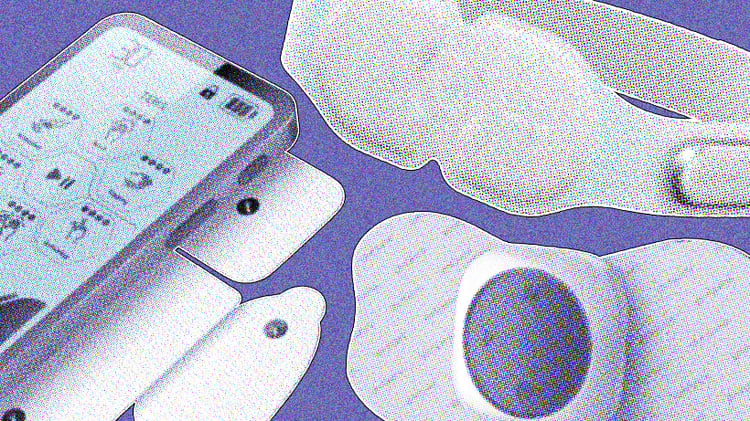
Researching and testing TENS units—our perspective on whether they might help manage sciatica symptoms
We’d like to start with an important reminder: transcutaneous electrical nerve stimulation (TENS) does not treat the underlying cause of sciatica. If you’re experiencing ongoing pain, have been diagnosed with sciatica, or have another condition, speak with your healthcare provider before using a TENS unit to make sure it’s appropriate for your situation.
TENS is a non-invasive electrical pulse therapy used to support pain management. While it isn’t usually the main treatment for sciatica, some people might find it helpful as part of a broader care plan, with the potential to provide temporary symptom relief. Keep in mind that research is still evolving, and effects vary between people.
In this guide, we’ve combined the latest evidence with our hands-on testing of popular TENS units to investigate whether they’re worth considering for people with sciatica. We explain what the research says, what features matter most, and share the devices we believe offer the best combination of comfort, ease of use, and overall value—provided your healthcare professional agrees with you using TENS.
Sciatica: What causes it
Sciatica isn’t a condition per se but a collection of symptoms caused by irritation or pressure put on the sciatic nerve. Since this nerve starts in the lower back and travels through the buttocks to each leg, the discomfort can be felt all throughout the lower part of your body.
Rather than just back soreness, you may feel sharp, burning, or shooting pain, with many people describing numbness, muscle weakness, and a “pins and needles” type of sensation. Symptoms of sciatica can range from mild to severe, which may interfere with walking, sitting, and overall quality of life.
We’ve found out that this condition isn’t uncommon—it affects millions of people around the world. Sciatica has many possible causes, but the most common is a herniated disc in the spine. Some injuries, osteoarthritis, and even pregnancy may be the reason as well.
Because treatment depends on the underlying cause, it’s very important you get an accurate diagnosis before trying to manage symptoms by yourself. After that, your healthcare professional may recommend some at-home remedies for mild pain or offer surgery for more severe cases.
Where does TENS fit in?
TENS is considered a complementary pain support option—it is not a replacement for medical treatment prescribed by a healthcare professional. The electrical pulses are thought to help provide temporary pain relief by stimulating sensory nerves.
However, we noticed that research specifically on sciatica has mixed findings. Some studies suggest short-term improvements but overall conclude that there’s a lack of high-quality evidence.
Still, we understand that you may want to explore all potential approaches for pain relief support and avoid depending only on over-the-counter pain relievers. That’s why we encourage you to discuss using TENS for sciatica symptom management with your healthcare provider—and if you get the green light, come back to check out our recommendations of the best TENS units.
Quick TENS units overview
- Oxiline TENS XS Pro: Suitable for simple controls
- Oxiline TENS Q Pro: Suitable for torso area
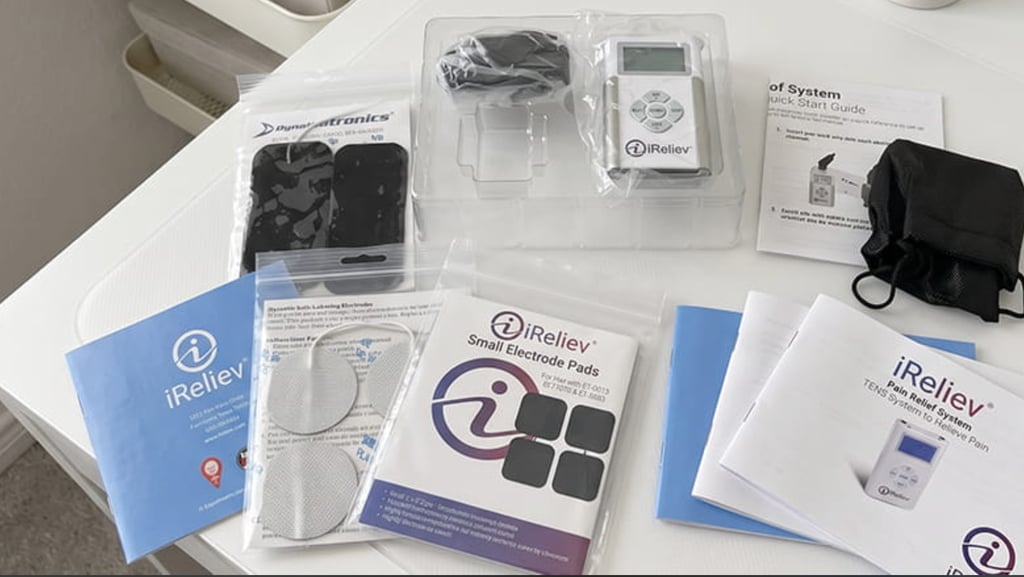
- iReliev TENS + EMS Pain Relief & Recovery System: Suitable for daily quick sessions
- Comfytemp Wireless TENS Unit: Suitable for travel
How did we choose the best TENS units for sciatica?
Effects from TENS therapy may vary person to person, so we’d like to emphasize that you should speak with your healthcare professional before using one to manage sciatica symptoms. That’s why our picks for the best TENS units focus less on how practical they may be for pain relief and more on what it’s actually like to use these devices day-to-day.
Over the past month and more, we’ve researched and tested a range of TENS units across different price points, portability levels, and control styles. We evaluated how easy they are to set up, operate, and use over time, while considering whether people with sciatica may be able to use them.
This article draws on our test-based observations and available evidence to help you decide which TENS units may be worth considering for managing sciatica-related pain.
Oxiline TENS XS Pro
Consider for intuitive controls and modern design
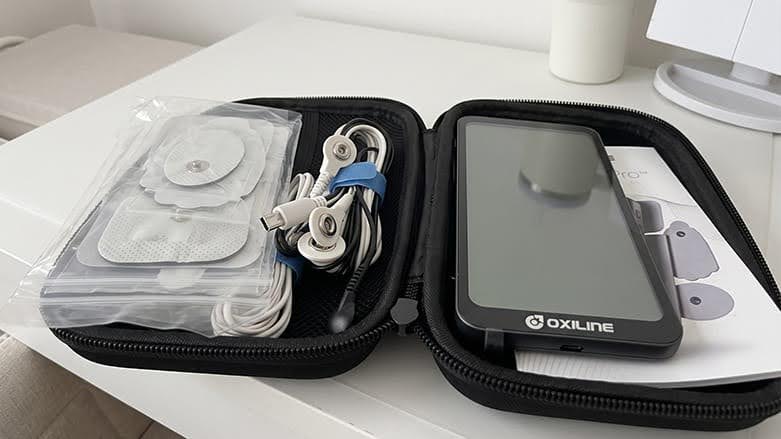
- Channels: Dual-channel
- Modes: 24 TENS and EMS programs
- Intensity: 10 levels
- Battery: Rechargeable
- Electrode pads: 6 total
Oxiline TENS XS Pro is one of the best TENS therapy devices we’ve tested, so whether you already have experience with such gadgets or are an absolute beginner, this unit is a solid option.
It has a large touchscreen, a modern interface, and 24 preset TENS and EMS programs. Due to dual output channels, you can use up to four electrode pads at once, as well as adjust their programs and intensities independently.
If you’re not familiar with the term EMS, it stands for electrical muscle stimulation, a technology commonly used in rehabilitation after injury or as part of athletic training. In this case, electrical pulses cause your muscles to contract and relax, which may help complement your regular exercise routine.
Oxiline XS Pro is a wired TENS unit, so, in our experience, it does restrict movement during a session. Still, if you’re willing to remain in one place for some time, we found that the device is straightforward to use. Also, if looks matter to you, you’ll love the modern feel of XS Pro.
On the downside, the battery life wasn’t impressive at all. During testing, it usually lasted around a day or two between charges. It’s not like short battery life is a total red flag, but we did find it disappointing.
- Easy setup
- FDA-cleared
- Lifetime warranty
- Fast charging
- Higher price
- We found battery life disappointing
- Continue with our Oxiline TENS XS Pro review
Oxiline TENS Q Pro
Consider for torso area support
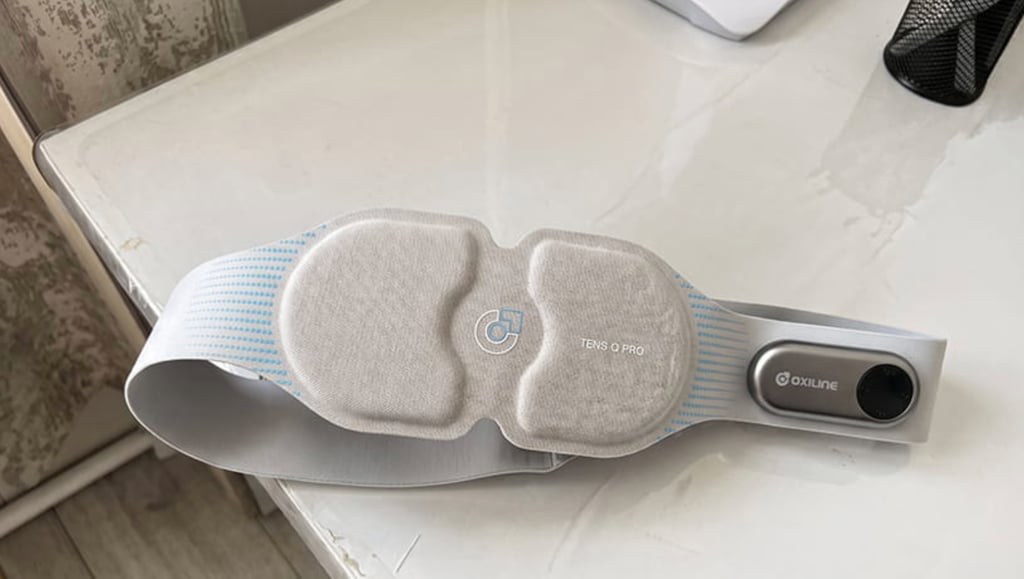
- Channels: Not applicable
- Modes: 6 modes with 3 heat levels
- Intensity: 10 levels
- Battery: Rechargeable
- Electrode pads: 4 total
There are two main things to consider if you’re interested in Oxiline TENS Q Pro: it’s designed only for the torso area, and its wireless design is best suited for people who want to move around during a session. If that matches what you’re looking for, then we’d definitely recommend Oxiline TENS Q Pro.
Out of all the TENS devices we tested, this one was probably the easiest to use. Its electrode pads are integrated into the waistband, which stays snug throughout the session without restricting your movements.
This Oxiline device also combines six TENS and EMS modes, as well as incorporates three heat levels that reach roughly 100–113°F. Together, these functions may give you a convenient device for the lower back, abdomen, or both sides of the waist.
That said, if you’re looking for a more versatile TENS device, this isn’t the best fit for you, since you won’t be able to target legs, buttocks, or other body parts.
- Great for portability
- Includes 13in waistband extender
- Soft to the touch and stretchy material
- FDA-cleared
- Only for the torso area
- Not very customizable programs
- Continue with our Oxiline TENS Q Pro review
iReliev TENS + EMS Pain Relief & Recovery System
Consider for casual therapy
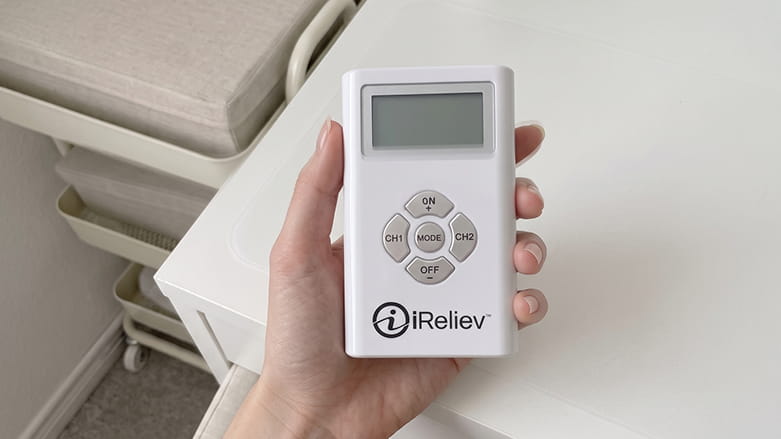
- Channels: Dual-channel
- Modes: 14 TENS and EMS programs
- Intensity: 25 levels
- Battery: AAA batteries
- Electrode pads: 6 total
iReliev TENS + EMS Pain Relief & Recovery System is a simple wired TENS unit, earning its place on our list due to its straightforward operation. To explain better—although it packs plenty of features, its controls stay simple and customizable, so we found it easy to use every day without requiring much effort or commitment.
iReliev TENS + EMS comes with 14 preset modes, including Muscle Recovery, Warm Up, Endurance, Active Recovery, and Acute & Chronic Pain. The brand claims these programs are designed for different situations, so choosing one is straightforward and doesn’t require many settings changes. Once you get used to the device, you can adjust session lengths or experiment with two different modes at the same time.
The main drawback is just that it’s not the most versatile TENS unit on the market right now, offering fewer programs and less flexibility.
- Batteries last quite a long time
- Easy controls
- Good option for first-time users
- FDA-cleared
- Recurring cost for AAA batteries and electrode pads
- Restricts movements
- Just a 1-year warranty
- Continue with our iReliev TENS + EMS Pain Relief & Recovery System review
Comfytemp Wireless TENS Unit
Consider for portability and ease of use while traveling
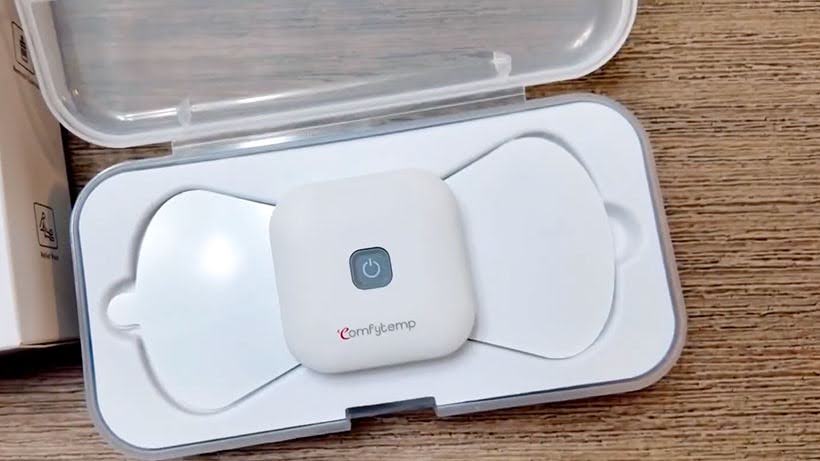
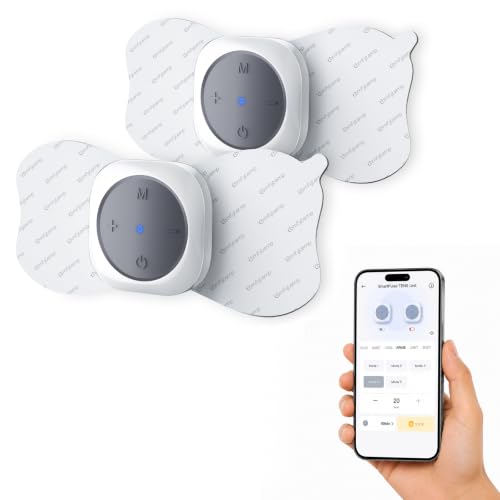
- Channels: Two separate hosts
- Modes: 30 programs
- Intensity: 20 levels
- Battery: Rechargeable
- Electrode pads: 4 total
If you’re looking for a TENS unit you can travel the world with, we suggest checking out Comfytemp Wireless TENS Unit. It follows a traditional wireless setup, meaning there are two compact hosts, a companion app for controls, and four electrode pads that can be applied across different areas of the body.
The electrode pads are on the smaller side, so if you're looking to target larger areas, such as the lower back for sciatica-related pain support, it’s better to use two pads at once. For that reason, the package includes two rechargeable hosts that clip onto the electrode pads to deliver electrical pulses.
Don’t worry—the setup is just as easy as with a wired TENS unit. Just don’t forget to charge the hosts before use and pair them with the Comfytemp app so you can adjust the settings. You can also set session time from 10 to 60 minutes, and once the timer ends, the device stops automatically.
Of course, portability is its biggest strength, making it easy to move around and travel with. That said, we wouldn’t call it very discreet if you like wearing fitted clothes—you can usually see the host bump under your clothing.
- Two hosts for two electrode pads
- Nice app interface
- Wide choice of modes and intensity levels
- Only 4 electrode pads included
- Wireless hosts look bulky under clothes
- Battery life isn’t the best
Detailed research: Can a TENS unit be used for sciatica?
As we established earlier, some research suggests that TENS might support short-term pain relief for some people, but the evidence on whether it may help with sciatica is extremely limited. That doesn’t necessarily mean TENS can’t be used—there’s just not enough high-quality research to say with confidence if it’s beneficial.
One of the best-known trials of this subject was published in 1999 and included 64 people with sciatica caused by lumbar disc herniation. Participants were randomly assigned to receive TENS, PENS (percutaneous electrical nerve stimulation), or sham PENS therapy for three weeks. Although PENS isn’t the main focus of our article, it is worth noting that it is a minimally invasive pain-relief technique that uses thin needle electrodes inserted through the skin.
Researchers suggested that people using TENS experienced reduced pain and used fewer pain-relieving medications than before the trial. However, you should know that the study was relatively small and only followed participants for a short period, so you shouldn’t view its findings as conclusive.
A more recent 2024 randomized controlled trial looked at 164 people with chronic lumbar radiculopathy, a condition that can include sciatica. Participants received TENS, low-level laser therapy (LLLT), and sham LLLT over three weeks. Post-trial results showed that TENS was associated with modest improvements in pain and physical function, though it wasn’t the most effective method.
Taken together, these studies suggest that TENS may provide temporary symptom relief for some users, but the current evidence isn’t considered strong. If you’re thinking of buying a TENS unit, we recommend discussing it with your healthcare provider first.
TENS pad placement for sciatica
Since sciatica pain can travel from your lower back down to your feet, there’s no single placement that works best for everyone. Your goal should just be to position the pads around the area where you feel discomfort at the moment, such as your lower back, buttocks, or legs, rather than aiming for specific points.
As a general rule, you should place the pads at least a few inches apart from each other on clean, dry skin. Also, we suggest avoiding bony areas.
Keep in mind these guidelines only apply to TENS units with separate electrode pads. With Oxline TENS Q Pro, the pad placement is fixed and not adjustable, so you don’t really have to think about it too much.
Start your session at the lowest intensity and gradually increase it until you feel a strong yet comfortable tingling sensation in the area. If the stimulation becomes painful or your skin becomes irritated, stop the session and remove the pads.
TENS safety tips
First, you should always follow the manufacturer’s instructions for your safety. But if we’re speaking about general tips, TENS is generally considered safe for most healthy adults. Potential side effects include slight skin irritation where the pads are attached, muscle twitching during a session, and temporary sensitivity in the targeted area.
That said, TENS isn’t suitable for everyone, and you should check with your healthcare provider before use if you:
- Have a pacemaker
- Have an implanted electrical device
- Are pregnant
- Have active cancer
- Have epilepsy
- Have heart conditions
- Have a history of deep vein thrombosis
Final thoughts
There’s no single TENS unit that’s right for everyone. While TENS has been studied for decades and research suggests it may be helpful for temporary pain relief, whether it might help manage sciatica symptoms specifically remains unclear.
We’ve presented four solid TENS units that may interest you, provided your healthcare provider has confirmed that TENS therapy is appropriate for you. We also want to emphasize how important it is to get a proper diagnosis if you’re experiencing sciatica-like symptoms, as at-home therapies such as TENS aren’t a replacement for a treatment plan.
Other recovery and wellness guides
Best wireless TENS units in 2026: How to choose?
Best TENS units for back pain: Finding the right fit
Best TENS and EMS combo units in 2026: Tested and compared
FAQs
Can you use a TENS unit every day?
Generally, yes. Many people use a TENS unit daily, provided they follow the manufacturer’s instructions and their healthcare provider’s advice. That said, it’s not mandatory, so we suggest using it only when feeling discomfort.
How long should a TENS session last?
Most TENS sessions last between 10 and 30 minutes, although some devices allow longer sessions. The ideal duration depends on the device and your comfort.
Where should TENS pads be placed for sciatica?
Place the pads around the area where you feel discomfort, such as the lower back, buttocks, or legs. However, avoid placing them directly on the spine or bony areas.
What's the difference between TENS and EMS?
TENS is intended to help relieve pain by stimulating sensory nerves, while EMS targets muscles to potentially cause contractions, used in muscle training and recovery.
Can a TENS unit cure sciatica?
No, a TENS unit isn’t a cure for sciatica. It may help manage some sciatica-related pain, but it doesn't treat the underlying cause.
4 resources
- BMJ Open. Efficacy and safety of transcutaneous electrical nerve stimulation (TENS) for acute and chronic pain in adults: a systematic review and meta-analysis of 381 studies (the meta-TENS study)
- Pain. Percutaneous electrical nerve stimulation: an alternative to TENS in the management of sciatica
- Journal of Lasers in Medical Sciences. Comparison of the effectiveness of TENS and low-level laser therapy applied to the sciatic nerve region in chronic lumbar radiculopathy
- Journal of Pain Research. Latest advancements in transcutaneous electrical nerve stimulation (TENS) and electronic muscle stimulation (EMS): Revisiting an established therapy with new possibilities