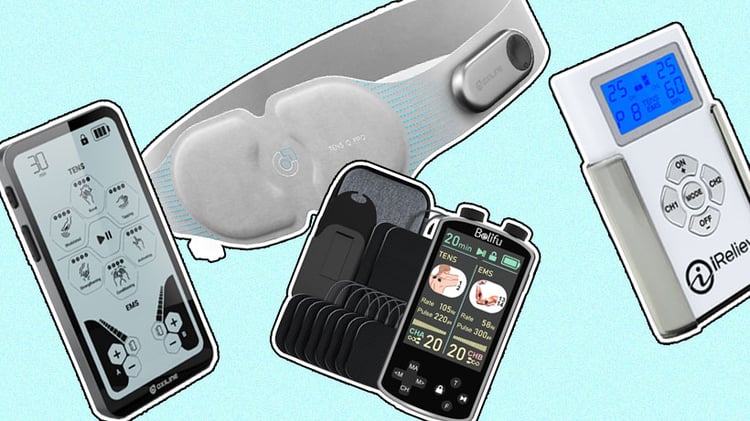
We tested the best TENS and EMS combo units—here's how to choose the right one
As more people look for ways to support the management of everyday aches or muscle recovery, they often lean toward transcutaneous electrical nerve stimulation (TENS) and electrical muscle stimulation (EMS) devices. At first, those terms may look identical, but as you start researching, they appear to be different.
A TENS unit is mainly intended for pain relief by sending gentle electrical pulses through the skin. An EMS device, on the other hand, stimulates muscles and is commonly used for muscle rehabilitation after injury or athletic training.
Today, many manufacturers combine the two technologies into a single device, allowing users to switch between TENS and EMS modes as needed. This sounds convenient, but it can also make choosing the right device more confusing.
That's why we tested some of the most talked-about TENS and EMS combo units. In this guide, we'll explain what each device offers and how it feels to use them, so you can choose the one that fits your needs with confidence.
Quick picks: Best TENS and EMS combo units
- Oxiline TENS XS Pro: Best overall TENS and EMS combo unit
- Oxiline TENS Q Pro: Best TENS and EMS combo unit for lower back and abdominal support
- iRelieve TENS + EMS Pain Relief & Recovery System: Best TENS and EMS combo unit for beginners
- Belifu TENS EMS Unit Muscle Stimulator for Pain Relief Therapy: Best budget TENS and EMS combo unit
TENS vs. EMS: What's the difference?
Before we look at the best TENS and EMS combo units, it's important to understand what these terms mean. They might seem similar at first, but they have different uses. Knowing the difference will help you pick the right device.
What is TENS?
TENS stands for transcutaneous electrical nerve stimulation. Both TENS and EMS units are used for therapy, but only TENS is primarily used for pain relief.
So how does it work? Well, if we put it really simply, it sends small electrical pulses through your skin to stimulate nerves. These pulses are thought to potentially block the transmission of pain signals from reaching your brain and may also help your body release endorphins, which are natural painkillers.
Most TENS devices offer several programs and intensity levels, so you can choose what feels best. Remember, everyone responds differently, so the amount of relief can vary. To add, TENS might not work for everyone, so it’s best to consult with your healthcare provider for a proper diagnosis and full management plan.
How is EMS different?
EMS stands for electrical muscle stimulation, and it works in a different way. Instead of focusing on nerves, EMS targets your muscles. The electrical pulses make your muscles contract and relax, much like they do during exercise.
EMS is often used for muscle rehab after injuries and for athletic training. Unlike TENS, EMS is meant to activate your muscles, not just support pain. That's why you will feel your muscles moving during an EMS session, while TENS usually just creates a tingling feeling.
That said, many newer devices let you switch between TENS and EMS, so you can choose the type of session you need.
How we tested TENS and EMS devices
Testing TENS and EMS devices is more complicated than testing a smartwatch or headphones. People have different pain levels, causes of said pain, and recovery needs, so one device may not work the same for everyone.
Because of this, we focused on the overall experience of using each device. We tried them after workouts, while relaxing at home, during desk work, and as part of daily routines.
Instead of judging how well they supported pain relief or helped recovery, we paid close attention to comfort during use, build quality, battery life, ease of use, and how simple it was to adjust the intensity. We also checked how versatile each unit was, such as the number of programs and whether switching between TENS and EMS modes was easy to understand.
As for pain management or muscle recovery, we think those choices are best left to healthcare professionals. If you are thinking about using one of these devices, it’s a good idea to talk to your doctor or physical therapist first, since everyone’s needs are different.
Oxiline TENS XS Pro
Best overall TENS and EMS combo unit
- TENS and EMS modes: 24 combined TENS and EMS therapy modes
- Channels: Dual-channel
- Intensity levels: 10 levels
- Battery type: Rechargeable (lasts up to 24 hours)
- App support: No
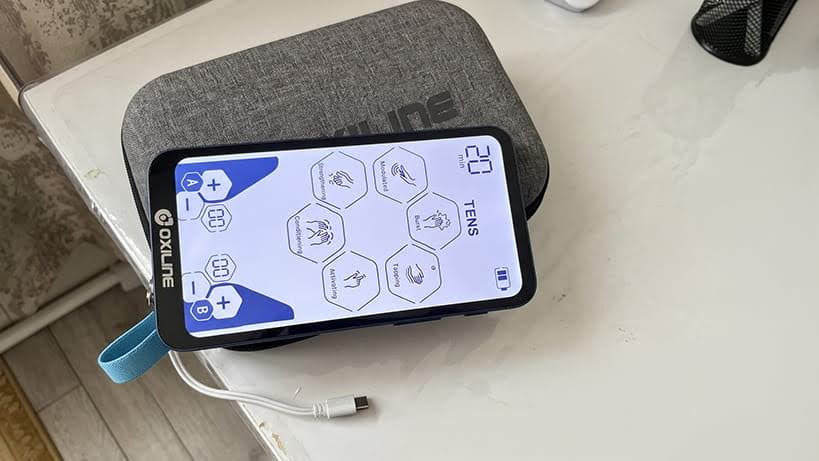
Oxiline TENS XS Pro earned the top spot on our list for its versatility and quality. What caught our attention first was the wide range of therapy modes. It offers 24 TENS and EMS modes, grouped into six main categories: Modulated, Burst, Tapping, Strengthening, Conditioning, and Activating.
Each category has four variations, making it easier to choose a program based on your needs. Whether you want to support pain management or are aiming for muscle stimulation, there are plenty of choices.
We also appreciated the dual-channel design. It lets you address two different areas at the same time and adjust the intensity for each independently. For example, you could use one set of pads on your shoulders and another on your lower back, or use it on both legs after a tough workout. This really saves time compared to running separate sessions.
Using the device is also easy. You just connect the cables, attach the pads, place them where needed, select a program, adjust the intensity, and start the session. Most sessions last 15 to 30 minutes, and the rechargeable battery can last up to 24 hours, so you won't need to charge it often.
It isn't just one feature that puts it at the top of our list—it's the complete package. That's why we think Oxiline TENS XS Pro deserves to be named the best overall TENS and EMS combo unit.
- 24 TENS and EMS therapy modes
- Dual-channel design saves time
- Long battery life
- Large number of programs may feel overwhelming at first
Oxiline TENS Q Pro
Best TENS and EMS combo unit for lower back and abdominal support
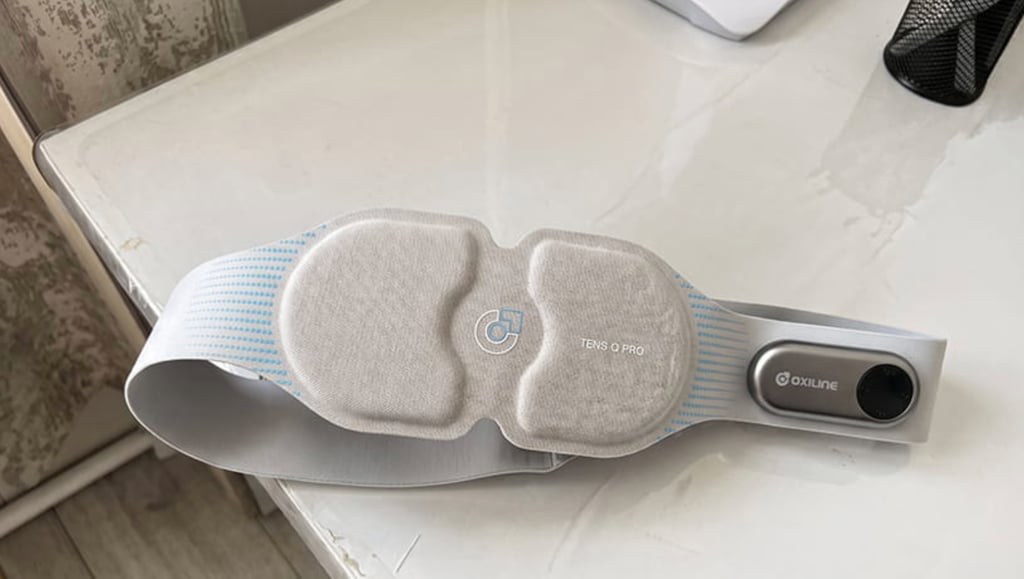
- TENS and EMS modes: 6 pulse modes
- Channels: Single integrated application area
- Intensity levels: Adjustable
- Battery type: Rechargeable (lasts up to 3–4 days)
- App support: No
Even though Oxiline TENS Q Pro is less versatile than Oxiline TENS XS Pro, it is not a worse device. It’s just made for a different purpose.
This model is designed specifically for the waist, lower back, and abdominal area rather than for general use. Because it covers a smaller area, it has fewer programs than its bigger sibling.
It offers six pulse modes that mimic different massage styles. For its intended use, we found this to be more than enough, since you are not switching between many muscle groups.
Our favorite feature is the built-in heating function. Anyone who has experienced lower back discomfort or period cramps knows warmth can help you feel better. Combining heat with electrical stimulation made the experience more relaxing than stimulation alone.
The belt design is also very easy to use. There is no need to attach multiple pads or connect cables. You simply wrap it around your lower back, fasten it, and control everything with the built-in remote. The buttons are clearly labeled for power, mode, heat, and intensity, so starting a session takes only a few seconds.
- Made especially for lower back and abdominal use
- Includes a built-in heating function
- Very easy to control
- Has fewer therapy modes than TENS XS Pro
- Can only be used on certain body areas
iReliev TENS + EMS Pain Relief & Recovery System
Best TENS and EMS combo unit for beginners
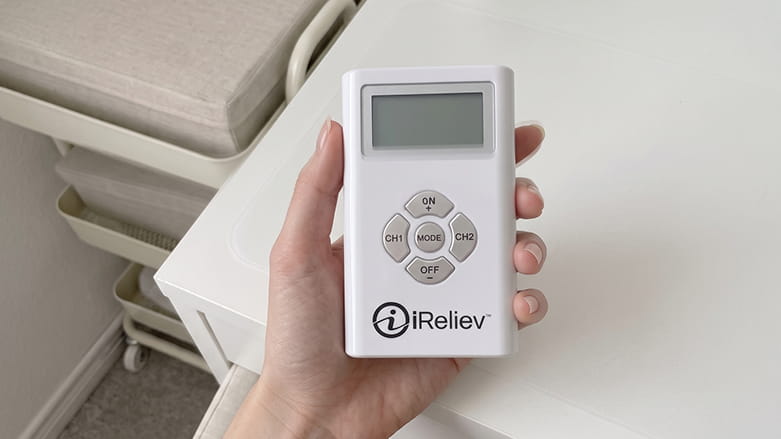
- TENS and EMS modes: 14 pre-set modes
- Channels: Dual-channel
- Intensity levels: 25 levels
- Battery type: AAA batteries
- App support: No
iReliev TENS + EMS Pain Relief & Recovery System earned a place on our list because it builds on the company's previous TENS-only unit by adding EMS functionality. This makes it a more versatile option for people who want both technologies in one device.
It comes with 14 pre-set programs, including Muscle Recovery, Warm Up, Endurance, Active Recovery, and Acute & Chronic Pain modes. According to iRelieve, these programs are designed for different situations, making it easy to choose one without adjusting many settings. Whether you want to help relax sore muscles or support your body after an intense workout, there is a good variety to pick from.
Like Oxiline TENS XS Pro, iReliev features a dual-channel design, allowing you to use two sets of pads at the same time. This is handy if you want to target two muscle groups during a single session.
The main reason it didn't take our top spot is that it offers fewer programs and less flexibility overall. Still, for someone buying their first TENS and EMS combo unit, it’s an easy device to suggest.
- Has dual-channel
- Has 14 pre-set programs
- Good value for first-time users
- Fewer pre-set programs than premium competitors
- Less flexibility
Belifu TENS EMS Unit Muscle Stimulator for Pain Relief Therapy
Best budget TENS and EMS combo unit
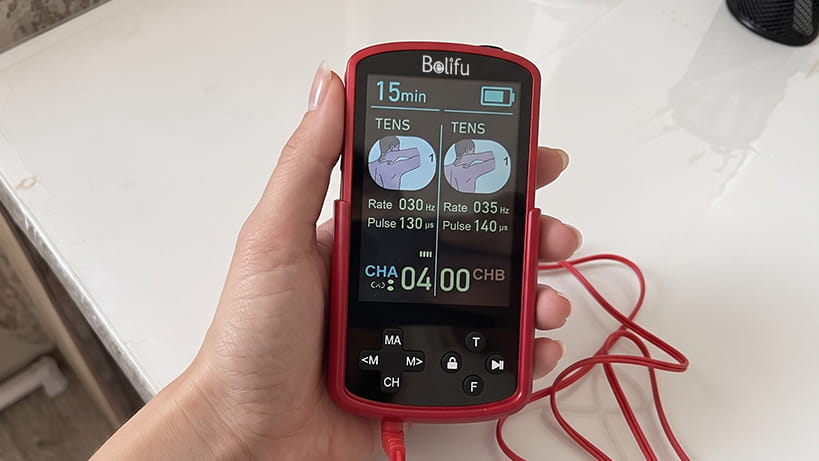
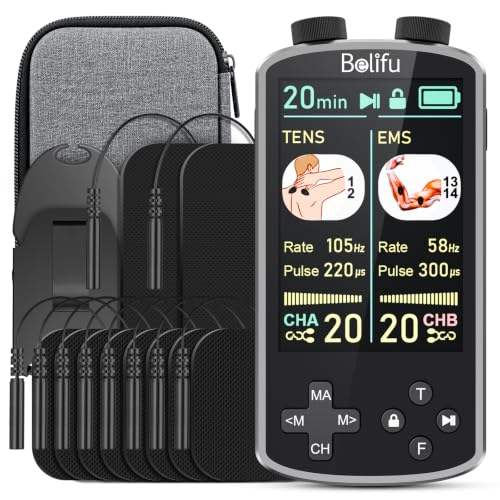
- TENS and EMS modes: 36 pre-set modes
- Channels: Dual-channel
- Intensity levels: 20 levels
- Battery type: Rechargeable (60 hours)
If you're looking for a budget-friendly TENS and EMS device, Belifu TENS EMS Unit is worth considering. It offers an impressive number of features for its price and doesn’t feel cheap.
Its biggest feature is 36 pre-set programs—the highest number on this list. While that sounds impressive, we found it a little overwhelming. For comparison, iRelieve offers fewer programs, while Oxiline TENS XS Pro strikes what we think is the right balance between variety and simplicity.
With more than 25 modes to scroll through, it becomes harder to remember which one you liked. That said, if you enjoy experimenting with different massage sensations, you’ll probably appreciate having many options.
However, the real standout (in our opinion) was the battery life. Belifu claims up to 60 hours of use from a single charge, and during our testing, we rarely reached for the charging cable. That’s roughly two and a half times longer than Oxiline TENS XS Pro, making it a great choice if you travel often or don’t want a device that constantly needs charging.
- Excellent value for money
- Huge selection of therapy modes (for some people)
- Outstanding battery life
- Huge selection of therapy modes (for some people)
- Build quality doesn't feel as premium
How to choose the best TENS and EMS combo unit
After testing these devices, we noticed that some features matter more than others. Here’s what we recommend looking for before you buy:
- Number of channels. We suggest picking a dual-channel device. This way, you can apply it to two areas at once, like your lower back and shoulder, instead of running two separate sessions.
- Pre-set programs. Consider how much variety you really need. Some devices have over 30 programs, while others offer 10–15. More options aren’t always better if you only use the same two modes each time.
- Intensity range. A wider range gives you more flexibility, especially if more than one person in your home will use the device.
- Wired or wireless design. Wireless units are often made for specific areas like the lower back or abdomen. If you want to use it on different muscle groups, a wired model with adhesive pads is usually more versatile.
- Rechargeable battery. We like rechargeable models since you won’t need to buy new batteries. Just make sure to check the battery life if you plan to use the device often.
- Pad quality. Adhesive pads wear out, so check how easy and affordable it is to get new ones.
- Portability. If you travel often, pick a compact device that fits easily in your bag or suitcase.
- Budget. Pricier models may have extra features, but a simpler device can still be a great choice if it meets your needs.
How to use TENS and EMS safely
Before we get into how to use TENS and EMS combo units safely, here’s an important reminder. If you are experiencing any kind of pain or are recovering from an injury, don’t make these devices your first option unless suggested otherwise by a qualified professional. It’s best to talk to your doctor before trying one.
Place the electrodes correctly
To get the best results, put the pads on or near the area you want. Most manufacturers provide diagrams with recommended pad placement, so check those before your first session. It’s a good idea to check with your healthcare provider so they can instruct how to use TENS in your unique case.
Avoid certain areas
Do not put electrodes on the front of your neck, over your head, or on your face, or across your chest and upper back at the same time. Placing TENS on these spots can be dangerous. Also, avoid putting pads on open wounds or irritated or broken skin.
Don't overdo your sessions
Begin with a comfortable intensity and slowly increase it if you need to. TENS should feel like a tingling sensation, but it shouldn’t cause painful muscle contractions. With EMS, muscle contractions are expected, but longer or stronger sessions are not always better. Stick to the session length the doctor recommends.
Check your pads regularly
Adhesive pads wear out over time. If they stop sticking, or if they get dry, cracked, or damaged, replace them before your next session.
Who shouldn't use TENS and EMS combo units?
The list includes:
- People with a pacemaker, defibrillator, or other implanted electronic device
- Pregnant people (unless advised by a healthcare professional)
- People with epilepsy or seizure disorders
- People with certain heart conditions
- People with serious blood circulation problems
Other recovery and wellness reviews
- The best TENS unit for home use: Our favorite models and recommendations
- Best wireless TENS units in 2026: How to choose?
- Best TENS units: Tested, compared, and ranked
References:
- National Library of Medicine. Transcutaneous Electrical Nerve Stimulation
- Journal of Pain Research. Latest advancements in transcutaneous electrical nerve stimulation (TENS) and electronic muscle stimulation (EMS): Revisiting an established therapy with new possibilities