We've put several TENS devices through real-world testing—here are our top picks for everyday use in 2026
TENS units have moved well beyond physical therapy clinics. These electrical stimulation devices are now sold directly to consumers, and an online search will turn up dozens of options making nearly identical claims. In this guide, you'll find our top picks with in-depth reviews of each product, focused on units that are comfortable to wear, easy to use, and, in the end, worth the money.
While a TENS unit won't treat the underlying cause of your pain, it may be a useful addition to a broader pain management plan, ideally one you've discussed with your healthcare provider.
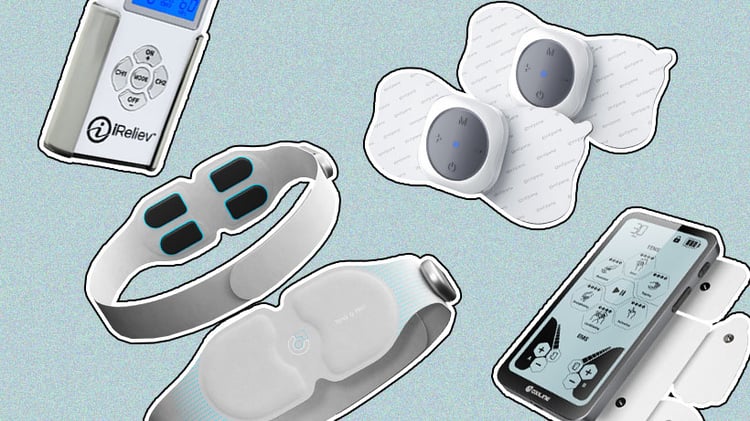
Quick picks: Best TENS units
- Oxiline TENS XS Pro: Best overall
- Oxiline TENS Q Pro: Best for lower back
- Comfytemp Wireless TENS Unit Machine: Best on a budget
- iReliev TENS + EMS Pain Relief & Recovery System: Best for athletes and active people
How we tested TENS units
Spec sheets only tell you so much, so our process was hands-on: we tried these products over several weeks through repeated sessions.
The first test was getting started. We considered how long it took to go from opening the box to running a first session, evaluating whether the setup is straightforward or leaves the user with questions. Here, we also considered the available modes, whether they add value or confusion.
From there, we shifted to fit, everyday use, and durability. This evaluation phase was the longest as we considered a wide range of factors. For instance, we checked how the adhesive on the pads held up, how each unit felt during wear, and roughly how far the battery lasted before needing a recharge or new batteries.
Finally, we checked each brand's claims against what we actually experienced. Every product that made it into this guide passed that process and was signed off by our team; if we noticed any discrepancies between the claims, we omitted the product.
Oxiline TENS XS Pro
Best for versatile applications
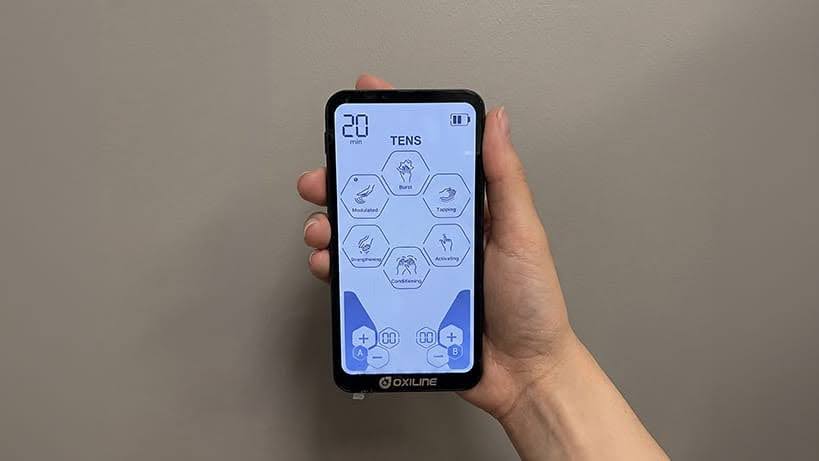
- Channels: Dual
- Preset programs: 24 therapy modes, 10 intensity levels
- Additional technologies: Electrical muscle stimulation (EMS)
- Battery type: Rechargeable
- Wired or wireless: Wireless
- Price: Mid-range
We chose TENS XS Pro as our best overall pick because it doesn't ask you to compromise and is flexible enough, without needing to buy multiple units.
It runs on dual channels, so you can use it on two areas at once, each with its own intensity setting. It also comes with different pad sizes (small round, medium square, large rectangle), so you're not stuck using the same shape everywhere you'd want to apply it.
Oxiline states that a single pad should last 20 to 30 sessions before it stops adhering properly, and that held up during our testing period. After use, you’ll need to clean the pads and air-dry them before putting them back in the box—a simple task that is required with most TENS units.
Ultimately, Oxiline delivered the perfect combination of versatile functionality and ease of use. We found the touchscreen interface intuitive, and we had no issues switching between the 24 therapy modes. Having EMS built in alongside TENS means you can use the same device for muscle stimulation and recovery, not just pain relief.
And lastly, Oxiline comes with a lifetime warranty on its products. While the pads will need to be replaced, this is a low-maintenance product.
- Great balance between functionality and versatility
- Can be used on two areas with independent settings
- Easy control via touchscreen
- FDA-cleared
- The pads will need to be replaced
Oxiline TENS Q Pro
The most convenient option for targeting lower back pain
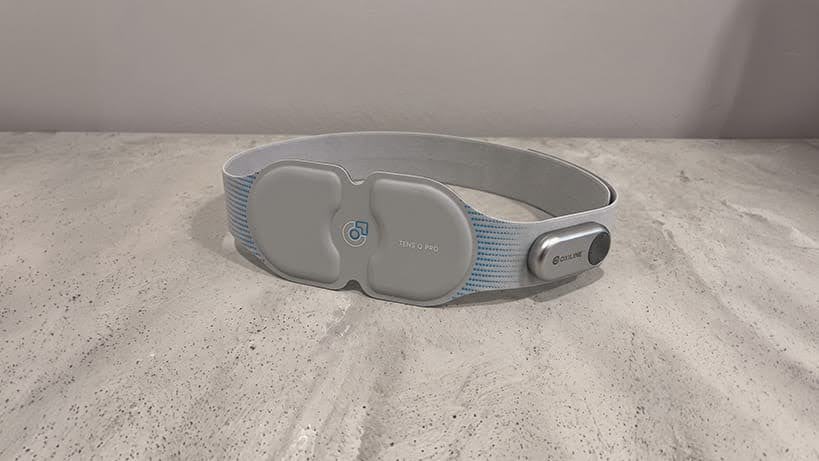
- Channels: Integrated pads rather than channel-based outputs
- Preset programs: 6 programs
- Additional technologies: Heating pads
- Battery type: Rechargeable
- Wired or wireless: Wireless
- Price: Mid-range
TENS Q Pro takes a different approach from most units on this list: instead of separate pads and wires, it's a band you wrap around your back. It offers the least versatility of the devices we tested, but it's also the easiest to actually put on and use correctly without help.
What we like is the combination of electrical stimulation and heat in a single band—you can run TENS alone, heat alone, or both together, and our team found the heat setting soothing and relaxing. One of our crew members also noted that they used the product for period cramps.
As the brand promises, this product can be used whilst on the move. Put it under clothing, and no one will be able to tell, which is perfect if you want a discreet product to use at your work desk. Since it straps on the waist, the pads are not sticky—there’s no cleanup after usage, nor do you need to change pads.
Oxiline has earned points for its lifetime warranty as well, something that a more budget-friendly product usually does not offer.
- FDA-cleared
- Easy to put on
- Soothing heat and massage-like sessions
- Lifetime warranty
- Limited application areas
Comfytemp Wireless TENS Unit Machine
Best for shoppers on a stricter budget
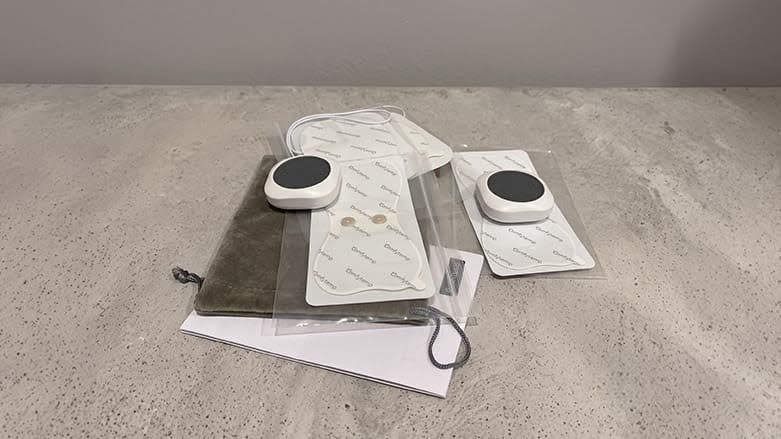
- Channels: Two independent wireless units
- Preset programs: 30 modes, 20 intensity levels
- Additional technologies: None
- Battery type: Rechargeable
- Wired or wireless: Wireless
- Price: Budget-friendly
If you want a similar wireless product to Oxiline TENS Q Pro but you are on a stricter budget, Comfytemp could be your match. It is also wireless, but there's no controller. Instead, everything—modes, intensity, application area—is handled through the Comfytemp app, which prompts you to select the body part you're targeting so you're not scrolling through all 30 modes individually.
Since you can stick the product on any area, this is a more versatile option than Oxiline TENS Q Pro. Though the placement may be trickier for some users due to having to position the pads correctly on their own, especially in harder-to-reach spots like the back.
Buyers should be aware that this product is strictly a TENS unit only, and you will not find any additional technologies like EMS or heat included. However, most of our picks include at least one of those extras, so it's worth knowing upfront if that's something you're expecting.
Comfytemp’s key advantage is the impressive longevity of the pads, which should last over 60 uses—and that matched what we found in our testing period. But this comes with a caveat, as there is some maintenance you must perform after each use. The company advises washing the pads with water and letting them air-dry after every session.
- Long-lasting pads
- Controlled via an app
- Cordless
- Hasn’t been FDA cleared
- Does not include EMS or heating technology
iReliev TENS + EMS Pain Relief & Recovery System
Suitable option for muscle recovery
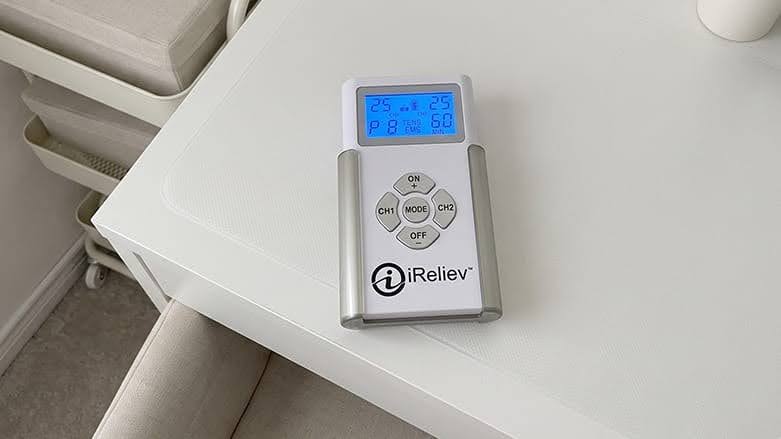
- Channels: Dual
- Preset programs: 14 modes, 25 intensity levels
- Additional technologies: EMS
- Battery type: 3 AAA batteries
- Wired or wireless: Wired
- Price: Mid-range
Combined with electrical muscle stimulation (EMS) technology, the iReliev TENS unit is tailored for active people: whether you're looking for a device to support recovery after workouts or help you warm up beforehand, its dedicated programs are built to fit right into a training routine.
The screen is not as intuitive as Oxiline TENS XS Pro—it reminded us of a complicated medical device. However, it has fewer modes to choose from, only 14, so, in the end, it is not the most overwhelming TENS device out there.
Moreover, it relies on AAA batteries rather than an internal rechargeable battery. Let’s compare: the three AAA batteries have a shorter lifespan compared to the 3200mAh rechargeable battery of Oxiline TENS XS Pro. This means not only will you end up replacing them, but you will also have to do so more frequently than you would need to recharge the Oxiline unit.
The maintenance is similar to what other TENS units require: after each use, clean the pads with water and let them dry. As per the manufacturer, the pads should last around 30 uses, which matched our experience as well.
While our reviewers noted that the device feels slightly flimsy, it comes with a year of warranty for your peace of mind.
- Can be used on two areas with independent settings
- Features EMS
- Does not have FDA clearance
- Relies on AAA batteries
TENS units compared
| Product | Channels | Modes | EMS included? | Battery | FDA-cleared? | Price |
| Oxiline TENS XS Pro | Dual | 24 | Yes | Rechargeable, 3200mAh | Yes | Mid-range |
| Oxiline TENS Q Pro | Integrated pads rather than channel-based outputs | 6 | Yes | Rechargeable, 2000mAh | Yes | Mid-range |
| Comfytemp Wireless TENS Unit Machine | Two independent wireless units | 30 | No | Rechargeable, does not specify the capacity | No | Budget-friendly |
| iReliev TENS + EMS Pain Relief & Recovery System | Dual | 14 | Yes | 3 AAA batteries | No | Mid-range |
How does a TENS unit work?
A TENS (transcutaneous electrical nerve stimulation) device delivers electrical currents through the skin that may help reduce pain.
Scientists have suggested two main mechanisms of action. The first one suggests that currents from TENS units interfere with pain signals traveling to the brain—a concept known as "gate control"—and block them. The second theory focuses on the release of endorphins, which are the body's natural pain-relieving chemicals. While these mechanisms remain theoretical, research on various types of pain and TENS suggests that these devices may help provide short-term pain relief for some people.
For instance, some studies suggest that TENS may be helpful for menstrual cramps, acute and chronic neck pain, and chronic lower back pain.
But one caveat of these studies must be mentioned: currently, the data on TENS remains mixed, with some research being inconclusive due to a lack of high-quality studies, which is worth keeping in mind. This is the case with fibromyalgia, though the researchers do emphasize that TENS has a favorable safety profile.
Beyond this, TENS can’t treat the underlying condition causing pain. It should be used as an additional tool for pain management support, not as a cure.
If you are thinking about buying a TENS device, the first step is to consult your healthcare provider.
What should you look for in a TENS unit?
TENS units vary in ways that go far beyond their cost. Here, we collected some of the factors our team would consider when choosing a TENS unit for our personal use.
Channels
TENS devices come with either one or multiple channels, which determine how many electrode pairs you can use at the same time. More channels give you more flexibility because you can use different settings on them. Let’s say you are targeting shoulder and neck pain at the same time—you may want the intensity on one area to be lower than the other.
Intensity levels
Since everyone’s sensitivity to electrical stimulation varies, a TENS unit with a wider intensity range lets you find a level that feels comfortable. Moreover, if you are targeting different areas of your body, sensitivity may vary, and a product with a broader intensity range will be more versatile.
Pad sizes
The size of the pads affects where and how you can use the device. Larger pads may work better for broader areas, while smaller pads are easier to position on smaller or more precise spots. They can also be a better choice for people who want to minimize the amount of skin covered.
Battery type
Rechargeable models are more practical for regular use because you don’t have to keep spare batteries on hand. However, AAA-powered devices can still be a convenient option because replacing the batteries is simple and inexpensive, and you don’t have to worry about the built-in rechargeable battery losing capacity over time.
TENS vs. EMS: What's the difference?
TENS and EMS are often bundled into the same device, which makes them easy to mix up, but they're built to do different jobs.
TENS targets your nerves: it uses electrical pulses that may interrupt pain signals before they reach the brain, and it's aimed at pain relief rather than working the muscle itself.
EMS, or electrical muscle stimulation, targets the muscles. It uses electrical impulses to trigger muscle contractions, similar to what happens during exercise. This is why it's commonly used for muscle conditioning and to support recovery after a workout—though, as with TENS, the research on the benefits of EMS is mixed.
TENS and EMS also feel different. TENS feels tingling, gentle, while EMS is more pronounced, with involuntary muscle contractions.
In short, reach for TENS modes when the goal is pain support, and reach for EMS modes when the goal is muscle recovery support. A device that offers both, like Oxiline TENS XS Pro or iReliev, gives you the flexibility to use either depending on what you want on a given day.
Are TENS units safe?
The researchers highlight that TENS has a good safety record. However, there are certain circumstances in which you should consult a doctor first, or avoid using them entirely.
TENS units are not recommended for anyone with a pacemaker or any similar device, people with epilepsy, or anyone with pain that hasn't been evaluated by a doctor. If you're currently pregnant, it's important to discuss any TENS use with your healthcare provider before trying it.
Beyond that, follow the manufacturer's instructions for your specific model. Start at the lowest intensity and increase gradually. Avoid placing pads directly over broken or irritated skin, and stop use if a device shows any signs of damage.
Other recovery and wellness reviews:
Best leg compression sleeves: Discover options for recovery, circulation, and running
Best red light therapy devices for pain: Explore how red light therapy may assist with recovery and lessen discomfort
Best vagus nerve stimulation devices: Learn how non-invasive vagus nerve stimulation may help with recovery and stress
-
The Journal of Pain.
-
Journal of Occupational Rehabilitation.
-
Journal of Clinical Neuroscience.
-
Medicina (Kaunas).
-
The Journal of Strength & Conditioning Research.
-
Database of Abstracts of Reviews of Effects (DARE): Quality-assessed Reviews.