Best vagus nerve stimulation devices in 2026: Our tested picks for stress and relaxation


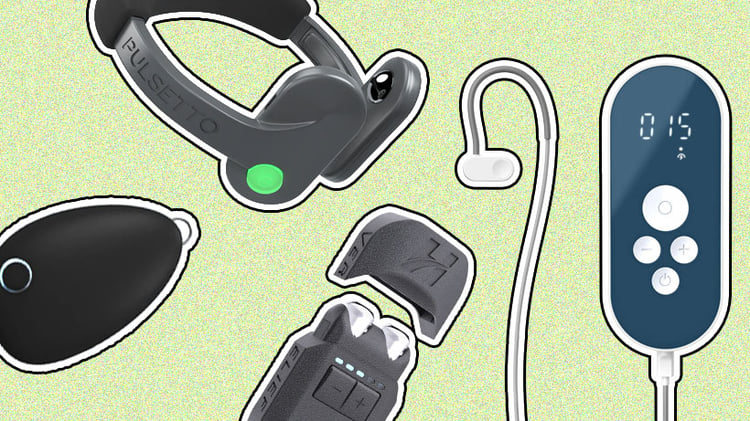
Stress overhaul support: Our testing-based recommendations on vagus nerve stimulators
Whether it’s college, work, or relationship stress, we all feel it on an almost daily basis. Over time, it may really pile up. Well, you’re not alone—we’re seeing a real rise in wellness tech designed to support nervous system regulation.
You may have heard the vagus nerve mentioned when people talk about stress, sleep, and relaxation. It’s the longest cranial nerve that goes from the brain through the neck to the abdomen and plays a role in functions like heart rate, breathing, and digestion.
That’s where at-home vagus nerve stimulation (VNS) devices enter. They’re flooding the market with claims of reduced stress, better sleep, and improved mood. Yet, whether they can actually deliver is still a pending question.
We tested some of the most popular models to help you understand what these non-invasive tools can (and can’t) do. Here’s what we found and which vagus nerve stimulation devices we liked the most.
Quick look: The best vagus nerve stimulation devices
- Nuropod: Best for user-friendly design
- Pulsetto FIT: Best for easy use
- Hoolest VeRelief Prime: Best for traveling
- SONA: Best for sessions powered by smart features
- ZenoWell Luna: Best for mid-range budget
- Sensate: Best for calming sessions
How we tested these vagus nerve stimulation devices
Before we started testing at-home vagus nerve stimulation devices, we set clear evaluation criteria to keep things consistent between all the testers. We looked at:
- Design aesthetics
- Convenience during use
- Stimulation performance
- App experience
- Overall feelings after a session
But that’s just the foundation. Our testers explored technical specs, portability, battery life, and build quality, assessing if each device’s price is justified. Since we tested both handheld and wearable options, we also reviewed available clinical research on different vagus nerve stimulation methods.
One important note—these are our informed opinions based on real testing, not medical advice. Everybody is different, and what works for us may not have the same effects for you. Before you decide to purchase a vagus nerve stimulation device, talk to your healthcare provider.
Nuropod
Best user-friendly vagus nerve stimulator
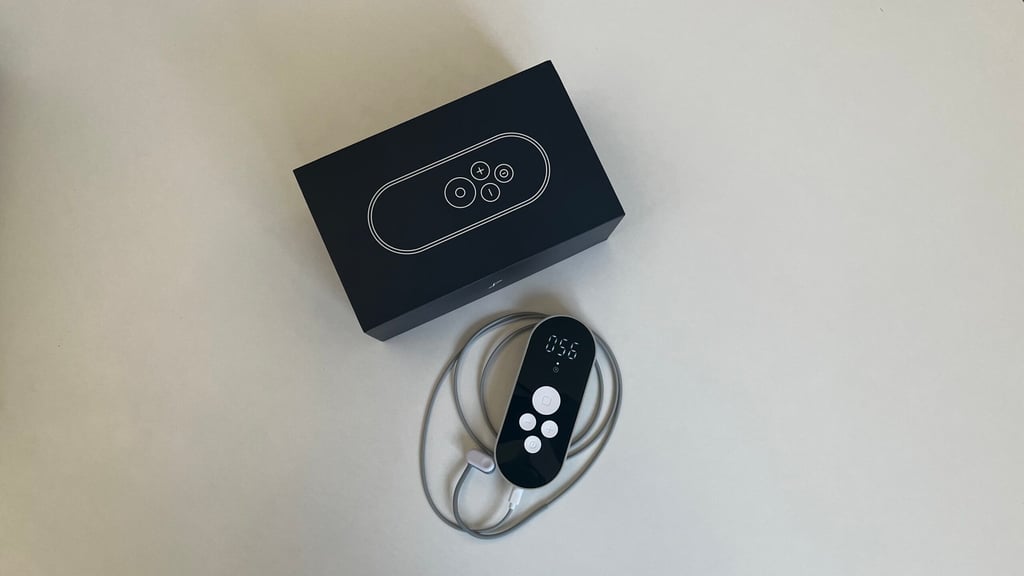
- Placement: Earpiece positioned on your tragus and inner ear
- Connectivity: Companion app available
- Session time: 15–30 minutes twice a day
- Certifications: CE and FDA clearance
- Price: $855
Unanimously, our top choice is Nuropod—a non-invasive transcutaneous auricular vagus nerve stimulation (taVNS) device that clips onto your ear. It’s honestly user-friendly and beginner-friendly too, except for the $855 price tag.
We tested it regularly for a month and noticed generally sharper focus, less anxiety, and less midday sleepiness. Measuring results is tough since effects are tied to nervous system changes, so that’s all we observed.
That said, don't be quick to judge after just a few sessions. At first, we thought it felt like nonsense, even uncomfortable, to complete a 15–30 minute session two times per day. But our testers adjusted, eventually describing the electrical signal as either manageable or soothing.
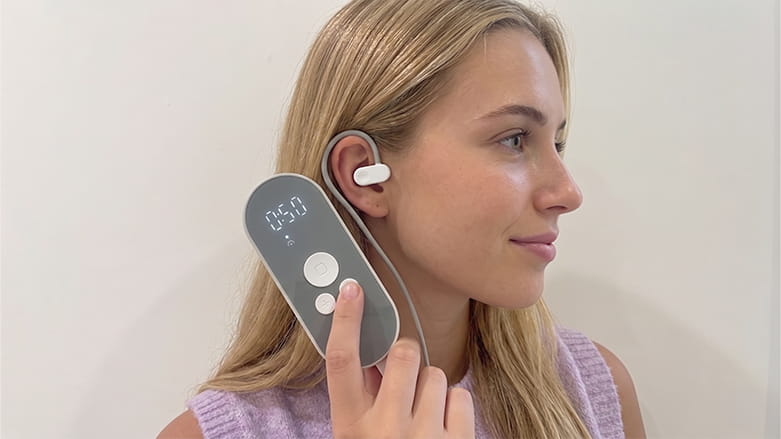
Why do we claim Nuropod works as a starting point? Controls are simplistic and you don’t need an app—everything is displayed on a controller attached to the earpiece itself. Put your phone away, skip the notifications, and meditate or read during a session to fully immerse yourself.
Though Nuropod does have a companion app, we didn’t test it. Apple Store reviews suggest it’s very buggy, so for now just embrace the simplicity of the experience.
- Simplistic controls
- No need for an app or conductive gel
- Hands-free design
- Steep price tag
- Takes time to adjust
- Reports say app is buggy
Pullseto FIT
Best convenient vagus nerve stimulation device
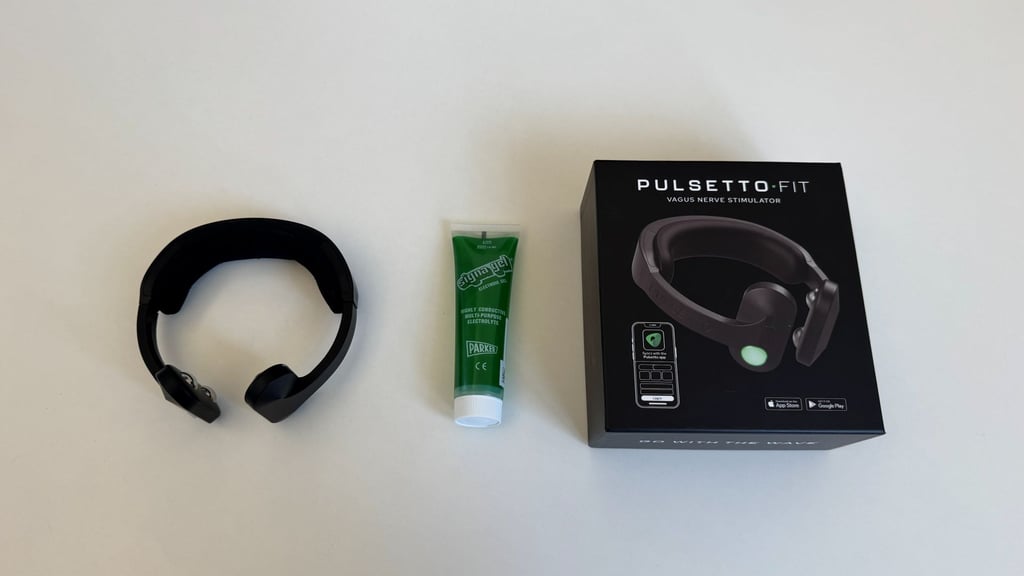
- Placement: Wearable positioned around your neck
- Connectivity: Companion app available
- Session time: 4–10 minutes twice a day
- Certifications: CE and FCC
- Price: $296
If wearing an electrical stimulation device clipped to an ear sounds too uncomfortable for you, Pulsetto FIT offers an appealing alternative. Mind you, the brand makes two models—FIT and Lite—but we tested only the FIT one.
We recommend Pulsetto FIT if you want a convenient transcutaneous cervical vagus nerve stimulation (tcVNS) device. This approach is designed to stimulate the vagus nerve through the neck, yet most tcVNS devices are handheld. Pulsetto FIT differs—it’s hands-free and worn around your neck, sitting at the nerve without requiring you to hold it.
You control sessions through the free Pulsetto app: track usage, adjust intensity levels, set duration, and access guided sessions. We found the interface intuitive, though differentiation between five programs—Stress Relief, Anxiety, Sleep, Burnout, and Pain Management—raised some questions.
Using Pulsetto FIT was an interesting experience. The design resembles a very loose choker (accesory that cycles through fashion trends every few decades). FIT is suitable for smaller necks, so we didn’t have too much of an issue trying to find the correct placement of electrode pads.
Comfort depends entirely on your sensitivity to the sensation. Some testers started at level 6, moving to level 7 after an adjustment period, while level 9 remained too strong even after weeks of use.
- Intuitive app interface
- Very convenient design
- Relatively budget-friendly
- You need to find the correct electrode pad placement for you
- Unclear difference between programs
- Requires conductive gel for use
Hoolest VeRelief Prime
Best travel-friendly vagus nerve stimulation device
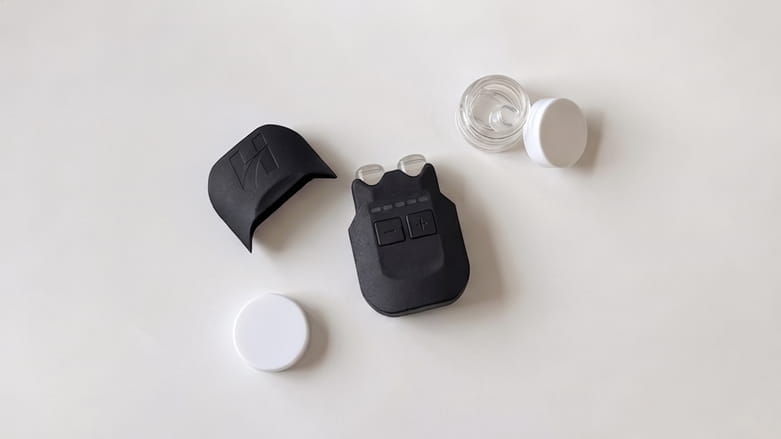
- Placement: Handheld device for your neck
- Connectivity: None
- Session time: 30–60 seconds, up to 5 minutes
- Certifications: N/A
- Price: $159.20
If you want a tcVNS device that actually fits in your pocket, Hoolest VeRelief Prime is your choice. It’s smaller than a palm and is discreet; you can use it during a work break or just any moment alone without drawing attention. Plus, sessions are short enough that portability becomes a really big advantage.
Just note that this vagus nerve stimulation device is classified as a general wellness tool. That's important when evaluating what it can actually do for you.
Honestly, we didn’t see any dramatic changes after a week of regular use. The sensation itself is immediate—you feel a brief buzz—and there’s post-session calm. But overall, it’s hard to tell if that’s the device itself or just placebo.
One benefit is that you can apply Hoolest to your shoulder, shin, or forearm, not just the neck. Whether the vagus nerve itself responds to this off-target placement is debatable, but the electrical signal may trigger local muscle relaxation.
Lastly, we want to mention Hoolest’s references to clinical studies on their site, but most of them are citations of general tcVNS research with no mention of VeRelief Prime. A few claim the device was used in studies, but there aren’t any links to published papers, so keep some skepticism about these trials.
- Very short sessions
- Low price point
- Literally pocket-sized
- No FDA clearance or certifications
- Unverified research claims
- Requires conductive gel for use
SONA
Best AI-powered vagus nerve stimulator
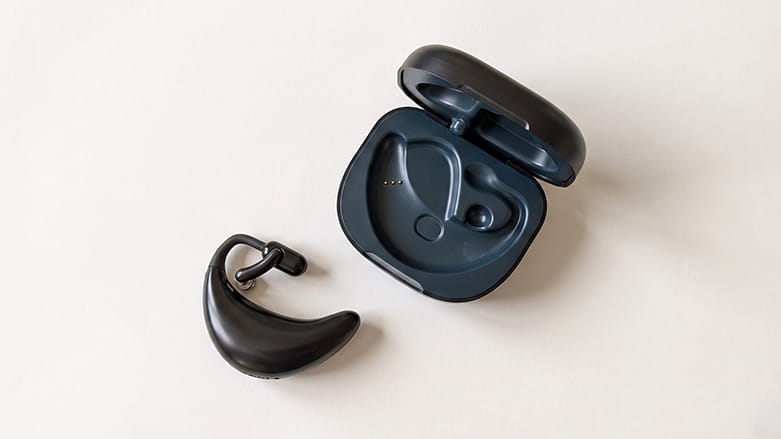
- Placement: Wearable earpiece
- Connectivity: Companion app with audio pairing
- Session time: 10 minutes
- Certifications: CE mark, UKCA, GDPR, CCPA, UFCC, RoHS compliant
- Price: $937
If your budget allows it and you’re serious about wellness tech, we recommend checking out SONA. It’s a taVNS earpiece that uses AI to personalize stimulation based on your real-time heart rate and respiration data.
In our experience, the stimulation sensation is quite intense, so make sure to start with lower settings. Don’t expect overnight changes—any effects may take time to become noticeable. After several weeks, our testers reported feeling more energetic and in a more stable, positive mood. That said, we can’t attribute all the changes to SONA.
What actually sets this device apart is the biometric feedback: heart rate, heart rate variability (HRV), and respiration. While these metrics may be affected by external factors like sleep, diet, and emotional state, it’s a nice addition to the experience.
Speaking of design, the earpiece is very comfortable—flexible, with premium material that moulds to your ear. Also, the companion app lets you monitor skin contact quality during sessions.
The biggest downside is SONA’s price tag. It’s also not FDA-cleared, though there are other certifications and promises of clinical trials in the future.
- Ergonomic, flexible design
- Biometrics tracking
- Engaging app
- Premium price
- No FDA clearance
- App-dependent
ZenoWell Luna
Best budget taVNS device
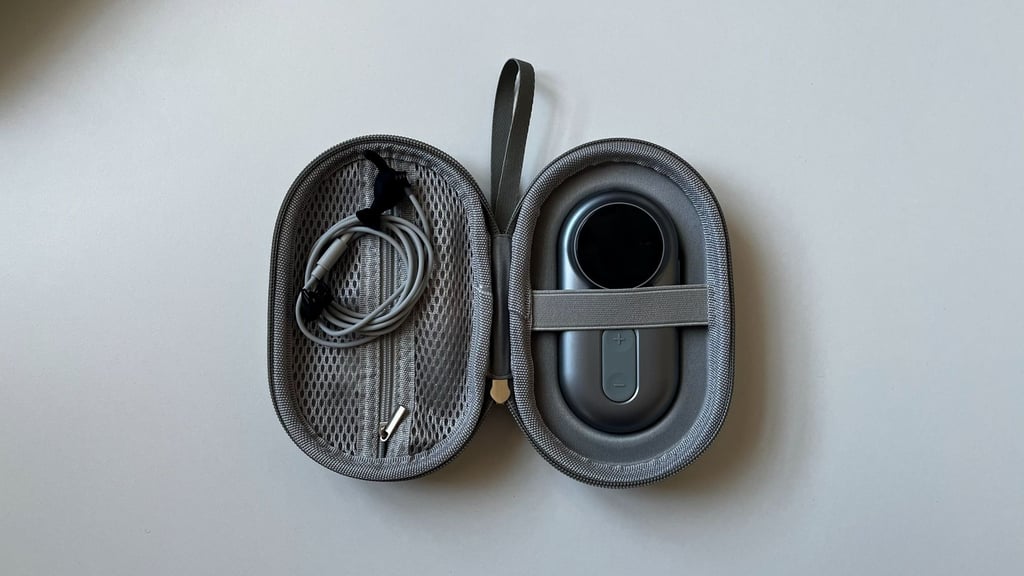
- Placement: Earpiece positioned in your inner ear
- Connectivity: Companion app available
- Session time: 5–20 minutes
- Certifications: CE, FCC, RoHS compliant
- Price: $409
If Nuropod and SONA feel too pricey for you, ZenoWell Luna cuts the cost roughly in half while keeping the core taVNS features. We believe it’s a solid mid-range option, especially for budget-conscious people.
The earpiece itself is flexible and comes in gray or blue. The controls are super simple, with a physical controller attached to the earpiece. You don’t need an app or Bluetooth to use the core modes, although the Zeno app unlocks additional features. We also felt like the controller was bulkier than Nuropod's.
The four specialized modes let you customize your sessions: Relief for managing headaches, Sleep for helping to fall asleep faster, Relax for tension relief, and Medit for focus support. In our testing, we didn’t feel much of a difference or claimed benefits between the modes, but it may just be our experience.
Overall, ZenoWell Luna works best if you want an affordable taVNS device with simple controls and the option to use an app for more advanced features.
- Easy controls
- More affordable than most taVNS devices
- Multiple color options
- Long sessions
- We didn’t feel any effects
- Requires gel or water for good contact
Sensate
Best vagus nerve toning device for relaxation
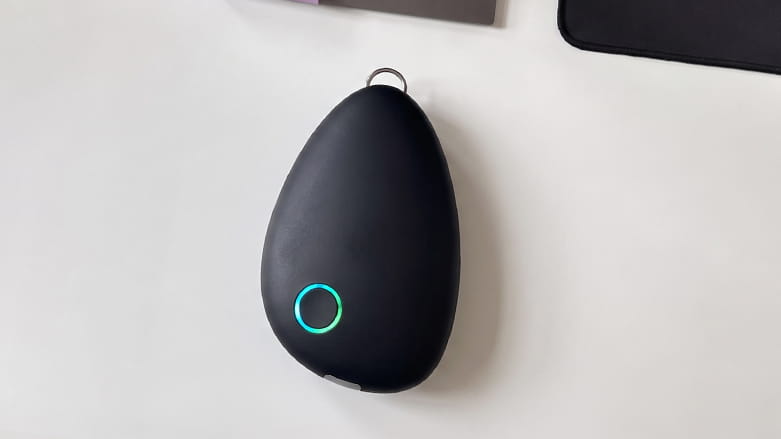
- Placement: Held on the sternum
- Connectivity: Companion app with audio pairing, Apple Health integration
- Session time: 10 minutes
- Certifications: CE mark
- Price: From $269.10
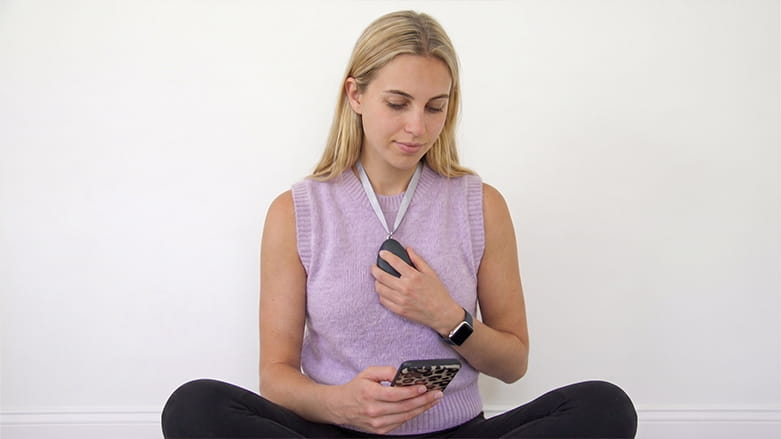
Sensate isn’t a traditional vagus nerve stimulator—it’s positioned as a vagal nerve toning (VNT) device that uses infrasonic vibrations instead of electrical stimulation. This distinction is really important, as it’s unclear whether Sensate directly affects the vagus nerve or if the calming effect comes just from the pleasant sensation.
The device is pebble-shaped, with a rubberized surface that feels very nice to hold. You can grip it to your chest during sessions or wear it with the included lanyard. The app syncs device vibrations with audio soundscapes, deepening the calming experience.
In our testing, Sensate delivered the most pleasant sensation—within minutes, we felt noticeably more relaxed. That said, it’s not really designed to provide the same type of sustained vagus nerve stimulation as electrical at-home vagus nerve stimulators.
It may be strongest for managing in-the-moment anxiety or winding down after a stressful day. So, think of Sensate more as real-time stress relief rather than lasting change.
- We felt immediate calming effects
- Budget-friendly
- Pleasant-to-the-touch material
- Not a traditional VNS device
- Handheld design
- Limited clinical evidence
Vagus nerve stimulation devices compared
Still deciding which device fits your needs best? Here’s a quick breakdown of each option.
| Device | Type | Placement | Session | App dependency | Price | Best for |
| Nuropod | Wearable taVNS | Ear | 15–30 minutes | No | $855 | Most user-friendly |
| Pulsetto FIT | Wearable tcVNS | Neck (both sides) | 4–10 minutes | Yes | $296 | Convenient design |
| Hoolest VeRelief Prime | Handheld tcVNS | Neck | 30–60 seconds, up to 5 minutes | No | $159.20 | Portability |
| SONA | Wearable taVNS | Ear | 10 minutes | Yes | $937 | AI-powered personalization |
| ZenoWell Luna | Wearable taVNS | Ear | 5–20 minutes | No | $409 | Price-to-feature balance |
| Sensate | Handheld VNT | Chest | 10 minutes | Yes | $269.10 | Calming sensation |
What is vagus nerve stimulation?
The vagus nerve is the longest cranial nerve in your body—an important connection between your brain and most major organs. It branches from your brainstem and runs all the way down to your gut, passing directly through your heart, lungs, and digestive system.
This nerve is the main pathway of your parasympathetic nervous system. When it’s active, it helps slow heart rate, relax muscles, and promote digestion. That’s why researchers suggest that stimulating the vagus nerve may help support your body's natural relaxation response.
Vagus nerve stimulation is a treatment method that sends mild electrical pulses to activate this nerve. There are two approaches: invasive and non-invasive.
Implanted VNS vs. tcVNS vs. taVNS: Which is right for you?
Implanted VNS device: Best researched
Surgically implanted vagus nerve stimulation devices are placed under your collarbone and send electrical signals through a wire to your vagus nerve. This approach is the most studied and has strong, established evidence of long-term safety and effectiveness. It’s also FDA-approved to help with epilepsy, treatment-resistant depression, and PTSD.
However, implanted VNS has its drawbacks. It requires surgery, which carries risks like infection, nerve damage, or voice changes due to the location. Plus, the procedure is very expensive and not all insurance plans cover the full cost. If you’re simply looking for stress relief or relaxation, this approach is likely not for you.
Neck-based tcVNS: Most affordable
Transcutaneous cervical VNS works by sending gentle electrical signals through electrodes placed on your neck. Devices come in handheld forms (like Hoolest VeRelief Prime), neck patches, or wearables (like Pulsetto).
Devices with this approach are generally affordable and considered safe with only mild, temporary side effects. Research on tcVNS is also slowly emerging, suggesting improved auditory and visual performance when compared to placebo.
Ear-based taVNS: Convenient but pricier
Auricular VNS (taVNS) stimulates the vagus nerve through the ear, where a branch of the vagus nerve is—the auricular branch. Through there, electrical signals are delivered to the main vagus nerve, seeking to trigger your parasympathetic system. Devices are typically earpieces or ear-clips.
It is commonly considered safe for at-home use, and emerging research suggests modest effectiveness for depression, sleep, and anxiety. However, taVNS devices like Nuropod and SONA are significantly more expensive than many tcVNS options.
Who shouldn’t use vagus nerve stimulation devices?
Because taVNS and tcVNS devices deliver mild electrical stimulation, there are some safety considerations you should know about. If any of the below apply to you or you're unsure, contact your healthcare provider before using a device.
Don’t use taVNS or tcVNS devices if you have:
- Pacemaker, cochlear implant, or other active implanted electronic device. Electrical stimulation may interfere with device function.
- Metal implants in the head, neck, or heart. Electrical stimulation may have unpredictable effects.
- Are pregnant. There’s limited safety data on pregnant people.
- Active ear infections, skin wounds, or conditions where the device is placed. There's a risk of worsening infection or irritation.
- History of heart arrhythmias. Evidence is mixed and limited.
- Sleep apnea. Evidence is mixed and limited.
How to choose a vagus nerve stimulation device
If you’re still wondering which vagus nerve stimulation device to choose, we’ve put together a short guide covering the key features you should consider and questions to ask before buying.
Comfort and convenience are the first things you’ll notice in any device, and they’re crucial if you’re looking for a long-term tool. Consider whether you prefer a wearable device for easier sessions with preset settings, or whether a handheld vagus nerve stimulator suits you better, especially if quick sessions are your priority.
Another aspect is app-dependency. Apps can offer more personalization and intuitive operation, though notifications can be distracting. Devices without apps are more straightforward to use but may take time to learn the controls—still, they’re typically simple once you get the hang of them.
Cost is a critical factor for most people. So, set a budget and look for a vagus nerve stimulator within that range. Don’t forget to check for subscription fees and whether you need conductive gel. These ongoing costs can quickly add up.
You’ll also notice different stimulation approaches, which we discussed above: taVNS, tcVNS, and VNT. If clinical validation matters to you, also check if a device carries relevant certifications and has published clinical trial studies.
The most important thing is to choose a device you’ll actually like and use. Don’t rush the decision—finding the right fit takes time, but it’s worth it.
Vagus nerve stimulation devices reviews:
Nuropod review: Does daily use actually reduce stress?
I used Pulsetto for weeks: Is it worth buying?
Sensate review: Can this vagus nerve device actually reduce stress?
My ZenoWell review: What happened after weeks of use
Vagus nerve stimulation devices: FAQ
Sometimes, yes. You should always follow device manufacturers’s guidelines on use frequency and length. However, some research on taVNS (ear-based) use suggests that daily sessions are safe and well-tolerated.
Sensation depends on stimulation intensity, and the feeling can vary from person to person. Usually, at lower intensities, you should feel a tickling sensation. At higher intensities, stimulation can feel uncomfortable, or like pinching—you might even experience slight pain or dizziness.
No. Most at-home VNS devices aren’t FDA-approved or FDA-cleared. Instead, they’re marketed as general wellness products.
Implantable VNS devices are FDA-approved medical treatments for epilepsy, PTSD, and treatment-resistant depression. Meanwhile, at-home and wearable VNS devices are considered wellness products.
If you’re seeking a tool for stress or relaxation support, then it may be worth the investment. Emerging evidence suggests that taVNS and tcVNS may help improve mood and sleep quality, though results vary by person and take time to develop. Consult your healthcare provider to see if one might help you.
-
Brain, Behavior, and Immunity.
-
Journal of Clinical Neurology.
-
Brain Stimulation.
-
Brain Stimulation.
-
Scientific Reports.
-
Frontiers in Psychiatry.
-
Aging.