- FDA-cleared device
- Combines TENS and EMS therapy
- Modern touchscreen interface
- Durable and high-quality electrode pads
- More expensive than many rivals
- Battery life could be longer
Before receiving this device, I had no idea what TENS or EMS technology actually meant. But after spending a month researching the topic and several weeks testing the device, I feel ready to put together my own Oxiline TENS XS Pro review.
TENS stands for transcutaneous electrical nerve stimulation, and it’s a widely used, non-invasive therapy that might provide short-term pain relief, while EMS is designed to stimulate muscles. Oxiline TENS XS Pro combines both in a consumer device intended for at-home use alongside—not instead of—your healthcare professional’s advice and treatment plan.
In this review, I share my hands-on experience, explain what I learned about TENS and EMS, and help you decide whether this feature-rich unit is worth your consideration. Just one note before we start—the results vary person to person, so I encourage you to check with your doctor before starting TENS therapy.
| Product | TENS XS Pro |
| Technology | TENS and EMS |
| Best suited for | Multiple body areas |
| Preset modes | 24 modes |
| Intensity levels | 10 levels |
| Channels | Dual independent channels |
| Battery life | Up to a full day on a single charge (rechargeable) |
| Included electrode pads | 6 electrode pads |
| Warranty | Lifetime warranty |
What's so special about Oxiline TENS XS Pro?
Oxiline TENS XS Pro doesn’t reinvent how TENS devices work, but after several weeks of testing, I do think it’s one of the better-designed wired options on the market.
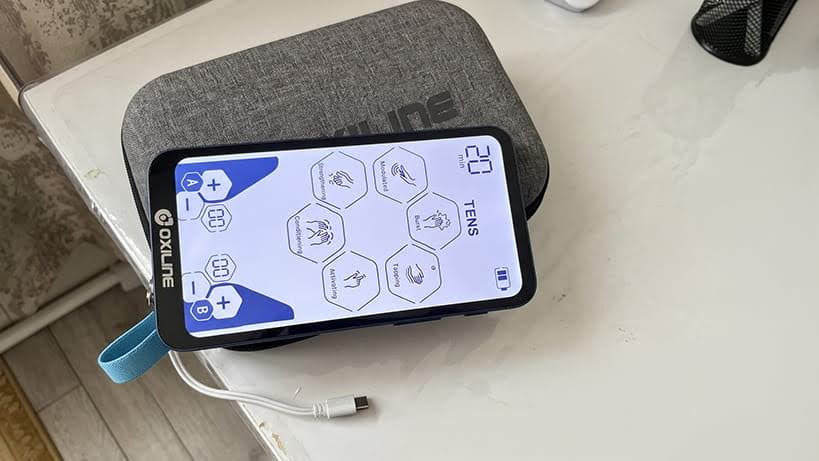
My positive impression started almost immediately—after seeing plenty of older TENS units with their bulky controllers and confusing button layouts, the XS Pro’s touchscreen felt like a refreshing upgrade. It looks more like a modern smartphone than a traditional health tech device, making it straightforward to navigate even if you’ve never used a TENS unit before.
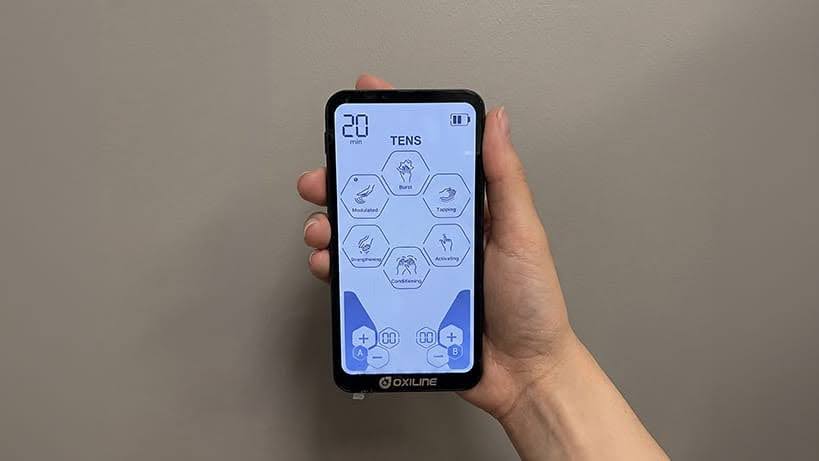
Another feature I appreciated is the dual independent channels. While not exclusive to Oxiline, it’s an important aspect for a wired TENS unit, which allows you to connect multiple electrode pads while adjusting the intensity of each channel separately. This gives you much more flexibility if one area needs gentler stimulation than another.
Diving deeper into preset modes
XS Pro also includes 24 preset TENS and EMS programs that are neatly organized into six categories that use different combinations of pulse frequency, pulse width, and stimulation patterns.
- Modulated. Continuously changes the stimulation pattern during a session. This is generally intended to reduce your body becoming used to the pulses.
- Burst. Delivers groups of electrical pulses separated by short pauses.
- Tapping. Rhythmic, gentle, almost massage-like tapping sensation.
- Strengthening. EMS-focused mode that is supposed to produce strong muscle contractions.
- Conditioning. Also uses EMS, but with more moderate intensity to help build endurance.
- Activating. Uses gentler EMS contractions designed to help warm up muscles before activity.
Personally, I ended up using the Tapping, Activating, and Conditioning modes the most. My goal wasn’t particularly pain management but helping tired muscles feel a bit more relaxed after karate workouts. While I can’t say how truly effective these presets are, they were the ones I found the most comfortable and enjoyable to use.
Does combining TENS and EMS make sense?
A simple way to think about Oxiline TENS XS Pro’s programs is to split them into TENS (Modulates, Burst, and Tapping) and EMS (Strengthening, Conditioning, and Activating). While the two technologies use electrical stimulation, they’re designed for different purposes. Combining them makes practical sense because it gives you more flexibility in how to use the device.
TENS delivers low-level electrical pulses through electrode pads placed on your skin. Its main goal is to provide temporary pain relief, and current evidence suggests it may support pain relief during or shortly after a session for some people. However, results vary.
On the other hand, EMS sends stronger electrical currents to cause muscle contractions. It’s commonly used in rehabilitation and sports settings to help maintain muscle activity, support muscle strengthening, or assist with recovery after injury when recommended by a healthcare professional.
Ultimately, having both technologies in one device makes Oxiline TENS XS Pro more versatile, but neither TENS nor EMS should be viewed as a replacement for exercise, physiotherapy, prescribed treatments, or medical advice.
Battery life and safe use of Oxiline TENS XS Pro
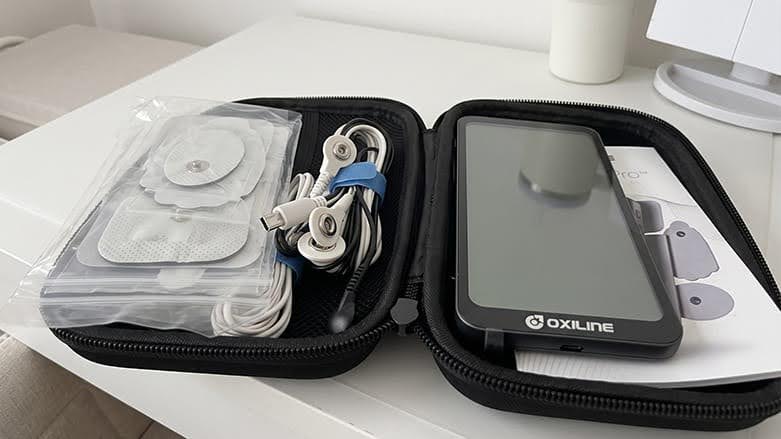
To be honest with you, the battery life is one of the most disappointing aspects of XS Pro, even though it’s fairly typical for a rechargeable wired TENS unit. During my testing, I found myself charging it almost every day. That’s not an absolute deal-breaker, but it did become bothersome after a while. A good thing—recharging is relatively quick.
Though for me, the bigger limitation was convenience rather than battery life. I’m rarely at home, and that’s why a wired TENS unit felt quite impractical.
A typical session lasts around 15–30 minutes, and the brand suggests using XS Pro more than once a day, depending on your needs and doctor’s advice. The device comes with a handy carrying case, but you’re still connected to the controller by cables, meaning that walking around or doing everyday tasks comfortably isn’t really an option. If you’re like me and have a chaotic schedule, fitting in regular TENS sessions may be difficult.
Where should you place electrode pads?
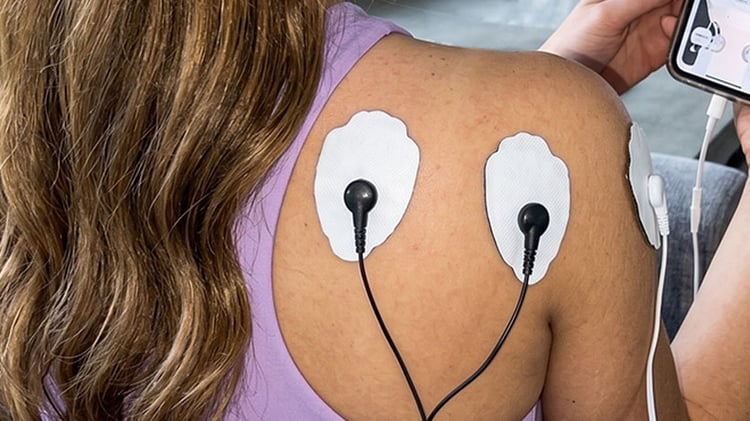
Oxiline TENS XS Pro includes six reusable, hypoallergenic electrode pads in three sizes. I actually really liked their quality—the hydrogel adhesive stayed sticky throughout my testing, they were comfortable to wear, peeled off easily, and I didn’t experience any skin irritation. Like most TENS pads, they’ll eventually need replacing, but Oxiline’s replacement sets are relatively inexpensive.
When it comes to placement, it’s always best to follow the manufacturer’s instructions. In general, XS Pro can be used on many areas of the body, including the back, shoulders, arms, hips, and legs. Just avoid placing the pads on the front of the neck, face, head, directly over open wounds, or across the chest.
Who shouldn’t use TENS devices?
Although considered safe for most healthy adults, TENS isn’t suitable for everyone. So, before using Oxiline TENS XS Pro, or any similar devices, talk to your healthcare provider if you have:
- Cancer
- Heart conditions
- History of deep vein thrombosis
- Epilepsy
- Implanted electrical device
- A pacemaker
- Are pregnant
Does it actually help with pain?
Oxiline says XS Pro is designed to help with pain management and muscle recovery, and that it can be used almost all over the body. Like with any health tech product, though, it’s worth looking beyond the marketing and seeing what the research actually says.
Overall speaking, there is reasonably solid evidence supporting TENS for temporary pain relief. A large 2022 review found that TENS may support pain during or immediately after a session, with very few reported side effects when used correctly. That doesn’t mean it works for everyone or every type of pain, but it’s a tool that may help manage symptoms alongside treatments recommended by your doctor.
Based on that, I think Oxiline TENS XS Pro is a promising device if your expectations are realistic. It might help provide you with short-term pain relief, and the EMS programs can be a useful addition to the experience. Just remember to first speak with your healthcare provider if you're unsure whether TENS or EMS is appropriate for your needs.
Is it worth using every day?
You can use Oxiline TENS XS Pro every day, but that doesn’t necessarily mean you have to.
The brand recommends having regular daily sessions, unless your doctor advises otherwise. However, research doesn’t show that using TENS more frequently automatically leads to better outcomes. Instead, most of the potential benefits appear during a session or for a short period afterward, so many people simply use it when they feel bothersome pain or discomfort.
EMS is a little different. If you’re using it as part of a rehabilitation program, your doctor may recommend a regular schedule. Yet for general fitness, EMS shouldn’t replace strength training. I see it as a useful extra feature that makes most sense before or after workouts rather than as part of a strict routine.
Is Oxiline TENS XS Pro worth the money?
XS Pro is definitely one of the pricier wired TENS options on the market, but I still believe its overall operation justifies the higher price point. At the time of writing, it costs $199.40, and Oxiline includes a 30-day risk-free trial, a lifetime warranty, and free shipping to some countries.
Of course, the upfront cost isn’t the whole story. Like every TENS unit, you’ll eventually need to replace the electrode pads as they lose stickiness. Oxiline sells replacement sets of eight electrode pads for $19.00, which isn’t a major ongoing expense, but still something worth factoring in.
Oxiline TENS XS Pro vs. competitors
Compared to other TENS units, XS Pro is pricier but may also bring more benefits. Here’s how it compares with competitors:
| Product | Oxiline TENS XS Pro | Oxiline TENS Q Pro | iReliev TENS + EMS Pain Relief & Recovery System |
| Price | $199.40 | $89.00 | $79.95 |
| Modes | 24 TENS + EMS | 6 TENS + EMS | 14 TENS + EMS |
| Electrode pads | 6 total | 4 total | 6 total |
| FDA status | FDA-cleared | FDA-cleared | FDA-cleared |
| Battery | Rechargeable | Rechargeable | 4x AAA batteries |
| Warranty | Lifetime | Lifetime | 1 year |
| Best for | People wanting versatility and customization | People prioritizing portability | Budget-conscious buyers |
| Official website | Visit Oxiline | Visit Oxiline | Visit iReliev |
More pain relief device reviews
Check out best wireless TENS units in 2026
Read our pick of the best TENS unit of 2026
Explore best TENS and EMS combo units
Learn more about best TENS units for back pain
Final verdict: Should you buy Oxiline TENS XS Pro?
After testing Oxiline TENS XS Pro for a few weeks, I think it’s a worthy option for anyone looking for a feature-rich wired TENS unit. It especially suits people who have a more routine schedule and spend their free time mostly at home. Plus, it’s easy for beginners to get started with, yet offers enough for more experienced users.
With both TENS and EMS functions, 24 preset programs, and three electrode pad sizes, XS Pro offers plenty of versatility. It’s certainly more expensive than many competing wired TENS units, but if you expect to use it regularly over a long time, I believe the price is manageable.
Yet, remember to keep your expectations realistic—it’s not a replacement for medical care but rather a supportive tool designed for pain management and recovery.
-
Journal of Orthopaedic Trauma.
-
BMJ Open.
-
Frontiers in Pain Research.