Best TENS units for back pain: Finding the right fit

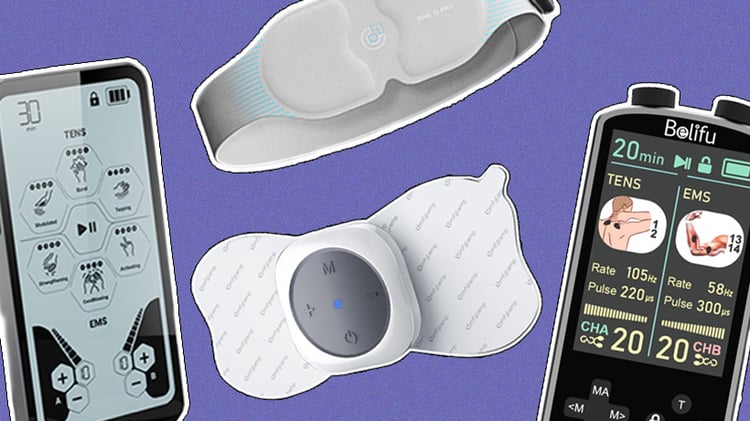
We’ve put the best TENS devices for back pain through real-world testing—here are our top picks for pain relief, muscle recovery, and at-home use in 2026
For a lot of people dealing with lower back pain, a transcutaneous electrical nerve stimulation (TENS) unit is one of the most accessible support options they can try. These small electrical stimulation devices have been used in physical therapy clinics for decades, and now you can use them at home.
While they will not treat the underlying condition, they may be a helpful tool in your pain management kit, given you follow the treatment plan provided by your healthcare provider.
The tricky part is shopping for one. An online search will lead you to a bunch of options with similar claims on the box. In this guide, you’ll find our top picks for the best TENS units for back pain with in-depth reviews of each product. We’ll focus on TENS units that are comfortable to wear, easy to use, and, in the end, worth the money.
Quick picks: Best TENS units for back pain
- Oxiline TENS XS Pro: Best overall
- Oxiline TENS Q Pro: Best for lower back pain
- Belifu TENS EMS Unit Muscle Stimulator: Best for budget shoppers
- Comfytemp Wireless TENS Unit Machine: Best wireless
How we tested TENS units for back pain
We didn't just read spec sheets for this one—we strapped these devices on and tested them for a couple of weeks to better understand their potential advantages and drawbacks.
Setup was the first thing we paid attention to since a device that requires hours of instruction reading before its first use loses points immediately. From there, we focused on electrode placement on the back, which is somewhat awkward to do on yourself. We tested whether the pads and instructions made it realistic to position them correctly on the lower back without needing a second person.
We also spent time going through the available modes and programs on each device, checking whether they were clearly labeled and easy to switch between, or whether they required digging through a manual to understand what each one actually did. For units with an app, we tested how smoothly it paired, whether it lagged during a session, and whether it added convenience or just another step.
Lastly, we evaluated the battery life, whether the adhesive held up as claimed, and how each unit felt during normal activities like sitting at a desk. We also cross-referenced marketing materials to see whether our real-world experience aligns with the brand's promises.
For this article, we handpicked devices that matched our expectations—meaning all the options presented were approved by our team members.
Oxiline TENS XS Pro
Best versatile option
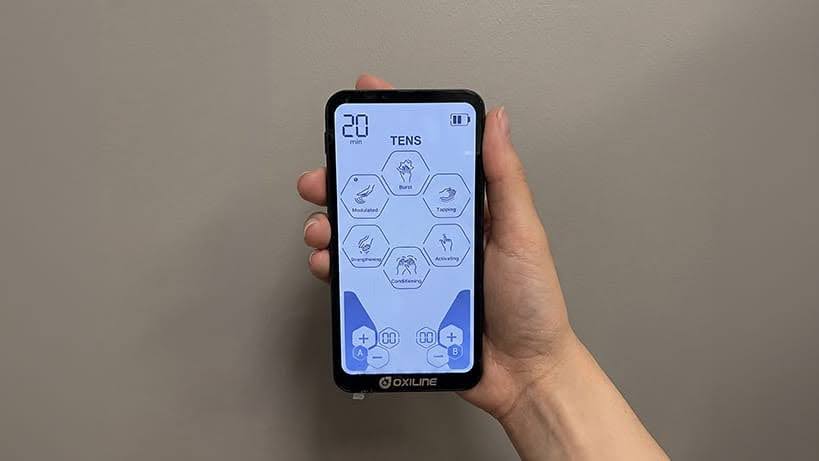
- Channels: Dual
- Preset programs: 24 therapy modes, 10 intensity levels
- Additional technologies: Electrical muscle stimulation (EMS)
- Battery type: Rechargeable
- Display: 5-inch LED touchscreen
- Price: Mid-range
We chose TENS XS Pro as the most well-rounded option in the lineup, and that versatility is really the whole pitch. It runs on dual channels so you can use it on two areas at once, each with its own intensity setting. This will appeal to those who want to target more than their back.
Moreover, the device comes with different pad shapes, each in pairs (small round, medium square, large rectangle), adding to the unit's versatility. As per the website, one pad should last from 20 to 30 sessions before it becomes nonadhesive, which corresponds to what we found during our testing period.
What we like is how much flexibility it offers without feeling complicated to use thanks to the touchscreen and program range. It can flex between everyday pain management and muscle recovery support. This, however, might be a bit too overwhelming for some users, as there are 24 therapy modes, and the device also features EMS, which stands for electrical muscle stimulation.
Lastly, Oxiline offers a lifetime warranty on their products—so while you will need to change pads eventually, other than that, this is a low-maintenance unit overall.
- FDA-cleared
- Versatile option
- Easily controlled via touchscreen
- Long-lasting adhesive pads
- Lifetime warranty
- May be overwhelming for some users
- Pads will need to be replaced
Oxiline TENS Q Pro
Best for lower back pain
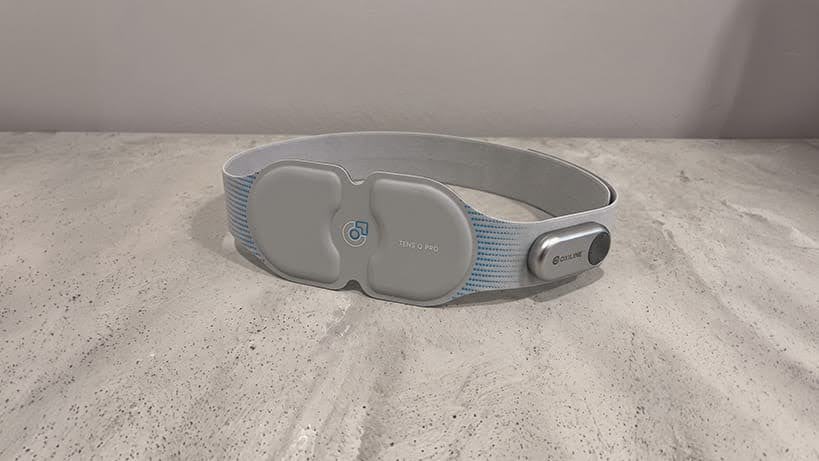
- Channels: Integrated pads rather than channel-based outputs
- Preset programs: 6 programs
- Additional technologies: Heating pads
- Battery type: Rechargeable
- Display: Wireless remote controller, no screen
- Price: Mid-range
TENS Q Pro has been designed specifically for those who are trying to find support for combating lower back pain. Instead of pads and wires, you place it yourself. It's a slim waistband you wrap around your lower back and abdomen, paired with a small wireless controller. Although this unit provides the lowest level of versatility among the products we tested, it comes with a distinct advantage of being the most user-friendly.
What makes it worth a specific callout for back pain is the combination of electrical stimulation and heat in one band. You can run TENS alone, heat alone, or both together—and our team has found the heat to be particularly soothing after a long day. The band is thin enough to wear under clothing, so you can actually wear it at work without drawing attention.
You can choose from six programs based on your preferences for massage techniques: finger pressure, tapping, push-pull massage, and others.
Just like with other Oxiline products, TENS Q Pro is covered by a lifetime warranty.
- FDA-cleared
- Lifetime warranty
- Soothing heat and massage-like sessions
- Cordless
- No screen
- For the lower back only
Belifu TENS EMS Unit Muscle Stimulator
Best for people on a budget
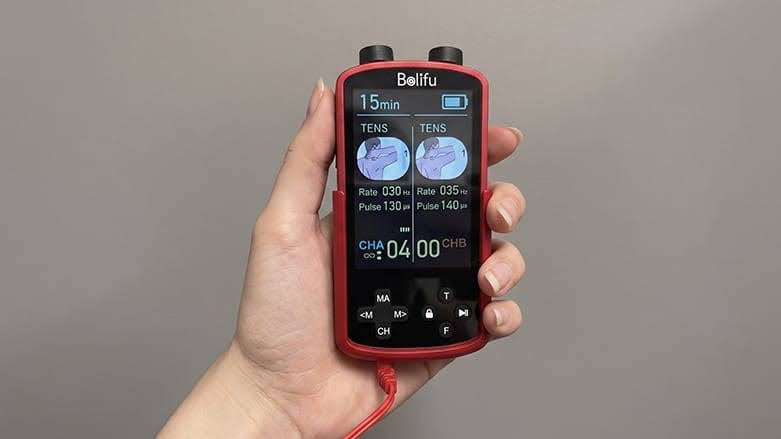
- Channels: Dual
- Preset programs: 36 therapy modes, 20 intensity levels
- Additional technologies: EMS and a dedicated Relax mode
- Battery type: Rechargeable
- Display: 3.8-inch color touchscreen
- Price: Budget-friendly
We included Belifu as the best pick for anyone who wants a full-featured TENS unit without a hefty price tag.
Despite its lower cost, it still runs on dual independent channels, so you can apply it to two areas, or split intensity settings between them, just like pricier models. Moreover, the replaceable pads should give you at least 50 uses before you need to replace them—which matched what we saw during our testing.
What stood out to us during testing is the sheer number of modes on offer. With 36 preset programs and a DIY option for building your own frequency and pulse combination, this unit gives you more room to fine-tune your sessions than most budget devices.
Again, just like with the Oxiline TENS XS Pro unit, this is a versatile option, which can be used beyond just the back. But the number of modes available can make the product overwhelming.
Some of our testers noted that the interface, while colorful, does not strike as user-friendly: you might need to scroll through a lot before you land on what you’re after. It's not a dealbreaker, but it does mean a slightly longer learning curve compared to units with fewer, more clearly labeled options.
- Budget-friendly
- Dual independent channels
- Additional relax mode for a massage-like experience
- Large, colored, and easy to read display
- Pads will need to be replaced
- Confusing interface
Comfytemp Wireless TENS Unit Machine
Best for staying mobile during your session
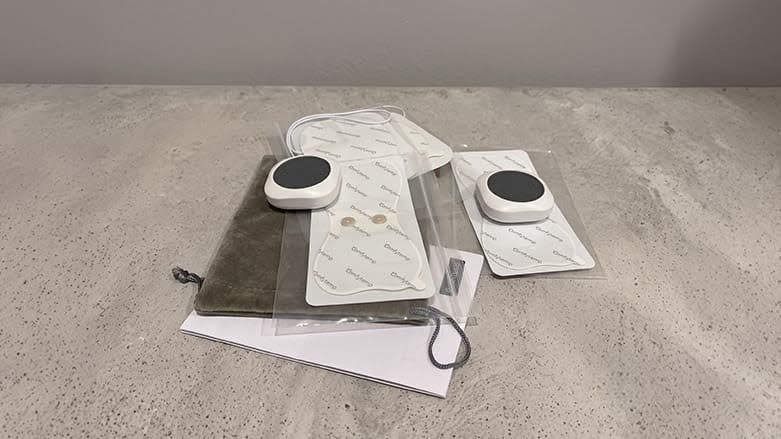
- Channels: Two independent wireless units
- Preset programs: 30 modes, 20 intensity levels
- Additional technologies: None
- Battery type: Rechargeable
- Display: None on-device; controlled entirely through the Comfytemp app
- Price: Budget-friendly
If you are looking for something simple and easy to operate, Comfytemp is a solid choice. Without additional technologies like EMS, it does what a TENS device should be doing, nothing more, nothing less.
There's no screen on the device itself. Instead, everything is controlled through the Comfytemp app, which handles modes and intensity settings from your phone rather than on the unit. While it offers 30 modes in total, within the app, you will be prompted to choose which area you are applying the device to, and that will eliminate the need to go through each mode separately.
The standout feature is their long-lasting pads that should endure over 60 sessions. However, the brand recommends rinsing them with water after each use, then air-drying, which is an extra step most people won't want to deal with after every single session
- Cordless
- Long-lasting pads
- App sorts modes by treatment area
- Requires a smartphone to operate
- No additional technologies
- Pads require rinsing after use
Best TENS units for back pain compared
| Product | Channels | Modes | EMS included? | Battery | Price |
| Oxiline TENS XS Pro | Dual | 24 | Yes | Rechargeable, 3200mAh | Mid-range |
| Oxiline TENS Q Pro | Integrated pads rather than channel-based outputs | 6 | Yes | Rechargeable, 2000mAh | Mid-range |
| Belifu TENS EMS Unit Muscle Stimulator | Dual | 36 | Yes | Rechargeable, 600mAh | Budget-friendly |
| Comfytemp Wireless TENS Unit Machine | Two independent wireless units | 30 | No | Rechargeable, does not specify the capacity | Budget-friendly |
Does a TENS unit help back pain?
TENS stands for transcutaneous electrical nerve stimulation. In plain terms, the device sends low-voltage electrical pulses through electrode pads placed on your skin, in the area that hurts. Those pulses are thought to do two things: they may interrupt or "gate" pain signals before they reach the brain, and they may prompt the body to release endorphins, which are its own natural pain-relieving chemicals.
For back pain specifically, this may temporarily support discomfort, though it won't fix the root cause of the pain on its own. Moreover, studies on back pain and TENS are currently mixed, with some suggesting no effect on pain—which is worth keeping in mind when considering TENS.
One of the reasons why the results are mixed is that studies have been looking at different types and causes of back pain, for example, chronic lower back pain, sciatica (pain from sciatic nerve irritation or compression that radiates from the lower back down to the buttocks or legs) caused by disc herniation, lower back pain during pregnancy, and back pain after lumbar spine surgery.
In certain cases, TENS may work better as a tool alongside other approaches, such as exercise, rather than as a standalone solution. The right first step is to consult with your healthcare provider for a proper diagnosis and full plan.
How to use a TENS unit for back pain
Before you start using TENS, read the manufacturer's instructions, as they can vary by model. Here, we’ll describe some of the most common guidelines, but again, this might not apply to your model.
Before using a TENS unit, inspect the device and make sure it is in good condition. If you see any broken parts, do not use it or try to fix it yourself.
Start by cleaning and drying the skin where you'll place the pads: lotion may weaken conductivity and stickiness.
In most cases, you will need to place the electrodes on either side of the area that hurts rather than directly on the spine itself. This is the placement most commonly used in clinical studies of TENS for low back pain, but it’s a good idea to check with your healthcare provider so they can instruct how to use TENS in your unique case.
Most manufacturers recommend starting at the lowest intensity and gradually increasing until you feel a strong but comfortable tingling. The tingling should not feel painful.
TENS session times vary, but they usually fall between 15 and 30 minutes, while some use it a couple of times a day for up to an hour each time. More does not necessarily mean you will feel more relief—in fact, too much TENS may cause skin irritation. If your skin becomes itchy or starts getting red, stop using the machine and remove the pads.
What should you look for in a TENS unit for back pain?
Here are some of the things to consider when looking for the best TENS unit for back pain:
- Number of channels. Lower back pain often shows up on both sides, so a unit with two channels may suit your needs better.
- Battery. USB-C rechargeable batteries are more convenient long-term than devices that eat AAA batteries.
- Pad size. Larger, rectangular pads generally cover the lower back better than the small, round pads meant for hands or feet. However, some might prefer smaller pads, as it means less covered area and less irritation.
- Intensity range and adjustability. Choosing a unit with greater adjustability can be highly advantageous, as your individual tolerance for the tingling sensation can vary.
- Reusable, quality pads. Cheap pads lose adhesion fast and need frequent replacing, which adds up in cost over time. We recommend checking two things out: not only how much the pads cost but also how long they last, as this may vary greatly.
Who should avoid using a TENS unit?
TENS units are generally considered safe for most people, but always check with a doctor before trying one, as some people are recommended to avoid them altogether.
That includes anyone with a pacemaker or other implanted electronic device, people with epilepsy or a seizure disorder, and anyone with undiagnosed pain that hasn't been evaluated by a doctor.
While TENS may help with lower back pain during pregnancy, it is crucial to discuss any intervention with your healthcare provider if you are currently pregnant.
Other recovery and wellness reviews:
Best wireless TENS units: Our top picks
Best TENS and EMS combo units: Tested and compared
Best TENS unit for home use: Our favorite models and recommendations
-
The Journal of Pain.
Transcutaneous electrical nerve stimulation: Basic science mechanisms and clinical effectiveness
-
Journal of Occupational Rehabilitation.
Systematic Review to Inform a World Health Organization (WHO) Clinical Practice Guideline: Benefits and Harms of Transcutaneous Electrical Nerve Stimulation (TENS) for Chronic Primary Low Back Pain in Adults
-
Journal of Clinical Neuroscience.
Efficacy of Neuromodulation in Postoperative Acute and Chronic Low Back Pain after Lumbar Spine Surgery: A Systematic Review and Meta-Analysis of Randomized Controlled Trials with Trial Sequential Analysis and Meta-Regression
-
Medicina (Kaunas).
Using TENS for Pain Control: Update on the State of the Evidence
-
Cureus.
The Effectiveness of Non-Pharmaceutical Interventions Upon Pregnancy-Related Low Back Pain: A Systematic Review and Meta-Analysis