Best smart scales (2026): Top picks for body composition, weight loss, and health tracking

We've reviewed the best smart scales available right now—here are our top recommendations
Smart scales have moved far beyond the traditional bathroom scale. Most can now track weight, body fat, muscle mass, water percentage, BMI, and more, with results sent straight to your phone.
That extra insight is why they’ve become popular among people trying to lose weight, get fit, or just better understand their health-related metrics. Some models also include features such as heart rate tracking.
They’re not perfectly accurate, and that’s fine. These numbers are estimates, so the real value comes from watching how they change over time.
For this article, we focused on accuracy, ease of use, app experience, and whether the extra features are actually worth it.
Quick picks: The best smart scales we've tested
- Hume Health Body Pod: Best smart scale overall
- Oxiline Scale MD Pro: Best scale for weight loss:
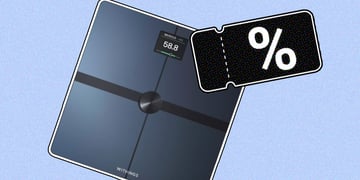
- Withings Body Scan: Best body composition scale
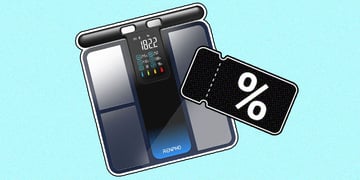
- RENPHO MorphoScan Smart Body Scale: Best body fat scale
How we tested the best smart scales
Ranking the best smart scales is fairly complex, as no two models offer the same experience. When comparing these devices, we kept our focus on the factors that matter most in everyday use.
Accuracy and consistency were the first things we looked at. A smart scale can have plenty of extra features, but none of them matter much if the weight readings aren't reliable.
Body composition tracking is what sets smart scales apart from regular scales. We examined the metrics each model provides and how easy the app makes it to view and understand them.
We also checked convenience features, including support for Apple Health, Google Fit, Fitbit, and Samsung Health. Multi-user support was another important factor, especially for households.
To finish it off, we evaluated build quality, display readability, and overall value for money. After all, a scale should be easy to read, built to last, and priced in line with its features.
No single feature determined our rankings. Instead, we focused on the overall experience each scale provides, from the quality of its measurements to how easy it is to use day after day.
Hume Health Body Pod
Our top recommendation
- Weight capacity: Up to 400lbs
- Connectivity: Bluetooth
- Metrics tracked: Body fat, visceral fat, muscle mass, body water, metabolic age
- App support: Hume Health app (iOS/Android)
- Multi-user support: Up to 24 user accounts
- Price: $183.04
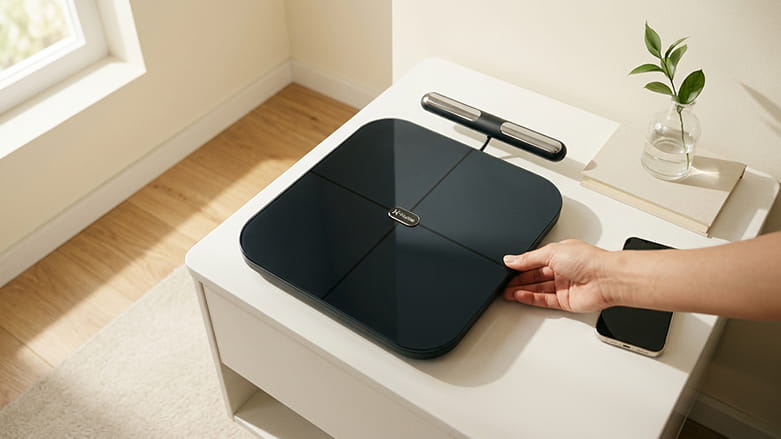
Body Pod works best when paired with the Hume app, which brings all your measurements together in one place, making them easier to follow over time. Rather than checking individual readings, you can quickly see how metrics like body fat, muscle mass, and water levels are changing.
This scale stands out with the amount of body composition data it collects. Beyond something you would expect, like body fat and muscle mass, it also tracks a range of additional metrics that complete a full image of your progress.
This device prioritizes body composition tracking over broader wellness monitoring. It lacks features like ECG (electrocardiogram) readings and other heart-related metrics found in more expensive alternatives.
- Detailed body composition tracking
- Clear and intuitive app
- Wide range of tracked metrics
- Fewer advanced wellness features
- No ECG or heart tracking
Oxiline Scale MD Pro
Good choice for weight loss journey
- Weight capacity: Up to 396lbs
- Connectivity: Bluetooth
- Metrics tracked: Weight, body fat, muscle mass, body water, visceral fat, bone mass, BMI, protein, metabolic age, body age, plus advanced multi-point body composition readings
- App support: Oxiline app (iOS/Android)
- Multi-user support: Unlimited separate user accounts
- Price: $179
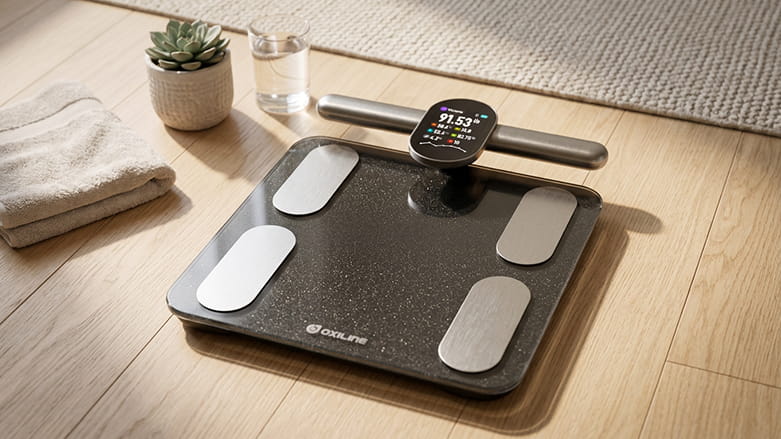
Oxiline stands out most for the amount of information it delivers in a single reading. It breaks things down into a wider set of measurements that give a more technical view of body composition.
In daily use, this makes it better suited for users who are comfortable working with data. The app organizes results into charts and breakdowns, but interpreting them takes effort. The more consistently you use it, the more useful it gets.
- Good for data-focused users
- More advanced metrics than typical smart scales
- Can feel complex for everyday use
- Requires more effort to interpret data
Withings Body Scan
Most detailed health tracking
- Weight capacity: Up to 440lbs
- Connectivity: Wi-Fi, Bluetooth
- Metrics tracked: Body fat, total body water, muscle mass, bone mass, visceral fat index, basal metabolic rate
- App support: Withings app (iOS/Android)
- Multi-user support: Up to 8 user accounts
- Price: $499.95
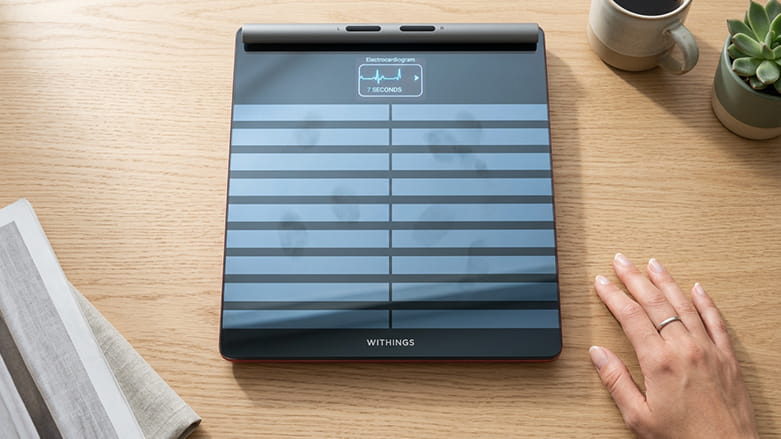
Body Scan feels practical in everyday use, especially when used together with the Withings app. Segmental body tracking and easy-to-read progress charts make it easy to understand how your body is changing over time. Supporting up to eight users works well in households.
It makes the most sense for people who want more than basic weight tracking and are serious about long-term wellness or fitness progress. For casual users, simpler and cheaper smart scales will usually be enough.
It’s a premium device, and the price reflects that. Some of the more advanced health-tracking features add extra steps to the process that many casual users won’t need.
- Works with major health apps
- Detailed segmental body tracking
- Clear and easy app insights
- Most expensive on this list
- Complex for everyday users
RENPHO MorphoScan Smart Body Scale
Designed for tracking fitness progress
- Weight capacity: Up to 400lbs
- Connectivity: Bluetooth
- Metrics tracked: Weight, body fat, muscle mass, body water, visceral fat, metabolic age, plus advanced body composition metrics
- App support: RENPHO Health app (iOS/Android)
- Multi-user support: Unlimited user profiles
- Price: $149.99
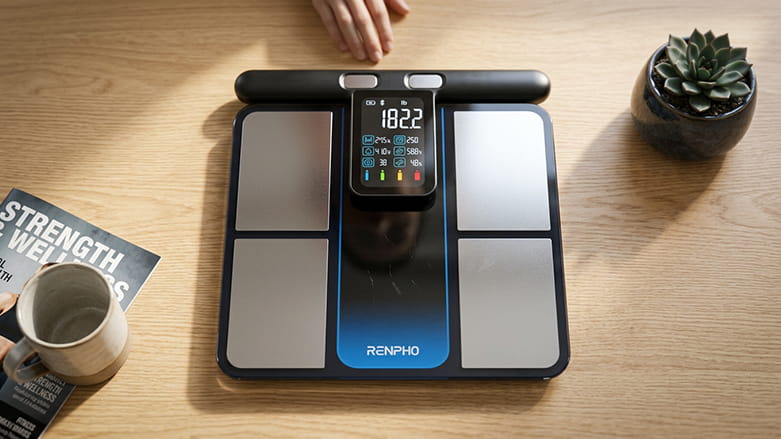
One of the scale's strongest points is how approachable it feels. The app keeps measurements organized and easy to check, making it simple to build a routine around regular weigh-ins.
MorphoScan feels made for everyday fitness users rather than wellness enthusiasts looking for every possible metric. It provides enough information to stay motivated without turning every weigh-in into an overanalyzing session.
In the long run, experienced users may surpass what MorphoScan offers. While it covers the essentials well, it doesn't go as deep as some of the more specialized smart scales on the market.
- Easy to use daily
- Keeps fitness goals on track
- Well-designed app
- Less detailed than premium rivals
- Experienced users may want more
Smart scales compared
Smart scales can look very similar at first glance, but there can be significant differences between them.
Some focus on advanced body composition tracking, while others prioritize ease of use, app experience, or broader wellness features. Price can also vary considerably depending on the level of detail and functionality offered.
To help you quickly compare our top picks, we've broken down the key differences across the categories that matter most.
| Scale | Weight accuracy | Body fat tracking | App quality | Ecosystem | Max users | Price |
| Hume Health Body Pod | Excellent | Excellent | Excellent | Excellent | 24 | $183.04 |
| Oxiline Scale MD Pro | Excellent | Excellent | Very good | Good | Unlimited | $179 |
| Withings Body Scan | Very good | Good | Very good | Good | 8 | $499.95 |
| RENPHO MorphoScan Smart Body Scale | Very good | Very good | Good | Good | Unlimited | $149.99 |
How to choose the right smart scale
Choosing the right smart scale among so many options can be challenging. While most models track the same core metrics, the overall experience can vary significantly depending on the app, wellness features, and level of detail provided.
Accuracy should be your top priority. Most smart scales are reliable when measuring weight, but body composition metrics such as body fat and muscle mass are only estimates. They're most useful for tracking changes over time.
Before buying, check which health platforms the scale supports. Compatibility with Apple Health, Google Fit, Samsung Health, Fitbit, or Garmin Connect can make it much easier to keep all your wellness and fitness data in one place.
Focus on the metrics you’ll check regularly. Not every extra measurement is equally useful. For most users, body fat and muscle readings are enough, while more detailed metrics suit advanced tracking.
If multiple people will be using the scale, look for multi-user support and automatic user recognition. These features help keep data separate for each person and make the scale far more convenient in shared households.
Are smart scales accurate?
Smart scales do a solid job of measuring weight. In studies comparing them with clinical measurements and reference methods, including DEXA scans, the differences are usually very small, often just a few hundred grams, which is generally accurate enough for everyday use.
Body composition is less exact. Most smart scales use bioelectrical impedance analysis (BIA), sending a small electrical signal through the body to estimate body fat and muscle mass. It helps track changes, but it’s still an estimate, not a precise reading.
The numbers can also shift depending on simple things like hydration, when you last ate, whether you’ve exercised, or even the time of day you step on the scale.
That’s why smart scales work best when you ignore small day-to-day swings and focus on the bigger picture over time.
What metrics do smart scales measure?
Every smart scale starts with weight. It’s the most accurate reading you’ll get and the foundation for everything else the device estimates.
Most models also estimate body fat percentage and muscle mass. These give a general view of body composition, but they’re still based on impedance readings rather than direct measurement.
From there, some scales add extra measurements, such as water percentage, bone mass, BMI, and visceral fat. These don’t change day to day in a dramatic way, but they can help you spot longer-term shifts in your body.
You’ll also often see basal metabolic rate (BMR), which is an estimate of how many calories your body uses at rest. It’s mainly used for fitness planning, not daily tracking.
On select premium models, you may even get heart rate or basic cardiovascular data. These are less common and found on more advanced devices that go beyond weight tracking.
Smart scale vs. traditional bathroom scale
Both smart scales and traditional bathroom scales measure weight. That’s pretty much it for what they have in common.
Smart scales bring a lot of additional features to the table. To help you better understand the difference between these two, we’ve broken down what each actually offers.
| Feature | Smart scale | Traditional scale |
| Weight tracking | Yes | Yes |
| Body composition | Yes | No |
| App syncing | Yes | No |
| Progress trends | Yes | No |
| Multi-user support | Yes | No |
Who should buy a smart scale?
When trying to lose weight, it is convenient to have everything you need for tracking progress in one place. A single weigh-in doesn’t tell you much, but when you’re keeping tabs over a longer period of time, you get a clear picture of progress, as consistency is key.
Fitness users often get more value from body composition tracking. Metrics like body fat and muscle mass add context that a traditional scale simply can't provide.
Weight matters less to most athletes than what is actually happening with their body composition. A smart scale isn’t going to replace proper lab testing, but it is a practical way to keep an eye on things like muscle mass and body fat between training cycles.
Not everyone is focused on fitness or weight loss. For general wellness monitoring, a smart scale makes it easy to track weight and other measurements over time, all in one place.
Families sharing a single scale benefit from multi-user support and automatic profile recognition, keeping everyone's data separate without manual switching. It is a small thing, but it makes a shared scale feel like it actually belongs to everyone in the household.
Other smart scales reviews
Hume Health Body Pod review: More than just a smart scale?
Hume Body Pod vs. Oxiline MD Pro: Which body composition tracker should you buy?
Hume Body Pod vs. Renpho MorphoScan: Which body-composition tracker should you buy?
Best smart scales: FAQs
Yes, for most people, smart scales are worth buying. They make it easier to track trends in weight and body composition over time, which is more useful than occasional manual weigh-ins.
Hume Health Body Pod is generally regarded as the most accurate overall, especially for weight tracking and consistency. Like all smart scales, body composition readings are best used for trends, not exact values.
Yes, but only as an estimate. They use bioelectrical impedance to calculate body fat, which changes based on hydration and other factors, so it’s best used for tracking changes over time.
Yes, most do. Bluetooth models can store and sync data once connected to your phone, but Wi-Fi makes syncing automatic and more seamless.
Yes, they are safe for most people. The electrical current used in body composition analysis is extremely low and not felt during use.
Withings Body Scan works best with Apple Health. It integrates directly and automatically syncs a wide range of health and body metrics.
RENPHO and Withings models both support Fitbit integration. Withings is generally regarded as offering more reliable syncing, though the experience can vary depending on the specific devices and app versions involved.
-
Accuracy of Smart Scales on Weight and Body Composition:
Observational Study
-
ScienceDirect.
Collecting health-related research data using consumer-based wireless smart scales