- Comfortable design even for long sessions
- Easy routine integration
- Great for targeted treatment
- Beginner-friendly use
- Limited area coverage compared to larger devices
- Effects take patience and consistency
- Less powerful than premium-tier devices
Red light therapy has grown significantly over the last year, and it is now one of the most crowded at-home wellness device categories, offering everything from full-sized panels to travel-friendly wearables. So, the challenge with RLT is no longer access, but rather figuring out which devices might actually fit into your life and daily routines, and which will end up collecting dust in just a few short weeks.
| Product | NovaaLab Red Light Therapy Pad |
| Price | Mid-range (typically ~$200–$400) |
| Best for | Targeted muscle recovery, joint support, and easy daily use |
| Key specs | Red + near-infrared wavelengths (630–660nm, 800–850nm) Wearable wrap-style pad FDA-cleared 10–20 min sessions per area Designed for targeted, not full-body coverage |
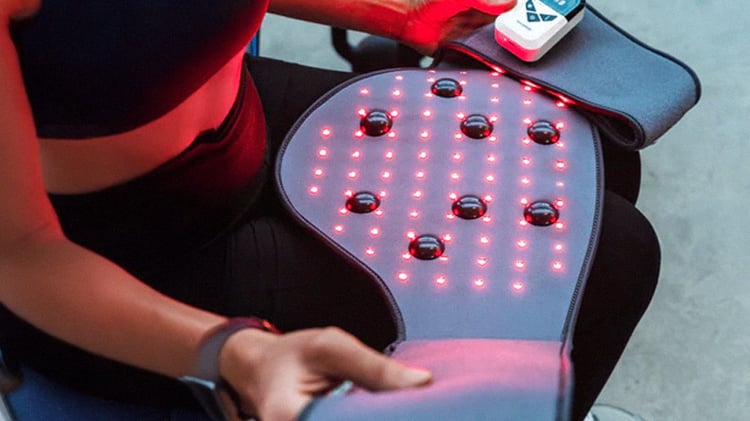
NovaaLab, a mid-tier compact wearable RLT pad, takes a different approach than larger, clunkier red light therapy systems. Instead of raw power, the NovaaLab pad offers excellent portability and easy use with a wrap-style design for targeted use.
We tested the NovaaLab red light therapy pad for eight weeks, using it on common problem areas, including shoulders and legs, as well as for skin-focused sessions. In this review, I’ll share our findings on the NovaaLab’s RLT pad usability and effectiveness, and whether it’s a worthy addition to your daily routine.
Price and competition: Is NovaaLab worth it?
The NovaaLab red light therapy pad is a mid-range price device. It’s more expensive than basic entry-level wraps like the LifePro Red Light Therapy belt, but still much cheaper than large systems from brands like Joovv.
Based on our experience testing simpler RLT therapy devices, like the Hooga RLT panel, we found that the NovaaLab felt more comfortable and refined, especially in terms of usability. Plus, NovaaLab’s build also looks and feels more solid and long-lasting than that of cheaper devices.
However, when measuring NovaaLab’s pad against higher-end products like Mito Red Light, it’s clear that the NovaaLab pad prioritizes convenience over higher light output or broader treatment options.
So, in terms of value and whether the NovaaLab pad is worth your money, we’ve concluded that it makes the most sense to purchase the NovaaLab if you want a comfy wearable solution for target-area use. However, if you’re looking for full-body coverage or a high-powered system, then other devices might work better for you.
A quick look at NovaaLab red light therapy
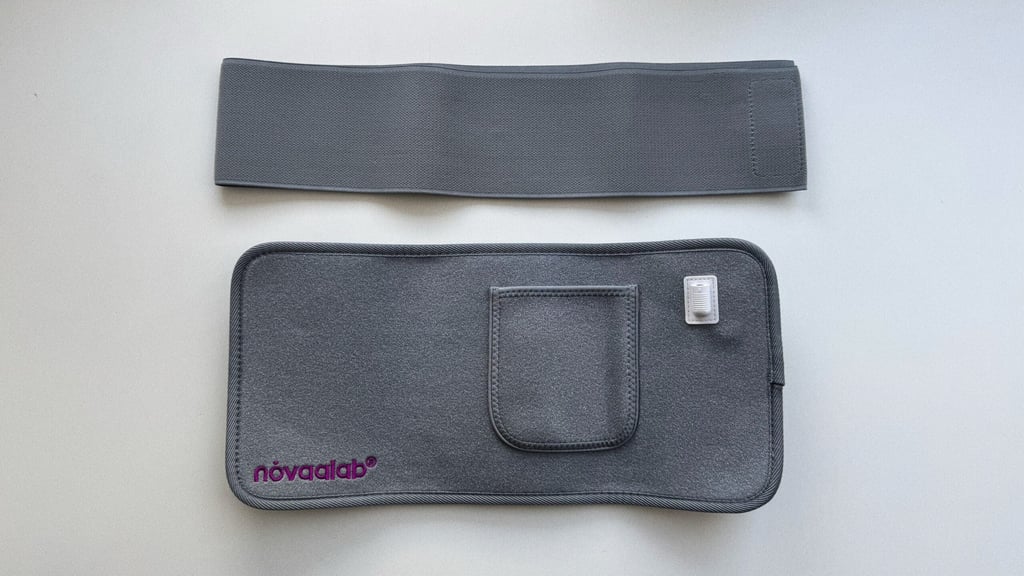
The NovaaLab red light therapy pad is a flexible, moldable, wearable device meant to wrap around target areas rather than full-body coverage. Personally, I had no issues using it on my lower back, shoulders, knees, legs, and arms. Overall, I found it quite versatile and practical, specifically for localized use.
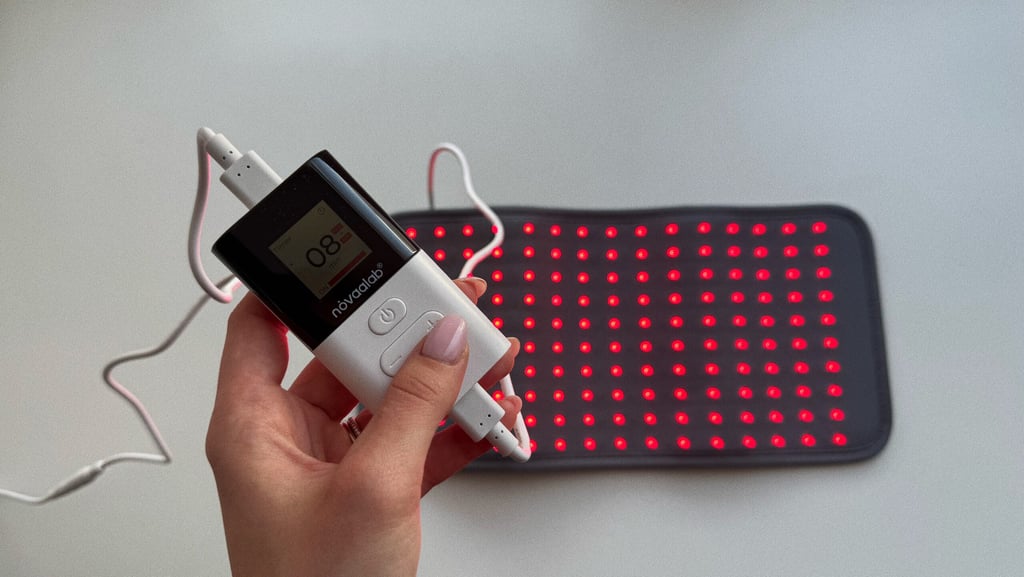
In the box, I found the pad itself with adjustable straps, a well-made extension belt, a controller, and a power supply. Because the NovaaLab pad needs to stay connected to a power source—either a wall socket or a power bank—I’d describe it as semi-portable rather than truly wireless. The pad doesn't require an app, and there is no complex setup to get started, so it’s definitely a good option for RLT beginners.
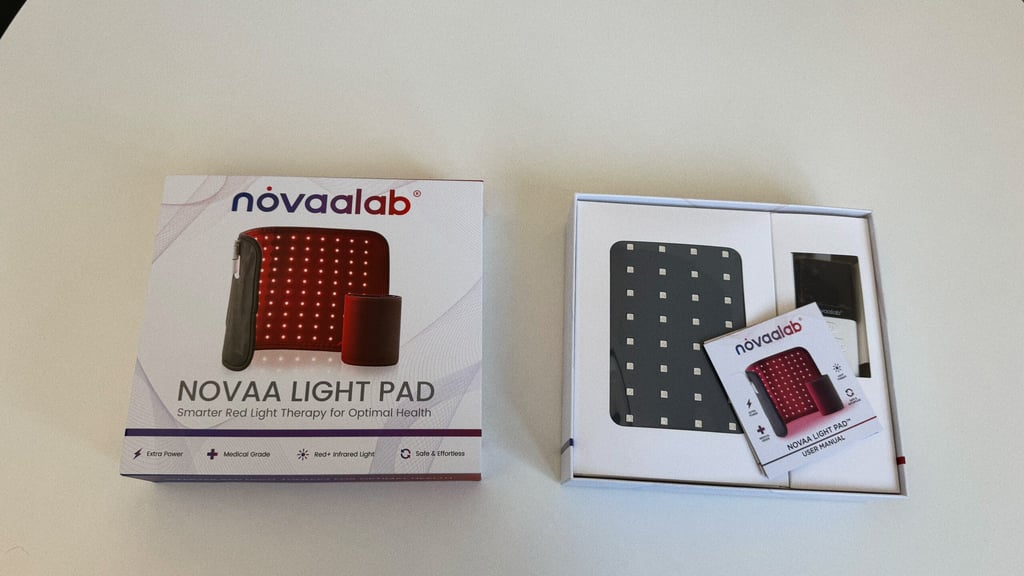
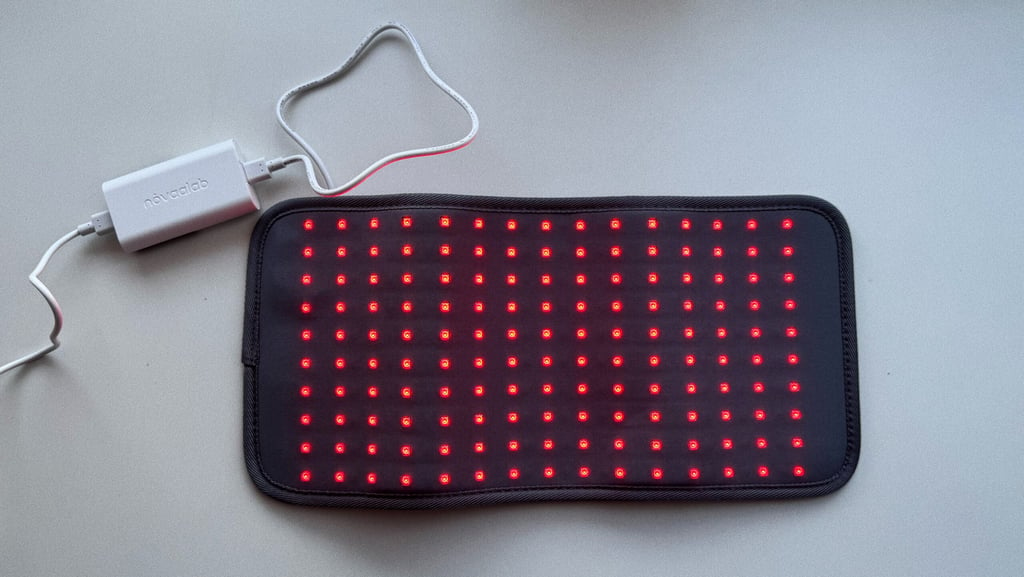
We found that the device uses a combination of red and near-infrared light, which are associated with skin support and deeper tissue recovery. Some potential reported benefits may include reduced inflammation, improved circulation, and gradual improvements in skin appearance.
NovaaLab is marketed as an FDA-cleared device, meaning it meets baseline safety standards, but this doesn’t guarantee clinical-level results. So, it is good to remember that it is a wellness tool, not a medical device, when setting your expectations.
What makes NovaaLab different?
The biggest difference between the NovaaLab pad and its price-tier competitors, I found, is not about raw power output but about usability. This flexible pad gave me the option to easily target specific areas without needing to stand still, as with large panels, or position myself precisely as with small RLT lamps. On usability, the NovaaLab gets an A+ from me, and I can easily see how anyone could incorporate it into their routines without much adjustment.
Highly focused sessions
NovaaLab uses a combination of red and near-infrared wavelengths, typically 630–660nm and 800–850nm. These wavelengths, or light colors, are the golden standard for at-home RLT devices and are meant for surface-level and deeper-tissue applications.
However, the key is always in how that light is delivered, and in NovaaLab’s case, it’s directly onto the body rather than from a distance. This gives it a clear edge over panel-style RLT devices.
For you, this means that with the NovaaLab pad, you get a more focused treatment, with no light wasted, but only within a limited area.
Comfort over intensity
After using the NovaaLab pad for eight weeks, we found that its biggest advantage is comfort. It’s something you can realistically wear while sitting, working, or relaxing, making consistent use much easier to maintain than with panel- or bulb-style RLT devices.
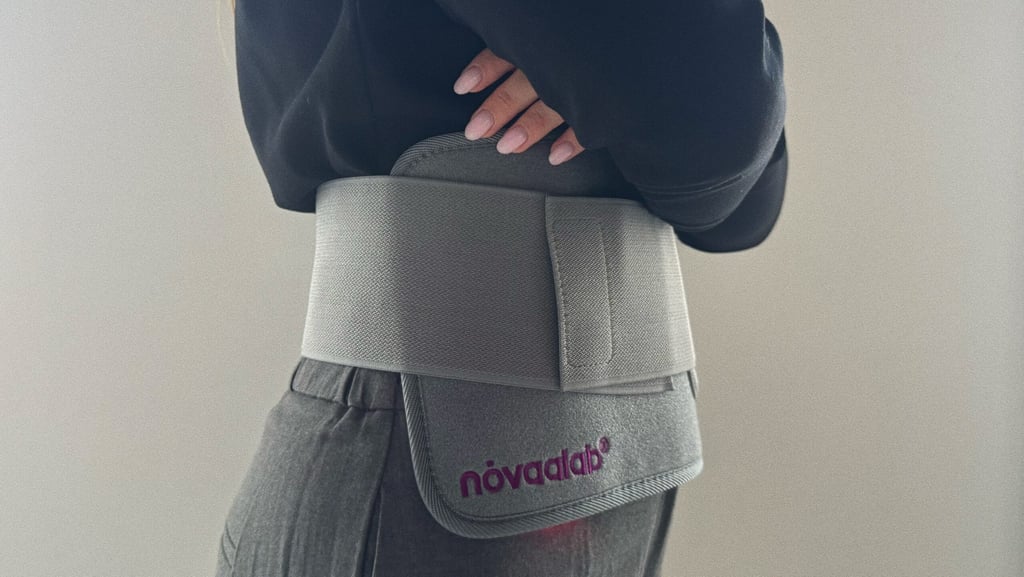
That said, the comfort here definitely comes at the cost of intensity. Compared to larger systems, the output feels moderate. For you, this means any potential effects are likely to come gradually over a longer period, so using the NovaaLab might require a bit of patience.
What actually matters here
As with most mid-tier or budget-friendly at-home RLT devices, their advantage is not in power but in habit formation. The NovaaLab is designed for regular use over time, and its design makes that much easier than with more complex or larger setups.
Build quality: Budget feel or solid enough?
Out of the box, the NovaaLab immediately felt functional rather than premium. The materials are soft and flexible, and the stitching and edges are robust. Overall, we found it to be designed for comfort against the skin rather than durability in a traditional sense.
Speaking of using the NovaaLab directly on the skin—I have particularly sensitive skin, but using this pad wrapped around my body did not irritate my skin or make me feel uncomfortable.
As for other aspects of comfortable wear, I thought the adjustable straps worked well, and I could adjust the pressure to my liking. Additionally, the extension belt is great for wrapping the pad around larger areas, such as the lower back or shoulders. No matter where I put this RLT pad on my body, it always stayed snug and secure—perfect if you’d like to wear it when moving around.
In daily use, you might find the lightweight design to be a clear advantage. Not only is the NovaaLab pad easy to store and simple to reposition, it also doesn’t require a dedicated setup space.
Where it falls short
Compared to premium-tier RLT wearables, NovaaLab’s build lacks refinement. Although the materials are practical and the controller is easy to use, it is simply not as polished.
That said, nothing felt fragile or off while we tested it—just straightforward and purpose-built.
How easy is NovaaLab to use daily?
The NovaaLab red light therapy pad requires virtually zero setup to start using. There’s no app and no learning curve. All we had to do was wrap the pad around the target area, power it on, and start the session. In my opinion, this may make the NovaaLab pad excellent for first-time users or anyone who dislikes fussing around and wants to go straight to actually using the device.
During our testing, we found it was very easy for us to incorporate daily 10–20-minute sessions into downtime. I mostly used it while sitting to watch a TV series or working at a desk, which made using the NovaaLab pad less like a dedicated task or a chore and more like a passive routine.
Building consistency
To get any noticeable results from red light therapy, consistency is crucial, and this is where NovaaLab shows promise. The low-effort setup and comfortable wear remove most of the friction that typically comes with using RLT devices, which can make it easier for you to maintain consistency over weeks of usage. Sure, you will still have to remember to include it in your routine, but the pad’s format and usability make it far more achievable than bulkier or non-wearable alternatives.
Results: What you can realistically expect
When writing any red light therapy device review, including this on the NovaaLab pad, I keep circling back to things like consistency and realistic results. These are probably the most important aspects when using any at-home RLT device, and here are the improvements you may notice from using NovaaLab based on my own experience:
Weeks 1–2: Subtle but expected
The initial results from when I just started wearing the NovaaLab were very subtle. I didn’t notice any immediate changes in recovery or skin appearance, or dramatic alleviation in knee joint pain. However, from my experience, this aligns perfectly well with how red light therapy works.
Weeks 3–5: Localized improvements
By the third week, I started to notice more pronounced and consistent improvement in targeted areas. Yes, the results were still fairly small, but they were much easier to notice. It felt like muscle soreness reduced slightly faster after workouts, my knees felt more mobile, and my skin started to appear more even.
Weeks 6–8: Consistency matters
Longer-term use of the NovaaLab red light therapy pad made the biggest difference for me. Although my improvements in recovery, joint pain, and skin appearance still weren’t dramatic, they definitely were noticeable enough to feel credible. Overall, I felt the biggest improvement in muscle recovery and a bit less impact on skin appearance.
The reality check
After my test wear was done, I thought the NovaaLab’s biggest limitation is coverage. Because the pad can only treat one area at a time, my overall results felt slower compared to larger systems. Additionally, while this pad is particularly easy to incorporate into any routine, if you want to use it on multiple areas, you will need to have a session dedicated to each treatment area. Which means, if you want to treat both knees, you may have to find around 40 minutes in total for your sessions.
Based on my results, I can say that NovaaLab worked for me, but with clear limits. It did deliver steady, incremental improvements in muscle recovery and slight joint pain alleviation, but it was no quick win, and the overall effects were not as dramatic as with clinic-level devices.
The NovaaLab RLT pad rewards routine and patience, and can make a good fit if you are willing to commit and keep your expectations realistic.
NovaaLab vs. alternatives: How it compares
I’ve pitted the NovaLab red light therapy pad against competitors, so you’d have a clearer picture of the device’s fit to your expectations and routine.
Compared to Hooga, NovaaLab offers better usability but less power. Between these two, Hooga is better for broader exposure, but NovaaLab is more practical for targeted use.
I found a similar story comparing the NovaaLab pad with Mito Red Light, where the latter focuses on intensity and coverage, while NovaaLab is a clear winner for convenience.
Lastly, when compared to Joovv, which is a higher-tier red light therapy device, NovaaLab felt a bit more basic but more accessible.
To sum up, if you want a device for full-body or simply broader sessions and do not mind dedicating the extra time, choose an RLT panel device. However, if you want something that may be easier to use consistently, NovaaLab makes a strong case for its no-fuss approach.
Is NovaaLab safe to use daily?
NovaaLab is generally safe for daily use, but you have to use it as directed. Because the NovaaLab RLT pad sits directly on the skin, it’s important to follow the recommended session times—not exceeding 20 minutes per area—and avoid overusing the device.
As for eye protection, you may skip it when using the NovaaLab pad on knees or lower back, but wearing special glasses is still strongly recommended if you want to use the pad near the upper body or face.
When I wore the NovaaLab pad for my sessions, I didn’t feel any unpleasant heat buildup. However, if you overdo yours, the warmth may become uncomfortable and cause irritation. From my experience, it is best to start with shorter RLT sessions, no more than 10 minutes, and gradually increase duration. This way, you’ll have a very safe approach to make sure wearing such a device does not cause any discomfort for you.
One last note on general RLT device use from me—consistency is way more important than session length for noticeable results. So, better use NovaaLab for shorter sessions, but keep them consistent over time.
Who it’s really for (and who should skip)
The NovaaLab red light therapy pad may be best suited for users who want a low-effort, targeted approach that they can realistically use every day. I found that this specific device may work well for muscle recovery and for alleviating mild pain.
If you’re looking for full-body coverage, fast results, or a high-powered device, the NovaaLab won’t be the right fit. In this case, larger systems with more raw power might give you more noticeable results in less time.
However, if you want a device that combines ease of use, comfort, and easy integration into your routine, then NovaaLab is a very practical, well-balanced option. That is, if you’re willing to stay patient until the results may become noticeable.
References
-
The Lancet.
-
BMJ Open.
-
Frontiers in Physiology.
-
Seminars in Cutaneous Medicine and Surgery.