Pulse wave velocity readings could spot blood pressure anomalies and trigger alerts before symptoms appear
Smart ring leader Oura is exploring technology to track and flag common pregnancy complications—including preeclampsia, hypertension, and gestational diabetes—in a bid to accelerate diagnosis and clinical intervention.
In a recent US Patent and Trademark Office (USPTO) filing uncovered by Wareable, Oura outlines a system based on pulse wave velocity (PWV) metrics to continuously track blood pressure and arterial stiffness from conception through the postpartum period.
While baseline shifts in arterial stiffness and blood pressure occur naturally during a healthy pregnancy, certain abnormal trends can indicate preeclampsia—a potentially dangerous condition for both mother and child.
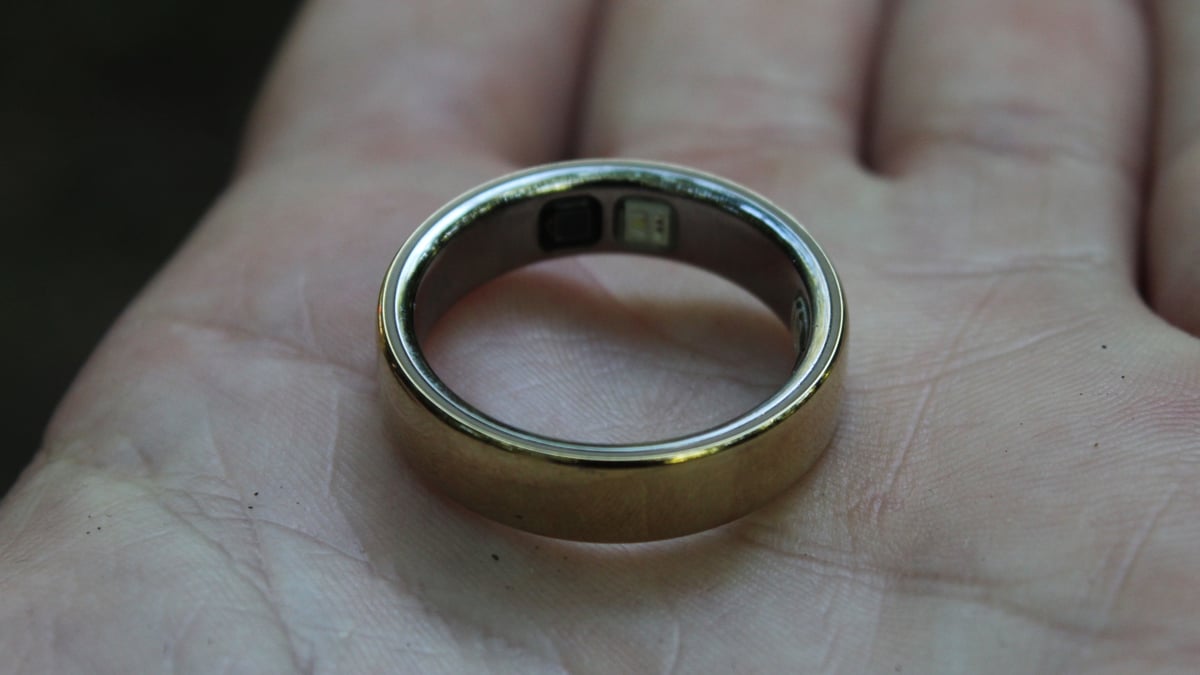
In the notes, Oura highlights that these critical warning signs often go unnoticed during standard care due to the sporadic nature of doctor visits. A smart ring like the Oura Ring 5, by contrast, unlocks continuous, passive monitoring that can catch subtle physiological deviations in real time.
“If the user becomes pregnant, which may be detected by the wearable device or input by the user via a user device, the wearable device may compare the changes in PWV levels to those expected during pregnancy,” the filing reads.
“For example, one or more variations to arterial stiffness or blood pressure may be expected during healthy pregnancies, and the values may return to the baseline levels after labour. As such, the wearable device may trigger warnings for a user if PWV levels indicate abnormal blood pressure or arterial stiffness, which may aid the user in seeking medical attention or diagnoses.”
Multi-sensor baselines & automated alerts
To establish accurate baselines, the ring’s LED sensors would combine PWV measurements with a broader suite of biometrics, including sleep stage tracking, circadian and ovarian rhythms, skin temperature, respiratory rate, HRV, resting heart rate, and Oura’s Cardiovascular Age metrics.
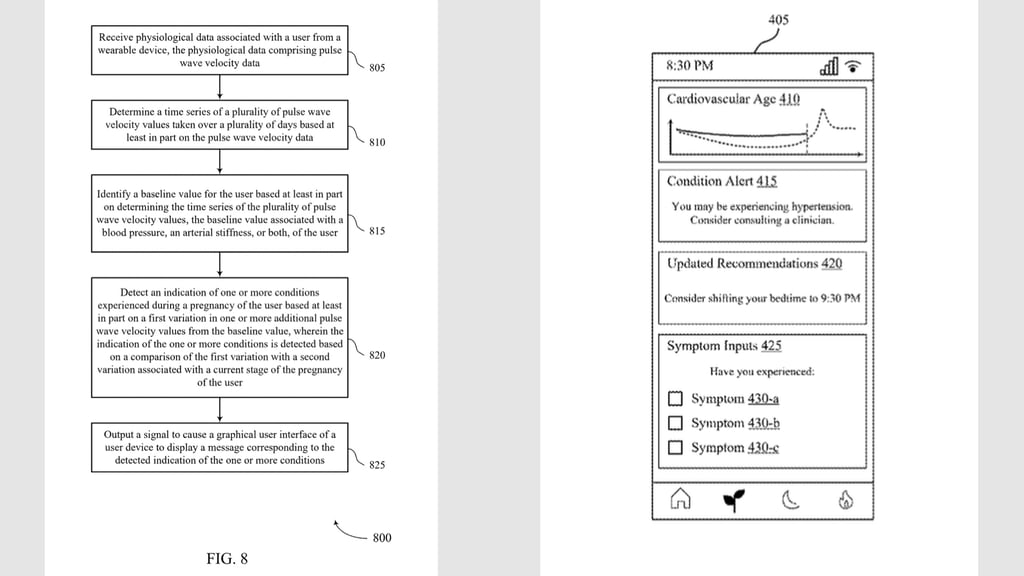
Algorithmic modeling across these dataset layers would allow the app to flag potential anomalies, prompt wearers to log specific symptoms, suggest adjusted sleep or activity targets, and advise them to consult a healthcare provider.
According to the filing:
In some examples, the message displays a time during which the one or more conditions occurred, a time interval during which the one or more conditions are predicted to occur, a request to input symptoms associated with the one or more conditions, educational content associated with the one or more conditions, an adjusted set of sleep targets, an adjusted set of activity targets, recommendations to improve symptoms associated with the one or more conditions, a recommendation to consult a clinician, or a combination thereof.
In higher-risk scenarios, the functionality extends beyond simple user notifications.
If measured anomalies cross a critical severity threshold, the system could automatically transmit data directly to a doctor, partner, or healthcare provider. In extreme cases, Oura also notes the platform could even automatically trigger a request for an ambulance.
Building on real-world maternal health data
The patent follows a major landmark study published by Oura in JMIR mHealth and uHealth in October 2025, which tracked over 10,000 pregnant participants wearing the Oura Ring Gen 3.
That research demonstrated how continuous tracking of temperature trends, resting heart rate, HRV, and sleep can establish clear physiological timelines across preconception, pregnancy, and recovery.
Crucially, researchers noted that participants who experienced pregnancy loss showed distinct physiological deviations—such as a flattened temperature curve and altered HRV trajectories—up to two weeks before the loss occurred.
While Oura maintains that consumer wearables are not standalone diagnostic tools, the newly uncovered patent shows how the company intends to translate those large-scale research insights into actionable, real-time safety tools.
In a statement to Wareable, Oura—as well as referencing that aforementioned study—said:
"Oura is continually investing in and conducting research across women’s health - from menstrual cycles, fertility and trying to conceive, to pregnancy, perimenopause and menopause.
“This work is critical to illuminating the vast physiological changes women experience throughout these stages and building a stronger foundation for more informed, personalized care. As for specific patents or future product plans, we can't comment at this time."