Why You Can Trust Wareable
Founded in 2014, Wareable brings together journalists and experts who have reviewed over 1,000 products, including smartwatches, fitness trackers, smart rings, smart home gadgets, and health tech devices.
Our team combines hands-on testing, in-depth research, and expert insights to evaluate product performance, assess manufacturer claims, and help readers make informed decisions.
HTC Vive Eagle review: A capable debut, but a hard sell

- Thoughtful privacy safeguards
- Choice of Gemini and ChatGPT
- Light design with intuitive controls
- Pricier than Meta's range
- Video quality trails competitors
- No charging case and awkward cable
- Frame just doesn't look great
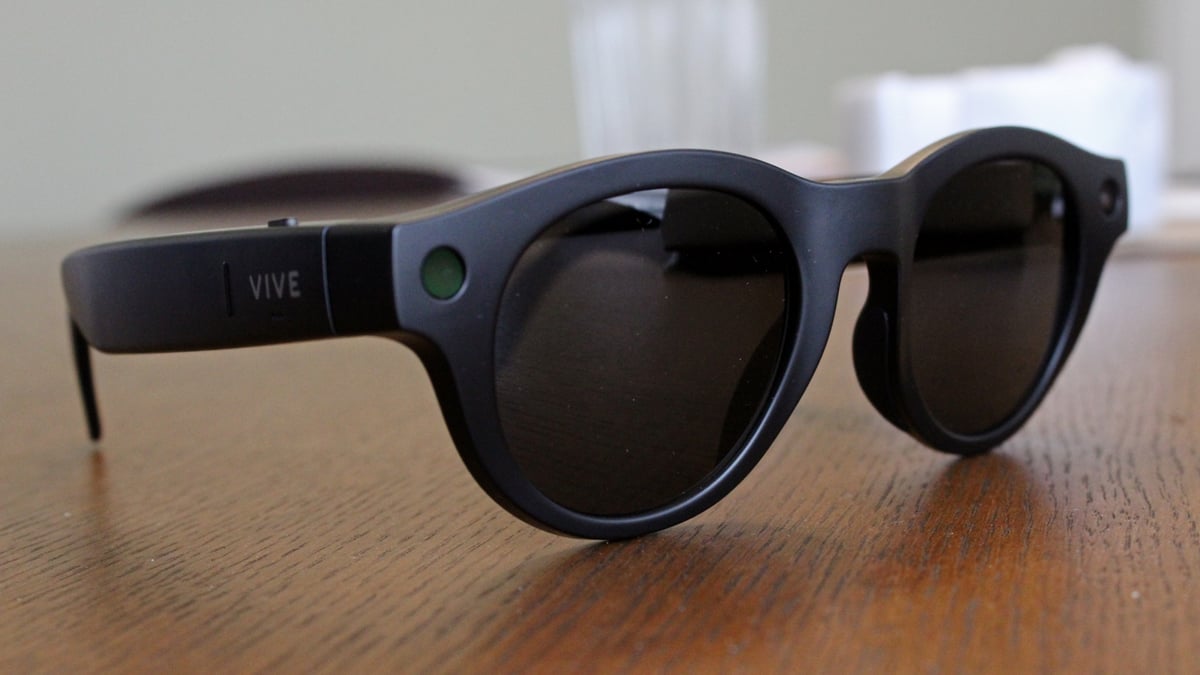
A little over a year after launching in Taiwan, HTC's first smart glasses have finally flown the nest.
The Vive Eagle is now on sale in the US, UK, and Europe and, like seemingly everyone else in the category, it's gunning for Meta and the glasses it sells through its EssilorLuxottica brands. It arrives in a market that has moved quickly since its announcement, with Meta refreshing its Ray-Ban line with a third-generation model and a camera-free Audio model.
Perhaps the bigger change in the time it's taken HTC to bring the Vive Eagle to other markets, though, is the cultural one.
Camera glasses were once quirky and new; now they're increasingly shorthand for bad behavior. UK pubs, restaurants, and theaters have banned Meta's glasses; US courts have barred them; and the German city of Potsdam has kicked them out of its public pools after complaints of secret filming.
Not every type of smart glasses is affected by this, of course: some have HUDs and no camera, and Meta's new audio-focused model skips the lens entirely. But even then, people are also rightly sensitive about wearing them, which makes any camera-equipped pair harder to recommend without a caveat.
So, the question for the Vive Eagle isn't whether HTC can build a competent pair of camera glasses, but whether it gives anyone a reason to choose them over Meta's, and whether this is a category you're comfortable wearing right now. I've had them in my rotation for the last couple of months; here's my full verdict.
Price, availability, and competition
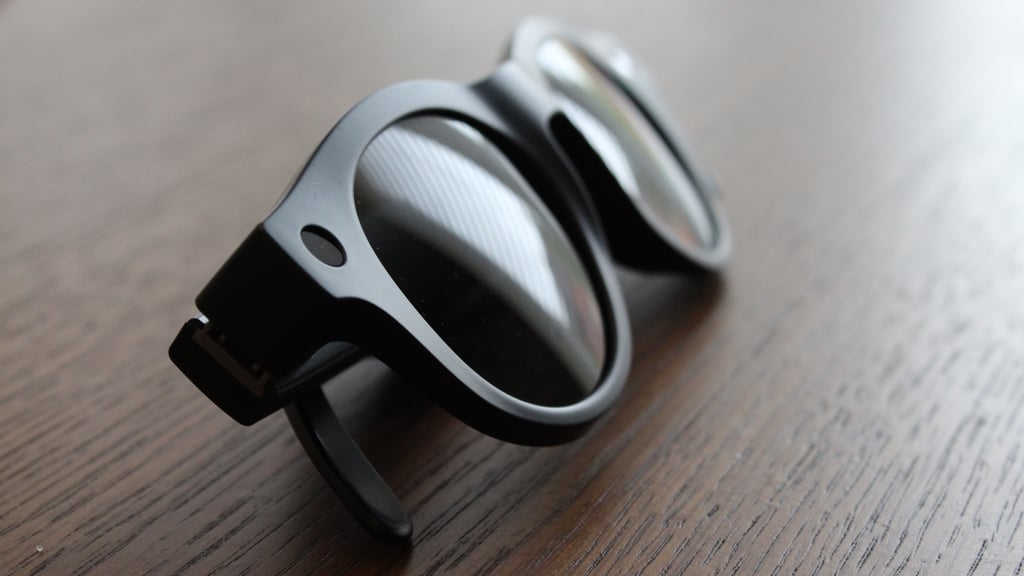
The Vive Eagle costs $499/£429 (€469) with clear or sun lenses. Auto-darkening photochromic lenses push the US price to $599 (around £520 / €550). The brand offers round and square frame styles in four colors, plus custom prescription lenses from -8D to +4D.
That puts the Eagle above most of Meta's lineup.
Ray-Ban Meta Gen 3 starts at $449/£409, Gen 2 is still on sale from around $379/£379, and the camera-free Ray-Ban Meta Audio starts at $349/£319. You also get less for the money. In the box, you'll find a regular glasses case and a charging cable, not the charging case that makes Meta's glasses so easy to live with.
Meta's lead isn't just about price, either. It has a more polished ecosystem, a stronger camera, and, thanks to Ray-Ban and Oakley, design and brand power that HTC simply can't match.
The Eagle has to win on something else—so let's see if it does.
Design and controls
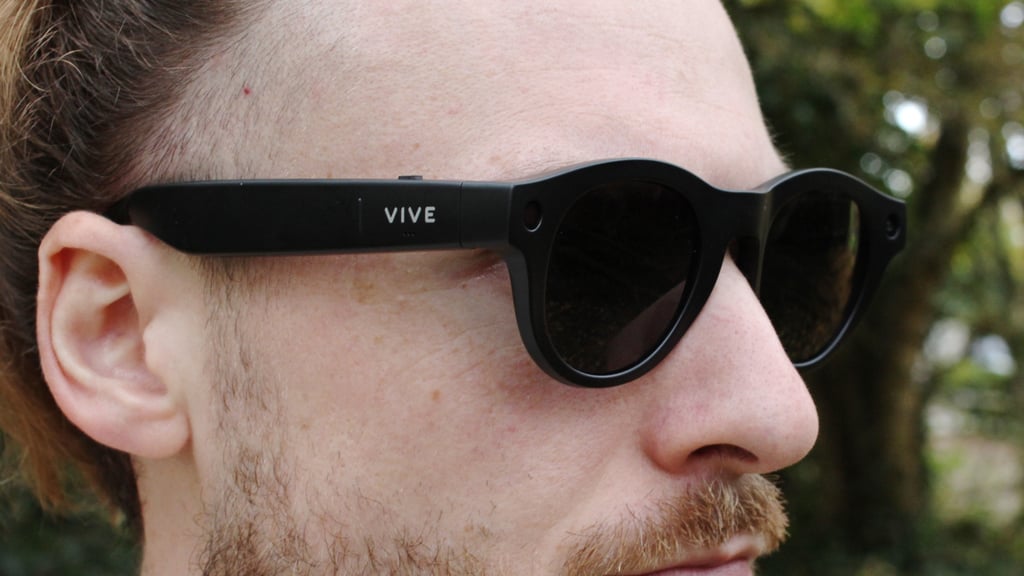
If you remember Snap's first couple of generations of Spectacles glasses, the Eagle's styling will feel a little familiar—or at least, that's how I felt when I first tried them on and looked in the mirror.
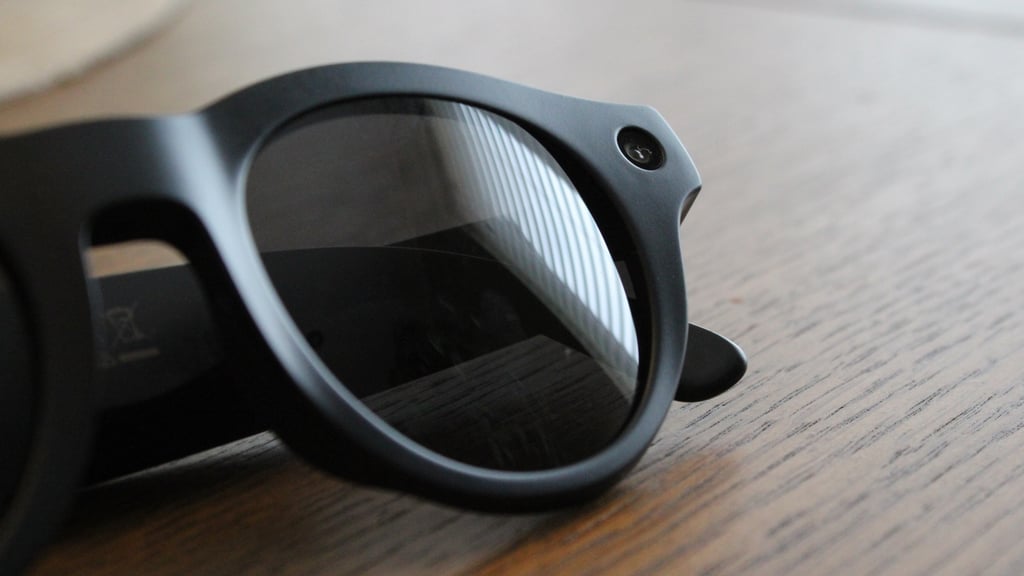
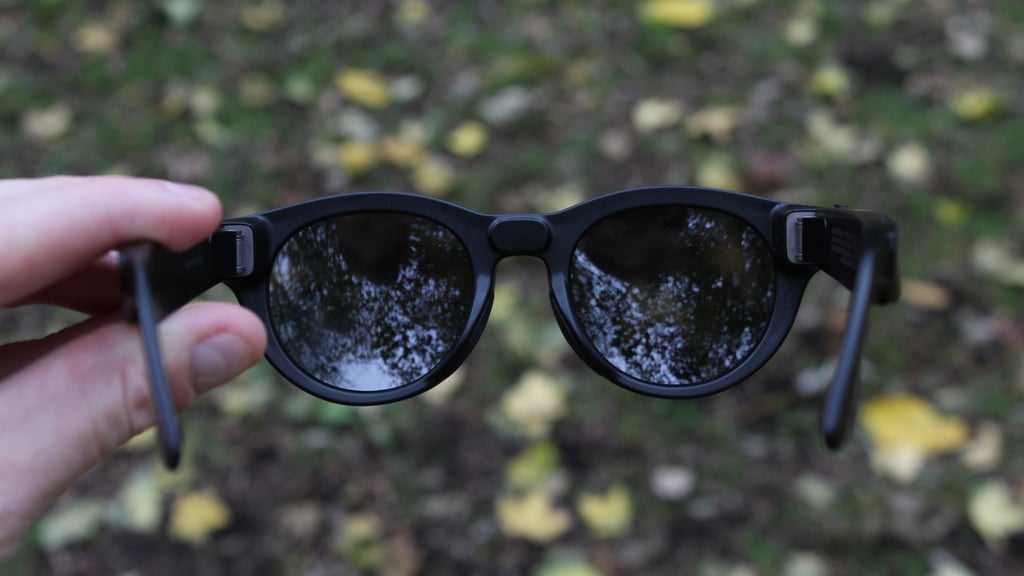
They're not particularly more or less offensive than the Oakley HSTNs, but they're not a glasses style I'd personally reach for. Something about them feels incredibly techy. Maybe it's the thickness of the arms, or the Vive branding, or the widened end pieces that fit in the status indicator (right eye) and camera (left eye).
Wearing them made me think of the sketch from The Simpsons when Homer spies on Apu in a giant sombrero with a camera inside. Okay, maybe it's not that overt, but you get the idea—for better or worse, the Vive Eagle don't feel like a discreet or chill pair of smart glasses. And, as discussed up top, that's not a great feeling in the current climate.
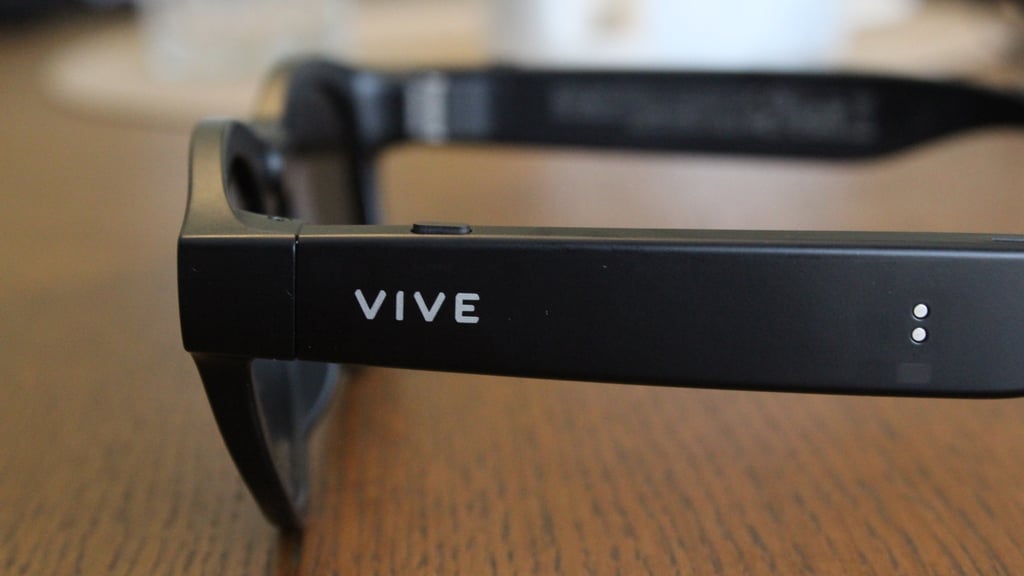
Functionally, though, everything worked as expected in our sporadic wears in the sun. At around 49g, they're very light—and while that means the build quality isn't something to rave about, that's the trade-off for a plastic frame comfortable enough to wear for hours at a time. They're also IP54-rated for dust and splashes.
Controls are intuitive, as well—and the onboarding in the Vive Connect app works seamlessly. The touchpad is responsive, and the two buttons (left for AI prompts, right for photo-taking and video capture) are easy to get used to.
I wasn't drawn to the gesture controls; between the touchpad, buttons, and voice commands, you already have plenty of ways to interact with the Vive Eagle.
Smart features and camera
On paper, the Eagle does a lot: calls, open-ear music, a voice assistant, photo and video capture, live translation, and direct streaming to Twitch and YouTube.
HTC's 'Total Memory Recall' also saves local context markers to help you remember where you parked or left things. I did performatively test this out at the train station, walking from my parked car to the platform, returning a couple of days later and using, "Hey VIVE, where did I park?", to which it remembered where on the level I was and pulled up an image it passively took when I was grabbing bags out the back. I can't imagine I would ever really need this feature, but it's fairly interesting tech and worked well.
In reality, I mostly used the Vive Eagle for calls, open-ear audio, and the odd query when I couldn't be bothered to pull out my phone. The audio quality on phone calls while walking to and from town and the office was decent (nothing mind-blowing, as expected). It's a perfectly good option when you want to keep an ear on traffic and your surroundings.
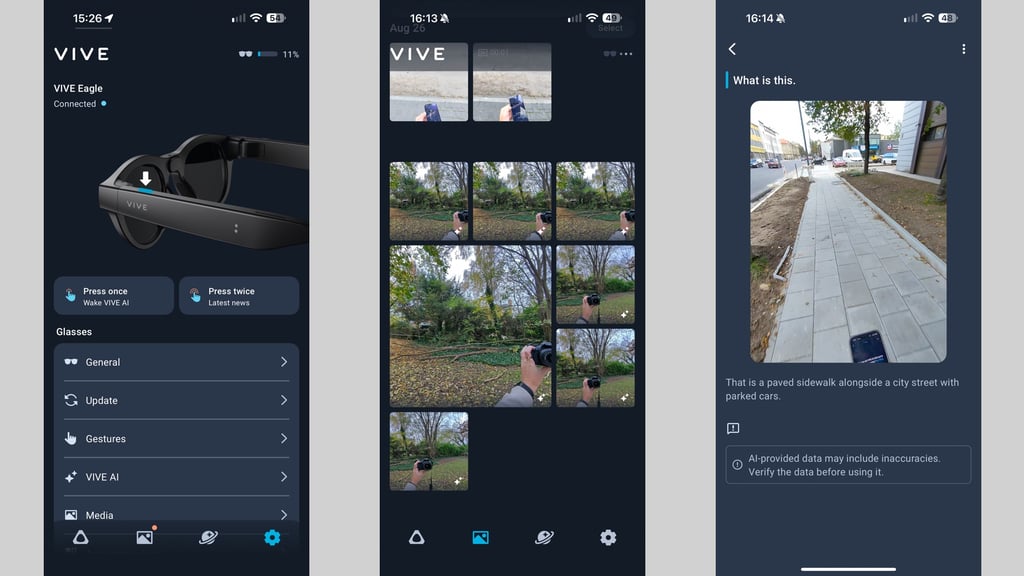
The AI features also work nicely. I set up the Eagle to chat with Gemini, and being able to choose between Google's AI and ChatGPT is a real point of difference when Meta's glasses tie you to a single assistant.
However, because they still need a connection to your phone, it's the kind of feature I'd only really use in a city, when navigating, or when I want a quick answer. The rest of the time, I'd just use my phone—even if there's technically more friction there.
That's not a problem unique to the Eagle; it's true of the whole space, and it raises a question the category still hasn't really answered: why would someone who doesn't normally wear glasses put on smart ones instead of using a phone or smartwatch?
It matters, too, because shoving something on your face is a bit like bringing it into your home. It's personal, not peripheral.
Camera fumbles
Again, though, that's not specifically unique to HTC's glasses. Instead, it's the camera where the Eagle is weakest against Meta.
HTC uses a 12MP ultra-wide sensor that captures photos at 3,024 x 4,032 pixels, the same still resolution as the Ray-Ban Meta's latest glasses. Yet, video is where Meta pulls ahead: the Eagle records at 1,512 x 2,016 at 30fps, while Gen 2 and Gen 3 can shoot up to 3K (2,384 x 3,168) at 30fps.
In good light, the Eagle works well for quick first-person photos and short social clips, as long as you treat it as a spontaneous capture device rather than anything serious. But if you've enjoyed Meta's Ray-Ban or Oakley glasses for casual bike rides, walks, or hands-free clips, the lower video ceiling is immediately noticeable when you watch clips back in the Vive Connect app.
Privacy features
Privacy is where camera glasses are being won or lost right now. Meta's glasses have attracted lawsuits, venue bans, and calls for tougher rules, and the company has had to close a loophole that let wearers cover the recording LED after they'd started filming. Launching a camera-free Ray-Ban says plenty about how it now sees the lens. That's the backdrop the Eagle arrives into.
There are upsides to buying from a company that isn't Meta, which isn't exactly famed for its privacy record. HTC says photos, videos, and other data are stored on the glasses rather than uploaded, protected with AES-256 encryption, and that it doesn't use your data to train its AI models. It also says requests passed to Gemini or ChatGPT are routed without you needing to log in or share personal identifiers.
How the Eagle tells the people around you it's recording is more interesting.
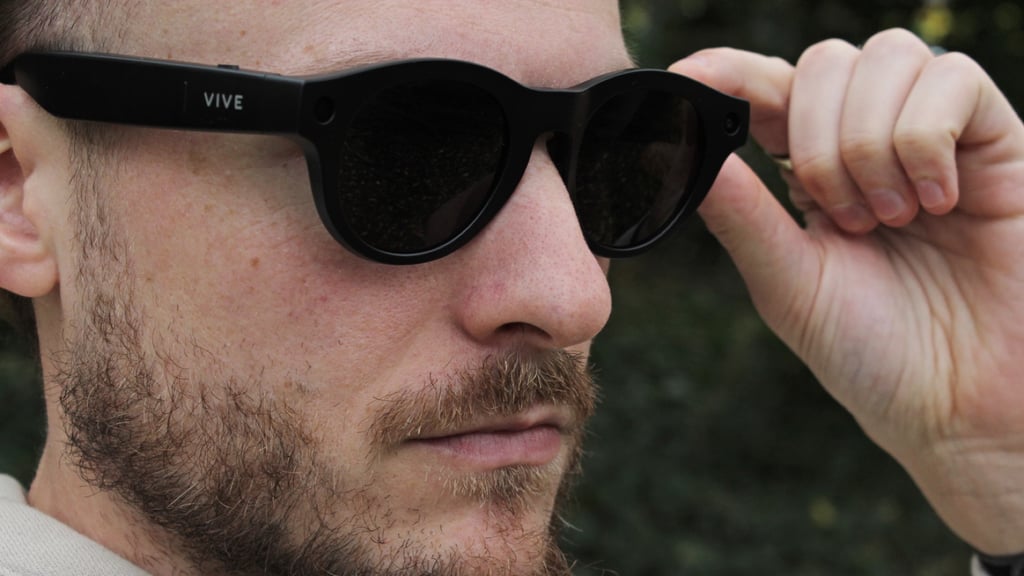
A recording LED adjusts its brightness to the environment and is backed by light and proximity sensors, so the camera is blocked if the LED is covered. The camera also won't work unless the glasses are on your face, so starting a clip and taking them off ends it. HTC has also added an optional voice command that lets someone nearby say 'stop recording' to end a clip.
They're all good measures, even if, like the recently announced Audio Intelligence features for the Apple Watch, they can't really ever do enough to keep glasses out of trouble.
Ultimately, the category—and any other wearable that records the world around it—rests on a paradox: consent depends on people knowing a recording device is pointed at them, yet the products are often designed to pass as 'ordinary'. A small LED has a lot of work to do.
Which tech brand do I trust to get this right? It's a hard question, and one that a few weeks of testing can't settle. HTC is doing some interesting things here, but, ultimately, they're only as good as bystanders' understanding of them.
Battery life
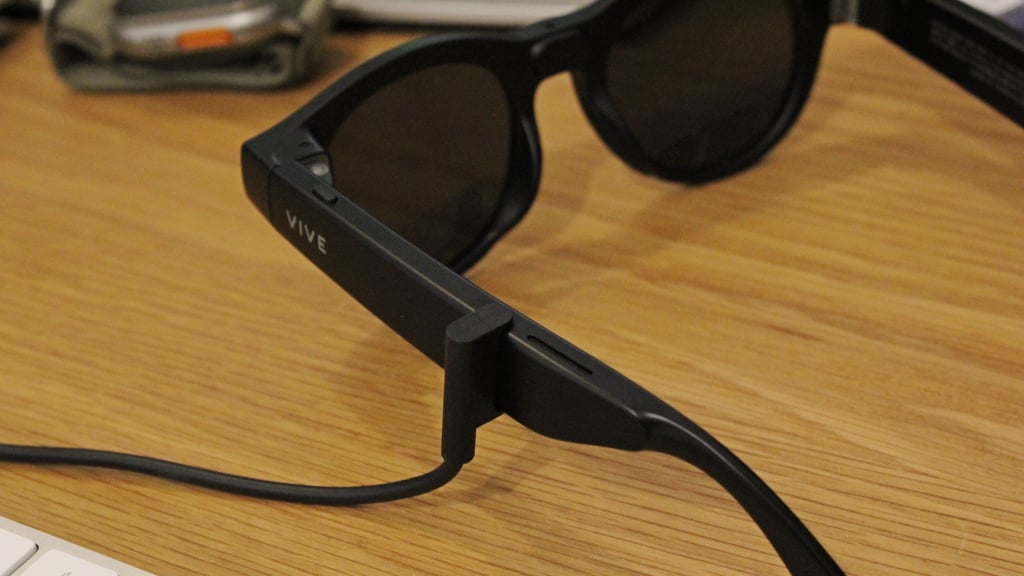
HTC rates the Eagle for more than 36 hours of standby, up to 4.5 hours of continuous music playback, and more than three hours of continuous calls from its 235mAh battery.
Analyzing this fairly loosely over our testing, that standby quote is about right—and, helpfully, you can tweak the auto-off timer to keep the Vive Eagle from draining completely when sitting on your desk.
Magnetic fast charging is also claimed to take it from 1% to 50% in 10 minutes and to 80% in 23 minutes—and, give or take a couple of minutes, that's what I saw in testing.
The quick top-up helps—as does the brand's Power Boost accessory, a small 120mAh battery pack you can clip to the side of the glasses. It does nothing to ease the overly techy feeling you get when wearing them, but it does work well when you need a bit of battery on the go.
Fundamentally, though, the magnetic pins on the Eagle's arms that enable this accessory attachment and charging are hard to get behind.
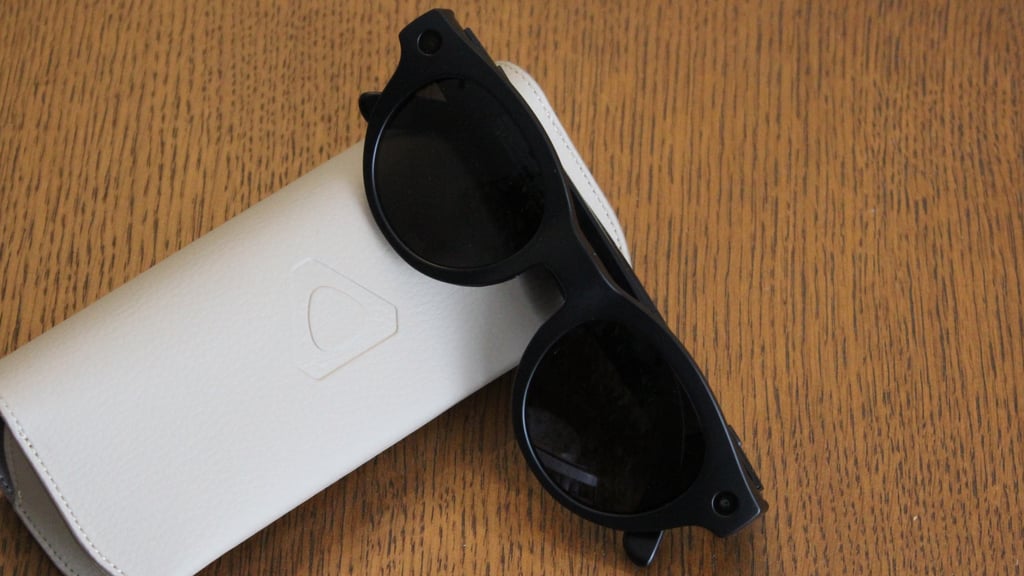
Meta's case doubles as a portable charger, so putting the glasses away also charges them. With the Eagle, the magnetic cable works, but it feels more like charging another gadget than storing glasses, and that small difference matters more than it may sound. A regular glasses case in the box is a missed opportunity, and the whole setup is unintuitive and, frankly, a bit ugly.
It also changes how you use them. Instead of taking them off, chucking them in a case and your backpack, and knowing they'll almost always be at 100% when you next put them on, you have to consciously charge another device. In my experience, most of the time I just didn't.
It's a proprietary charger, albeit a fine one, and the magnetic system technically works well, but it's friction I didn't want.
Final thoughts
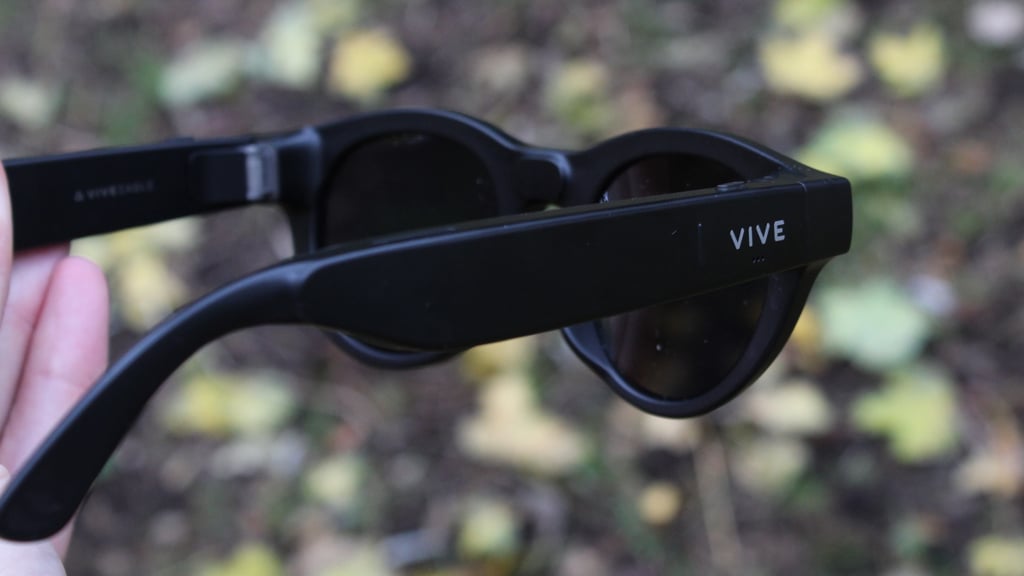
The Vive Eagle is a capable pair of smart glasses that does what HTC says without a glitch, and it's a solid first attempt. The trouble is who they're for.
Privacy and choice of AI assistants are the only two areas where I'd say the Eagle gives you more reason to care than Meta's glasses, and neither outweighs a weaker camera, a less polished ecosystem, no charging case, minimal brand pull, or a higher price.
If either of those two matters more to you than everything else, they're worth a look. For almost everyone else, Ray-Ban Meta remains the better buy.