Future Apple headsets could fix pass-through video's biggest problem

If you’ve ever felt a bit seasick while using a headset, Apple’s latest patent could hold a neat solution
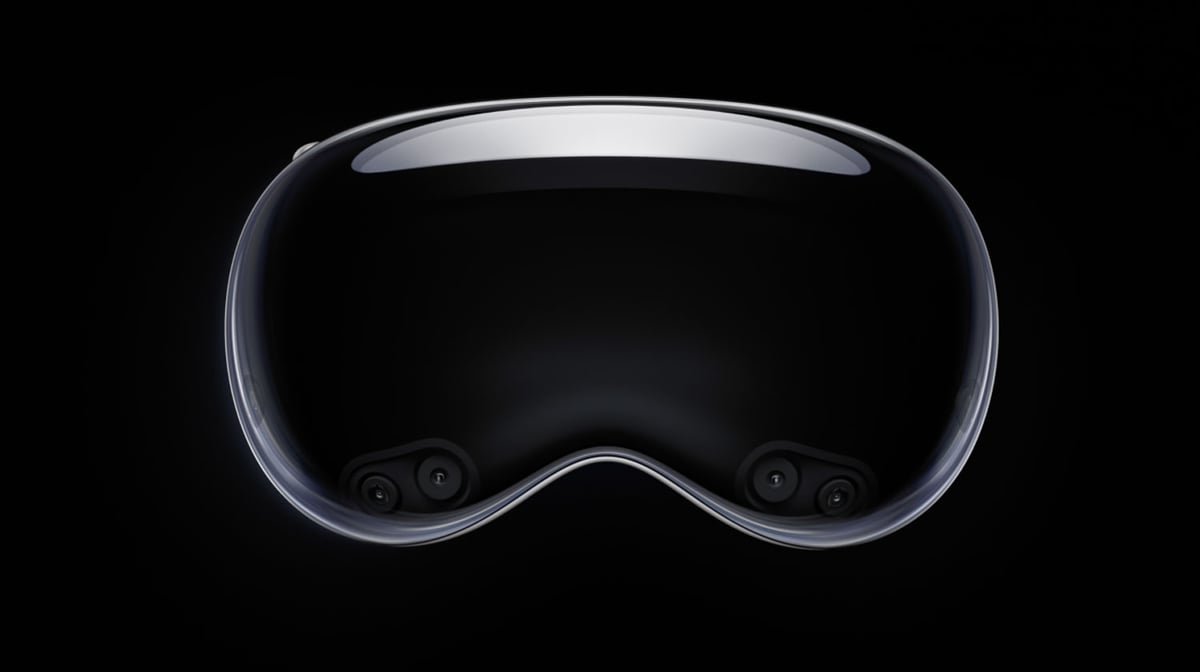
Apple appears to be exploring the idea of an XR headset design with dual forward-facing cameras separated by a dedicated nasal bridge to deliver improved video passthrough.
The proposal—detailed in a newly granted patent—aims to solve one of VR and AR's most common issues. Since front-facing cameras are often positioned slightly in front of the eyes, nearby objects can appear slightly off when viewed through the headset
This can make simple actions, like reaching for a drink or raising your hand in front of your face, feel less realistic than they should.
And Apple’s solution is to give each eye its own camera view, which could make the real world look steadier, more accurate, and less strange.
The reality gap in today's headsets
To understand why this matters, it helps to look at how a device like the Apple Vision Pro handles spatial awareness.
Apple’s headset uses two different display systems: the outward-facing EyeSight screen, which shows a digital version of your eyes to people nearby, and the internal 3D displays, which use live camera video to show you the room around you.
That video pass-through makes mixed reality possible, but it also introduces a subtle flaw called parallax distortion.
Since the headset’s cameras usually sit a few centimeters in front of your eyes, they can create a mismatch in depth, scale, and perspective.
So, for example, when you look at objects at arm’s length, like reaching for keys or raising your hand in front of your face, the scene may feel just a little off.
Matching hardware to human anatomy
Apple’s answer—at least in this example—is grounded in hardware design.
Instead of relying on heavy software processing to fix the mismatch, the patent puts two pass-through cameras on either side of a physical nasal bridge.
The goal is to create a more natural stereoscopic view that more closely matches how your eyes expect to see the world.
The filing also describes motorized display adjustment for interpupillary distance, which could help align the screens more precisely with the wearer’s eyes. In theory, this better fit could improve visual comfort during longer sessions.
What this means for Vision Pro
For now, there is no guarantee this exact design will ever ship. Still, it shows that Apple is seriously considering the visual compromises that hold current headsets back.
Solving these issues will matter not just for future Vision devices, but also for any lighter AR glasses that aim to make digital content feel like a real part of the world.
This is the kind of idea worth watching as Apple’s spatial ambitions continue to develop. So, stay tuned for more on this one.