Huawei Watch D3 review: Cuff accuracy in a sleek design

- Readings stayed close to reference BP monitor
- Slim, normal-looking smartwatch design
- Ambulatory monitoring worked without glitches
- Week-plus battery and fast charging
- Limited Huawei app ecosystem
- The odd anomalous reading overnight
- Dead space around the display
- Lack of US availability limits appeal further
Blood pressure tracking has evolved into a key modern focus areas for those building health wearables—especially since the biggest names in the industry began circling it.
Samsung, Google, and Apple have all tried their hand at software-driven blood pressure tracking over the last few years, but their interpretations all remain algorithmic: trends and estimates, with nothing actually squeezing your wrist (and, in some cases, a regular cuff still needed for calibration).
Huawei's Watch D line—first launched in 2022—takes an all-in approach, bypassing trends to deliver something niche and unique through innovative design and R&D. It's one of the few mass-market wearables that feels truly futuristic—the kind you typically see only in patent sketches and concepts.
When we reviewed the Huawei Watch D2 in 2024, it was growing into a superb pick for anyone who needs to track blood pressure routinely—mostly because it finally stopped looking like a device for sick people. The Watch D3 pushes that idea further. It's slimmer, the display is bigger, and it's now much closer to the brand's Watch Fit series than the D2 ever was.
It's also more clinically minded than the D2, with a 24-hour ambulatory mode built around European hypertension guidelines and new pre- and post-exercise readings.
We've been using the Watch D3 for about a month, comparing its readings with an Omron M2 Essential and running full ambulatory sessions to see how well it performs in the real world. Below is our full review.
Price and availability
The Huawei Watch D3 costs £399 / €449 (roughly $540) and has been on sale since September 23 through Huawei's own store and retailers.
As with all of the brand's smartwatches—including the D2 that arrived in 2024—this one isn't officially sold in the US. That's no surprise at this point, of course, but it does naturally limit the reach of what's already a niche offering from such a big brand.
The D3 arrives at £50 more than the D2's £349/€399 launch price. However, like before, it comes in one case size, three colorways, and M and L airbag straps (M fits 130-160 mm wrists; L fits 161-210 mm).
Reliable direct competition, as mentioned up top, is is pretty thin.
Samsung's Galaxy Watch range has long delivered blood pressure estimates, but it needs regular calibration with a compatible cuff.
Meanwhile, Apple's Hypertension Notifications are available on Apple Watch Series 9 or Apple Watch Ultra 2 and newer. Crucially, though, this doesn't provide a numeric blood pressure reading. Instead, it uses the smartwatch's optical sensor to analyze background heart data and blood vessel response over 30-day periods, notifying the user if it detects a consistent pattern of chronically high blood pressure.
Google's Blood Pressure Trends, available on the Pixel Watch 3 and newer, work similarly.
The D3, on the other hand, is the cuff. In that sense, there's no competition aside from traditional arm cuff BP monitors.
Who the Watch D3 is for and how it works
The people who'll get the most from the Watch D3 are those who've been advised to monitor their blood pressure: people with diagnosed hypertension, anyone tracking the effects of medication or lifestyle changes, and those whose readings at the doctor's office don't match their home readings.
Home monitoring typically means sitting down and taking your own readings twice in the morning and twice in the evening for seven consecutive days. Ambulatory blood pressure monitoring (ABPM) goes further, usually using a portable cuff for over 24 hours to show how pressure changes throughout the day and night.
The D3 is designed to do both from the wrist, and Huawei also allows you to share results with your GP via the Huawei Health app.
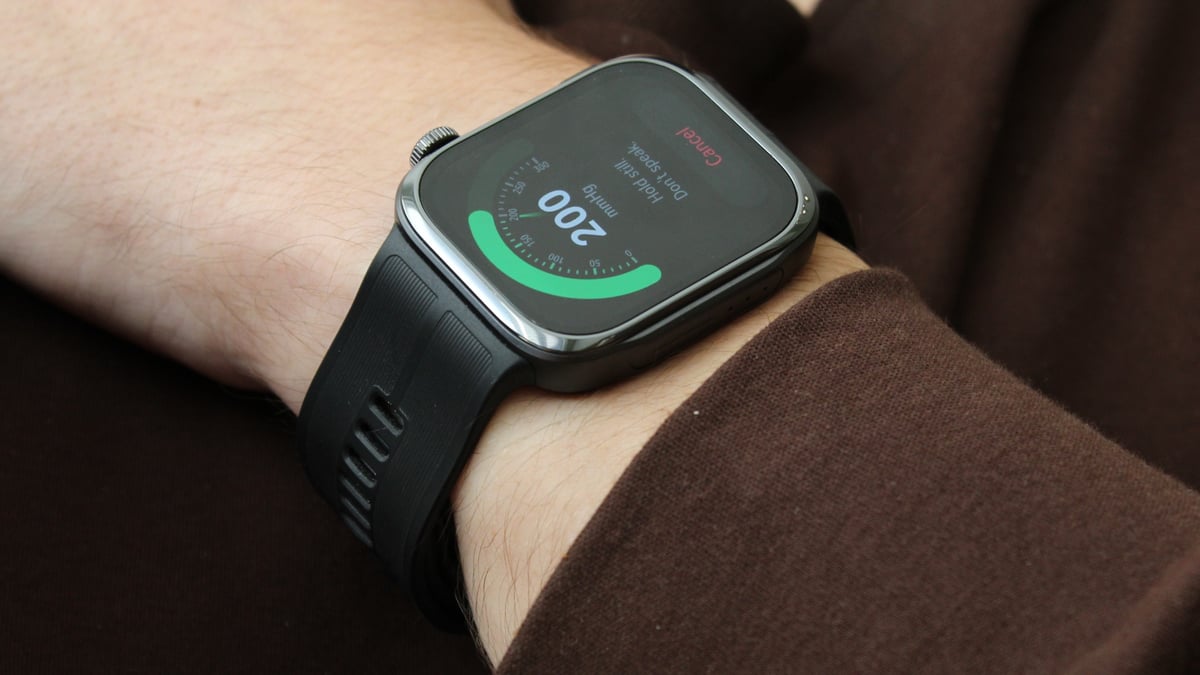
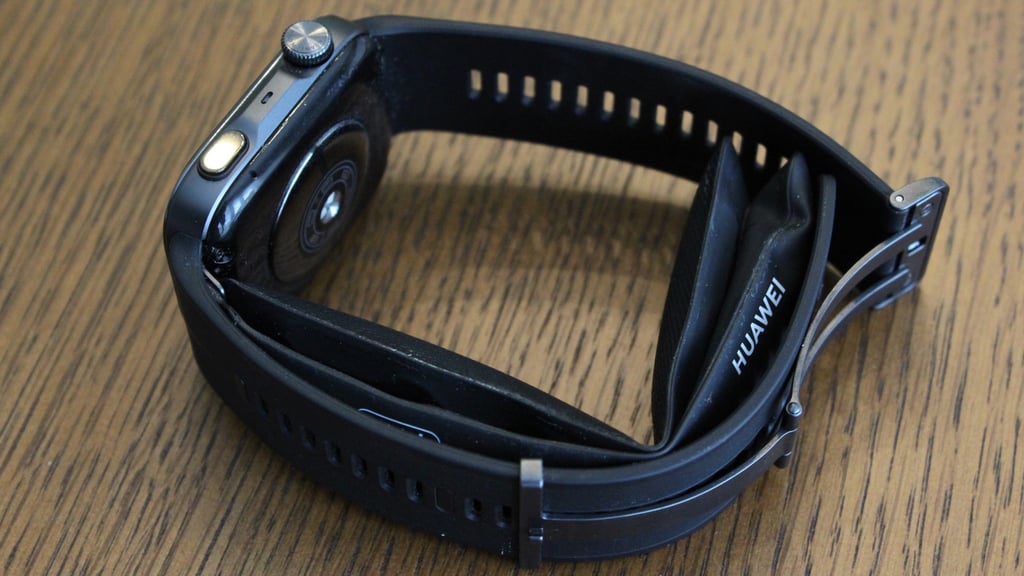
Unlike optical estimates, the strap houses a micro-pump and inflatable airbag that compresses the artery at your wrist and measures pressure directly, using the same oscillometric principle as upper-arm monitors.
Huawei pairs it with its TruSense sensor system, too, so there's no calibration.
You get three modes: a resting reading, ABPM, and a new pre- and post-exercise check, which Huawei says can capture a reading within two minutes of finishing a workout. The ABPM mode follows European Society of Hypertension guidance, targeting at least 70% successful readings across 20 daytime and seven nighttime measurements.
On certification, the D3 carries CE-MDR approval as a medical device in the EU, covering all three modes. As with all health features on smartwatches, however, availability varies greatly by country, so check before importing one.
Design and display
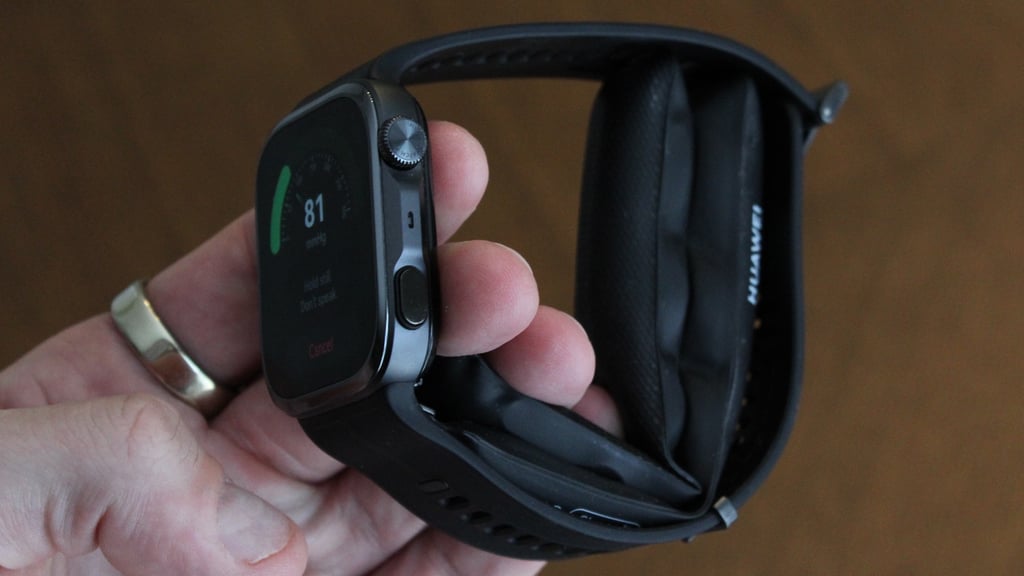
The D3's engineering story is a slimming exercise. The case is 11.3mm thick, down from 13.3mm on the D2, with a squarer 46.5 x 41mm footprint and an aluminum alloy build. The strap is narrower than the D2's, too, but it still has to house the airbag, so it's thicker than a normal watch band.
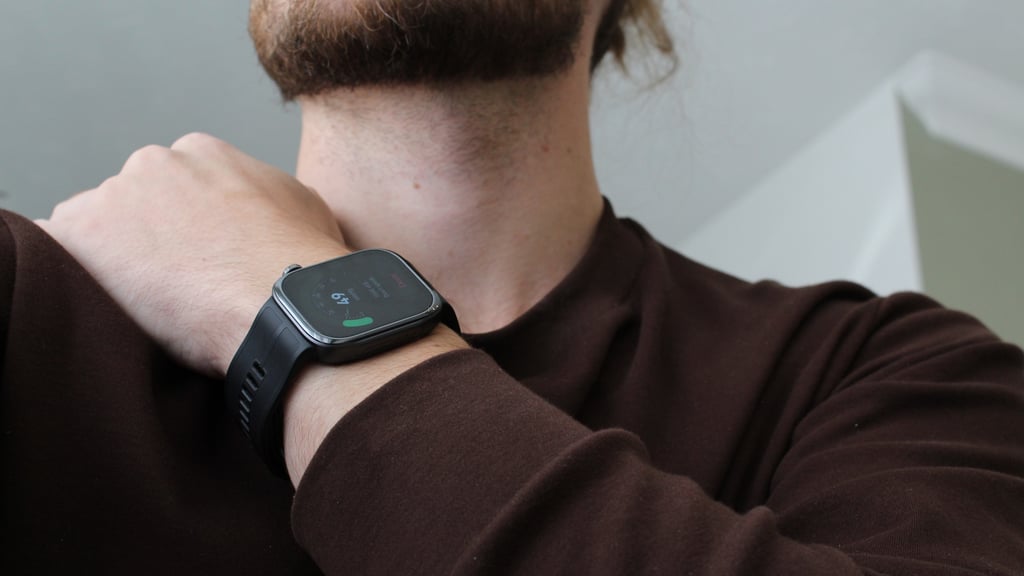
Here's the thing, though: you just don't really feel it after a while. Whether I was idle at my desk, exercising, or sleeping, the D3 felt like any other smartwatch. The only time you're aware of the cuff is when it inflates for a reading, or when you take it on and off.
More than that, and a testament to how much Huawei has refined this design—it now looks mostly like a regular smartwatch. It doesn't scream medical device, and the case isn't unusually thick next to something like an Apple Watch Ultra or, really, any of Huawei's own lines. I wouldn't feel daft wearing it even if I didn't need it.
Yes, the band stands out a bit if you're looking, but—if we're honest—nobody is. It just looks like a regular square smartwatch, which is exactly what you want.
An exercise in refinement
The display, meanwhile, is a 1.92-inch AMOLED—up from 1.82 inches on the D2, at the same 408 x 480 resolution.
Huawei quotes up to 3,000 nits of peak brightness, and I've certainly found it punchy and easy to read outdoors. That's pretty typical of Huawei's smartwatch displays, though.
There's still a bit of dead space around the bezel that I think the brand could tidy up in a future iteration, but overall, it does the job.
Controls are a rotating crown and a function button that doubles as the ECG electrode. It's a system that works well in theory—you won't have any issues navigating the Watch D3 once you get used to the combination of touch swipes and crown pushes—but I remain a bit unconvinced about Huawei's ECG architecture (more on that below).
Blood pressure tracking performance
The most important test is whether the cuff works when you ask it to. Over a month of use, taking readings every hour in ABPM mode and two or three times a day otherwise, it never once lagged or failed to inflate. That sounds like a silly thing to clarify, yet with so little precedent for how reliably this technology works as advertised, it's worth saying.
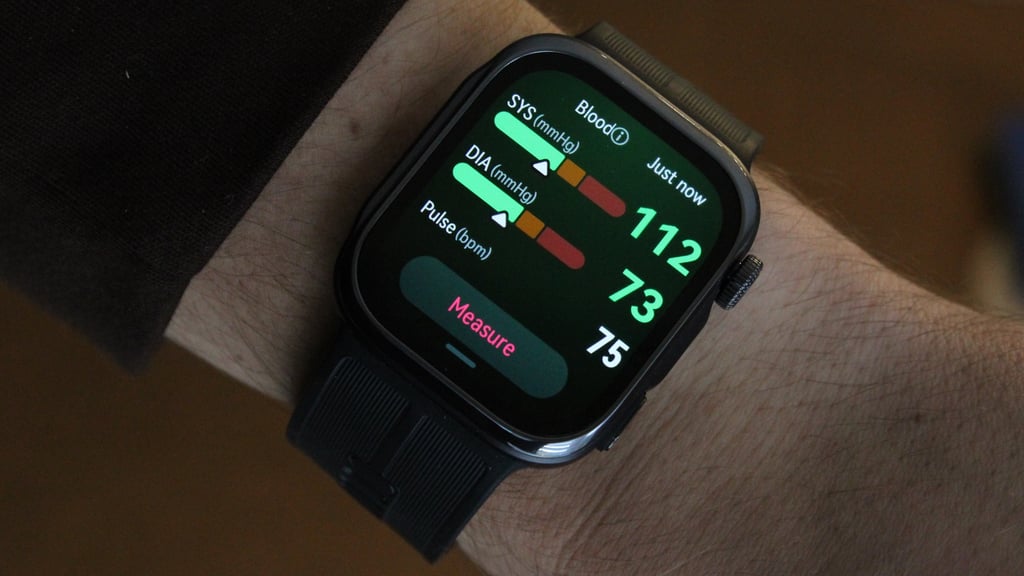
To check accuracy, I compared daytime readings with an Omron M2 Essential. The D3 was never more than 5 mmHg off on systolic or 3 mmHg off on diastolic, and it tended to read slightly higher rather than lower. Here are some examples I've taken while writing this review:
| Huawei Watch D3 | Omron M2 Essential | |
| Example 1 | 119/73 | 118/70 |
| Example 2 | 118/71 | 114/72 |
| Example 3 | 113/66 | 109/63 |
| Example 4 | 112/73 | 108/73 |
It's not an exact science, since the readings are taken consecutively rather than simultaneously, and one person's month isn't a clinical validation study. But on almost every occasion, the numbers are tight and in the same ballpark as our D2 testing, where readings were nearly identical to a cuff.
I ran ABPM a few times during this review period—and, aside from being reminded by the Watch to inflate every hour, which gets old very fast, the results were impressive again.
In both sessions, one overnight reading was out of character (157/93, classified as Stage 1 Hypertension), and one was classified as Elevated (132/68) but out of step with readings from 30 minutes either side.
I suspect that's down to fit and the unpredictability of where your arm is during sleep. Nocturnal readings are a different proposition: normally you sit upright, still, with your hand at chest height, whereas overnight the watch has to take a reading while you're lying down, wherever your arm happens to be.
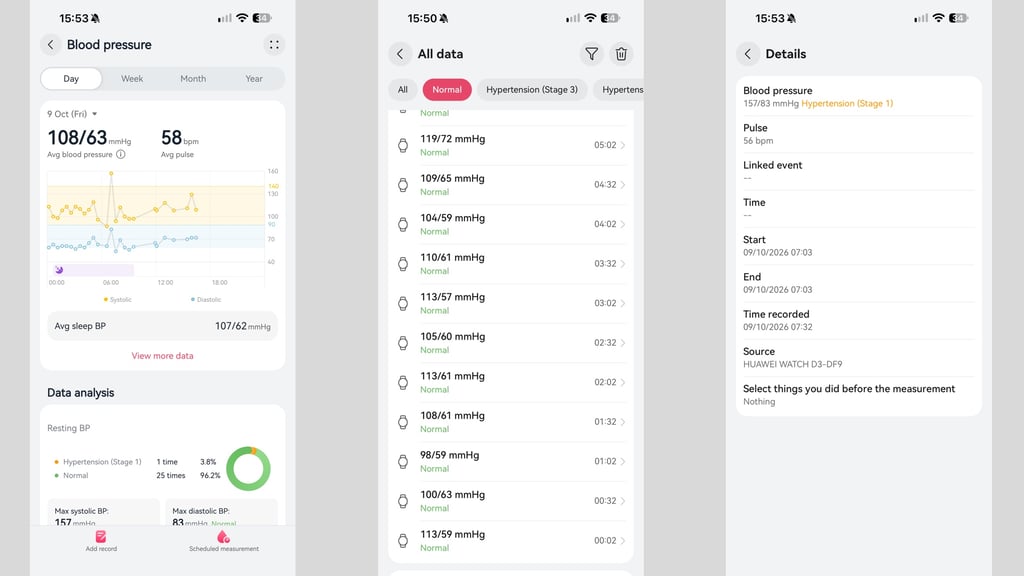
Blood pressure also naturally dips during sleep, which is why clinicians assess day and night averages separately. I'd expect a doctor to throw that reading out as an anomaly, since it's so different from everything around it. As mentioned, though, I also didn't compare nocturnal readings with the Omron, so I can't say how close the overnight numbers were.
Show your working out
Really, what a doctor would look for is the trend, and that's where the D3 delivers. That's also, ultimately, what other brands trying to deliver blood pressure insights are aiming for—but it's undeniable that what Huawei brings here is a little more reassuring and robust, with its 'proper' systolic and diastolic measurements.
Aside from the overnight outliers, the readings in each session clustered comfortably together—all 'Normal', thankfully—which is exactly the pattern that determines overall blood pressure. The Huawei Health app also presents it all neatly: it shows your average blood pressure and pulse, charts systolic and diastolic on a graph, and breaks down how many readings fall into each classification.
Typically, I'd note that there's not a lot of depth, engagement, or actionability to the health data Huawei provides, but I don't actually think those presentation tricks are required here.
Ultimately, anybody using the Watch D3 will likely just want clear and concise data, rather than any AI-conjured lifestyle advice based on the data. To that end, it does the job.
What else can the Watch D3 do?
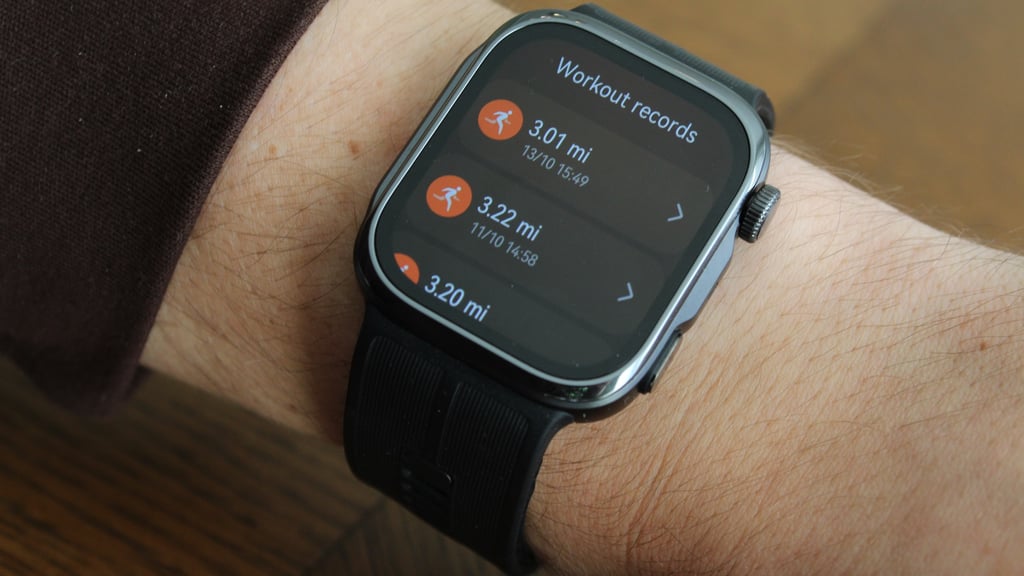
Aside from the cuff, the Watch D3 is a very capable wearable in its own right.
Workout tracking with GPS, sleep tracking, and ECG are all here, along with the Health Glance, which checks 11 health indicators in about a minute (where supported). New this time are Pulse Wave Arrhythmia Analysis for atrial fibrillation alerts via the optical sensor, a separate Beat-by-Beat ECG app, and a Health Community feature for sharing alerts with family members.
After a month, the data was nothing unusual and stayed close to the baselines I've developed over years of full-time wear with Garmin, Whoop, and Oura. I still have fairly consistent issues getting a reading from Huawei's ECG electrode compared to other brands—and the Watch D3 constantly told me to tighten the fit or make sure the tip of my finger is wet to get a reading. Again, I've experienced that with its other smartwatches, including the Watch GT line.
Ultimately, though, it's hard to get too worked up about good performance in workout tracking or a relatively weak one in the ECG department—neither is a reason specifically to buy this watch.
The only potential concern during testing was whether the cuff design interfered with data integrity or the feel of workouts or sleep tracking. But in essence, it feels like any other Huawei smartwatch with a fancy blood pressure trick, and that's a very good sign.
Still more tracker than smartwatch
The usual Huawei caveats apply, mind. Its AppGallery remains relatively thin because of regulations—and because Huawei has to build almost everything itself —though the company is increasingly linking up with other platforms.
This line also supports NFC payments for the first time. And though the process of getting set up is clunkier than what you'll experience with Apple Pay or Google Pay, it's ultimately good that they exist and show Huawei is committed to filling in the gaps that have been left by a lack of integration with third parties.
Battery life and charging
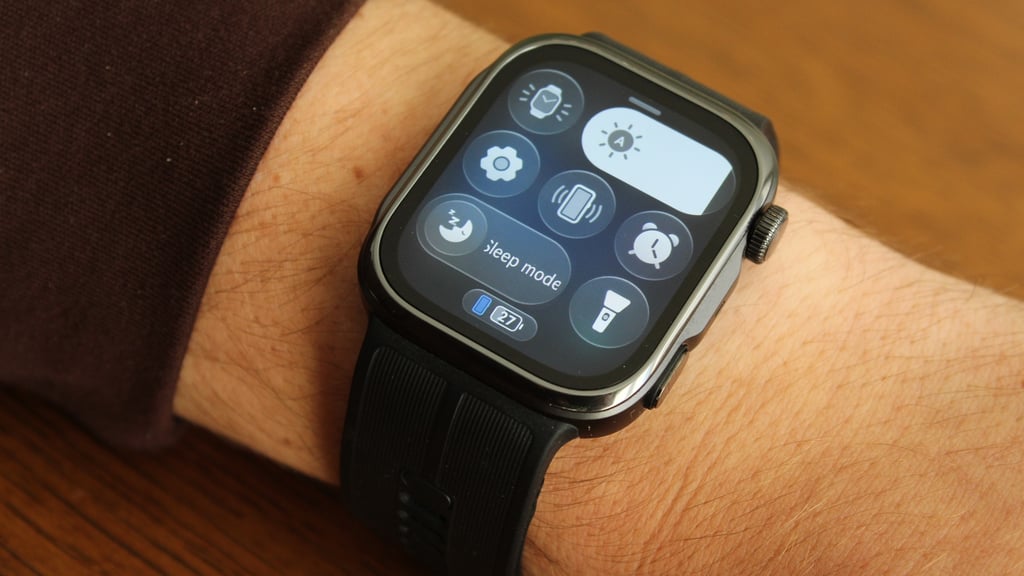
I found the Watch D3 lasted around seven to eight days with regular use, incoming notifications, the always-on display enabled, and blood pressure readings a few times per day, beating Huawei's own six-day claim.
With the always-on display disabled for a few days, my calculations put it at 11-12 days, which is great for work trips when you don't want to pack an extra charger (which, like other Huawei smartwatches, is a proprietary magnetic puck).
ABPM, the headline feature, cuts that to just over a day. That makes total sense for a feature requiring this much action, and Huawei itself quotes around a day. Fast charging helps: it takes under 20 minutes to go from sub-10% to 50%, so you never feel any strain. It would be a chore if you were doing ambulatory monitoring constantly, but, really, ABPM is only ever a 24-hour test, not a lifestyle.
The week-long stamina also fits neatly with patients doing home blood pressure measurements: the seven-day, four-readings-a-day routine barely needs a top-up.
Final thoughts
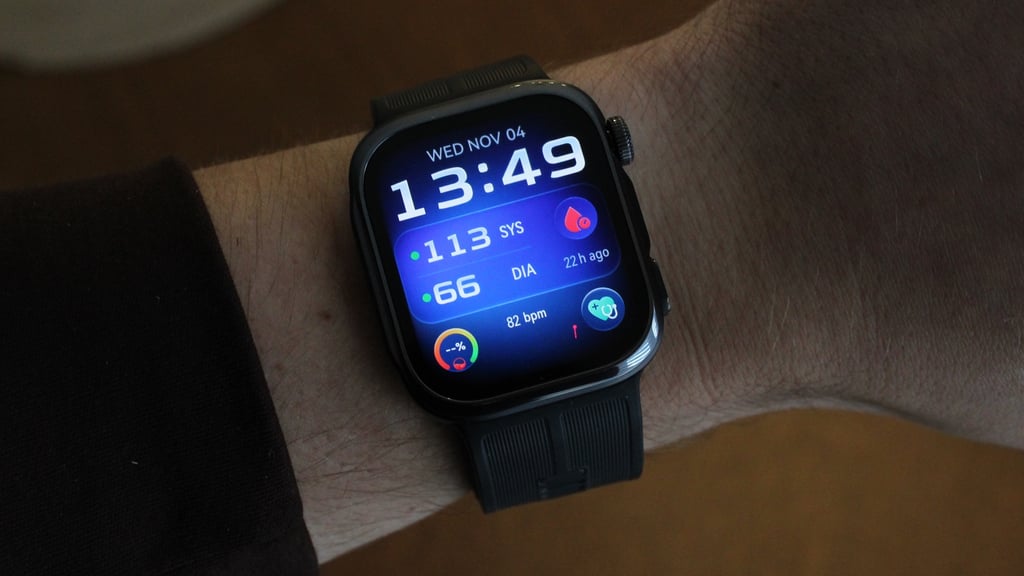
The Huawei Watch D3 isn't for everybody, and it isn't trying to be. If you have no need to monitor your blood pressure, it's a fairly priced but unnecessary health watch with a modest app ecosystem.
But if you do, it's a rare wearable: a watch with a real cuff you can wear all day, forget about, and trust to work when you need it.
Slimmer, easier to live with, and just as capable as the D2, it earns its premium with ambulatory monitoring support alone. But if you're deciding between the two on price alone, the discounted D2 remains a sound alternative.