Why You Can Trust Wareable
Founded in 2014, Wareable brings together journalists and experts who have reviewed over 1,000 products, including smartwatches, fitness trackers, smart rings, smart home gadgets, and health tech devices.
Our team combines hands-on testing, in-depth research, and expert insights to evaluate product performance, assess manufacturer claims, and help readers make informed decisions.
Samsung targets deep belly fat with radar-based smartwatch tracking

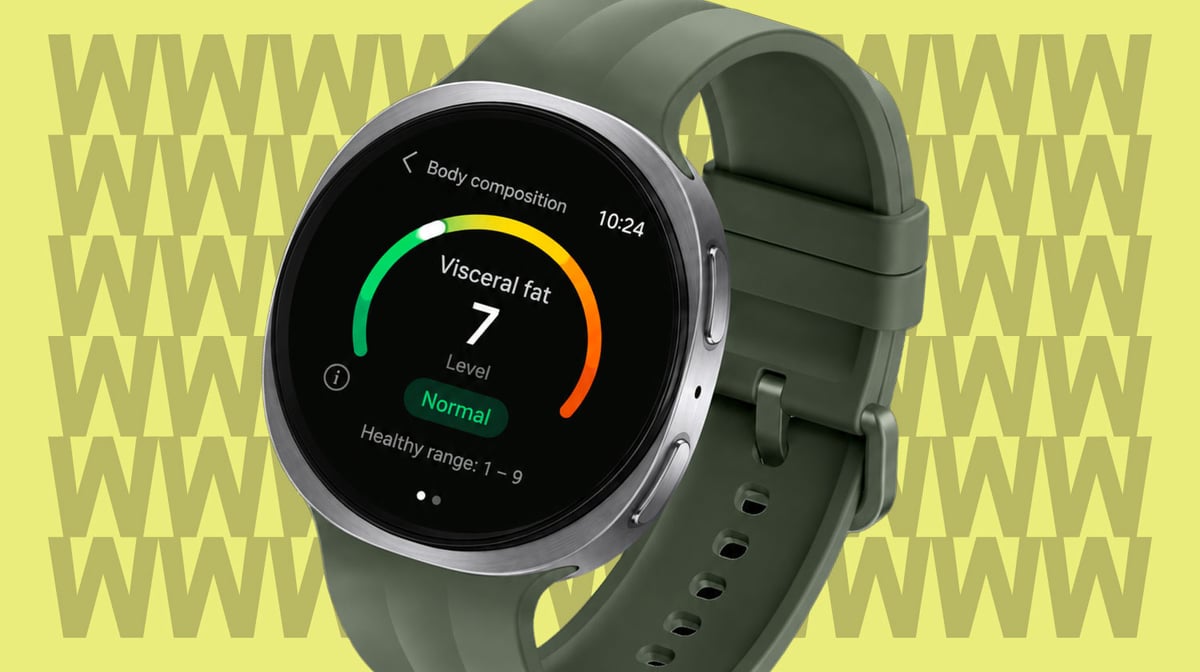
Visceral fat is one of the trickiest body metrics to measure—but Samsung is exploring whether its wearables could do the job
A new Samsung patent describes a system that combines ultra-wideband (UWB) radar with body composition sensors to estimate subcutaneous and visceral fat without clinical scans.
Currently, accurate visceral fat readings typically require clinical imaging, such as MRI or CT scans—while most consumer devices offer only rough estimates.
First reported by Wareable, the filing—titled ’Method and system for estimation of abdominal fat’—reveals Samsung’s thinking on how portable electronics could begin measuring a body metric that has so far remained largely in the hands of clinics.
And even though the Korean company hasn’t described a finished product yet, the patent suggests portable technology (perhaps a Samsung smartwatch) could handle a job usually beyond the reach of everyday wearables.
Tackling one of the hardest body metrics to measure
Visceral fat is different from the fat just under the skin. It sits deeper in the abdomen, wrapped around internal organs, and is more closely linked to health risks such as cardiovascular disease and type 2 diabetes.
Consumer devices like smart scales can estimate it using bioelectrical impedance (BIA), but these results are often too inconsistent to trust completely.
Samsung’s patent suggests a more detailed method.
According to the filing, the system would use UWB radar to scan the abdominal area and measure reflected signals, which could then estimate subcutaneous fat, the layer closer to the skin.
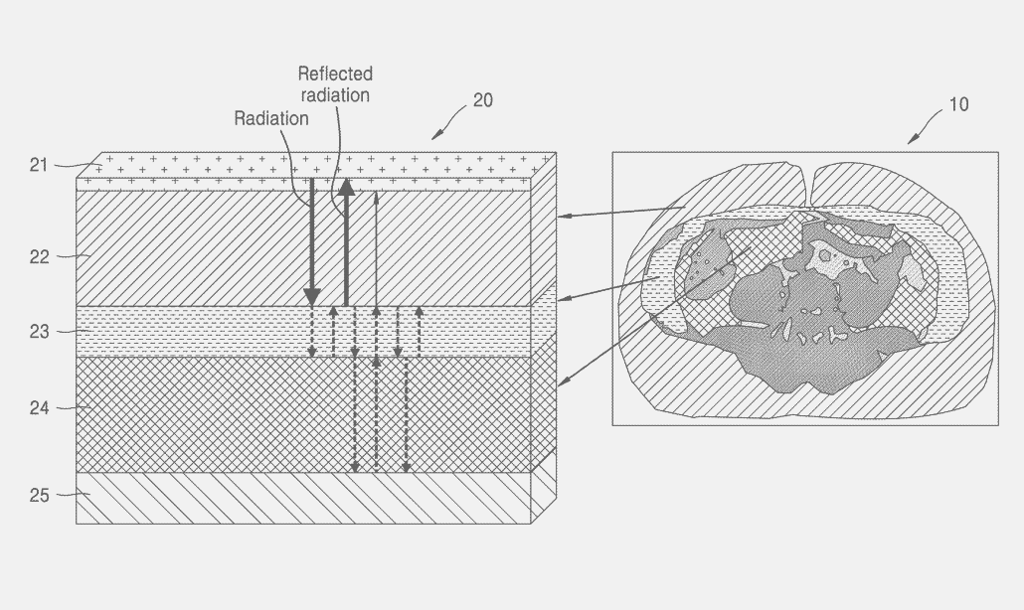
It would then combine this with BIA data and basic body measurements—height, weight, age, and gender—to estimate total abdominal fat.
From there, the system could calculate visceral fat by distinguishing deeper fat from the subcutaneous fat it had already measured, enabling a more advanced form of body-composition tracking than most consumer devices can offer today.
Could this end up in the future Galaxy Watch?
Samsung is a fairly credible company to take this idea further, having been one of the first major brands to bring body composition tracking to smartwatches.
Galaxy Watch users have been able to check their body fat percentage, total fat mass, skeletal muscle mass, body water, BMR, and BMI since the feature was introduced with the Galaxy Watch 4 in 2021.
Although the patent describes a portable device in broad terms rather than a finished smartwatch, it’s easy to imagine that this is where Samsung might be headed.
UWB is already in its phones, and BIA sensors are already in its watches, so combining these technologies in a future Galaxy Watch seems likely.
As always, we’ll keep tracking this idea as it develops and see whether it appears in Samsung’s next generation of smartwatches. Stay tuned.