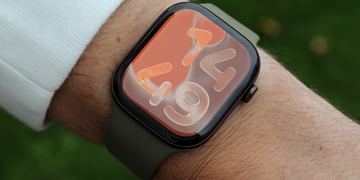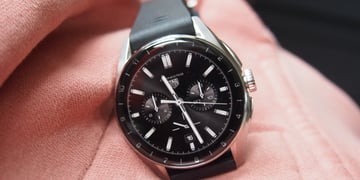
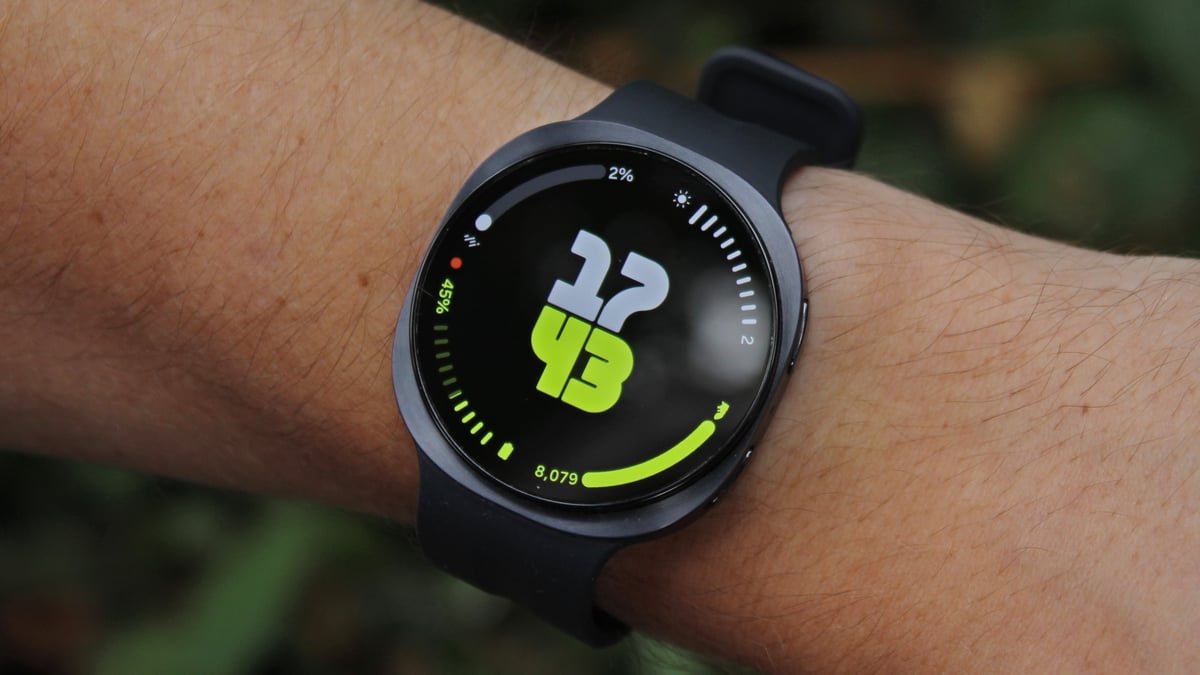
- Useful chip and battery upgrade
- Still the most distinctive design in the mid-range
- More useful on-device Gemini integration
- Battery life still lags behind Android rivals
- Workout heart rate was strangely inconsistent
- Minor hardware upgrade that doesn't reinvent anything
When the Galaxy Watch 8 arrived last year with its redesigned cushion case and the debut of Google Gemini on a Samsung smartwatch, it did something the standard Galaxy Watch line hadn't quite managed in a while: it felt genuinely exciting.
It was the boldest visual overhaul the line had seen in years, arriving at a moment when Wear OS badly needed a mid-range option with some personality to set against the ever-present, ever-nondescript Pixel Watch.
A year on, the landscape hasn't shifted all that dramatically—which, in itself, says something about where Samsung's priorities lie this cycle.
With the just-announced Pixel Watch itself undergoing a minor iteration this year, the Galaxy Watch Ultra 2 has cemented itself as the standout premium option on Android. That's left the standard line to do what standard lines usually do in an off-year: refine rather than reinvent.
That's precisely what's happened with the Galaxy Watch 9, which launched alongside the Ultra 2 at Samsung's Galaxy Unpacked July event in London. This generation is a quieter, internals-first release: a new Snapdragon Wear Elite chip, a roughly 20% larger battery, deeper on-device Gemini integration, and a fresh coat of One UI 9 Watch.
After a month of testing, the question is whether an internals-only refresh is enough to help the Watch 9 surge ahead of the incredibly polished Pixel Watch, or whether its design stasis leaves it as a stopgap update. The review below explores that question in detail.
Price, versions, and the competition
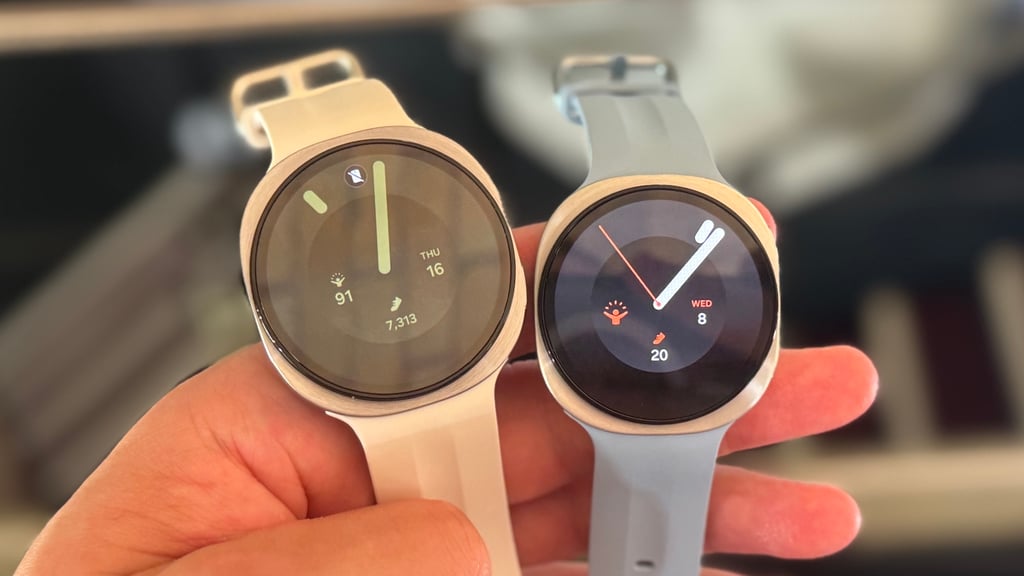
The Galaxy Watch 9 remains a premium option in the mid-tier market, with this generation—like last year—starting with the 40mm Bluetooth model, with an LTE option available if you require it.
Choosing the larger 44mm case variant I tested will typically cost extra for both the standard Bluetooth and the LTE configurations. There's also a minor price increase from last year's Watch 8—continuing a pattern of creeping costs across most of the smartwatch industry's 2026 device lineups.
Samsung is, as usual, keen to soften that with launch incentives. Their standard trade-in promotions can knock a significant chunk off the total bill if you're stepping up from a premium model like the Galaxy Watch Ultra, and additional discounts have been stacking on top of that since orders opened.
Where it sits, the Watch 9's real competition isn't the Ultra 2 above it in Samsung's own range; it's the Pixel Watch 5, which, as I'll dive into below, is a better fit for those chasing true multi-day battery life.
For the avoidance of doubt, ecosystem lock-ins mean the Apple Watch isn't really part of this conversation at all. This is squarely a fight between Android's mid-range—back to a Google vs. Samsung equation, given OnePlus' recent exit from the US and Europe.
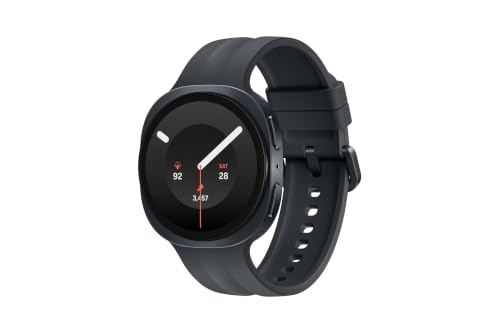
Design and display
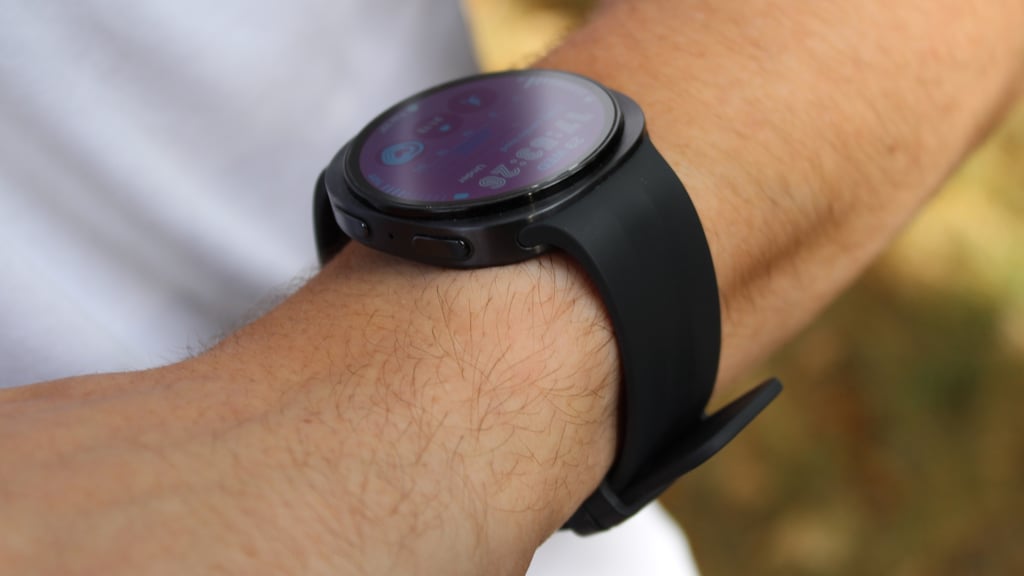
The Galaxy Watch 9 is, at least in my view, the best-looking Android smartwatch in the mid-range for pure personality, boasting the same cushion case that spearheaded the line's makeover last year.
Though nothing has really changed this time around, the standard Galaxy Watch 9 is still a watch I'd reach for over the Pixel Watch on looks alone.
The more classic, mechanical watch aesthetic may not be as clean-looking as Google's smartwatch, but it looks distinctly less techy and dainty. And while the Pixel Watch 5 is a great nondescript option, it's also pretty stale; aside from the introduction of the Actua 360 domed display last year, Google hasn't really changed the device's overall feel since it launched.
Samsung's approach is more like Apple's Series line: refresh the vibe every few years, rather than every generation, and use other editions to get creative or experimental with design and features.
I tested the 44mm version for this review—and, as expected, it was perfectly comfortable for basically every wearing scenario I put it through: daily running workouts, gym work, and the occasional indoor cycling session.
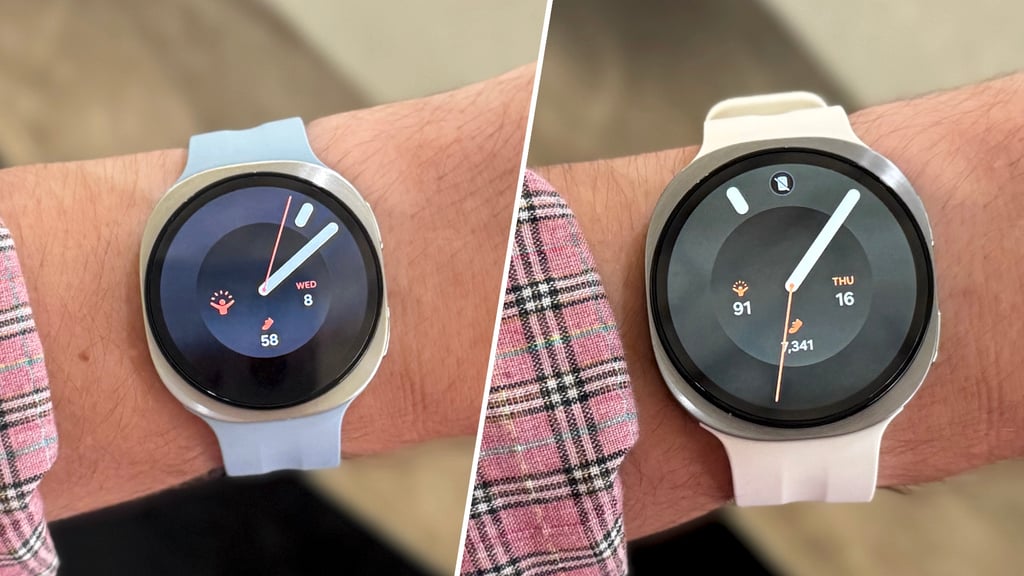
I'd expect that sentiment also extends to the smaller 40mm edition, shown above, which I spent plenty of hands-on time with during Samsung's Unpacked event at launch in July.
It's certainly not best suited for bigger wrists, obviously, but—again—I think the cushion case holds better than Google's smaller offering.
Under the hood
The headline design tweak for 2026 is instead under the hood.
Samsung has swapped the Exynos W1000 chip in the Galaxy Watch 8 for Qualcomm's Snapdragon Wear Elite platform—the same chip powering the Galaxy Watch Ultra 2—and paired it with a battery that's roughly 20% larger. It also helps power deeper on-device Gemini AI integration.
The chip change is fairly crucial on paper—again, even if it's not the kind of upgrade you can point to on a spec sheet with much excitement.
Side-by-side performance against the Watch 8 generation feels a touch snappier, and Gemini responses come back noticeably faster.
It's not a transformative leap, but it's a legitimate one, bringing the standard Galaxy Watch a step closer to the polish Google has delivered over the past couple of generations.
Software: One UI 9 Watch
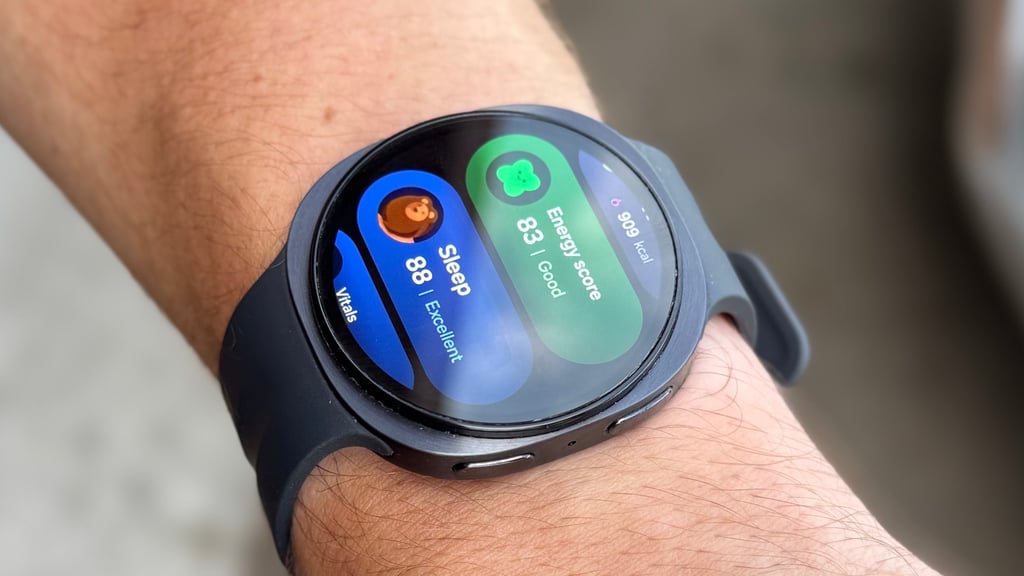
Samsung's One UI 9 Watch skin for Wear OS is rolling out to many existing devices, but a couple of features are headlining here on the Watch 9.
Raise to Talk is probably the most impactful new smart feature, giving you quicker access to Gemini (and other AI assistants). To use it, you just—as the name suggests—lift your wrist and start speaking, rather than long-pressing the button first.
It's a small change, but it removes friction from daily use. That's especially true if you have the LTE version of the Watch 9, which means you don't need your Android phone nearby to use it.
I loved the introduction of Gemini on last year's top-tier Android devices, but I've found myself using it about twice as much because Raise To Talk is so reliable. The nature of it does make you feel slightly conspicuous out in public—like you're cosplaying an MI5 agent tailing a target—but it's undeniably easier than pulling out your phone to check a fact, the easiest route to a meeting, or whatever else.
Samsung has also merged the Double Pinch and Shake gestures, reserving Double Pinch for positive actions (answering a call; confirming an alert) and Shake for negative ones (declining a call; dismissing an alert). This sensible consolidation makes the gesture system a bit easier to remember, but again, nothing too groundbreaking.
Elsewhere, a small lick of paint has been added to widgets and typography for this year's flavor of One UI—but the new tracking additions are the most interesting talking points.
New health and fitness features
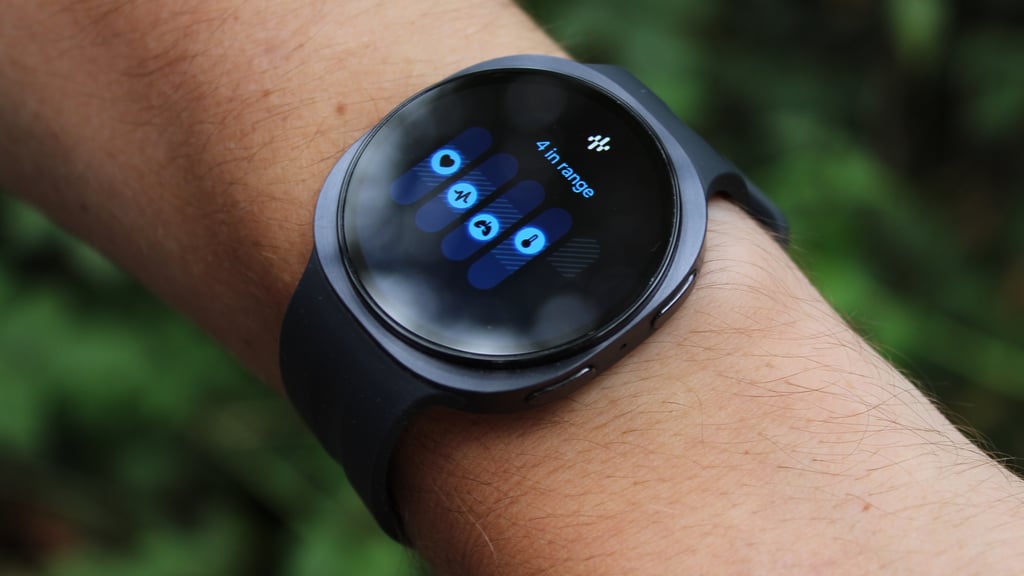
The Galaxy Watch 9 arrives with the same set of Samsung Health features that also debuted on the Galaxy Watch Ultra 2.
Vitals is the standout addition: an early-warning recovery baseline that tracks five overnight biomarkers—resting heart rate, HRV, respiratory rate, skin temperature, and blood oxygen saturation—and alerts you only when something meaningfully deviates from your personal baseline.
It takes about a week to calibrate, and its usefulness—like any medium- and long-term tracked trends on wearables—depends on whether it (via Samsung Health) can flag something before you notice it yourself. In that sense, I think Samsung has struck a decent balance here, quietly surfacing relevant data in its companion app and letting you get at-a-glance summaries of your recent HRV spike, for example.
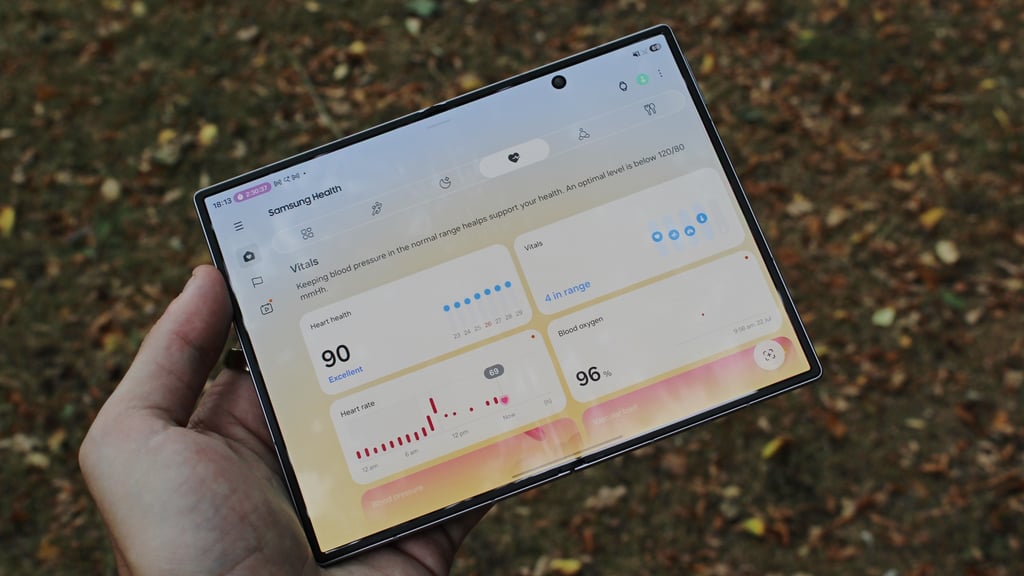
Meanwhile, Heart Health Score combines sleep, stress, activity, and on-wrist body composition data into a single snapshot.
As I said in our Galaxy Watch 2 review, the inclusion of body composition data is what sets it apart from similar scores elsewhere, though I remain a little skeptical that a wrist-based BIA reading is precise enough to carry that much weight in the calculation. It demands strict consistency in testing conditions to be genuinely useful, and that's difficult to convey via any watch.
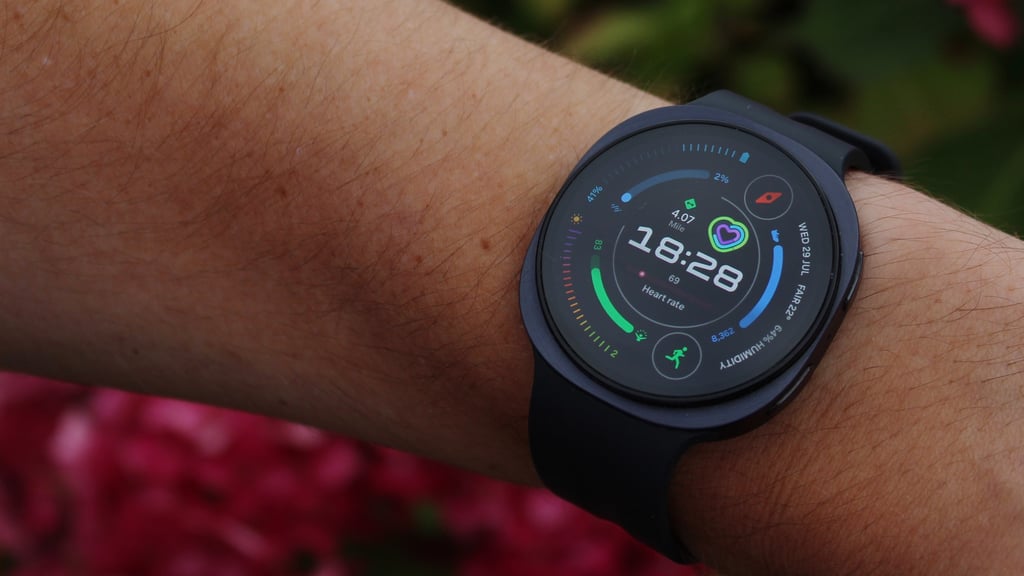
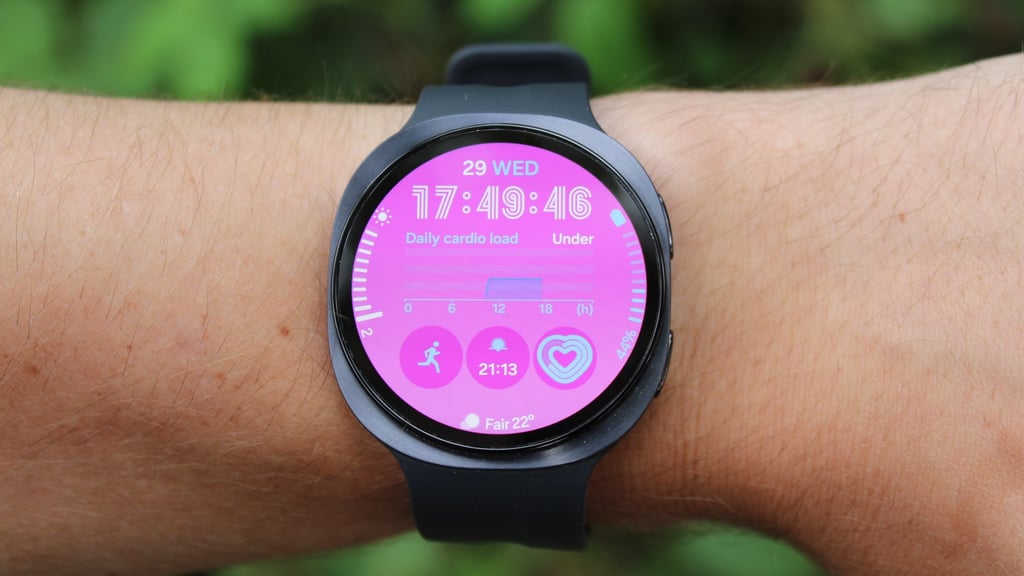
Daily Cardio Load rounds out the buffed-up recovery picture, measuring accumulated strain against your rolling training capacity to help avoid overtraining. There's nothing particularly new or innovative from Samsung here; it's more about ticking a now-expected box. But, again, it's presented cleanly in the refreshed-looking Health app.
Finally, the Fitness Index breaks your physical fitness down into five pillars: cardio, endurance, strength capacity, flexibility, and body composition.
This is then visualized as a pentagon radar graph benchmarked against age- and gender-matched peers. It's a neat way of turning abstract biometric data into something you can actually parse at a glance, even if—after many weeks of testing—my own scores have come back a little more generous than I'd expect from a metric this broad.
Workout tracking: GPS and heart rate accuracy
This is where the Watch 9 gave me the most pause. Given the incredibly strong heart rate tracking performance of the same BioActive sensor in the Galaxy Watch Ultra 2—and the Watch 8's similarly strong showing during last year's tests—I expected this to be another fairly routine test.
Oddly, though, the unit I've been testing seems to have a couple of gremlins.
Test 1: Outdoor steady-state running session
- The full workout session data comparison is viewable here
While not as straightforward as an indoor cycling test, a steady-effort run with minimal elevation change is among the easier tests for a premium device like the Galaxy Watch 9. Or, at least, it should have been.
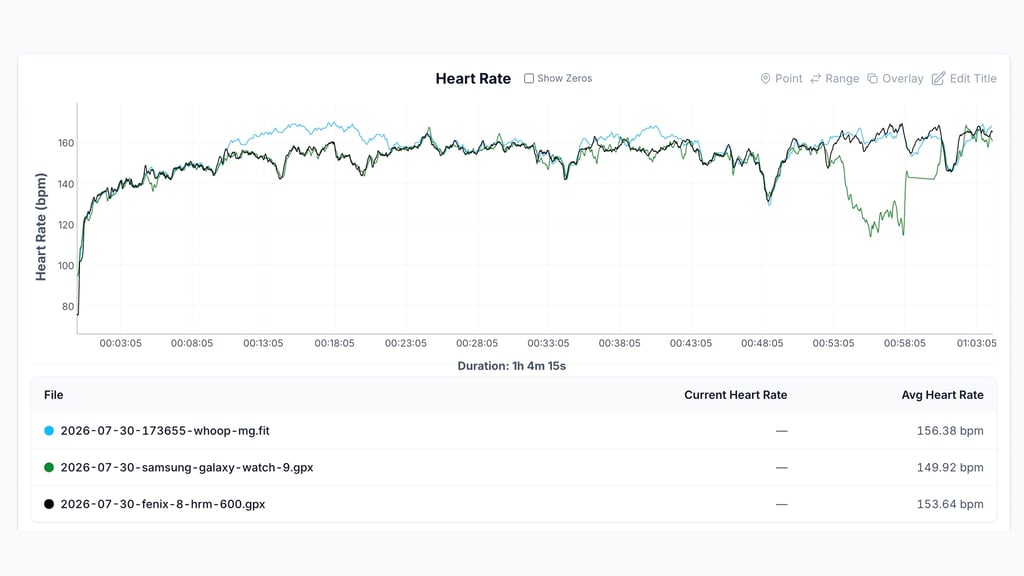
As shown in the wide view of this workout, the Watch 9 seems to drop out completely toward the end, which skews its average for the session.
Minor quirks like this do happen—even with chest straps like our main reference device here, the Garmin HRM 600. However, while I can forgive a skew of 10-20 seconds, this is around eight minutes of being nowhere near the Whoop MG or Garmin chest strap.
Again, mishaps happen, though—and often, like in this case, there's no easy explanation. And in a couple of additional steady-state running tests later that week, the Watch 9 proved it can hold its own as expected.
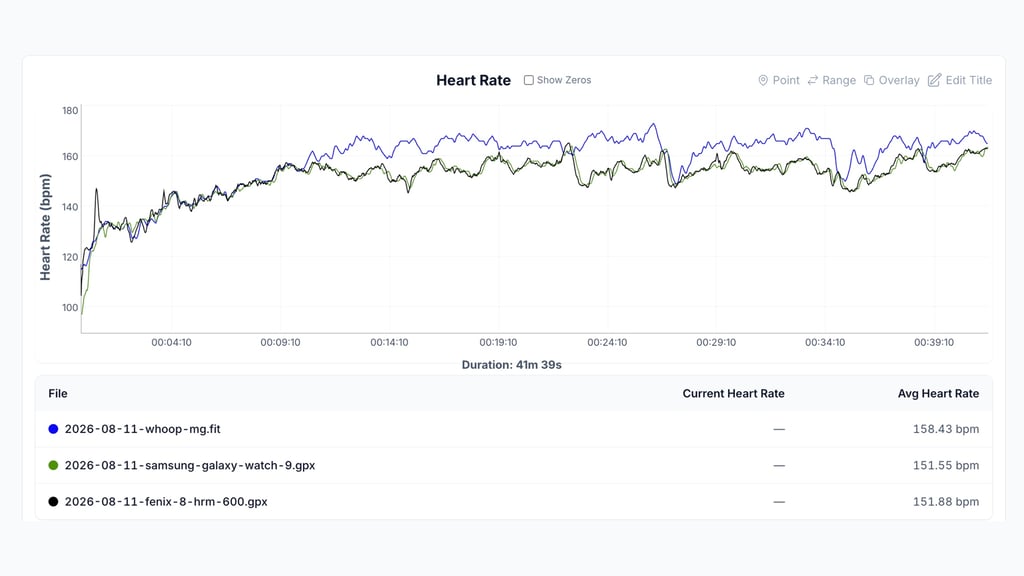
In this example—which can be viewed in full here—it remained remarkably tight to the chest strap (which actually had a mini-blip of its own at the start of this run)—finishing within 0.5 BPM of the HRM 600's average. Mega impressive.
In fact, the data here is so clean that even the Watch 9's latency to the chest strap is perfectly visible throughout the workout—mimicking the same peaks and troughs.
All good, then. And with GPS within 20 meters of the Garmin Fenix 8 Pro's Multi-Band setting in all these tests—as expected, given there's been no change here, but still a big tick—it was on to the tougher task of an interval session.
Test 2: Outdoor interval running session
- The full workout session data comparison is viewable here
Unfortunately, the Watch 9 didn't perform very well in this session—and suffered a similarly eventful outing in a similar follow-up test.
It failed to capture almost every element of this four-interval workout: it struggled to get up to speed in the warm-up mile, only doing so halfway through the first interval, and then didn't realign to the right reading until the third interval's rest period and into the cool-down.
It's worth mentioning that Whoop (on the opposing wrist) also struggled in this test.
However, despite its inability to hang with a chest strap unless it's on the upper arm—as I've documented in virtually every review since its launch—it still rarely shows the same kind of inconsistency as the Watch 9 did here (or in that steady-state test above).
Over- and under-reporting by a few beats is one thing, and quite common from the wrist, but dropouts are less so.
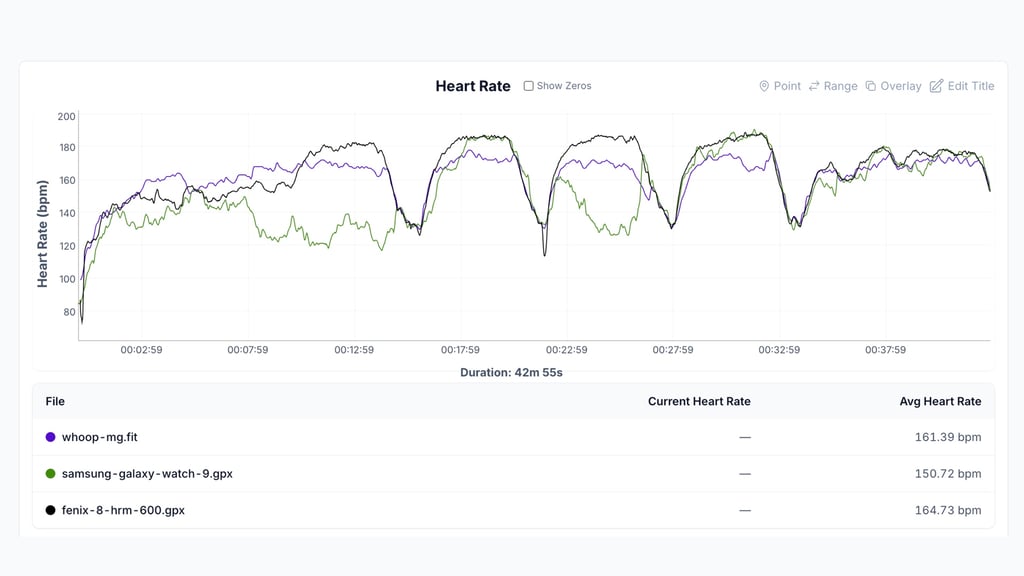
Again, it's unusual that I didn't see this kind of issue in the Ultra 2, but variances do happen across designs because of weight and component differences. The fact that we didn't see any of this with the virtually identical Watch 8 is the real head-scratcher.
In many ways, it reminds me more of testing the older, less consistent Samsung watches. And while I don't necessarily want to overstate the issue—since the BioActive sensor's long-term performance over the last year outweighs it—the data is the data, and it was persistent enough across the 10+ tests I ran with the Watch 9 to be representative (at least for this unit).
I'll be keeping an eye on it to see if things improve over the coming months.
Sleep, health, and stress tracking
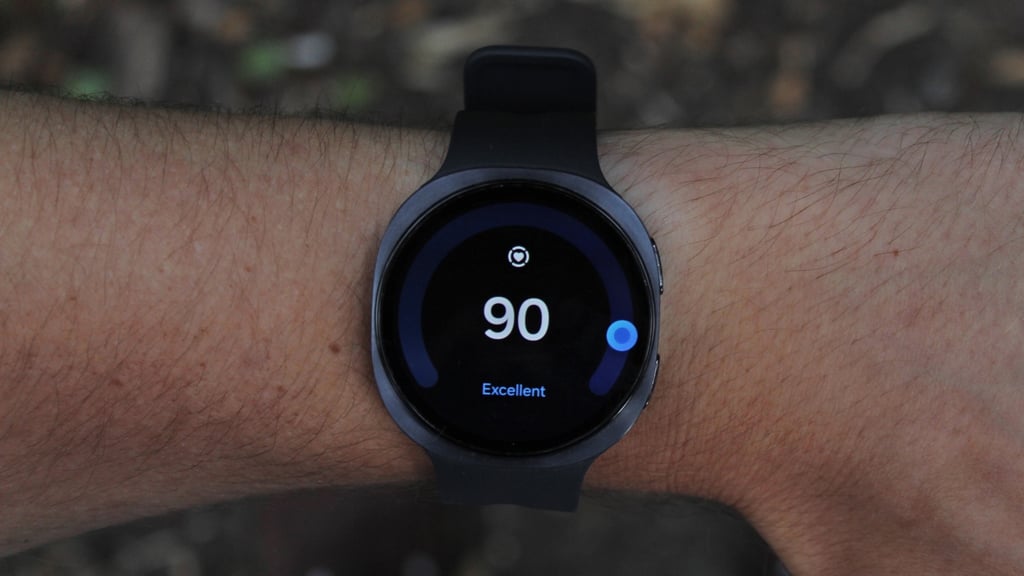
Sleep and health tracking perform as expected, and the broader Samsung Health experience remains one of the more visually appealing health companion platforms on the market.
Unlike some apps that cram every available tile and graph into a single tab, Samsung Health uses smart design choices to keep its cards and graphs clear and easy to digest.
I found sleep detection and wake-up timings reliable—the Watch 9 was encouragingly able to spot when I was in bed but awake, rather than basing the estimate entirely on movement.
Your nightly analysis also includes detailed stage breakdowns (which we naturally put less stock in on any device), continuous blood oxygen monitoring, skin temperature, and optional snore detection via your phone's microphone.
The Sleep Coaching program also still assigns you an animal sleep persona (I'm an Unconcerned Lion, if you must know) based on a week of logged data, with structured multi-week targets to improve regularity.
It's a useful and accessible framing system—and, as I said when it launched, I particularly like that it gives users a topline change to focus on and act on from a sleep hygiene perspective (rather than something related to sleep stages).
As with most mass-appeal brands, stress tracking is a key area where Samsung continues to lag behind rivals like Whoop and Oura.
The all-day HRV-based stress view is there—and I like the smoothed-out timeline and basic breakdown of your body's state.
However, I think those aforementioned brands have shown that there's a whole load of insights to be had in this area regarding stress timing (e.g, highlighting the periods in a 24-hour cycle you tend to restore), tendencies (surfacing your activity vs. non-activity stress on particular days), and history (e.g, which biometrics have been out of rhythm for months, like Oura's Cumulative Stress).
The data exists; it's just more passive than it needs to be. Again, Samsung isn't alone in this regard, but it also has the resources to help lead the charge.
Battery life
Battery remains one of the Galaxy Watch 9's weaker areas—and it's the one place where the hardware upgrades haven't translated into the real-world difference I was hoping for.
This isn't the case with the Galaxy Watch Ultra 2, suggesting that the big leap forward in battery life on that device is more down to the increased cell size than to chip efficiency.
Despite a battery cell roughly 20% larger than the Watch 8's and a more efficient chip, I'm still seeing real-world battery life stuck in the 24- to 30-hour range (usually dependent on how much GPS tracking occurred in a cycle).
For a 44mm device, that's disappointing. Compared with the 45mm edition of last year's Pixel Watch 4 (which we consistently reached around 48 hours with) and Samsung's Galaxy Watch Ultra 2, which manages around four days even under heavy use, it's a clear step behind.
It's not that the chip and battery changes have done nothing, but the gains simply haven't shown up where it counts.
Like the Apple Watch Series line, the standard Galaxy Watch could do with a proper injection of battery life at some point.
Whether that arrives via a future Qualcomm chip generation or a design tweak to squeeze in a larger cell, it's the single biggest thing standing between this watch and a recommendation over the Pixel Watch.
Summary: A solid Android watch to consider
The Galaxy Watch 9 is a minor iteration of a very good smartwatch, and there's nothing wrong with that framing on its own terms—not every generation needs to be a redesign.
The chip upgrade powers a solid array of new smart and health-related features, and it remains the most characterful smartwatch in Android's mid-range. Yet, for most people, I still don't think it's the best mid-range pick overall; that still goes to the Pixel Watch, particularly while battery life here remains stuck where it was.
If you're already on a Galaxy Watch 8, there's little reason to upgrade. But if you're coming from a Watch 4-6 and deciding between a Watch 8 and a Watch 9, the newer model is the technically better buy.
As ever, those exclusive advanced health features—blood pressure monitor integration and ECG—being exclusive to those with Samsung phones also mean it's a much better fit for those users than the rest of the Android pool.