Samsung patent tackles one of AR glasses’ display problems: keeping virtual graphics clear in bright real-world conditions
A new patent filing—“Method and electronic device for blur reduction of an occlusion mask”—reveals how Samsung plans to sharpen digital overlays on future AR glasses, solving an optical issue where bright sunlight or dark backgrounds make graphics look blurry.
It addresses an issue that many smart glasses users face. In bright light, glasses makers often use a dark patch behind text or icons so those visuals stand out.
However, because this patch is so close to the eye, its edges can look soft—almost like a shadowy halo behind the image.
Rather than making the glasses bigger and using more complicated optics, Samsung appears to be working on a smarter solution.
The Korean brand seems to be considering a dynamic light-blocking layer that adjusts how much background light passes through behind the virtual image.
The idea is to keep digital overlays readable in daylight without adding a distracting blurry patch.
Solving it through software, not bulkier optics
The patent says the device can figure out the position, size, and shape of an occlusion mask based on the virtual image.
It can then calculate how much light to block based on surrounding brightness and adjust the transmittance of an electroactive panel in different areas to reduce blur in the final image.
This means the system can darken the background behind graphics more accurately, rather than using bulkier optical hardware to fix the image later.
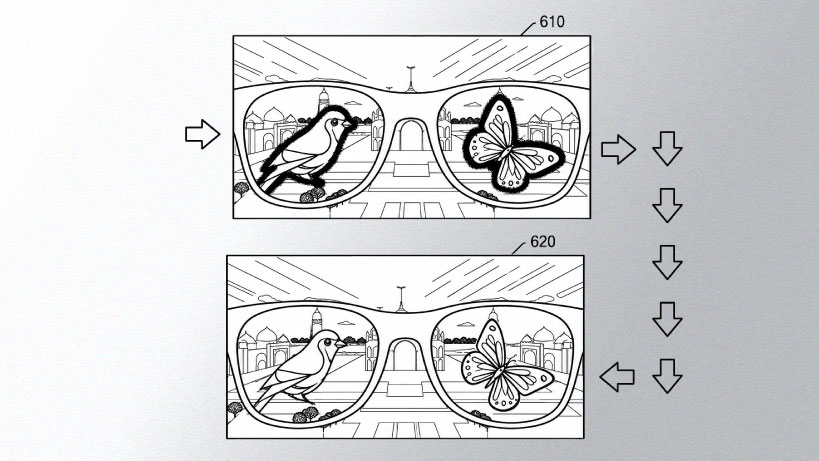
The patent also mentions reducing blur by using calculations based on the optical system and the user's pupil position, suggesting Samsung wants the dimming layer to address the issue before the user notices it.
One for the future?
This approach fits with Samsung’s current focus on XR technology.
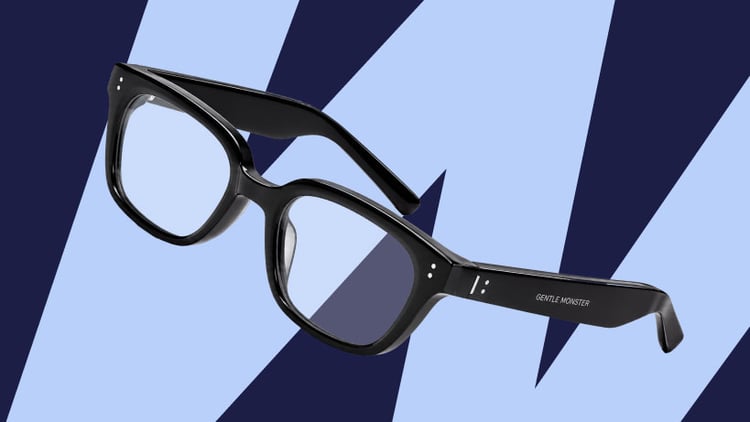
The company already offers Galaxy XR, and—at Galaxy Unpacked in July—it once again teased its Android XR glasses in partnership with Google, Gentle Monster, and Warby Parker, with a full launch expected later this year.
However, as you might have guessed, this patent seems to be aimed at future products rather than something coming soon.
It looks like early groundwork for advanced AR glasses with a more complete heads-up display—the kind of hardware Samsung may eventually use to compete with Meta, Apple, and others in the race for lightweight smart eyewear.
For now, the filing is simply another sign that Samsung is tackling the visual issues that could define the next phase of its smart glasses ambitions. So, stay tuned for more.