- Gorgeous, light design with swappable cushions
- IPX4 rating suits sweaty workouts
- Excellent transparency and noise cancelling
- Long-lasting battery
- Tinny sound with no EQ
- Missing basics like auto-pause
- Fiddly buttons and flaky device switching
- No wired mode or hardshell case
Premium over-ear headphones have long been a three-way fight between Sony, Bose, and Apple.
Beats—Apple's louder sibling brand—has mostly played a different game: bass-forward sound and a brand that carries serious weight with athletes. Occasionally, as we saw with the Beats Powerbeats Pro 2 and its native heart rate tracking, it also soft-launches features before they graduate to Apple's products.
The Beats 360 tries to turn that cachet into something equally purposeful—and giving something unique to those rely on headphones during workouts.
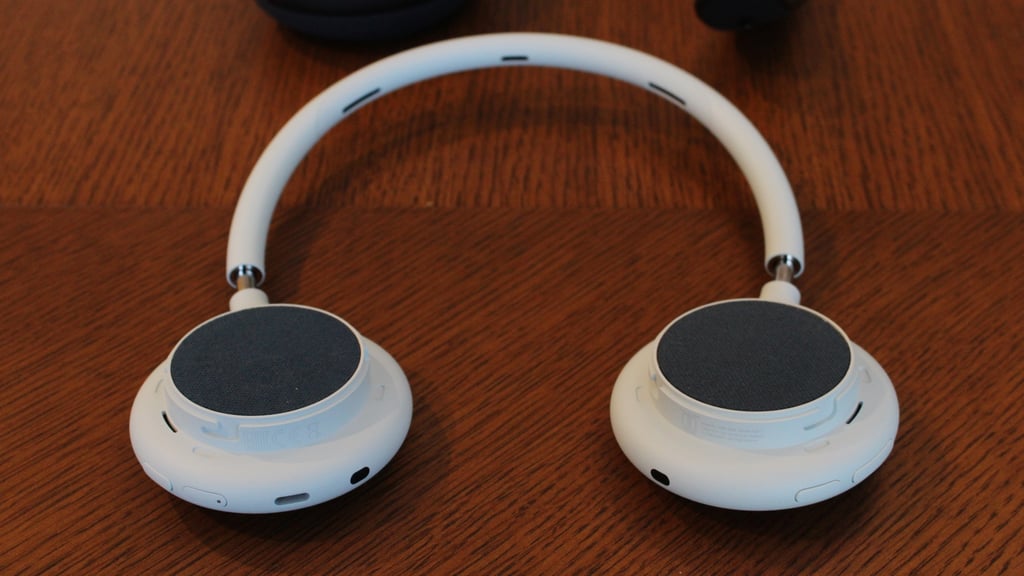
This emphasis and modularity make the 360 a more intriguing proposition than most. They're the first over-ear Beats with an IPX4 rating for sweat and splash resistance, and the first with swappable ear and headband cushions: a breathable Performance Knit set in the box, and a softer, faux-leather UltraPlush alternative sold separately.
Beats also touts up to 1.75x more noise cancellation than the Studio Pro (by its own testing), custom dual-magnet drivers, Adaptive EQ, Personalized Spatial Audio with head tracking, and up to 32 hours of battery life with ANC on.
I've been testing a pair for the last few weeks, wearing them at my desk, at the gym, on a few runs, and during commutes. During that time, I've compared them with the AirPods Pro 3 and Sony WH-1000XM4s. The verdict above is the short version; here's how those trade-offs play out day to day.
Price, value, and the competition
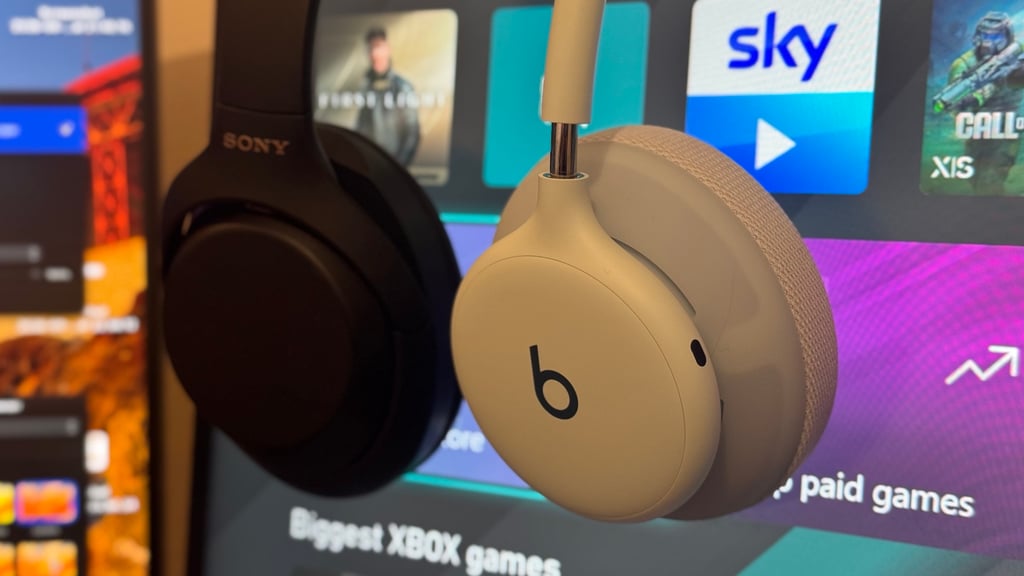
The Beats 360 cost $349.99 / £299.95 and come in four core colors (Black, Cloud, Pink, and Sky), each with matching Performance Knit cushions.
Spare cushion kits normally cost $49.99 / £49.99, but a launch promo drops them to $9.99 / £9.99 until October 31. At that price, the extra kits are a no-brainer. At full price, a spare set runs nearly $400/£400 total, and I'd think twice.
Beats also cut the Studio Pro to $299.99 on launch day, which muddies the story a little. The Studio Pro keeps wired listening (3.5mm and USB-C lossless), which the 360 drops entirely, so the cheaper pair is arguably more versatile.
Against the competition, the 360 undercuts everyone. Sony's WH-1000XM6 list at $459 / £399, Bose's QuietComfort Ultra (2nd Gen) launched at $449 / £450, and AirPods Max 2 started at $549 / £499. On paper, the Beats match or beat all three on battery life and offer sweat resistance none of them advertise. But Sony and Bose both include a carrying case and a cable.
I haven't had those three side by side with the 360, but the AirPods Pro 3 and XM4s—which, interestingly, Sony has just rebadged and re-released, such is their staying power and cult status.
In my view, both sound better for less. So, at this price, the 360 charges a premium for style and modularity, and you're giving up sound to get it.
Design, comfort, and customization
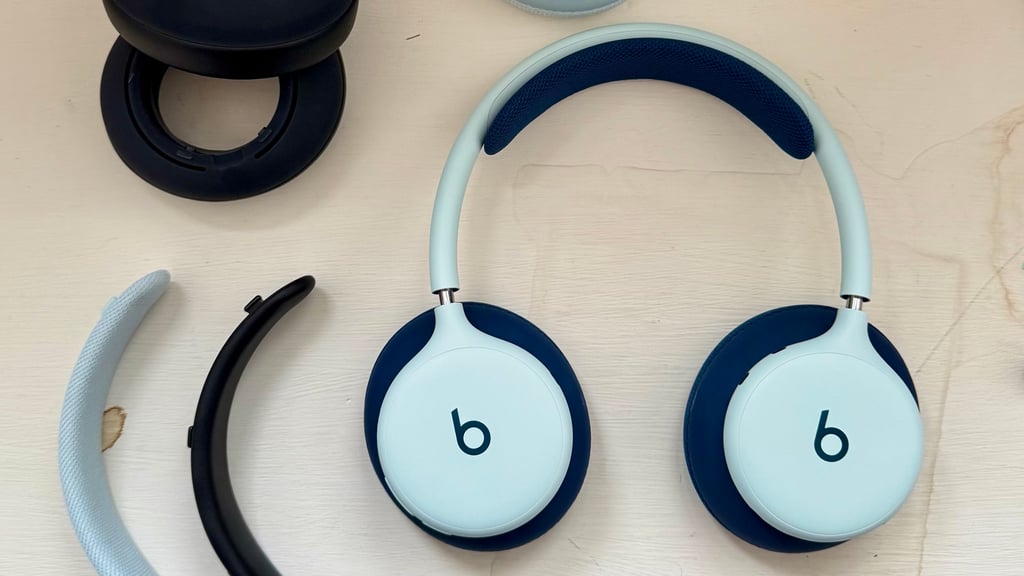
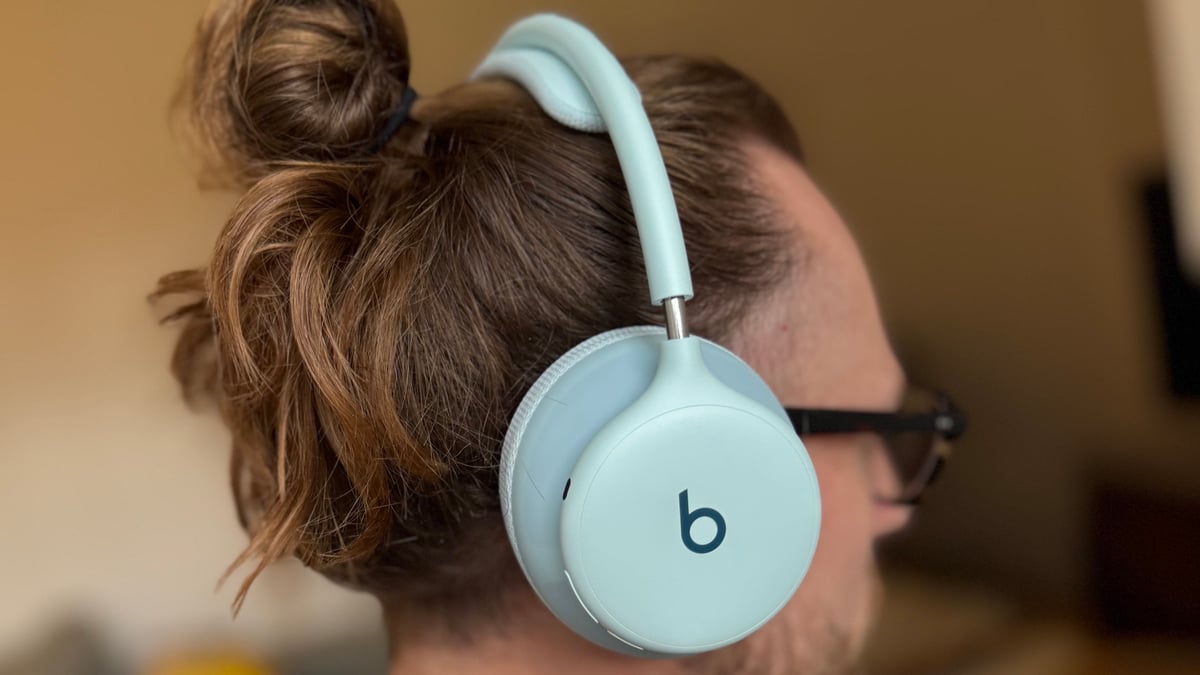
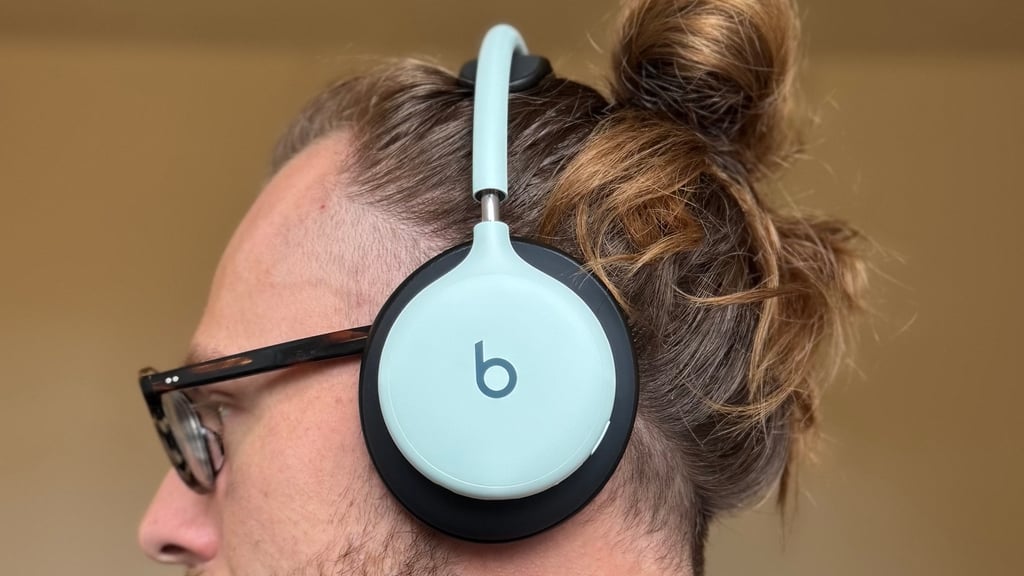
Let's start with the obvious: these look great. Outside of AirPods Max, I think the 360s are the best-looking cans on the market, and I suspect their strong association with athletes will appeal to gym-goers who don't fancy the Powerbeats Pro 2 or AirPods Pro 3.
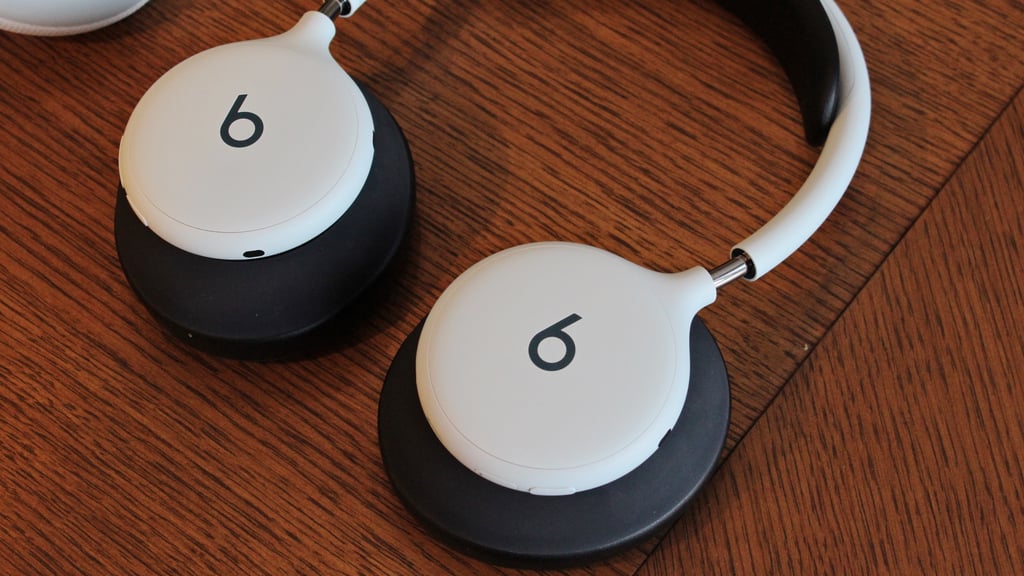
My Sky unit comes with matching teal-blue Performance Knit cushions, and I've also been swapping in a set of navy Performance cushions and black UltraPlush ones. Each kit includes ear cushions and the headband cushion, so you can change the whole look at once. Performance Knit comes in six colors (adding Navy and Volt to the core four), while UltraPlush is available in Black and Cloud.
The two materials feel very different. Performance Knit is comfortable and breathable, but I wouldn't wear it at my desk or on long journeys. UltraPlush, which Beats describes as seamless engineered leather, is what I've settled on for almost everything. The clamp force is higher than the Performance Knit, but I haven't personally found either configuration to be as warm to wear as the XM4s over long periods.
Part of the wearability is also the weight. While the 360s are very comparable to a pair like the XM4s, they're around 100g lighter than Apple's AirPods Pro Max 2. That can make a big difference on the likes of flights.
Keeping it light
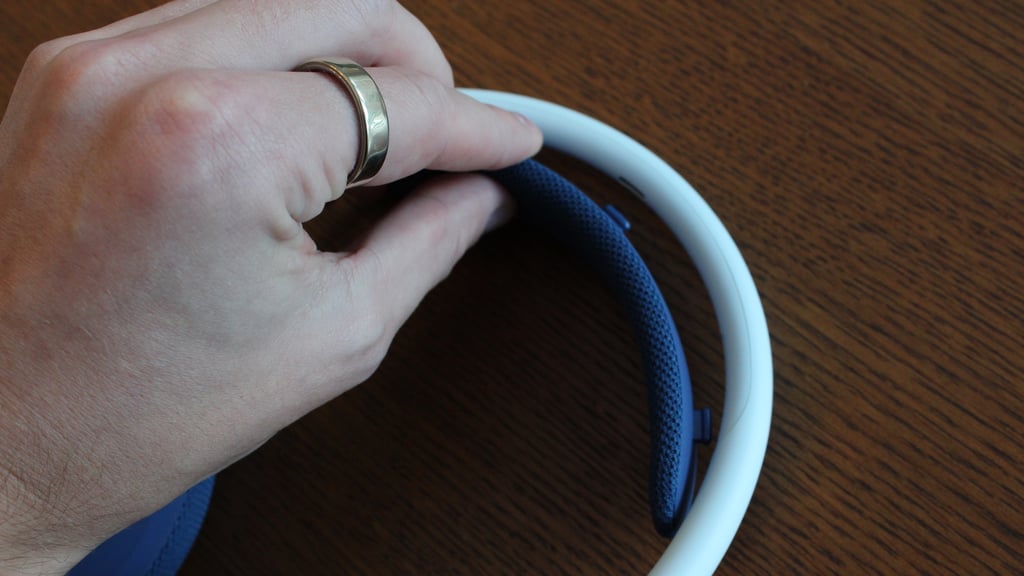
Swapping is largely intuitive, but the headband cushion is a little fiddlier. It clips in through three holes, and it's easy to miss one, leaving the plastic slightly lifted from the bonding. That's not a big deal, but it reinforces the impression that the build quality is decent, not top-tier. These don't feel as ultra hard-wearing as the AirPods Max, which is the other side of the coin to having something this light to wear.
Away from typical scenarios, the gym is where the 360 should shine. The IPX4 rating means it can handle mild rain and sweat—ideal for UK autumn and gym sessions. I don't particularly love wearing cans in the gym, as I like being able to pull out an earbud easily, but so many people do.
To help you stay aware of your space, Transparency mode is about as good as it gets. This is where Beats' Apple parentage shows: it lets you stay aware of your surroundings on the gym floor, and ANC kicks in when you need it.
I've run in them, too, and they feel secure with the Performance Knit cushions. They haven't shifted my stance that running in cans is a cry for help, but you do, at least, have the option.
Controls and everyday use
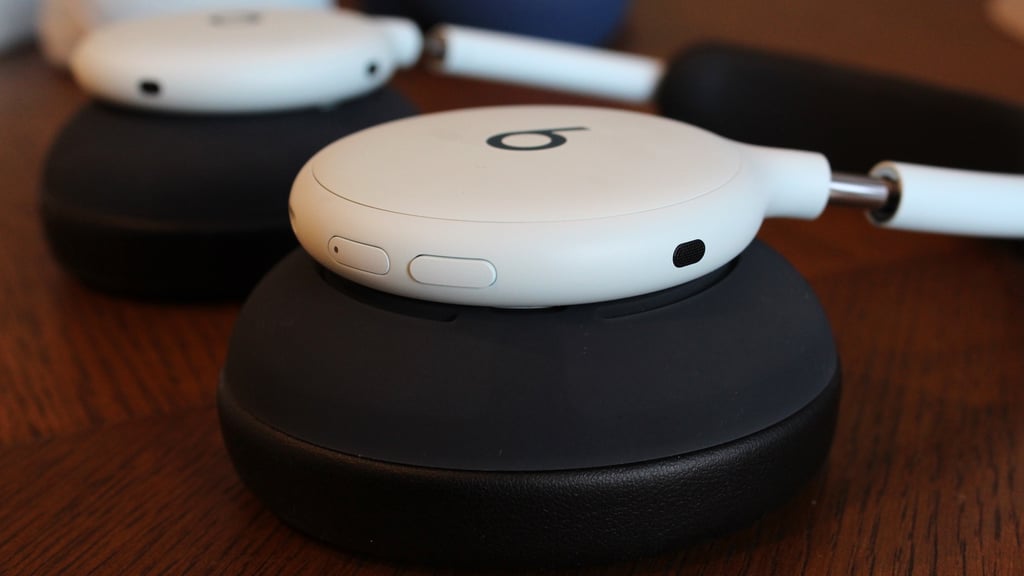
In principle, I prefer the idea of physical buttons over touch controls. Yet, the Beats 360 has a couple too many for my liking, and it takes a little bit of time to learn what they do.
Like the Powerbeats Pro 2, I like the physical volume rocker, and the LED makes the power button fairly self-explanatory. Yet, I think they could have also been modded to let users access playback and listening-mode controls, rather than having completely separate buttons.
I can make my peace with that—as I say, physical buttons are, at least, a reliable alternative to touch. However, because these five controls are spread across the back of each cup, it takes some adjustment to avoid pressing them as you handle and put on the headphones.
The bigger issue is a run of small oversights that feel wrong at this price. There's no auto-pause or resume when you take the headphones off or put them back on, which should be standard for a pair this expensive.
There's also no wired listening—which, honestly, I don't care much about, but plenty of people will expect it as a means to boost sound quality and access features like lossless audio.
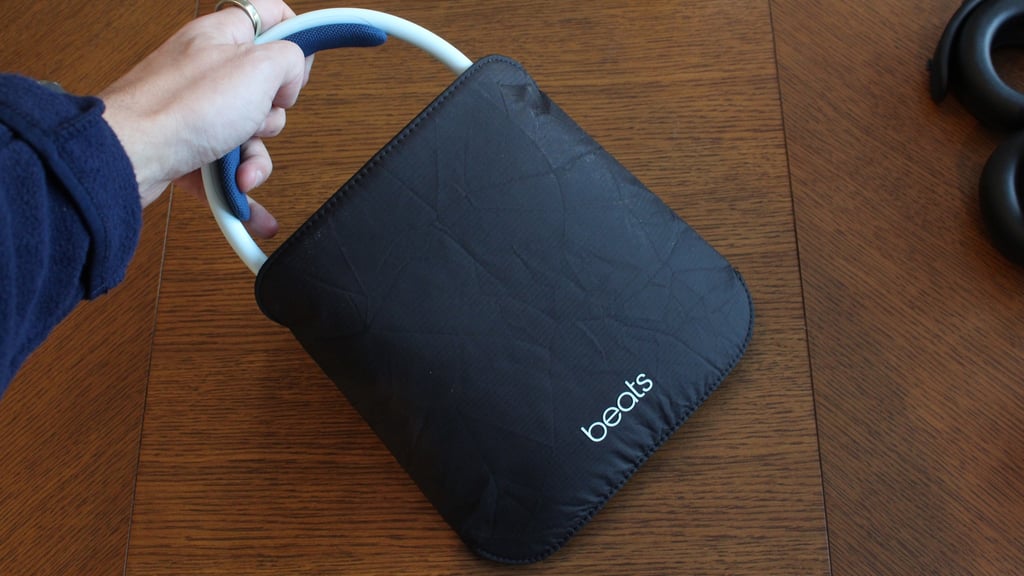
And there's no hardshell case. Beats gives you a soft fabric pouch, and I've ended up hanging the headphones near my desk and storing the spare cushions in it. That feels stingy for headphones this expensive, and it's an odd omission for a pair pitched as gymbag-ready.
Sound quality
While the Beats 360's overall look and feel are a win, the sound performance is a bit of a mixed bag. On paper, Beats says the custom drivers, featuring three-layer diaphragms and dual magnets, deliver precision, low distortion, and the brand's signature low end.
To my ears, though, the tuning just isn't that sophisticated. It feels slightly tinny and lacks the balanced depth you get from rival flagship models. As I've switched between the 360 and those heavy hitters over the last couple of weeks, the gulf is immediately noticeable.
Some of that classic Beats bass presence is here, but it isn’t enough to save the day—even with the UltraPlush cushions, which provide a tighter acoustic seal around the ears and tend to exaggerate the headphone's top-end emphasis.
There’s also a faint, constant hiss regardless of what you're listening to. I’ve found myself pushing the volume higher than I’d prefer just to mask it, which isn't great for a premium pair of headphones.
Out of control
It feels like a misstep for a device at this price point to lack manual EQ controls.
Beats' Adaptive EQ automatically adjusts for fit and seal—a feature that makes sense given the swappable cushion design—but automated processing can’t replace custom frequency tweaking. And right now, you can’t adjust the profile at all.
That missing control becomes more obvious depending on what you feed it. On tracks with delicate arrangements like Puma Blue’s '(Fool)' or Zoe’s Shanghai’s 'Big Big Picture', upper-midrange transients—specifically a sharp, stinging snare or the aggressive attack of a kick drum—take over.
Because of this forward top end and drum prominence, the underlying bass guitar lines and airy, floaty backing vocals can sometimes get drowned out.
The profile performs better with high-energy production, but I'm still not sure I prefer it to a more balanced approach.
On Skepta’s 'Shutdown' or Joe James' 'love riddum', the forward upper-mids bring the main vocals right to the front—it can really feel like the vocals are beaming directly into your ear—while snappy drum machines, catchy piano riffs, and looped samples cut through with high energy.
Yet on mellower cuts like James’ 'Chinese Farmer', that same persistent snare bite still fatigues the ear. Even on complex rock tracks like Jeff Buckley’s 'Grace', the trade-off is clear: the extra top-end energy gives the track a raw, driving feel, but the mid-range clarity oddly suffers, leaving lead vocals feeling slightly veiled rather than crisp.
Ultimately, more energy in a track yields a better performance, but, again, it lacks the balance needed for nuanced listening.
We should also note that Beats' 1.75x noise cancellation claim is measured against its own Studio Pro, not market benchmarks like Sony or Bose. Like its Transparency mode, the ANC performed well during testing—mostly at the gym, where it consistently overpowered the persistent 7am dubstep playlist, but also on busy commuter trains into London.
I also didn't notice much difference in ANC performance between the two cushion types, which is encouraging.
Smart features
The Beats 360 come with the usual Apple conveniences: one-touch pairing, Automatic Switching, Audio Sharing, always-on Hey Siri and Find My, with Fast Pair and Find Hub on Android. An accelerometer and gyroscope in the left cup enable Personalized Spatial Audio with head tracking.
Apple syncing is nice in theory, but it falls short in practice. Unlike AirPods Pro 3, the 360s run on a proprietary Beats chip rather than an Apple H-series chip, which may explain why Automatic Switching isn't nearly as smooth.
The headphones keep pinging between your Apple devices, no matter what you're doing on each one. Even if you temporarily disconnect them, they don't remember and reconnect the moment you scroll on your phone at your desk. It gets pretty old pretty fast—so much so that I've actually untethered the 360 from my MacBook to avoid it.
Combined with the lack of wear detection, this reinforces the sense that the 360's software and settings needs another pass.
There's no question that the Apple ecosystem has benefits, though. Find My is a real peace-of-mind booster when traveling (and, like me, you can't remember which bag you packed what into); pairing (despite the foibles above) is instantaneous, and easy-access Siri is ideal on the go.
Battery life
Beats rates the 360 at up to 32 hours with ANC and Personalized Spatial Audio on, and claims a five-minute fast charge gives an hour of playback. On paper, that's ahead of AirPods Max 2's 20 hours and a little beyond the 30 hours Sony and Bose quote.
In practice, the battery has been one of 360's strengths. Excluding the 60% I ran down out of the box, I've only charged it once over the last 2-3 weeks of Monday-to-Friday listening—at least five hours a day—which puts it right around that estimated time.
The lack of auto-off also slightly complicates this—but, aside from the odd period here and there, I haven't left the headphones on for too long without pausing.
That said, I also left the 360s idle a couple of times before I really got the hang of the buttons. Oddly, though, the auto-off timeout varies by mode—and with ANC, it can be seven hours of inactivity, which would be nice to tweak. This is only helped by your iPhone's Dynamic Island occasionally popping up with the 360s battery drain, reminding you they're still connected, in case you left them on accidentally.
Really, though, there's no major complaints about the battery performance—the 360s have consistent drain, and any of the quality of life issues—like the sound—are things that could eventually be tweaked in the settings.
Should you buy the Beats 360?
The Beats 360 are a great, fun pair of headphones if you value style and customization. They're strong in the gym, with transparency and ANC modes, sweat resistance, and long battery life. Swapping cushions is intuitive and—depending on how Beats bundles these going forward—very affordable. They'd probably be my go-to for the gym, though I'd still take AirPods Pro 3 for most occasions.
Still, some core problems are hard to forgive at this price: an unbalanced, hissy sound you can't tweak, plus a list of oversights that make them feel unfinished. If you're paying for sound quality, look at Sony or AirPods. If you want the best-looking, most customizable gym cans going, and can live with the flaws, the 360 make an interesting alternative.