Why You Can Trust Wareable
Founded in 2014, Wareable brings together journalists and experts who have reviewed over 1,000 products, including smartwatches, fitness trackers, smart rings, smart home gadgets, and health tech devices.
Our team combines hands-on testing, in-depth research, and expert insights to evaluate product performance, assess manufacturer claims, and help readers make informed decisions.
Ultrahuman eyes muscle fatigue tracking for strength training workouts

Patent filing explains how wearable sensors and AI can measure muscle recovery
Smart ring maker Ultrahuman is eyeing a system to provide athletes with real-time muscle fatigue warnings—a tool that could help prevent injuries and inform training loads.
In a patent filing spied by Wareable, Ultrahuman explains the calculation for more robust fatigue and recovery metrics for activities like strength training.
Currently, popular wearables harness cardiovascular data like resting heart rate (RHR), heart rate variability (HRV) and blood oxygen saturation (SpO2) to inform training readiness and recovery stats.
This works well for aerobic activities like running, but not necessarily for strength, where there’s no constant stream of spiked HR data.
Only Whoop 5.0 and Whoop MG, paired with the brand's Strength Trainer feature, interpret muscular load to inform overall body strain. Instead, most current wearables don’t measure individual muscle activation or provide access to limb movement data.
How Ultrahuman's solution could work
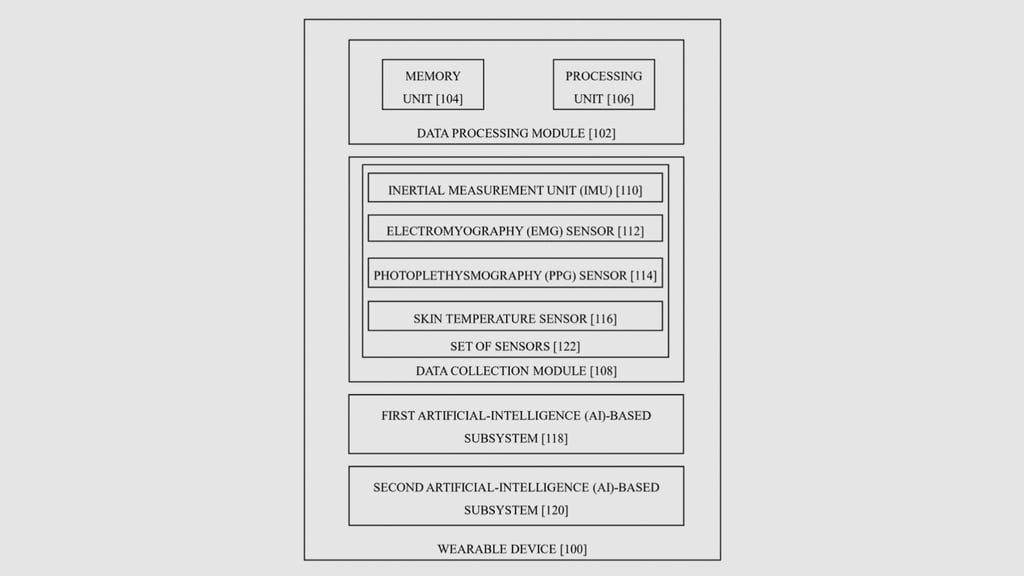
Ultrahuman's filing describes an AI-assisted hybrid system that combines heart rate metrics with measured muscle activity data from an electromyography (EMG) sensor, movement-pattern identification from an inertial measurement unit (IMU) sensor, and body temperature readings.
“The present invention enables monitoring of changes in muscle activation over time, which enables detection of the levels of fatigue of the user,” the patent reads.
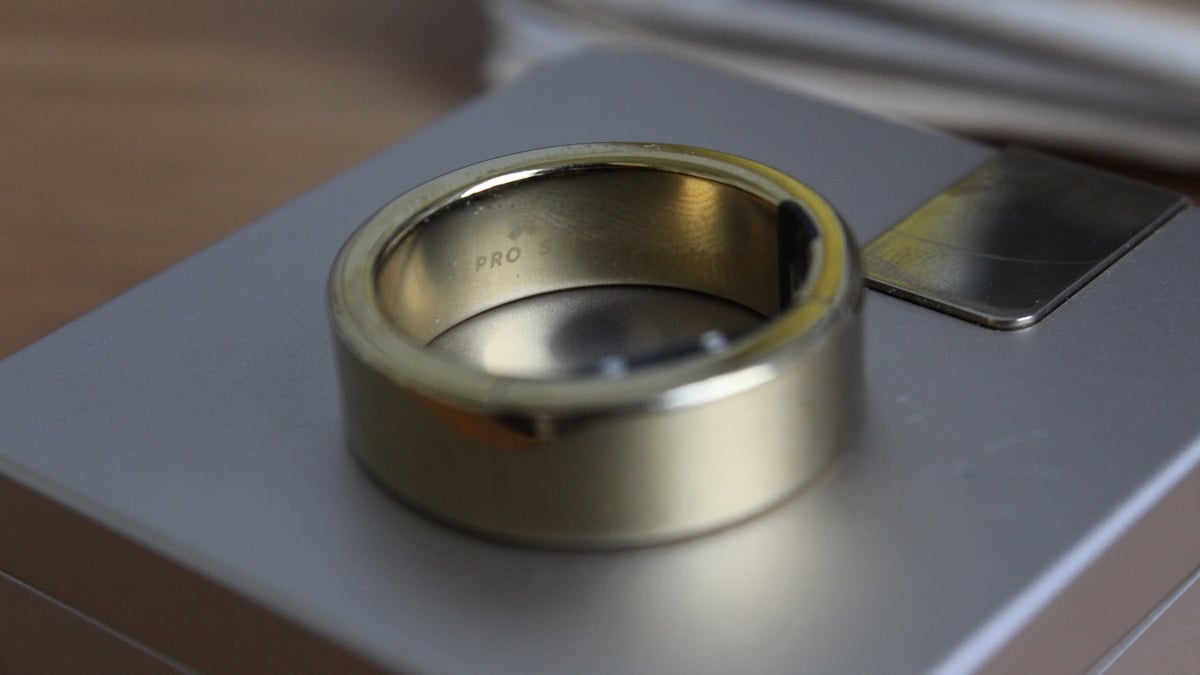
To track muscle activity, Ultrahuman explains that users would wear the sensor or smart clothing near the muscle group being activated. This could also signal the company’s plans for a form factor beyond devices like its Ultrahuman Ring Pro—and the patent itself shows a smartwatch with sensors embedded in the watch strap.
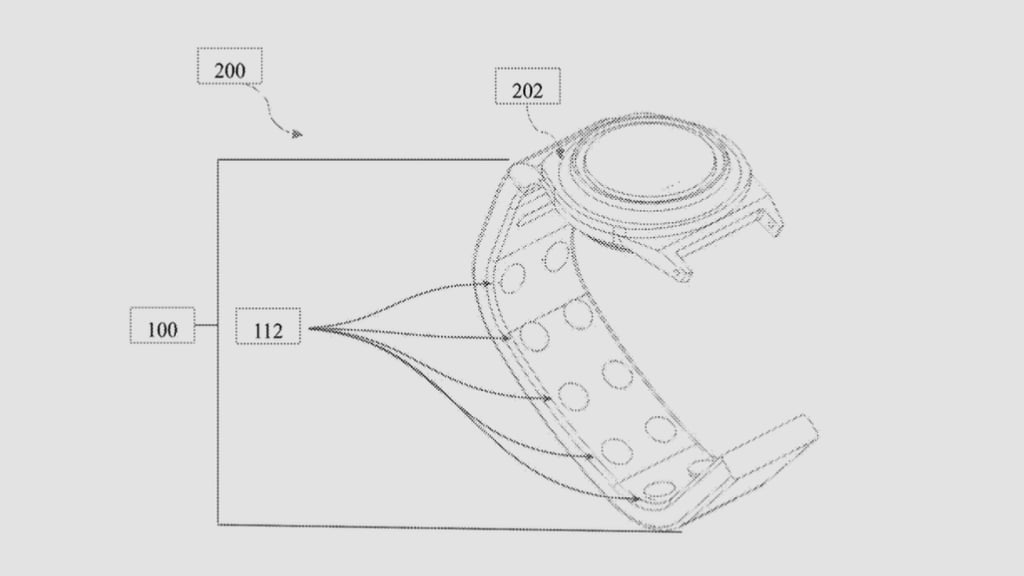
These EMG sensors “measure muscle response or electrical activity in response to a nerve's stimulation of the muscle” and “would enable precise analysis of the activity of the one or more muscles of the user,” the patent says.
Meanwhile, the IMU could detect the exercise being performed (e.g., a bicep curl) and count the reps and sets, and measuring elevated skin temperature during the activity could offer insight into physical energy expenditure and hydration levels.
When it’s brought together, Ultrahuman explains:
“An exemplary set of movement features may indicate that a user lifted their hands at a particular time period, an exemplary set of muscle-activity features may indicate that bicep muscles were contracted in the said time period, an exemplary set of heart-rate data may indicate that the heart-rate of the user was heightened during said time period, and an exemplary set of temperature data may indicate that the skin temperature of the user was also increased during said time period.”
Not just a tool for those pumping iron
The data would all be crunched by AI and, ultimately, users would receive alerts about the specific muscle fatigue with recommendations—perhaps for a rest day, or a green light to go again.
“For classifying or predicting a risk of fatigue level category for a subsequent period of time, a second AI-based subsystem is utilised,” Ultrahuman writes.
“Thereafter, based on the classified category, if the risk of fatigue level category is greater than a predefined threshold, a feedback medium may indicate an alert or a recommendation suggesting a reduced load or taking a rest day.”
Further down the line, Ultrahuman attests that its patented system could even be useful in detecting more serious health conditions.
The patent reads: “The proposed solution improves real-time monitoring of muscle activity, motion, heart rate, and skin temperature of the user so as to enable in real-time a detection/identification of one or more health conditions such as sleep apnea episodes, fatigue level, neuromuscular disorder, stress, Parkinson's tremors, epileptic muscle spasms, bradykinesia, etc. that may facilitate early intervention in such cases.
“Further, the wearable device enables real-time tracking of degradation in muscles, which may help in tracking conditions like amyotrophic lateral sclerosis (ALS) and muscular dystrophy.”
Wareable has contacted Ultrahuman for a comment and will update this story if a statement is forthcoming.