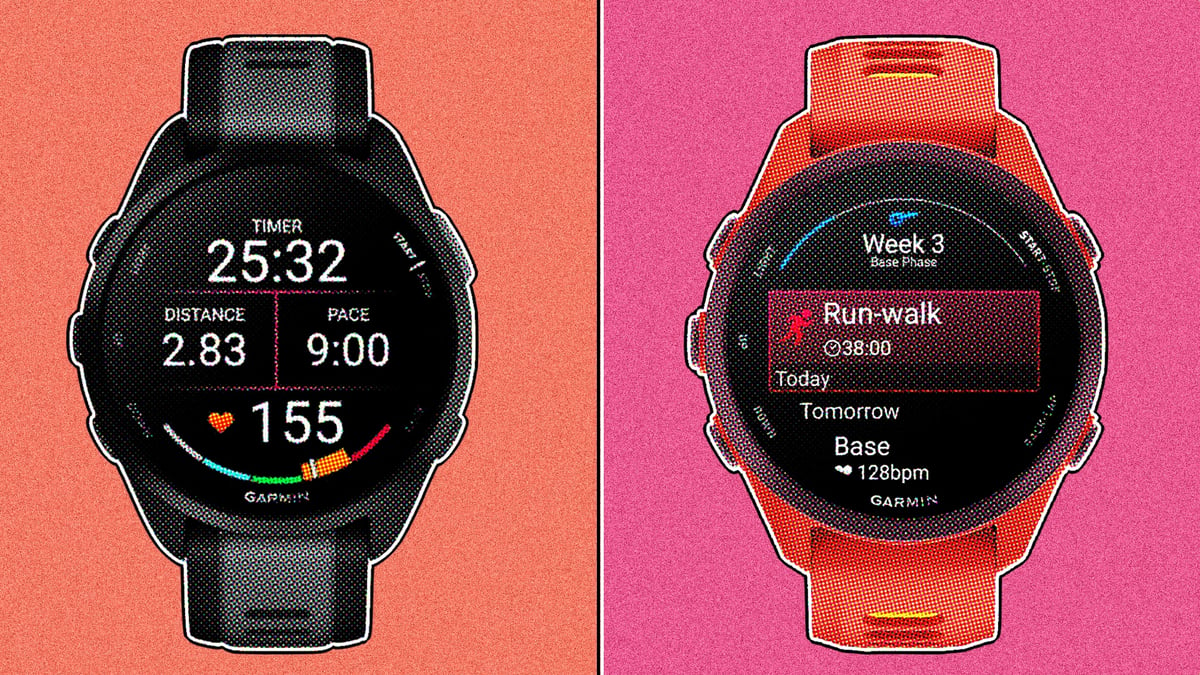
We compare the entry-level running watch generations to help you decide which is best to power your training
When Garmin launched the Forerunner 165 in early 2024, we praised it as the perfect entry point for beginner and intermediate runners.
It brought a vibrant, snappy AMOLED display to a (more) budget-friendly price point, effectively closing the book on the classic MIP (memory-in-pixel) screens.
Yet, Garmin also made some strategic omissions to the running watch. To protect the sales of the more expensive Forerunner 265 (since replaced by the Forerunner 570), the brand stripped the 165 of two key software metrics: Training Status and Training Readiness.
Two years later, the Forerunner 170 is here to freshen up the line. On paper, it addresses the exact compromises we complained about on the 165. However, it also comes with a higher price tag.
We're still putting the final touches on our 170 verdict, but, in the meantime, this comparison serves as a quick-hit guide for those trying to figure out whether to upgrade from the 165 or choose between the two generations.
Key specs compared
| Feature | Garmin Forerunner 165 | Garmin Forerunner 170 |
| Standard edition price (MSRP) | $249.99 / £219.99 (Standard) | $299.99 / £259.99 (Standard) |
| Music edition price (MSRP) | $299.99 / £249.99 | $349.99 / £299.99 |
| Display and case size | 1.2-inch AMOLED; 43mm | 1.2-inch AMOLED; 43mm |
| Training Readiness | No | Yes |
| Training Status | No | Yes |
| Garmin Pay (NFC) | Yes (All models) | Yes (All models) |
| Battery ('smartwatch' mode) | Up to 11 days | Up to 10 days |
A bump in pricing—and still extra for music
The 165 launched at an intriguing $249.99/£219.99. Now that it has been on the market for two years, you can routinely find it discounted online for closer to $199/£179.
The new Forerunner 170 launches at $299.99/£259.99, with the Music version reaching a hefty $349.99/£299.99. As we've said many times, it's a stinker that Garmin still continues to charge extra for music support, but it's all part of the up-selling structure, ultimately.
It all means the entry point for a new '100-series' Garmin has climbed by $50/£40. And since the physical hardware—the 1.2-inch screen, polymer case, and 5-button layout—remains virtually identical, that extra cash is almost entirely paying for the few changes we'll run through below.
Don't forget there are also other devices to consider around this price point, such as the Coros Pace 4—and that older versions of high-priced Garmin devices may also be a better fit.
Two major software additions to your training
This is arguably the single biggest reason to choose the 170 over the 165.
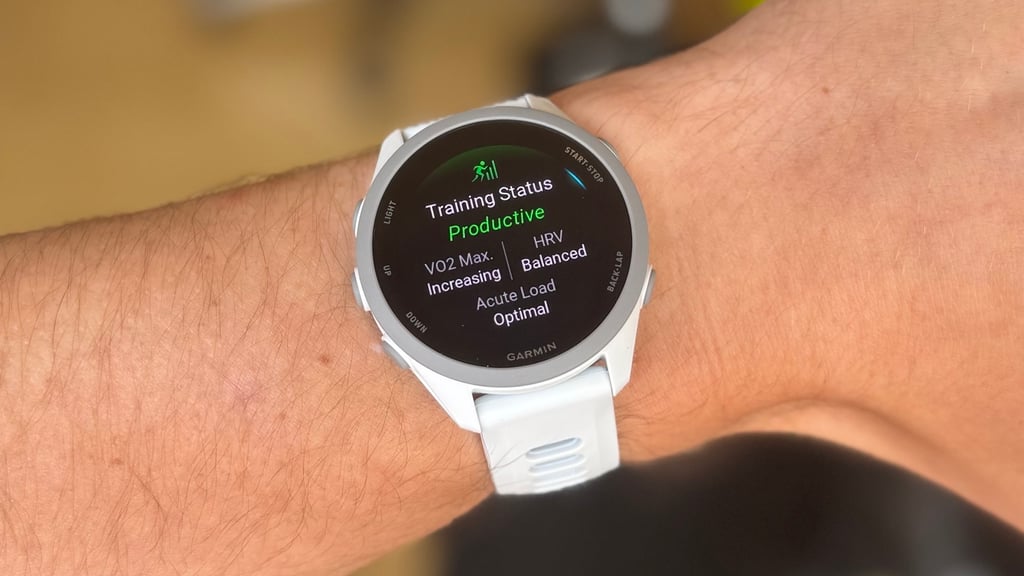
The 165 will track your heart rate, estimate your VO2 max, and tell you how many recovery hours you need after a run. But it lacks Training Status (which indicates whether your training load is productive or you're overreaching) and Training Readiness (which combines sleep history, HRV, and stress to assess whether your body is ready for a hard session).
The 170 (and the Forerunner 70) includes both of these metrics as standard features. For burgeoning runners training for a half-marathon or the like, these recovery-focused scores are invaluable. They help prevent overtraining and help you peak for race day.
An evolved user interface
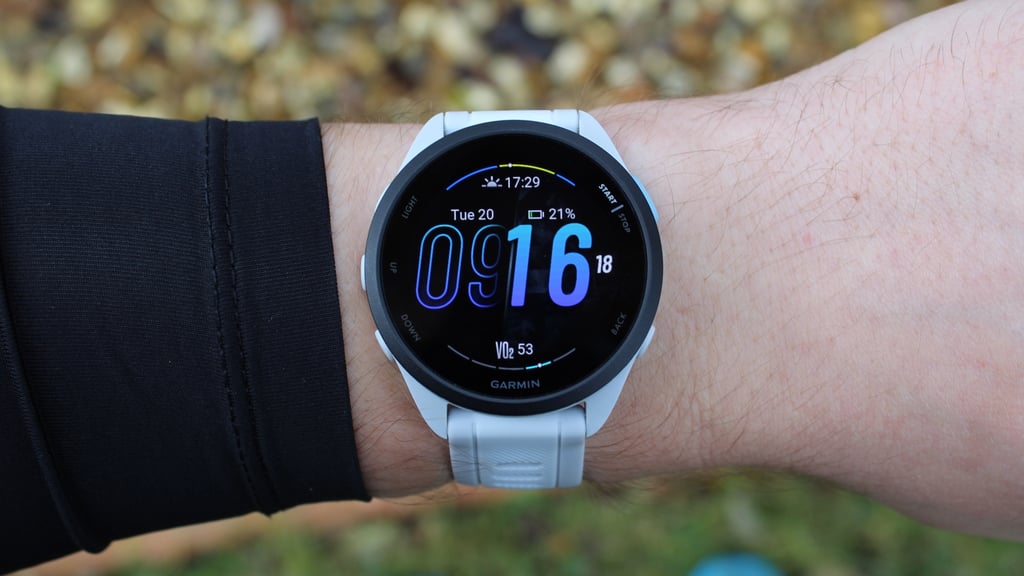
The Forerunner 165 and 170 may look physically identical, sharing the same 1.2-inch AMOLED display and polymer shell. However, the experience of using them is entirely different.
The Forerunner 170 runs Garmin's updated operating system, meaning it shares the same polished, modern UI as the higher-end 570 and 970. Though the actual CPU remains the same, the newer UI makes navigation around the watch smoother, with faster rendering and a slightly cleaner overall aesthetic.
Crucially, this new OS also brings a host of software widgets to the 170 that are completely missing on the 165, including a dedicated on-wrist calculator, Lifestyle Logging, Health Status, Evening Report, and the Sleep Coach.
A note on future support
This is an evergreen point when comparing an older-gen model with a current-gen one, but it's worth noting nonetheless. Since the 170 is built on Garmin’s latest software architecture, it is naturally better positioned than the 165 for long-term support. The watch will continue to receive new software updates and feature rollouts over the coming years.
The older Forerunner 165, on the other hand, has been very well supported in the last couple of years (receiving features like Garmin Share, backup/restore functionality, and improvements to Garmin Coach/race time predictions), but it has largely stopped receiving new features.
If you buy a 165 now, you'll likely still get bug fixes, but the 170 is just more likely to receive upgrades being rolled out across the Forerunner line.
Battery and sensors: Much of the same
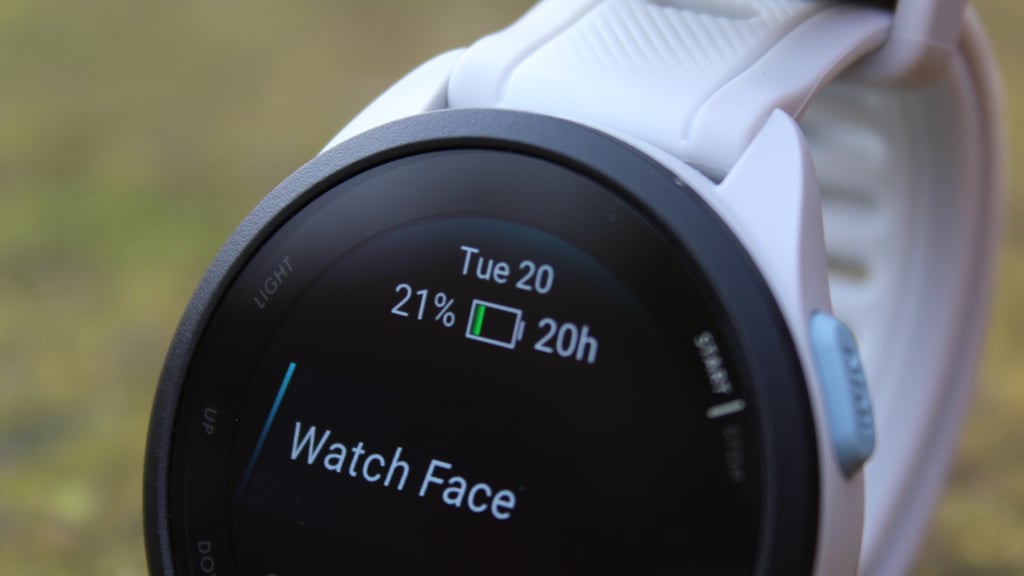
Despite the software changes, the core tracking hardware hasn't changed—and that means it's no real surprise to see the battery life estimates about the same on the spec sheet.
Both watches, as expected, feature Garmin's Gen 4 Elevate heart rate sensor (not the Gen 5 found on the Fenix 8, Forerunner 970, and Venu 4). Accuracy remains very solid for most types of running sessions, but you won't get advanced medical features like ECG or skin temperature sensing on either watch, obviously.
Interestingly, the battery life takes a very slight step backward on the newer model—even if, as we say, it's still essentially the same in real terms.
The Forerunner 165 is rated for up to 11 days in smartwatch mode, while the Forerunner 170 drops slightly to 10 days. Note that this is the smartwatch mode, though, which doesn't account for GPS/music use.
In our extensive testing of the 165, we found that with the always-on display (AOD) enabled and daily GPS tracking, it comfortably lasted about 7 days. We project a very similar real-world performance for the Forerunner 170, but will update this section following our review.
GPS tracking
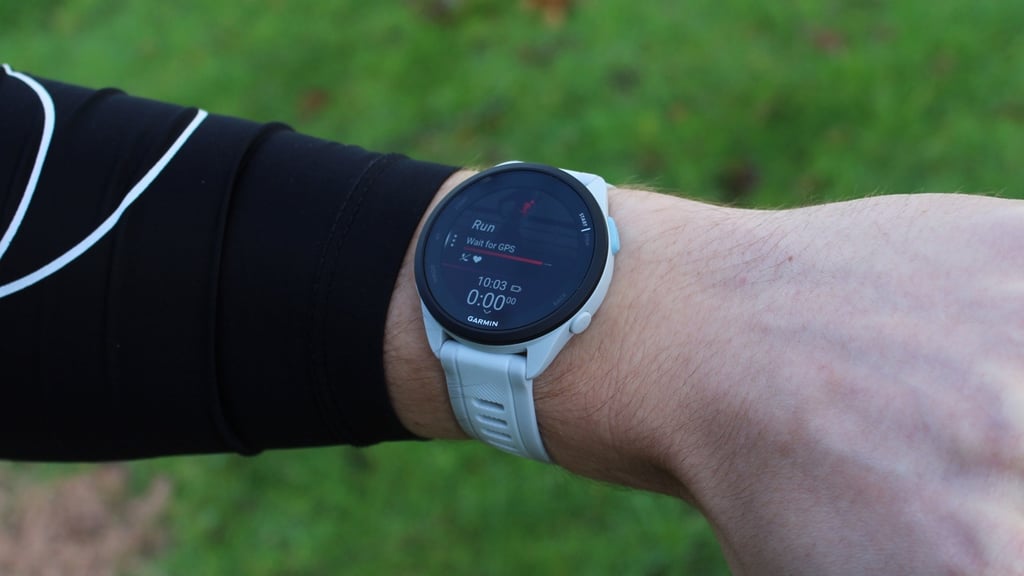
Both watches use the same single-frequency GPS architecture, so you don't need to stress about differences in accuracy between these two watch series.
Neither features Garmin’s ultra-precise 'Multi-Band' (dual-frequency) mode—you still need to step up to the Forerunner 265/570 or 965/970 for that improved urban accuracy.
In our testing of the 165, the single-frequency GPS was highly reliable for open-sky and coastal runs, though it did suffer from a noticeably slow lock-on time (sometimes taking several minutes to establish a satellite connection).
We'll be paying close attention to whether the 170’s updated processor speeds up this connection time when we get it on our wrists for a full review.
Early verdict: Which is best (and our upgrading recommendation)
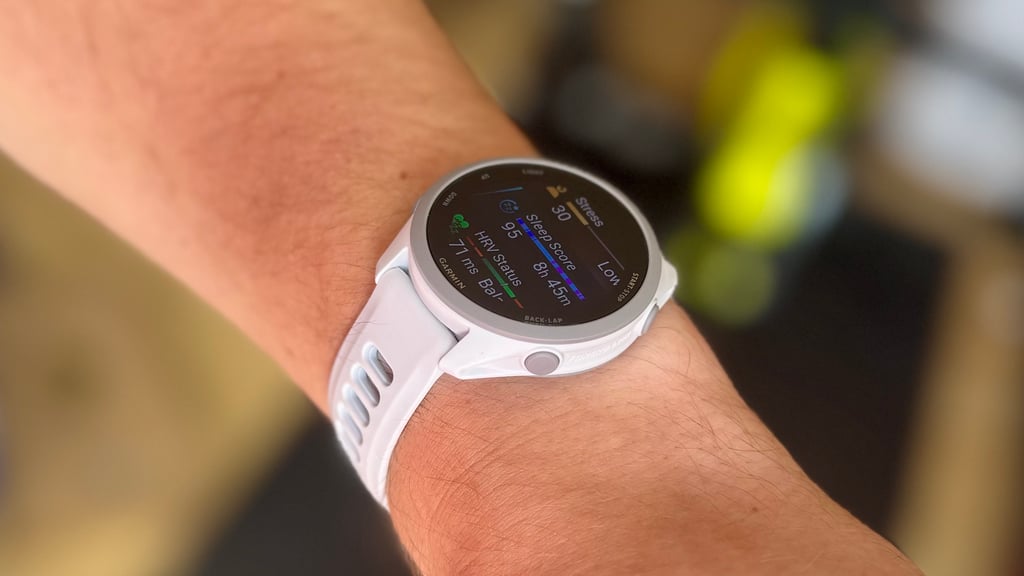
If you already own a Forerunner 165, the changes in the spec sheet offer little reason to spend $299 to upgrade to the 170.
After all, the physical wearability, battery life, and GPS architecture are virtually identical. Training Status, particularly, but also Training Readiness, are superb software additions that alone make the 170 a better overall watch.
So, if you're buying your first serious running watch, the choice is more complicated—and one we're still weighing up as part of our full verdict on the 170.
Our initial instinct is that those training for a specific race goal will get plenty out of the dynamic insights into recovery and analysis regarding the balance of different aerobic sessions of the two major software additions added to the 170.
However, plenty will be just fine with the 165's insights. If you're already following a trusted non-Garmin plan for a race, or are an experienced runner who won't necessarily get value from a rolling readiness score, it's better to save some cash and find the 165 on sale. You get almost the exact experience as the newer watch for less.