
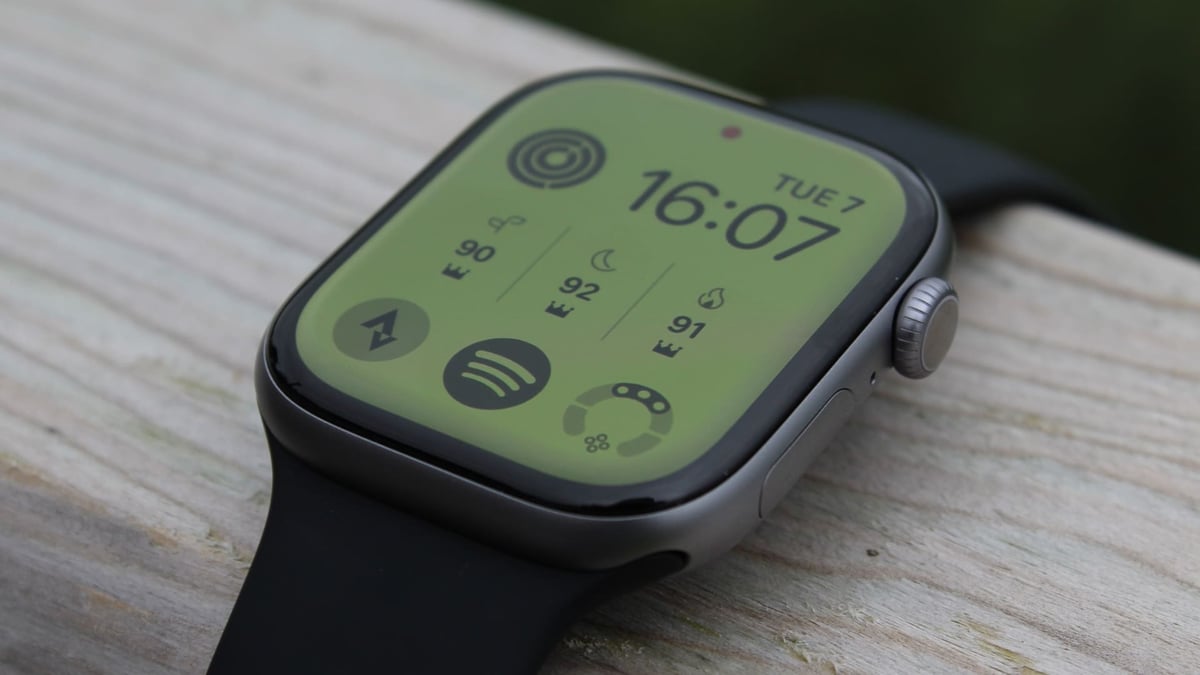
New data reveals a monopoly for the Apple Watch, just as on-device processing hits a critical turning point
Apple has established near-total dominance over the emerging on-device AI corner of the smartwatch market, capturing roughly 90% of all global shipments in Q1 2026.
That's according to a new industry report from Counterpoint Research, at least, which shows the broader category of 'Edge AI' wearables experienced a massive 70% year-over-year surge, climbing to a 25% market rate.
The figures reveal that one in four smartwatches shipped globally now performs machine learning tasks natively on the wrist.
To qualify as an Edge AI device under Counterpoint’s criteria, a smartwatch must feature a dedicated hardware accelerator, such as a neural processing unit, that executes at least one primary health, safety, or interaction feature locally.
In part, Apple has achieved its success in this on-device format by being one of the first to integrate a built-in neural framework to handle localized tasks, including advanced gesture processing, Siri responses, and real-time health or safety signal analysis, without routing user data to cloud servers.
Laying the framework for the next phase of on-device processing
The brand has also teased big improvements to Siri AI features coming via watchOS 27 later this year, with Samsung expected to lean heavily on Galaxy AI in its rumored upcoming hardware and Qualcomm's Wear Elite expected to land on the Google Pixel Watch 5 this fall.
So, this massive volume spike comes as the wearable tech industry's biggest brands undergo a fundamental shift in how they deploy on-device intelligence.
After all, localized processing has existed for many years: Samsung introduced a 3nm chipset for offline tracking in 2024 via the Galaxy Watch 7 and Galaxy Watch Ultra, and Google has used dedicated machine-learning co-processors since late 2023 with the Pixel Watch 2.
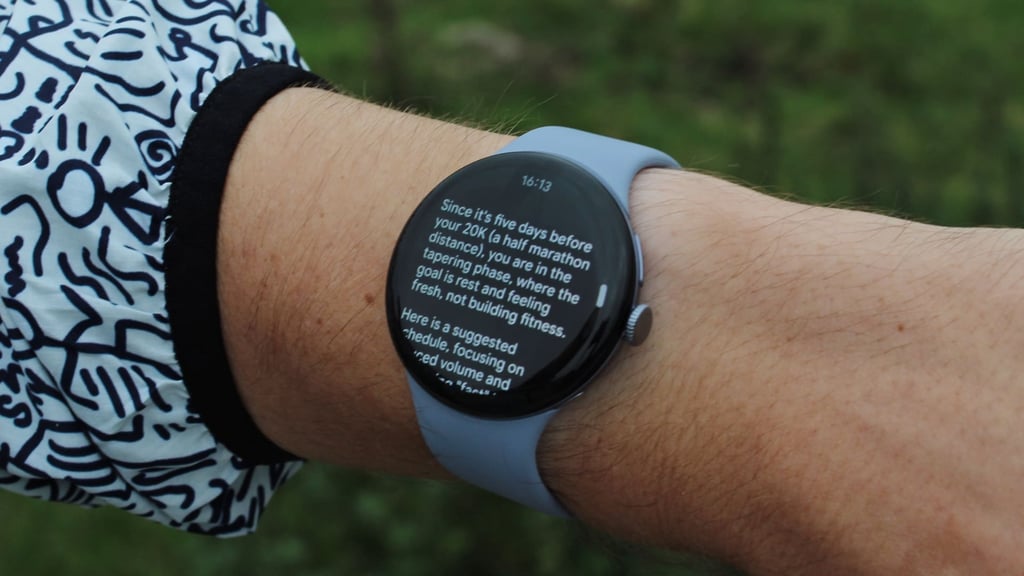
However, those early efforts focused primarily on background algorithms for biometric health tracking and sleep metrics.
The current (and upcoming) generation of hardware will be high-powered enough to continue the transition toward visible, on-device conversational AI, offline text summarizing, and real-time interface adjustments on the wrist.
The report also detailed an accelerating adoption curve for advanced health sensors alongside local processing. Between Q1 2025 and Q1 2026, blood pressure monitoring rose from 11 percent to 23 percent of total shipments, while sleep apnea detection features tripled to reach 18 percent.
Counterpoint analysts also note that the industry is rapidly transitioning from basic hardware integration to deep software optimization, with Edge AI devices projected to hit 32 percent by the end of 2026.