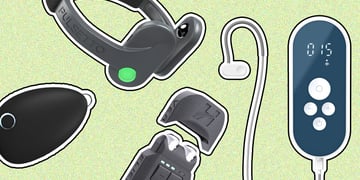
Nuropod vs. Pulsetto: Which vagus nerve stimulation device is right for you?

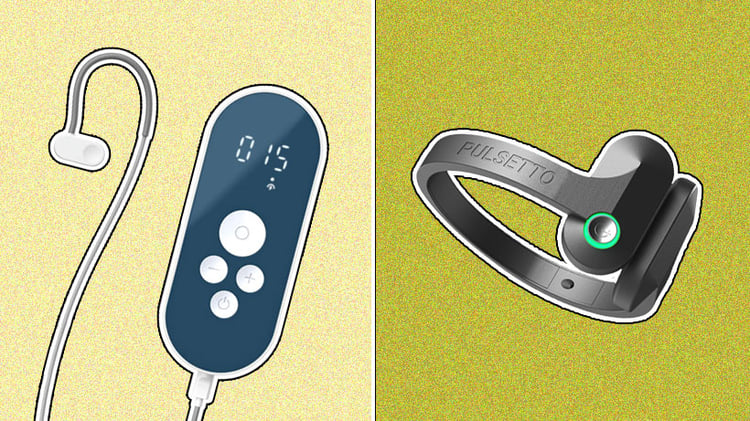
Both devices are designed to support your nervous system, but one has a stronger scientific positioning, while the other focuses on offering a more comfortable experience
Both Nuropod and Pulsetto offer vagus nerve stimulation (VNS) wearables that aim to support stress management, sleep, recovery, and relaxation.
Yet, they are built with quite different user experiences in mind. Pulsetto feels more consumer-friendly and wellness-oriented, while Nuropod positions itself as a more research-focused oriented and clinically oriented device.
To see which one is worth the investment, our Wareable team put them head-to-head. As always, we tested both devices with realistic expectations in mind, knowing that VNS effects may be gradual, consistency is important, and benefits vary by person.
Keep on reading to find our experience with Nuropod and Pulsetto and our honest thoughts about them.
| Spec | Nuropod | Pulsetto |
| Rating | 4.5/5 | 4.5/5 |
| Price | $900 | $251 |
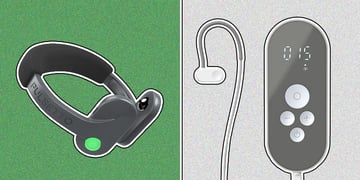
| Design type | Hands-free earpiece | Hands-free neckband |
| Stimulation type | Ear-based | Neck-based |
| Power output | 35 volts | 12–46 volts |
| Session length | 15–30 minutes twice a day | At least 4 minutes twice a day |
| App integration | ✅ Optional | ✅ Required |
| Official website | Visit Nuropod | Visit Pulsetto |
Which feels easier to justify financially?
At $900, Nuropod demands a premium upfront investment. On the bright side, Nuropod long-term costs remain low since the app is free and no special gels are needed to use it. The only thing that you might need to purchase is a $50 replacement earpiece if the original becomes damaged over time. The device also comes with a 30-day money-back guarantee and a 2-year warranty.
When purchasing Nuropod, buyers especially take notice of the research behind it, as the brand claims its product is the most researched on the market. It’s clear with over 60 published studies with several of them available to read online for free.
In contrast, Pulsetto offers quite an affordable price of $251. For it, you get more powerful output and a free-to-use app. It also comes with a 2-year warranty, which can be extended to five years for an additional $39.
For another $139 a year, you can upgrade the app to a premium subscription, which unlocks extra stimulations, meditations, central nervous system tap testing, and wearable connectivity.
Naturally, Pulsetto is easier to justify financially, primarily due to its affordable price, more developed app, and better onboarding experience. Nuropod makes sense if you highly value scientific positioning and want to avoid ongoing long-term costs for the most part.
Winner: Pulsetto
Which device feels more comfortable?
When it comes to design, comfort, and ease of use, we have to hand it to Pulsetto. The onboarding experience was completely seamless. To start, we simply pressed the power button, applied the gel, slipped on the neckband, and controlled our sessions through the app, which was convenient.
The neckband was comfortable enough, too, resting securely. Though, we had to readjust it a few times during the first session to feel vibration from both electrode pads. The stimulation itself felt like a buzz. While level nine was too intense for our liking, the app makes it easy to dial in your preferred setting.
With Nuropod, the experience was slightly less smooth for us at first. While connecting the earpiece and controller was simple enough, navigating through the buttons that control session length and intensity was a bit confusing. The instruction booklet helped, but it still wasn’t an entirely smooth process from the get go.
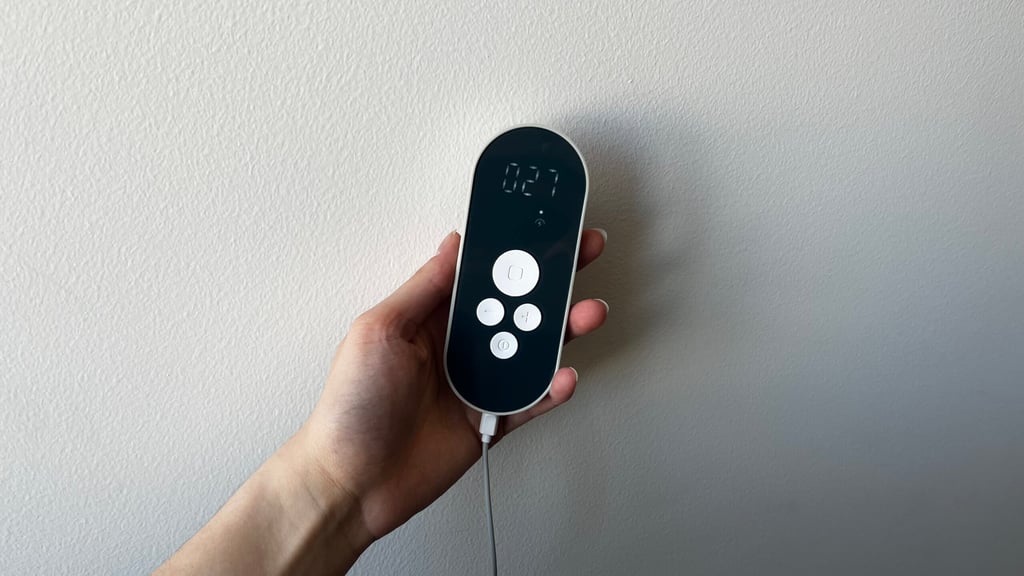
Furthermore, attaching the earpiece to the tragus felt a bit strange. The first few tries required a mirror to get it right. As for the stimulation, at lower levels, you barely feel anything, but if you overdo it, it quickly turns into a sharp, stinging, painful sensation. So we’d recommend carefully finding a level that feels comfortable to you.
When it comes to on-the-go use, Nuropod has a slight advantage. It’s more compact and includes a travel case right out of the box. With Pulsetto, you have to purchase the travel case separately for an additional $37, and it’s relatively bulky to carry around constantly.
Which is easier to use consistently?
All things considered, Pulsetto was much easier to live with and integrate into our daily routines. We naturally found ourselves reaching for it more—it was easy to just grab and put on.
Overall, Nuropod felt more like an intentional session than a relaxing experience—something we didn't particularly enjoy, though it ultimately comes down to personal preference.
Winner: Pulsetto
Technology, stimulation style, and scientific credibility
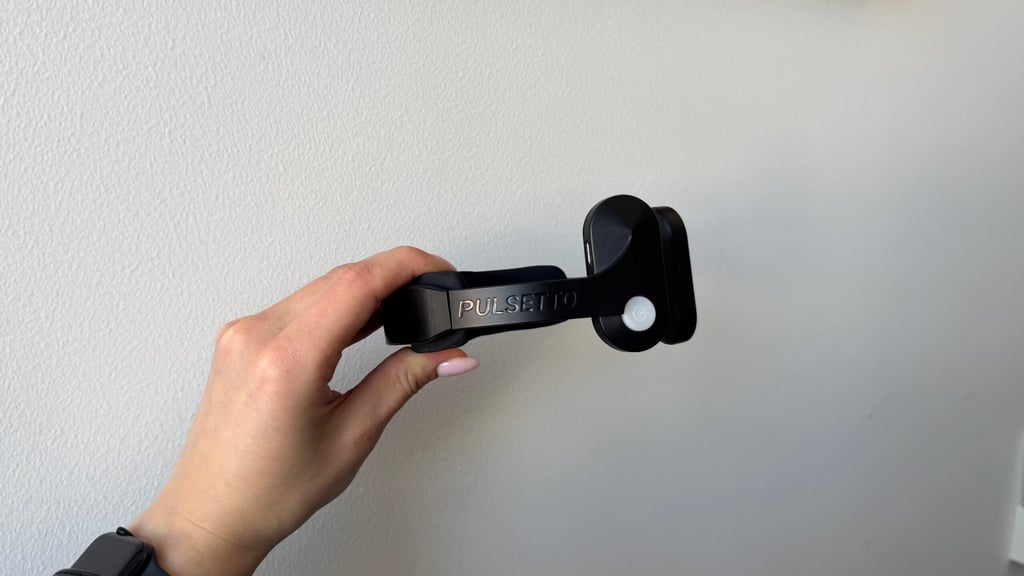
Both devices deliver electrical stimulation to the vagus nerve using metal contact points. However, they differ in their form and placement.
Pulsetto is designed as a neckband that is placed higher or lower on your neck, whereas Nuropod clips onto the tragus of the ear. Since both the neck and the ear are optimal spots for non-invasive vagus nerve stimulation, the choice comes down to your personal preference.
To improve conductivity, Pulsetto requires the use of a provided gel, while with Nuropod, the skin can be simply moistened with a drop of water.
Despite using similar technology, the session lengths and physical sensations differ between the two devices. Nuropod requires longer daily sessions ranging from 15 to 30 minutes, during which we felt only a barely-there tingle. Meanwhile, Pulsetto relies on much shorter 4–10-minute sessions twice a day that deliver a noticeable buzz.
Which is more scientifically credible?
Right off the bat, Nuropod positions itself as the world’s most studied at-home vagus nerve stimulator. The brand claims that the device has been scientifically validated in over 60 studies by more than 150 independent partner institutions such as Harvard and UCLA. Some of the research is available to read on the brand’s science page.
Whereas Pulsetto seems more like a consumer wellness device. While it’s mostly based on already existing research, it has been a part of a 2025 peer-reviewed study with 37 participants, which showed it may support stress levels and sleep quality.
So when it comes to scientific backing, Nuropod takes the lead with over 60 completed studies under its metaphorical belt.
Winner: Nuropod
Which app actually makes daily use easier?
Even though both devices have companion apps, Pulsetto devices can’t function without one, while Nuropod easily can. For Nuropod, the app is designed to help users onboard, track their progress, and provide educational content, but since it has a controller, you don’t have to actually download it. This is great news for people who like simplistic and straightforward design.
For us, the Nuropod app seemed well-designed, but it frequently glitched. We’ve encountered numerous errors, so we decided to continue using the device without the app.
On the other hand, Pulsetto is very app-dependent. On the device, you can only find the ON button. The rest of the functions are controlled via the app. After opening it for the first time, we were pleasantly surprised by how quickly the device connected to it. In what seemed like a second, the device was ready to use. Through the app, you can customize your stimulations, intensity, and also track your progress and various wellness indicators.
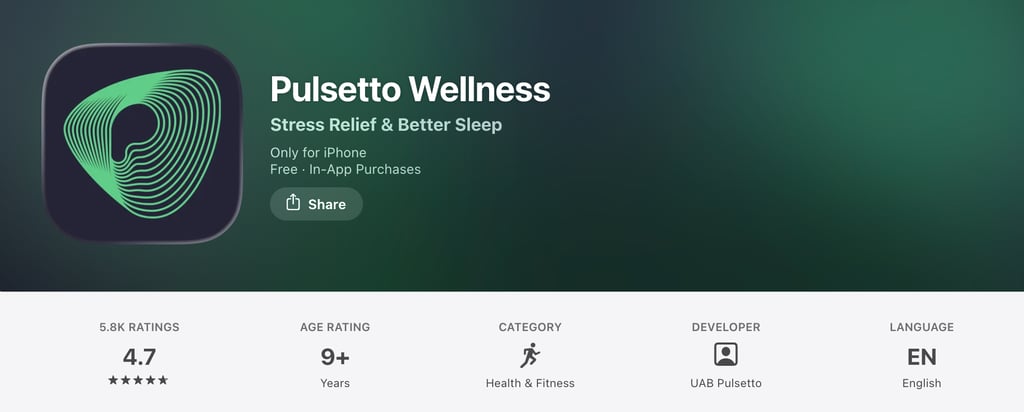
We really enjoyed using the app since it was easy to navigate and helped form a long-term habit—it sent daily reminders to avoid missing sessions. Due to the overall smooth and hassle-free daily experience, we have to give it to Pulsetto for having a far better companion app.
Winner: Pulsetto
What using Nuropod and Pulsetto actually feels like
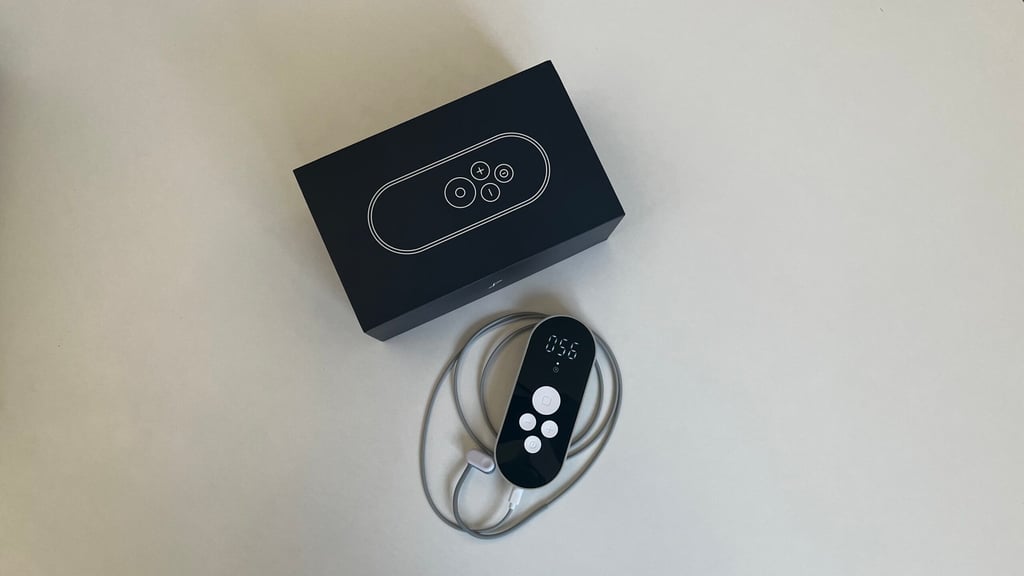
If you haven’t used wearable vagus nerve stimulation devices before, the sensation isn’t unpleasant, but it does require getting used to. With Pulsetto, we felt a slight buzzing when the stimulation level was just right. When it was too intense, we could feel a slight muscle contraction, which signaled to dial back on the intensity.
While Nuropod starts with a barely-there tingling, adjusting the intensity can be a bit jarring, as the sensation jumps to a sting. Furthermore, the earpiece is slightly less comfortable than Pulsetto’s neckband during longer sessions, which is worth keeping in mind.
How long before you notice effects?
During the first 1–2 weeks, our focus was purely on finding a routine we could stick to long-term. We spent this time getting used to the stimulation and finding the right intensity. By the end of the first two weeks, we started noticing subtle calming effects, but we weren’t yet sure if it was a placebo or not.
Once we settled into a daily routine, weeks three through six brought more noticeable changes. Some team members reported getting more restful sleep, while others felt calmer in high-stress situations. This doesn't mean our stress completely disappeared, but it became slightly more manageable.
Over time, we checked in on our progress, and apps showed that both devices may have helped support our nervous system. However, more than anything, they helped us build a lasting, daily relaxation habit.
Just keep in mind that this is solely our team's experience. Everyone’s situation is different, so your experience may be different as well.
Winner: Draw
Safety and side effects
Although wearable vagus nerve stimulation (VNS) devices like Pulsetto and Nuropod are generally considered safe when used as instructed, some people may still experience mild side effects. The most commonly reported complaints with non-invasive VNS devices are general discomfort, skin sensitivity, and headaches.
This is particularly true at higher intensity settings, so be sure to customize the intensity to fit your comfort level. After an initial adaptation period, it may be possible to increase it.
That said, certain people should avoid using vagus nerve stimulation devices altogether. This includes anyone who is pregnant, has a pacemaker, or has an underlying heart or neurological condition.
If you have ear sensitivity or other concerns, we recommend consulting your healthcare provider before getting started.
Who should choose each device?
If you’re still on the fence about which device to choose, this brief comparison should help make up your mind in no time.
Choose Pulsetto if:
- You want a beginner-friendly VNS device
- Ease of use matters most
- You prefer wellness-oriented UX
- You want a more relaxing experience
- You want a lower upfront commitment
Choose Nuropod if:
- You want stronger scientific positioning
- Research matters more
- You prefer targeted stimulation
- You prioritize nervous-system optimization
- You want a more serious long-term tool
Other health tech reviews:
Best vagus nerve stimulation devices in 2026: Our tested picks for stress and relaxation
Sensate review: Can this vagus nerve device actually reduce stress?
Pulsetto vs. Apollo: Which wellness device delivers the better overall experience?
Hoolest VeRelief review: Does this stress relief device actually work?
Verdict: Which is better overall?
Overall winner: Nuropod
In this review, Nuropod is a winner in our eyes because of a stronger science-focused positioning. However, it may feel a bit too serious for some, as it lacks the comfort and convenience Pulsetto offers.
While more of Pulsetto’s scientific backing is still emerging, it makes more sense for beginners, people wanting a less intimidating experience, and those who prioritize comfort and ease. Ultimately, we recommend choosing whichever speaks to you and your budget more.
References:
-
Brain Stimulation: Basic, Translational, and Clinical Research in Neuromodulation.
Safety and tolerability of Transcutaneous Vagus Nerve stimulation in humans: a systematic review.
-
Pulsetto.
A randomized, open-label, parallel-group, comparative study designed to evaluate the use of Pulsetto for psychological stress, anxiety, and disturbed sleep in individuals.