Pulsetto vs. Apollo: Which wellness device delivers the better overall experience?


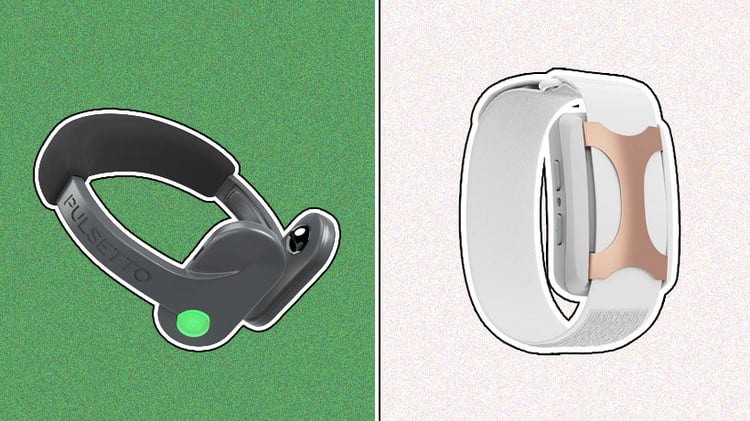
Both devices might help with stress regulation, relaxation, sleep, and nervous-system support—but they use very different approaches.
Stress seems to follow us everywhere these days, whether it’s work, family responsibilities, or simply trying to switch off at the end of the day. It can easily interfere with sleep quality and overall well-being.
That’s what got us interested in the growing market of wellness wearables that claim to help users relax, unwind, and sleep better. During our research, we kept coming across two devices: Pulsetto Lite and Apollo Neuro.
Both aim for similar results, but they work in different ways. Pulsetto uses gentle electrical impulses to stimulate the vagus nerve and affect the nervous system. Apollo Neuro uses subtle vibrations through a wearable, offering different modes for relaxation, focus, recovery, and sleep.
However, it’s important to keep expectations realistic. Neither device should be seen as a magic solution for stress or poor sleep. Potential benefits depend heavily on consistency, lifestyle habits, and the individual.
With that in mind, we decided to compare the two devices to see if they would improve our stress management.
| Spec | Pulsetto Lite | Apollo Neuro |
| Price | $278 | $349 |
| Technology | Vagus nerve stimulation (electrical impulses) | Vibration-based nervous system support |
| Wear style | Neck-worn (session-based) | Wrist/ankle wearable (all-day use) |
| Best for | Users interested in direct vagus nerve stimulation | Users who prefer passive, wearable support |
| Official website | Visit Pulsetto | Visit Apollo Neuro |
Pricing and subscriptions
We decided not only to compare prices but also to look at what happens after purchase. Subscription costs, warranty coverage, and trial periods affect whether a device feels like a good investment. Neither Apollo Neuro nor Pulsetto is cheap, but one is easier to justify financially, while the other feels more premium.
Apollo Neuro: Getting a free subscription with Apollo
Apollo Neuro costs $349, noticeably more than Pulsetto at first glance. But for the first year, you don’t pay the $99 annual subscription fee.
This might make you feel like you’re getting a decent gift when you purchase it. Moreover, they also offer a 30-day money-back guarantee and a one-year warranty.
Pulsetto Lite: A lower price with an optional subscription
Pulsetto is priced at around $278, with our exclusive discount, which makes it look more budget-friendly upfront. But keep in mind, the subscription adds to the overall cost.
You'll get a 7-day free trial, and afterward, extra features will cost you $99.99 per year or $39.99 per quarter. While prices like this are common in wellness products, they do increase the total expense.
So, if you add up all costs, the total comes to $378, making it pricier than Apollo Neuro. On the bright side, it offers a solid two-year warranty and a standard 30-day money-back guarantee, providing some peace of mind.
Winner: Apollo Neuro
Design and comfort
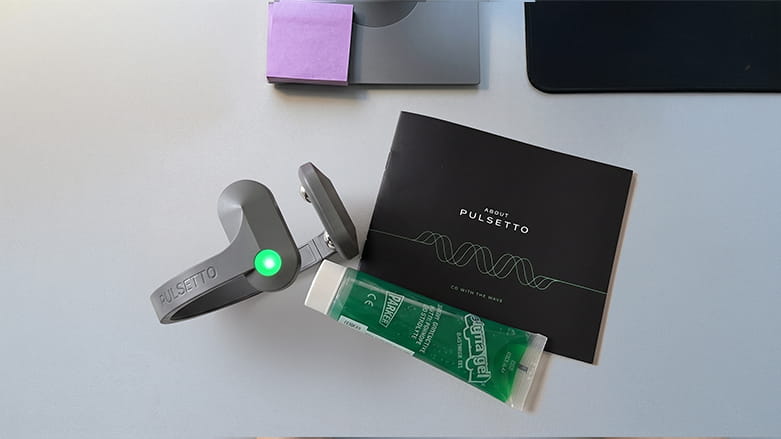
The design difference between these two devices is obvious. Pulsetto is a neck-worn vagus nerve stimulator. When you order it, the box includes the stimulator, a charging cable, electrode gel, and a user manual.
It works through direct stimulation, and it must sit against your neck during sessions. Because of that, Pulsetto looks like wellness technology rather than a casual piece of clothing. Using it requires planning your time specifically for a session.
Apollo Neuro feels the opposite. The box includes the wearable, an adjustable band, a clip, and a charging cable. Since it’s a wristband, you can wear it daily on your wrist or ankle. Both work fine, but wearing it on the ankle made some of our team members feel like they were on house arrest.
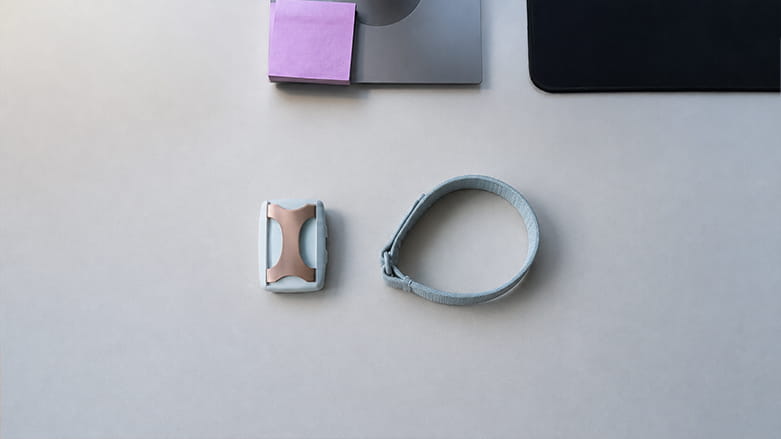
Which device is easier to live with?
It’s hard to choose a winner here as people prefer different things. Some of our team members said Apollo Neuro is supreme for everyday use.
You can wear it all day and run sessions almost anywhere without changing your plans. However, if you already own a device like the WHOOP 5.0, a smartwatch, or another fitness tracker, it feels like too much. A few of our team members even joked that they felt like they were covered in bands.
That is why some preferred Pulsetto Lite. While its sessions require more planning, you only wear it when needed. Once the session ends, you put it away and continue your day. For users who don't like wearing gadgets 24/7, that might be a smarter choice.
Winner: Draw
Technology, stimulation style, and the science behind
Pulsetto is designed to be a more direct way to affect the nervous system, while Apollo Neuro might offer passive support with wearable vibrations. To see which approach works better, we looked at how each device functions and the research behind them.
How does Pulsetto work?
Pulsetto is a non-invasive vagus nerve stimulation (VNS) device. It sits around the neck and sends gentle electrical pulses through the skin.
The goal is to stimulate the vagus nerve. The theory is that stimulating it may support relaxation and improve resilience to stress. Research on non-invasive VNS is still developing, but some studies suggest an association between VNS and improved stress management, mood, sleep quality, and even auditory and visual performance.
Pulsetto has also started building its own research base. A small peer-reviewed study published in 2025 found that a single Pulsetto session was associated with increased alpha brain-wave activity, often linked to a calmer mental state. The study also reported potential effects on blood pressure regulation.
How does Apollo work?
Apollo Neuro takes a totally different approach. Instead of electrical stimulation, it uses gentle vibrations delivered through a wearable you can wear on your wrist or ankle.
The idea is that specific vibration patterns may influence how your body responds to stress throughout the day. Apollo Neuro cites several studies supporting its vibration-based approach.
Earlier company-backed research reported improvements in heart rate variability, while a more recent 2025 study found improvements in wellbeing and burnout scores among students using the device.
However, we admit that although this research is promising, much of it has been funded or supported by the company. We would like to see more independent studies before drawing stronger conclusions.
Winner: Pulsetto Lite
What using Pulsetto and Apollo Neuro daily actually feels like
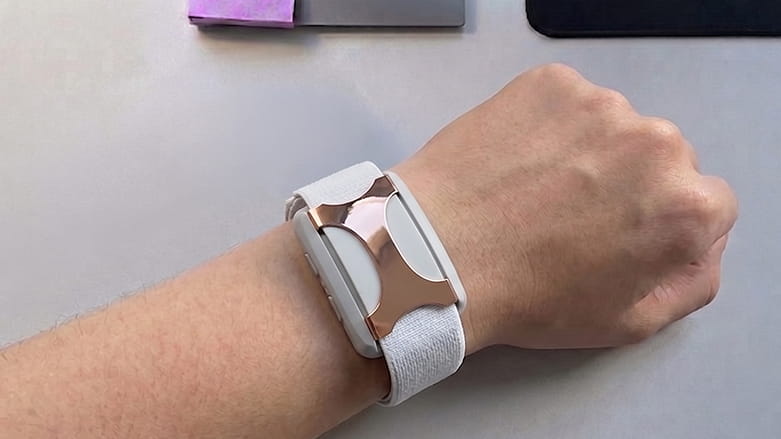
The main thing we noticed during testing is that neither device gives you an instant ‘wow’ feeling. If there were any results, they were pretty subtle.
Weeks 1–2: Figuring out the devices
The first few sessions were the most surprising because we didn’t know what to expect. Some team members testing Pulsetto Lite immediately cranked the stimulation to level nine.
We do not recommend that. The sensation felt overly intense and made muscles twitch painfully. Instead, we would recommend choosing levels between 5 and 7, unless you want to experience some torture.
Apollo Neuro felt much less dramatic. Since it relies on vibrations rather than electrical pulses, the experience was gentler. A few people initially questioned whether it was doing anything, given how subtle the vibrations were.
We’ll admit, at this stage, there was plenty of skepticism around both devices.
Weeks 3–6: Small changes start to appear
After a few weeks, team members using both Pulsetto Lite and Apollo Neuro reported slight improvements in sleep quality. Well, they weren’t dramatic, but even subtle positive changes in sleep feel better than nothing.
But we also have to mention the possibility of a placebo effect. When you’re paying more attention to stress and wellbeing, it’s hard to know if the device is helping or if it’s just the result of building better habits.
Which became easier to stick with?
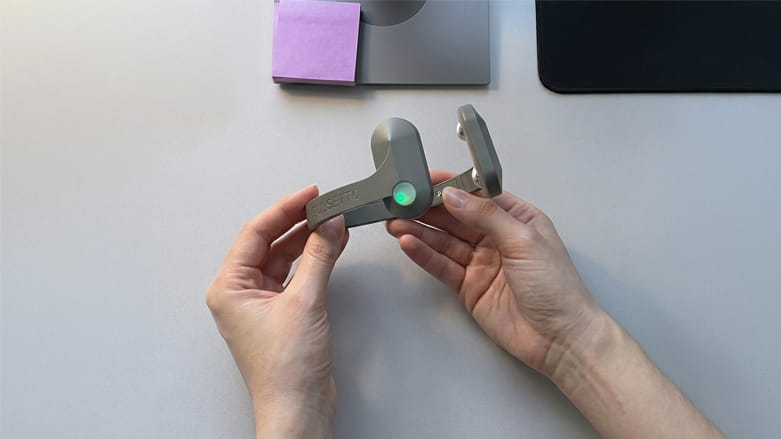
Surprisingly, Pulsetto won. Here’s why. Even though you can wear Apollo Neuro all day, you still need to plan three hours per day, five times per week, for sessions.
Pulsetto felt simpler. You do a session in the morning, another one in the evening, and you’re done.
Winner: Pulsetto Lite
Which app is easier to use?
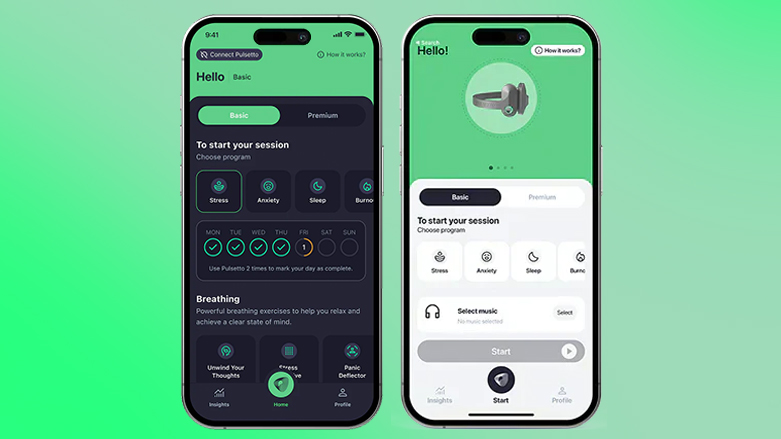
Both devices rely heavily on their companion apps. However, after using them side by side, we preferred Pulsetto one.
Pulsetto keeps things simple. Once connected, you choose a feature to explore—stress, anxiety, sleep, burnout, or relaxation. Once you start your session, the app guides you through it.
Additional categories like inflammation, gut health, and headaches are available through subscription, but honestly, most users will probably find the included options sufficient. We liked that the app shows heart-rate trends and changes during sessions, though this feature is also locked behind a premium subscription.
Apollo Neuro is more complicated here. It has more modes, customization options, and decisions to make.
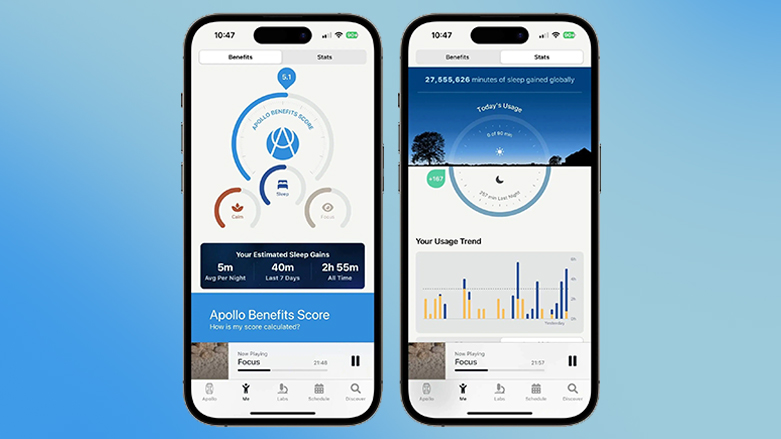
While great for enthusiasts, we sometimes spent more time choosing a program than using one. The good thing is that you can adjust the session time. That said, if you choose one hour, the vibrations can make your skin itchy or tickly, like sand running through it, which wasn’t always pleasant.
Winner: Pulsetto Lite
Who shouldn’t use these devices?
Because non-invasive VNS devices like Pulsetto Lite deliver mild electrical stimulation, there are some safety considerations you should be aware of. If any of the following apply to you, we recommend that you talk with your doctor.
Don’t use non-invasive VNS devices if you:
- Have a pacemaker, cochlear implant, or other active implanted electronic device
- Have metal implants in the head, neck, or heart
- Are pregnant
- Have a history of heart arrhythmias
- Have sleep apnea
- Are underaged
Because Apollo Neuro uses low-frequency vibrations, it’s considered a generally safe wearable. However, for some people, we would recommend using it with caution or consulting a healthcare provider before use:
- People with skin irritation
- People with sensory sensitivities
- Underaged people
Who should choose each device?
Both Pulsetto Lite and Apollo Neuro are designed for slightly different people. With that in mind, we put together a short guide to help you figure out which device best suits your lifestyle, preferences, and wellness goals.
Choose Pulsetto Lite if:
• You're interested in direct vagus nerve stimulation.
• You enjoy structured wellness sessions.
• You prefer an active approach to nervous system care.
• You're focused on VNS-specific benefits.
• You're comfortable with a more intentional treatment process.
Choose Apollo Neuro if:
• You want passive, all-day stress support
• Comfort and wearability matter most
• You prefer subtle background support
• You want something easier to integrate into everyday life
• You value convenience and habit-building
Verdict: Which is better overall?
After trying both devices, we think Pulsetto Lite comes out on top overall. Neither device guarantees results, but with Pulsetto, we could actually feel the electrical pulses working. Plus, there’s more research backing non-invasive VNS than vibration-based wearables.
Pulsetto was also easier to fit into our routines. Doing a quick session in the morning and another at night was simple to keep up with. Even though you can wear Apollo Neuro all day, we still had to plan when and how to use it as recommended.
That said, not everyone agreed. A few team members still liked Apollo Neuro better. Their main reason was that on a stressful workday, you can start a session right at your desk. We all agree, that’s pretty convenient.
-
Journal of Personalized Medicine.
-
Journal of Affective Disorders.
-
Autonomic Neuroscience: Basic & Clinical.
-
Scientific Reports.
-
American Journal of Physiology.
-
The American Journal of Medicine.