Fitbit Air vs. Whoop: Key differences between the screen-free trackers

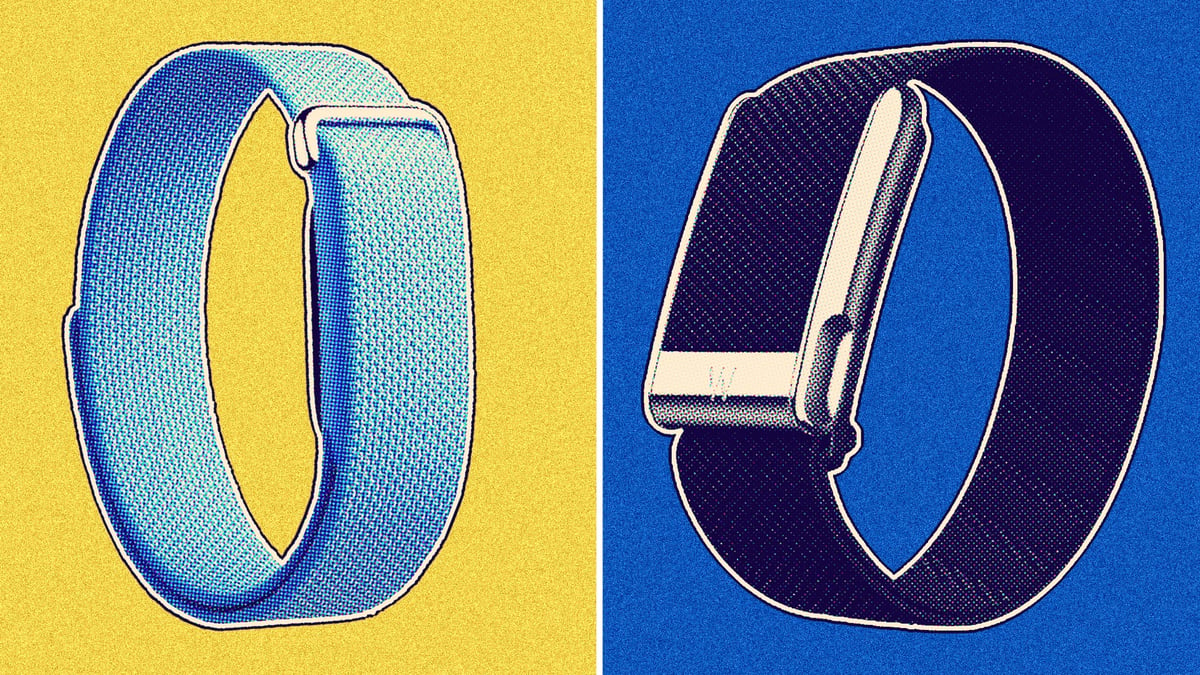
Trying to choose between Fitbit's budget-friendly discreet tracker and a Whoop subscription? This is the guide for you
With Google's announcement of the $99 Fitbit Air, Whoop faces its most serious competition yet in the screenless tracker category.
The latest Fitbit tracker doesn't arrive until 26 May, so answering the question of who should pick the Air and who should choose a Whoop subscription is difficult.
However, though we're not yet able to give our definitive verdict on the Air's real-world performance, we can weigh up the superficial differences between the two ecosystems.
Both devices ditch the screen to focus on distraction-free data, but they are for very different types of users. Here is how they compare across the five most important battlegrounds—and our initial verdict on which is best for whom.
1. Subscriptions
The most fundamental difference is how you pay—but, to be clear, it's not necessarily the 'one-off payment Fitbit vs. Whoop subscription' as has been billed by many.
The Fitbit Air follows a more traditional hardware model: you buy it for $99.99, and it's yours. However, to get the most out of it, the 'Google Health Coach' requires a $10/month Premium subscription to unlock Gemini’s deep analysis and workout plans.
For most people, we suspect the basic tracking and health data (which remains accessible even if you cancel) will be sufficient. However, on paper, it appears to be a much shallower experience than you receive with a Whoop subscription.
In contrast, you don’t buy the Whoop 5.0 or MG hardware; you subscribe to a tier (which we've analyzed and recommended our favorite Whoop plan in this separate guide).
Entry-level tracking starts at $199/year (Whoop One), while the top-tier 'Life' membership—the only way to get the MG hardware—will set you back $359/year. It’s a big commitment; if your subscription lapses, the sensor essentially becomes a paperweight.
As ever, this comes down to personal preference, but we'll revisit this section once we've analyzed the real value of the Air's free tier in our full review.
2. Battery life and charging
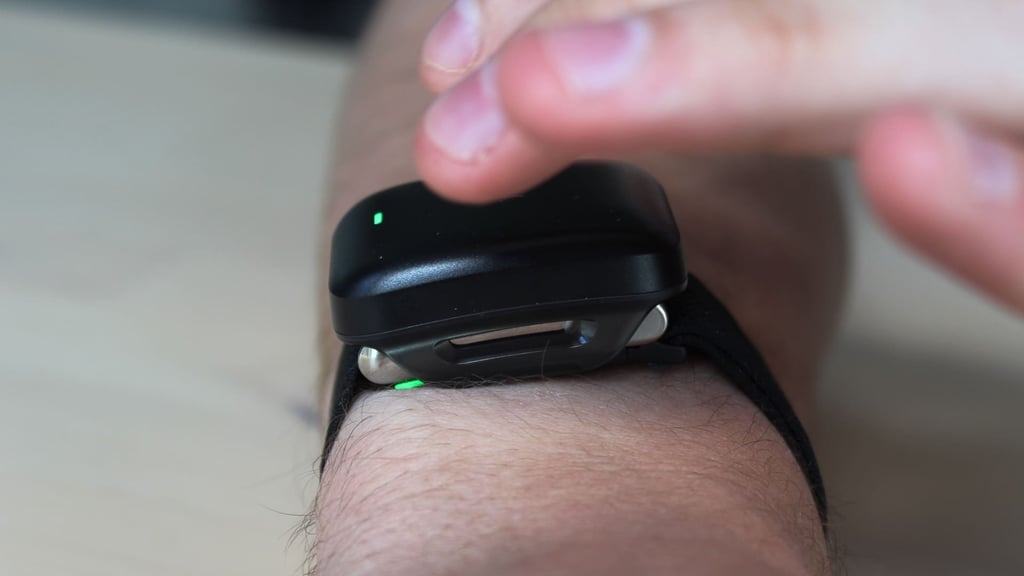
Both the Whoop 5.0 and MG boast a massive 14-day battery life. When paired with the wireless PowerPack (standard on Peak/Life tiers), which you slide onto the tracker to retain that always-on experience, you can effectively go a full month without being tethered to a wall.
It’s a set-and-forget experience that puts it on par with high-end Garmin watches in terms of charging cycles. And in our long-term testing over the year since both tracker styles launched, we've found that this 14-day estimate is spot-on (sometimes even surpassing it).
The Fitbit Air, Google estimates, will last a week, which is impressive given it's 20% lighter than the old Fitbit Luxe. While it can’t match Whoop’s two-week endurance, it wins on speed: Google’s fast-charging tech provides a full day of juice in just five minutes. If you’re a charger-forgetter, the Air’s quick-refill might be more practical than Whoop’s long-haul endurance.
Still, we expect Whoop to be the very clear winner in this area.
3. Lifestyle AI vs. performance coaching
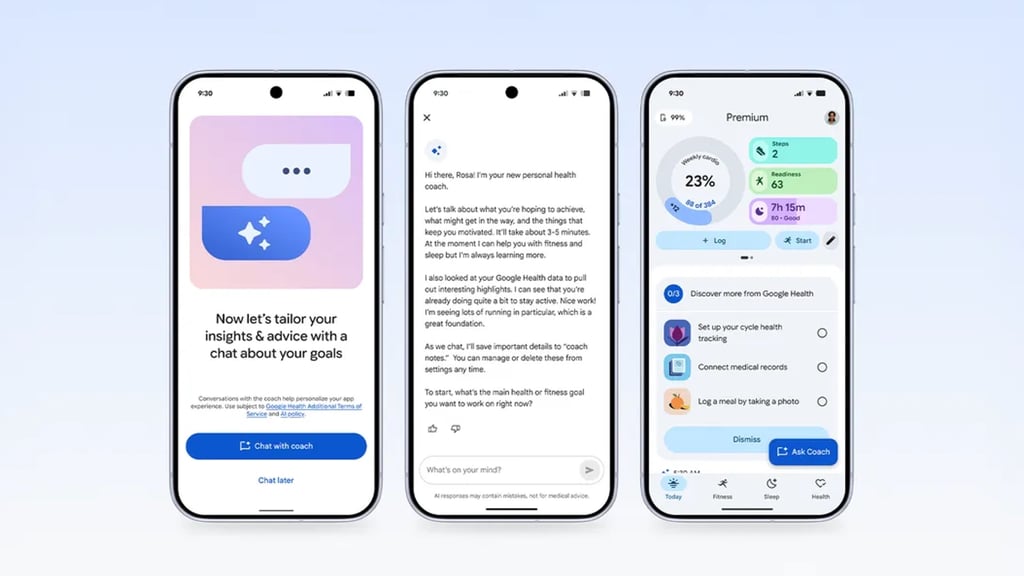
This is where we expect the software divide to become clear. The Fitbit Air feeds the new Google Health Coach. And, as we've come to expect from the brand over the last decade or so, the initial messaging suggests it's very lifestyle-centric.
It leverages Google's Gemini AI to answer questions about why your sleep was poor or to analyze a gym whiteboard photo and log your reps. Like the Pixel Watch 4, it's a tracker that nestles neatly into the Google ecosystem—though, without a screen, it's much less about integrating services like Google Calendar and Maps.
On the other end, Whoop's platform overhaul in 2025 doubled down on its strength as a tool for those who want detailed insights into their fitness and health.
It's made huge strides with its Whoop Coach in the last 18 months or so—just this week, it began rolling out an update that adds contextual memory and more engaging prompts. Yet, the most actionable and unique features remain its Healthspan and Pace of Aging—metrics developed with the Buck Institute to show how your behaviors are affecting your physiological age.
It still prioritizes activity strain, recovery, and sleep above all else, but excellent tracking tools for stress management, strength training, medical health, and wellness ensure this is a very complete experience for those serious about optimizing their health and fitness.
Essentially, Fitbit wants to help you be well, and Whoop wants to help you be elite. But, as ever, we'll update this comparison once we really understand the extent to which the paid tier of Google Health Coach can keep up with the Whoop dashboard.
4. Health features
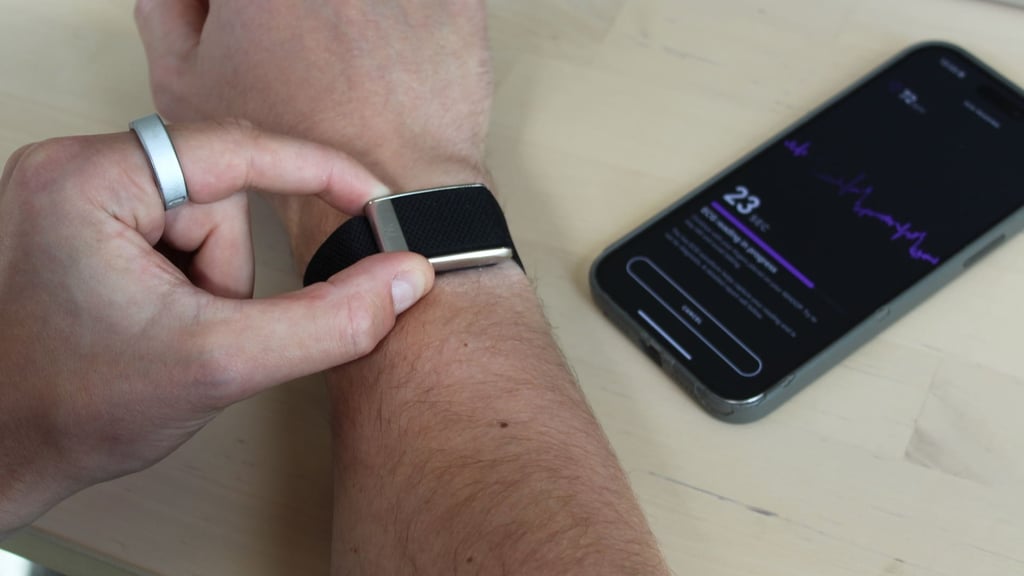
Both brands have pedigree when it comes to advising serious health conditions, but the Whoop MG (via the Life tier) is the heavyweight here. It features conductive elements in the clasp that enable on-demand ECG readings and background heart rate screening.
Depending on your Whoop tier and region, you can also access Blood Pressure Insights (in beta)— which uses optical sensors to estimate your overnight ranges—and link up with third-party platforms in Advanced Labs to integrate blood tests.
The Fitbit Air isn't quite as comprehensive—at least on paper. It packs the same health sensors as the Charge 6—including SpO2, skin temperature, and irregular heart rhythm notifications (AFib)—but it lacks a dedicated ECG function.
Fitbit can flag potential issues in the background, whereas the Whoop MG is for those who want to actively screen their heart health and blood biomarkers on their own terms.
5. Versatility and the wearability factor
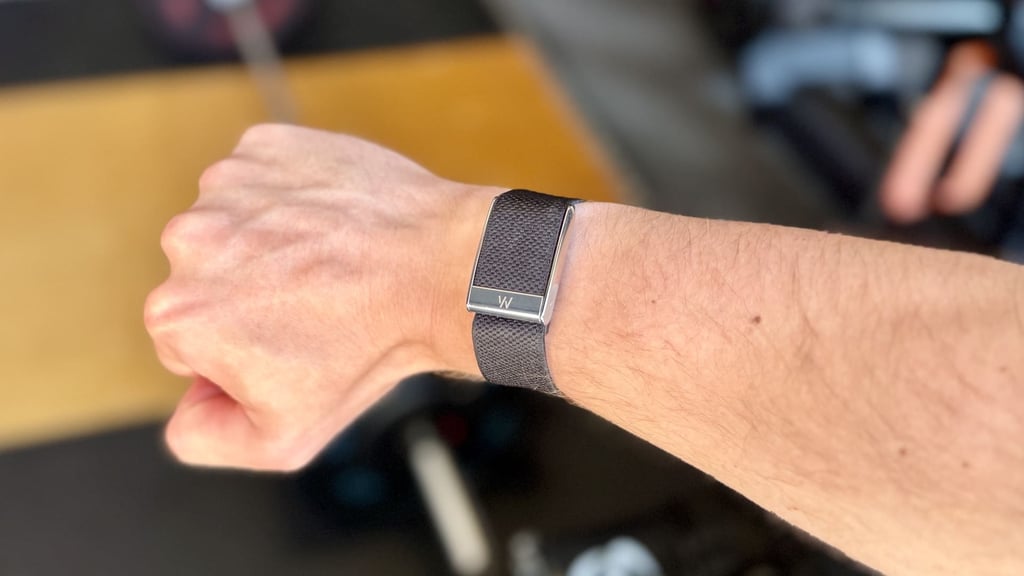
Whoop's biggest competitive advantage is its modularity. The Whoop Body ecosystem lets you remove the sensor from the wristband and slide it into Whoop-ready apparel, such as sports bras, boxers, or bicep bands. For martial artists or Crossfitters who don't want a device on their wrist, this is a dealbreaker.
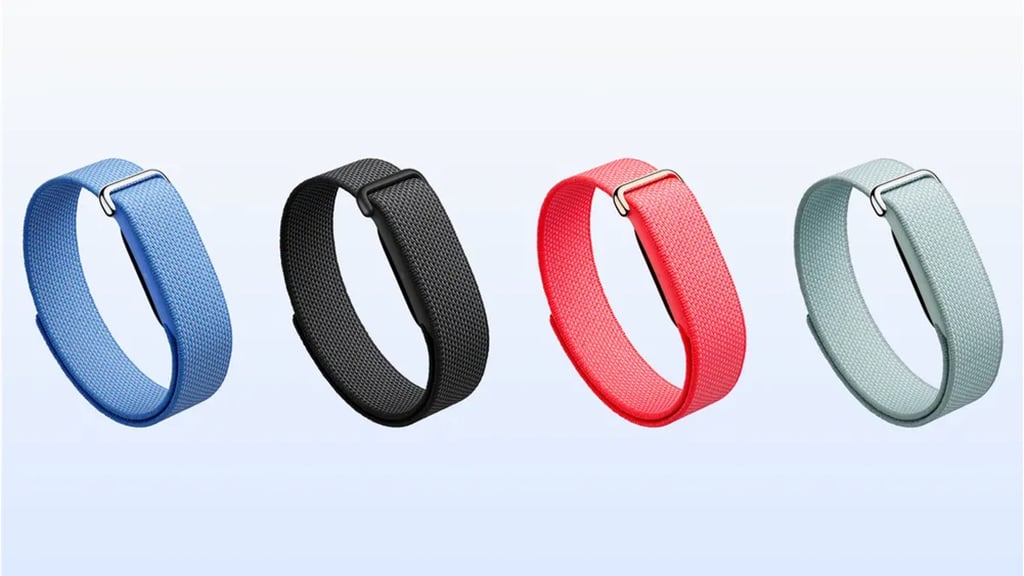
The Fitbit Air is a pebble-like module that users can swap between various bands (including the Stephen Curry Special Edition), but it's primarily a wrist-worn device.
However, Google’s "multi-device mode" is an interesting counterplay to watch here: it lets you wear a Pixel Watch 4 during the day and switch to the slim, screenless Air for sleep without any gaps in your data. No wearable can compete with Whoop in this area, but the Air's design and integration are compelling, nonetheless.
Initial verdict: Which is best for you?
With the Fitbit Air not yet released and our team therefore not yet able to put it through the wringer of a full review, it's not possible to definitively say which is best for those choosing between them.
However, we do know that the Whoop 5.0 and Whoop MG are incredible, albeit expensive, medical-grade tools for those who view recovery as a science. The elite wearability, depth of features, and 14-day battery make it one of the most compelling wearables to buy in 2026—and that doesn't change with the arrival of the Fitbit Air.
However, we still expect the Fitbit Air to be a threat to Whoop’s entry-level business. At $99, it provides core health metrics, 7-day battery life, and Gemini without a high-stakes commitment. For the person who just wants a discreet tracker to monitor their health in the background, the Air—again, on paper—is the most compelling Fitbit in years.
We'll return to this comparison once our full verdict is posted—stay tuned for now.