Why You Can Trust Wareable
Founded in 2014, Wareable brings together journalists and experts who have reviewed over 1,000 products, including smartwatches, fitness trackers, smart rings, smart home gadgets, and health tech devices.
Our team combines hands-on testing, in-depth research, and expert insights to evaluate product performance, assess manufacturer claims, and help readers make informed decisions.
A future Samsung Galaxy Watch could spot body tremors using existing sensors

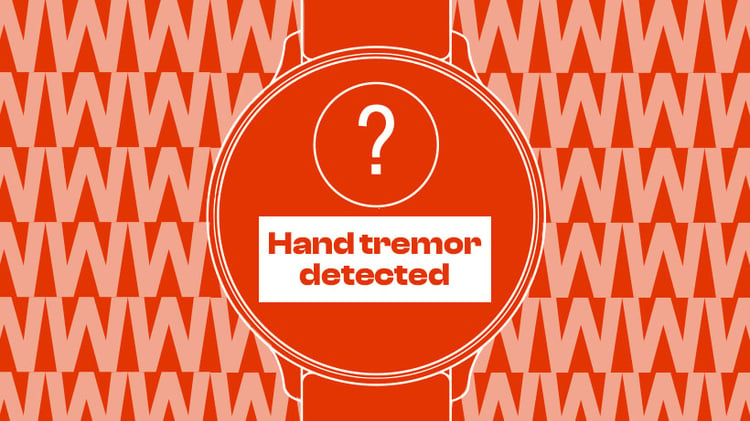
The next big Galaxy Watch health feature may be a new use of the sensors already sitting on your wrist
A newly published Samsung patent reveals how future smartwatches might use existing optical PPG light sensors and motion trackers to detect and record body tremors.
First spotted by Wareable, the filing—’Electronic device and method for detecting tremor in electronic device’—stands out because it doesn’t rely on a far-off new sensor breakthrough.
Instead, Samsung is exploring whether the dual-wavelength optical sensors already used to measure heart rate and blood oxygen, together with wearables’ three-axis accelerometer, can also detect the faster shaking patterns associated with tremors.
This could mean a future Galaxy Watch might detect unusual hand movement while users are sitting still and prompt them to run a quick check, rather than dismissing it as random motion.
How the tremor check on Galaxy Watch might work
By comparing motion patterns with changes in blood-volume signals at the wrist, Samsung aims to reduce false positives from normal daily movement.
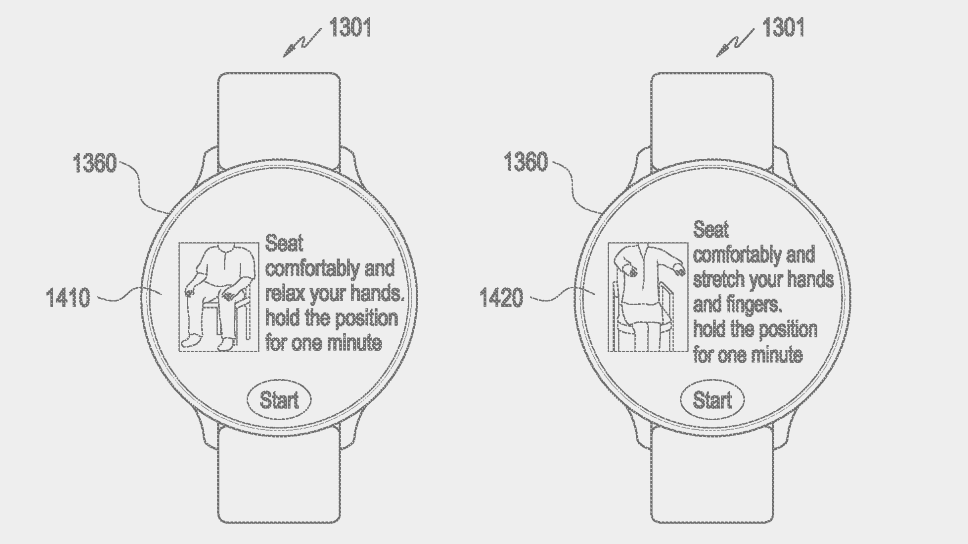
If the watch detects a possible hand tremor, the patent suggests the smartwatch could then ask whether the user wants to run a follow-up test.
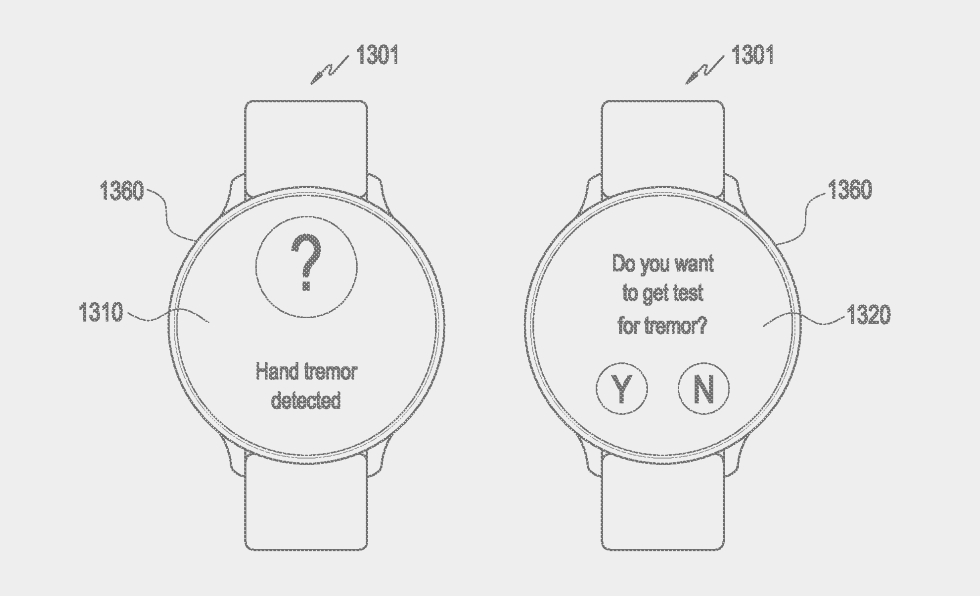
It then guides them through a short set of hand and finger exercises—including relaxing the hands, extending the fingers, reaching toward an object, and tapping the fingers—before analyzing the result.
This matters because tracking tremors can support neurological health monitoring, from logging Parkinson’s-related symptoms and monitoring medication side effects to detecting stress-related changes.
Consumer wearables still don’t do much of this at an advanced level.
Apple has its Movement Disorder API on Apple Watch, while Oura has recently started tracking micromovements during sleep (though not tremor-related).
Samsung’s effort to build more direct tremor detection using sensors already in a smartwatch seems like a meaningful next step.
So stay tuned, as we’ll watch to see whether this idea appears in future Galaxy Watch updates.