Cheaper than the flagship Body Scan, Body Comp and Body Smart appeal to the buyers on a stricter budget—here’s what you need to know if you’re choosing between them
Withings has been a well-known name in the smart scale market for a while—but their product line can appear confusing.
With three different models to choose from, two of them are suitable for those who are looking for a mid-priced scale: Body Smart and Body Comp. For this Withings Body Comp vs Body Smart, we tested both, and here’s our recommendation based on our hands-on experience.
Before digging deeper, here’s how they compare at a glance:
| Body Smart | Body Comp | |
| Total metrics | 20+ | 30+ |
| Body composition metrics | Body fat, muscle mass, bone mass, water percentage, visceral fat index | Body fat, muscle mass, bone mass, water percentage, visceral fat index |
| Cardiovascular features | Heart rate | Heart rate, pulse wave velocity, ECG |
| Nerve Health Score | ❌ | ✅ |
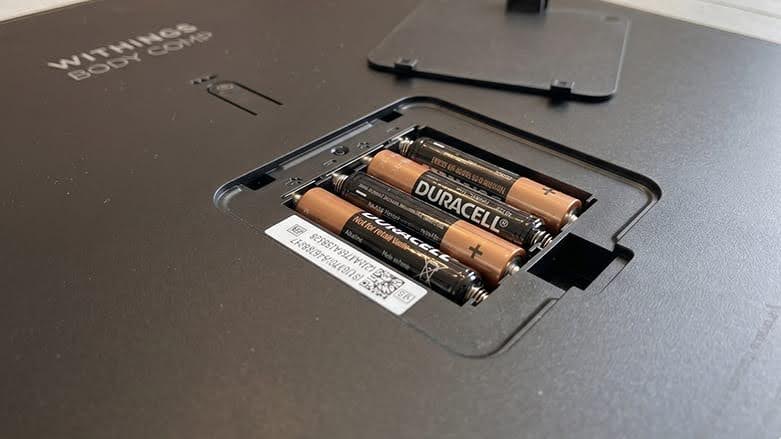
| Battery | AAA battery, lasts 15 months on average | AAA battery, lasts 15 months on average |
| Connectivity | Bluetooth or Wi-Fi | Bluetooth or Wi-Fi |
| App support | iOS and Android | iOS and Android |
| User profiles | Up to 8 | Up to 8 |
| Warranty | 2-year warranty | 2-year warranty |
| Price | $129.95 | $229.95 |
| Official website | Visit Withings Body Smart | Visit Withings Body Comp |
Design and everyday use
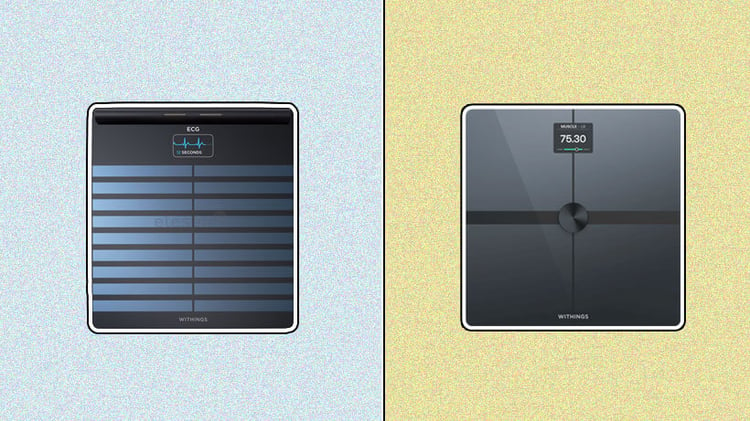
Body Comp and Body Smart appear almost identical—with only the horizontal lines on the platform differentiating them slightly. Both models come in either white or black.
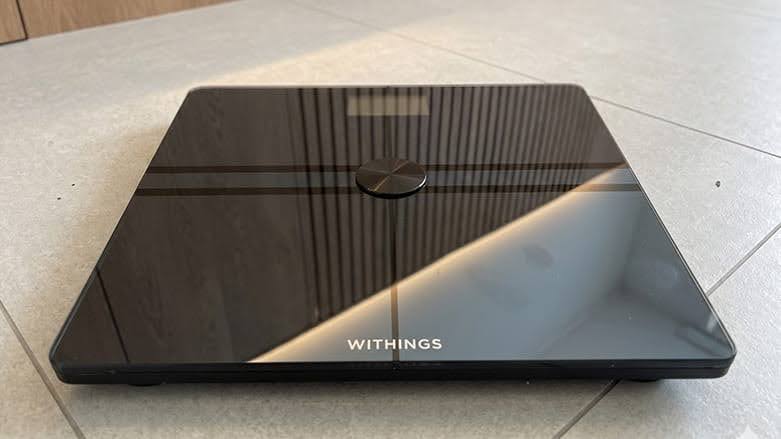
In terms of build quality, both feel the same: solid and well-made. The surface is large enough and neither scale wobbles nor feels cheap during use.
Setup is also straightforward: download the Withings app, connect, and you’re ready to start your first weight-in.
Both scales support Wi-Fi and Bluetooth connectivity, which means that the data syncs automatically in the background without needing your phone. This adds to usability: our team has tested several smart scales that connect via Bluetooth only and having a phone open before weight-in interrupts the day flow, especially if your goal is to weigh yourself on a daily basis.
Overall, if design and everyday usability are your primary criteria, there is genuinely no reason to choose one over the other.
Winner: Tie
Body composition tracking
Although Body Smart tracks fewer metrics, when it comes to body composition, they both share the same core measurements: body fat, muscle mass, bone mass, water percentage, and visceral fat index. In other words, the $100 price difference buys you additional cardiovascular and nervous system data—not better or more detailed body composition tracking.
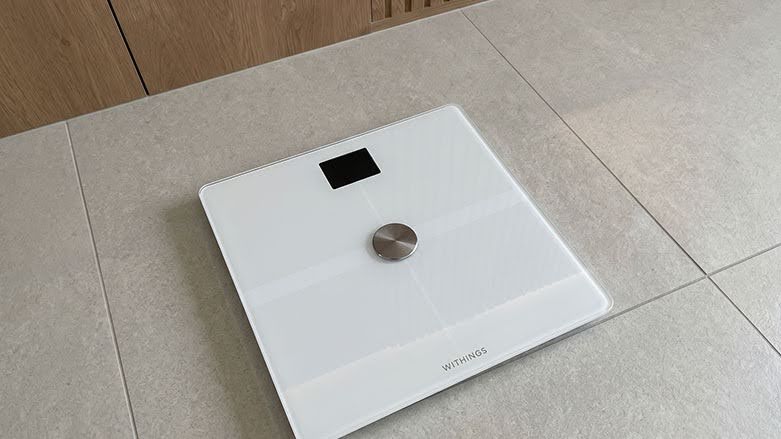
Both use the same bioelectrical impedance analysis (BIA) system, and neither includes a handheld sensor. As foot-only scales, the electrical current runs from foot to foot rather than through the full body, which limits segmental detail compared to devices that use both hand and foot contacts.
That said, in our testing, both scales were reliable at delivering consistent results day to day. That's what matters most with smart scales, because no consumer model—regardless of price—is intended to serve as a clinical measurement device. The absolute numbers may not be perfectly accurate, but if your composition data reading moves in one direction over several weeks, that trend is worth paying attention to. Used that way, both Body Smart and Body Comp serve their purpose well.
Winner: Tie
Body Smart vs. Body Comp: additional features
There’s no surprise that Body Comp, being a more expensive model, comes with extra features—so we dedicated this entire section to them. Here’s what you wouldn’t get with Body Smart:
Pulse wave velocity
Related to cardiovascular health, Withings describes this metric as a calculation based on the estimated time interval between the heart ejecting blood into the aorta and that blood flow reaching the feet. In simpler terms, it may measure how stiff or flexible your arteries are—stiffer arteries are associated with higher cardiovascular risk.
That said, Body Comp is a consumer wellness device, not a medical one, and these readings should not be used to diagnose or monitor any condition. If any of the data raises concerns, a conversation with your doctor is always the right next step.
Vascular age
The app uses pulse wave velocity data to compute your biological (as opposed to chronological) age. A younger age may indicate better arterial health. In other words, it transforms the data into a more relatable, easier-to-understand number.
Nerve Response Score
Only available in the U.S. market, Nerve Response score is a proprietary metric of Withings, which puts you anywhere from 0 to 100, with lower scores indicating potentially higher stress levels.
To calculate it, the scale sends a mild electrical stimulus through your feet and measures how your sweat glands respond—a technique known as electrodermal activity assessment. The idea is that sweat gland activity may reflect the state of your autonomic nervous system, indicating arousal, excitement, or stress.
In practice, our team found the score more confusing than useful. It's not always clear what's driving a change in the number or what action to take in response—and the app doesn't offer much guidance on that front. It's an interesting concept, but one that may raise more questions than it answers for the average user.
Electrocardiogram (ECG)
Body Comp features an ECG sensor that may flag irregular heart rhythms. It is an interesting addition for anyone who wants a broader picture of their cardiovascular health beyond heart rate—though as with all metrics on this scale, it is a wellness feature rather than a diagnostic tool, and any concerns should be discussed with a healthcare professional.
From our hands-on experience, the additional Body Comp features were intriguing, though we are unsure whether they are worth the extra $100. Yes, you get more metrics to look at, but some of them don’t work properly all the time or are overwhelming. For instance, one of our testers mentioned that the pulse wave velocity score didn’t appear on every weight-in.
But considering that Body Comp does offer more features, we picked this scale as our winner in this category.
Winner: Body Comp
Accuracy and measurement technology
Both scales use the same impedance analysis (BIA) system for body composition, so neither has a meaningful advantage over the other for core measurements such as body fat, muscle mass, or bone mass. As with any BIA-based device, readings are estimates rather than clinical measurements.
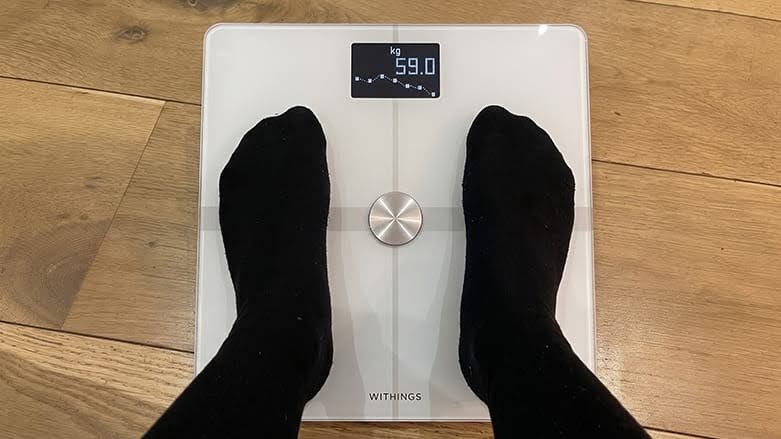
One thing worth noting is that neither Body Smart nor Body Comp uses a handheld sensor. Both are foot-only scales, which means the electrical current runs from foot to foot rather than through the full body. This limits the body composition data compared to scales that use both hand and foot contacts for segmental analysis. For most users tracking general trends over time, this won't be a dealbreaker—but it's worth knowing if detailed segmental readings are a priority for you.
On the cardiovascular measurement side, Body Comp pulls ahead with pulse wave velocity and ECG sensors, which Body Smart simply doesn't have.
Another extra feature found in Body Comp is Nerve Response Score, a proprietary metric that uses electrodermal activity that may give you a snapshot of your autonomic nervous system's state. Overall, this didn’t strike us as a useful feature for our team, making Body Comp not worth the price to access this particular metric. Also, be aware, Nerve Response Score is only available for users based in the United States.
Winner: Body Smart
App experience and ecosystem
Both scales use the Withings app (known as Health Mate in the past), which is one of the more polished companion experiences in this category. The interface is clean and trends are easy to read.
In our experience, the app worked reliably with both scales and most of us didn't encounter syncing issues during testing. One team member (Android user), however, did experience some hiccups, mostly lost data and troubles with Health Connect syncing.
The app is freemium—and we found that for most people, the free version will be more than enough, covering weight trends, body composition data, and integrations with popular health platforms. The premium subscription (Withings+) unlocks additional health insights, coaching programs, and advanced analysis. While these extras are nice to have, we didn't feel they were essential to getting the most out of either scale.
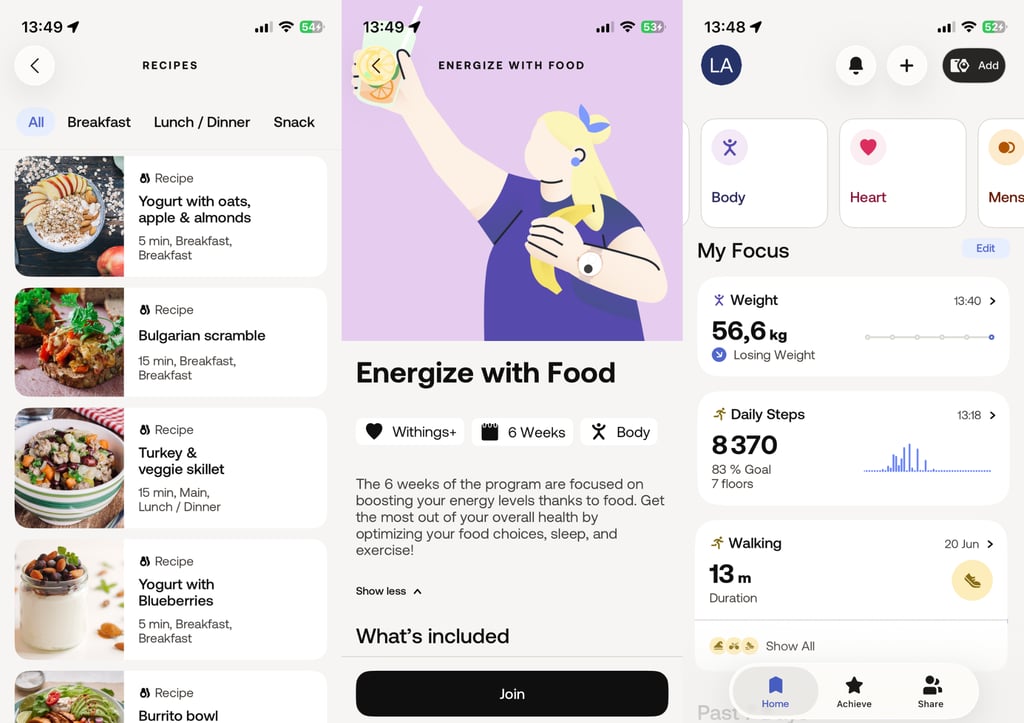
However, Withings+ subscription is not only for the brand’s smart scales—in fact, it is an all-in-one app for various health data. It is similar to what you would get from apps like Health on Apple, but with more guidance.
The ecosystem of Withings does not end with the subscription: they also offer smart watches, U-Scan for at-home urine analysis, blood pressure monitors, and other wellness tech. For those who are serious about health data tracking, Withings is one of the most extensive ecosystems.
If you are already in the Withings ecosystem, either as a premium subscriber or with other Withings devices, Body Smart or Body Comp make sense—it unlocks useful insights without costing a fortune. For those new to the brand, both are equal choices for this category.
Winner: Tie
Price and value
At $129.95, Body Smart is one of the better-value smart scales on the market. It offers a strong set of body composition metrics and an easy-to-understand app interface.
Body Comp at $229.95 is a $100 premium over the base model for the additional cardiovascular features. Whether that's worth it depends entirely on how much you value those extras. If the ECG and pulse wave velocity data are genuinely useful to you, Body Comp is the way to go, but most users will find Body Smart sufficient.
Keep in mind that some features require an additional subscription. This applies to all Withings smart scales. The premium is currently priced at $99.50 per year or $9.95 per month.
Winner: Body Smart
Verdict: Which should you choose?
While our team found Body Smart to be a better choice due to the value for money it brings, it is not necessarily the best option for everyone.
Choose Body Comp if:
An ECG and electrodermal activity sensors are useful for you.
However, if you are more serious about body composition tracking, a device with a handle is probably the more suitable choice for detailed body segmentation. An example of it would be Withings Body Scan or Hume Health Body Pod, if you're looking for a cheaper alternative.
In other words, the extra features in Body Comp do not provide any additional insights into body composition—arguably the reason people go for a smart scale—thus, our team didn’t find the upgrade worth it.
Choose Body Smart if:
You are looking for a well-rounded smart scale on a budget. Being $100 cheaper than Body Comp, it is nonetheless packed with features, including body composition tracking metrics, heart rate, and even nice-to-have features such as a weather forecast.