
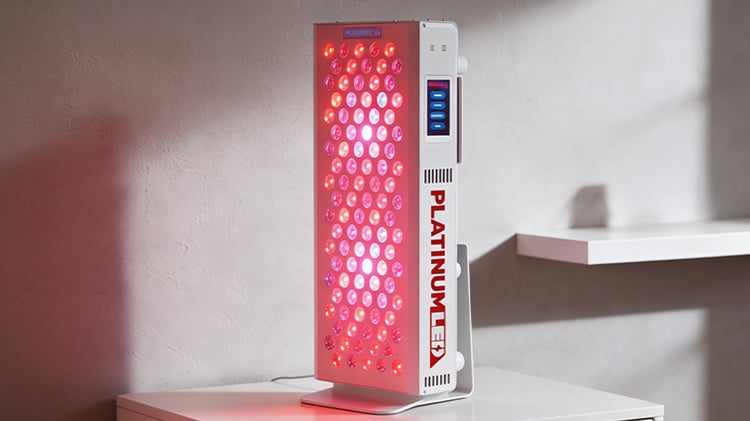
- Voice command system
- Adjustable intensity settings
- Solid build quality
- Not very beginner-friendly due to multiple control options
- Expensive compared to other panels
If you look around today, you’ll notice countless red light therapy (RLT) panels and masks. Sometimes it’s hard to pick the right one. Our team tests as many as possible on the market, so you won’t have to.
This time, I came across PlatinumLED BIOMAX 9th Generation panels. It caught my attention because I kept hearing it’s one of the more premium names in the space with a more powerful setup.
On paper, it looked more advanced than many panels I’d tried before, especially because of its adjustable intensity controls and built-in voice command support. Those features might seem small, but for some people building an RLT routine at home, they could be a game-changer.
After testing PlatinumLED BIOMAX 9th Generation at home for two months, I wanted to see if the experience justifies the cost and who this high-performance panel is really for.
| Product name | PlatinumLED BIOMAX 9th Generation |
| Price | From $659 |
| Rating | 4.5/5 |
| Verdict | Best for high-power home therapy |
| Key Specs | 7 wavelengths Voice command system 10–20 minute sessions Targeted and full-body treatments |
Different panel options
Before we start this review, I would like to quickly explain the differences between the PlatinumLED BIOMAX 9th Generation panels. First, there are four main models: BIOMAX 300, BIOMAX 450, BIOMAX 600, and BIOMAX 900.
While they mostly differ in size and number of LEDs, they are also split by coverage: smaller panels are for targeted treatment and larger ones are for full-body use. As I wanted something in between, I chose BIOMAX 450 as a balanced middle ground. It wasn’t too small or overly big.
First impressions out of the box
BIOMAX 450 feels like a premium product from the moment you take it out of the box. Compared to other panels, it comes as a complete setup. The list is long and includes eye protection, two remote controls, cables, a door hook, a wrench, two hanging brackets, six screws, and a cable assembly.
When I saw all this, I thought it was perfect since I could hang it in multiple ways. At the same time, hanging the panel properly takes some effort, especially if you want it positioned comfortably for regular sessions.
Since I wasn’t sure where I wanted it permanently, I also bought the optional stand separately. My initial thought was to place it on my nightstand, although the setup can feel bulky if you have a smaller bedroom or nightstand.
To be honest, eventually, I moved it to my bathroom after realizing that’s where it fit most naturally into my daily routine.
Opinion of the design
Once the setup was done, it was time to look at the design and standout specs. At first glance, I noticed it’s a heavier panel with solid metal construction, which makes it less portable but gives it a more high-end feel overall.
If you want a lighter version, I recommend reading my recent HoogaPRO 300 review, which is a better option. However, you won’t get the premium wavelengths and control that BIOMAX 450 offers.
Unlike most panels, it has 7 different wavelengths, which is impressive since most have two or at most four. More importantly, you can adjust the intensity of both red and near-infrared light to suit your comfort level or the type of session you want. That flexibility made the panel feel more customizable rather than just another one-button RLT gadget.
Daily control and features
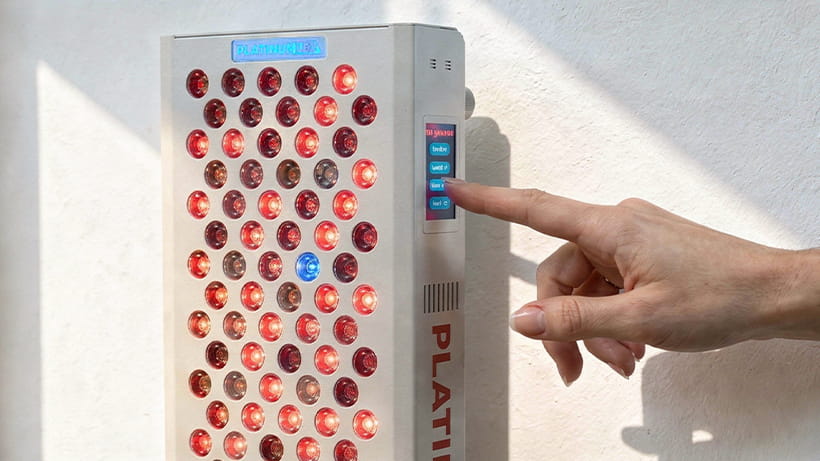
One thing I noticed quickly with the BIOMAX 450 is that you can control it in several ways, depending on how hands-on you want to be.
At the most basic level, there’s a simple remote control to turn the panel on and off. Then you can adjust the intensity and timer on the panel's side. It works fine, but I didn’t use it often.
There’s also a touchscreen-style remote that lets you control session time and intensity of both red and near-infrared light with a few touches. For people who don’t want to download the app, which has the same settings, it might be useful. But I preferred the app since I kept losing the touchscreen remote.
What stood out the most was the voice control system. It might sound confusing or hard, but it’s actually simple (you get a one-page guide to commands).
You wake the panel by saying ‘Hello, Max’ and then request your preferences. For example, in the morning, I would say, ‘All lights on,’ which turns on both red and near-infrared light, then ‘ten-minute timer,’ and it runs automatically. You can even fine-tune settings by just saying things like ‘red light to 80 percent,' which adjusts the intensity.
My experience with the PlatinumLED BIOMAX 9th Generation panel
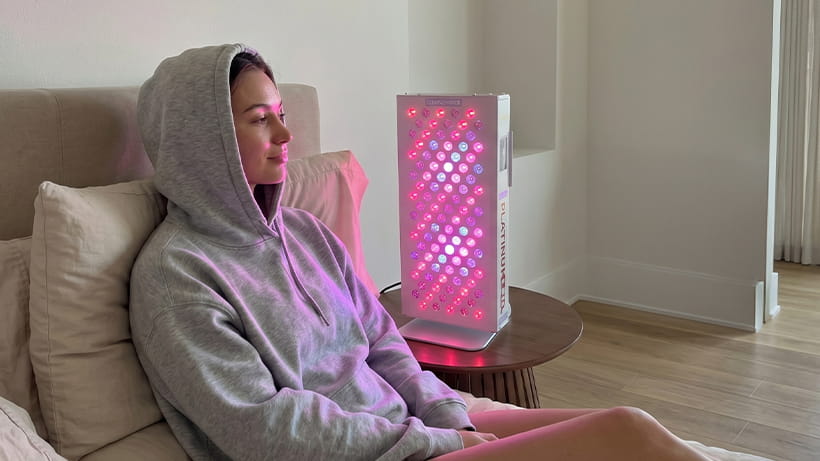
At first, my main goal was to figure out how I wanted to control the BIOMAX 450. As I already mentioned, there are a few ways to do it.
After a week of using it, I realized voice control was the most comfortable and practical. If I had to pick a second option, it would be the app. The physical remotes felt unnecessary, and I used them only a couple of times to understand the experience.
Once I settled on voice control, it became easier to integrate the panel into my daily routine. Saying the ‘Hello, Max’ command in the morning sets the tone for the day. It has its magic, I’ll admit.
I often used it on my face and neck, and the built-in timer was more helpful than I expected. The panel beeps after half the time has passed. This makes it easier to know where you are in the session without constantly checking the clock.
If you’re moving it across your face or body, the built-in beep is actually useful as it lets you know when to switch sides. Otherwise, you’d probably end up setting an extra alarm, which is an extra step.
Back to my experience, I usually did 10-minute sessions 5 times a week. Once I formed a habit, it wasn’t hard to use.
Have I noticed any results?
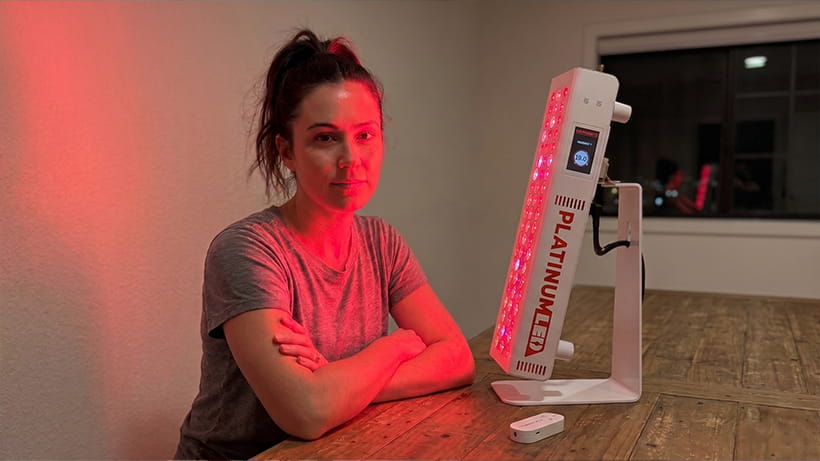
As with any RLT device, results aren’t instant and require patience. Trying BIOMAX 450 wasn’t an exception.
During the first couple of weeks, I didn’t notice much beyond the sessions feeling relaxing. But because BIOMAX 450 is more powerful, I felt some subtle results appeared earlier than with other panels I tried, like HoogaPRO 300.
As I’m mostly interested in supporting skin health and relieving shoulder tension, I mainly used it on my face and shoulders.
After two months of testing
After two months, I still felt the results were subtle. With skin, it’s hard to say if it supports acne healing since blue light makes up a very small part of the total output and feels like an added extra rather than a core feature.
Blue light is known to potentially target acne-causing bacteria, so if you’re considering it for acne treatment, you might want to explore other options, as many exist on the market. That said, I still felt that my skin looked generally healthier and more balanced over time.
For my shoulders, where I get tension from long hours at the computer, I noticed some improvement, but only when I combined the panel with mobility exercises and stretching. The PlatinumLED BIOMAX 9th Generation panels use 1060nm light to support deeper tissue, which may help with muscle recovery.
That said, I’d still recommend speaking to a doctor before using RLT for any skin or health concerns. In my experience, it works more as a supportive tool alongside other habits rather than as something you rely on only.
Does the experience match the cost?
If you're considering a PlatinumLED BIOMAX 9th Generation panel, the price starts at $659 and increases for larger panels. The one I had, BIOMAX 450, is a bit bigger than the smallest one and costs $799.
After using it for a while, I think the higher price makes more sense if you use it regularly. Compared to cheaper panels like Hooga PRO300, BIOMAX 450 feels more solid in quality and usability.
It has stronger output, adjustable intensity, and a voice command system. All this makes it feel closer to a premium home RLT device rather than a basic light panel.
So, is it worth the price? I’d say yes, but only for users who are sure they’ll use it daily or who already use RLT and want to upgrade their panel.
Where PlatinumLED stands against other panels
One thing I noticed straight away while testing different panels is that none of the others offered the same seven-wavelength setup as the PlatinumLED BIOMAX 9th Generation panels. That makes it feel more advanced compared to many competitors that focus on 2–4 wavelengths.
The voice command system is also something I rarely see elsewhere. That said, competition is still strong.
Premium alternatives like Joovv feel more polished and minimalist in their ecosystem and design. At the same time, Joovv will empty your wallet even more. However, it’s not as feature-rich, which might disappoint tech-focused users.
Compared to mid-range options like Hooga Pro300 or MitoPRO+, those often feel better value for beginners, especially if you don’t care about advanced controls or extra wavelengths.
Is it safe for daily use?
For most people, RLT devices are considered fairly safe when used properly. That said, ‘safe’ doesn’t automatically mean it’s suitable for everyone.
Some may experience skin sensitivity, especially if they use strong skincare products, prescription treatments, or have light sensitivity. That’s why I found it more comfortable to gradually build session intensity rather than going all in.
Moreover, if you have skin concerns or health conditions, it’s better to speak with a specialist before trying RLT. PlatinumLED BIOMAX 9th Generation panels may support general wellness, but shouldn’t replace any medical treatments.
I always appreciate when at-home RLT devices include protective eyewear, and I was glad the BIOMAX 450 came with them. The panel is very bright up close, so I mostly used the glasses during face sessions.
Bottom line
The PlatinumLED BIOMAX 9th Generation 450 is clearly a premium RLT panel (as are the rest of the models). Whether you choose to try one of them, it comes down to how much you value advanced features versus simplicity.
It definitely feels luxurious and powerful, but it’s also heavy, expensive, and not really for casual use. If you want something simple, a basic panel makes more sense. But if you like extra control and features, this one could be worth it.
-
Journal of Clinical and Aesthetic Dermatology.
-
American Academy of Dermatology Association.