Hooga PRO300 red light therapy panel review: Budget-friendly wellness tech put to the test


- Strong value for money
- Beginner friendly
- Compact and practical size
- Delivers solid irradiance
- No smart features
- Targeted use only
- Results require regular use
Red light therapy (RLT) was once found only in spas, recovery centers, or clinics before reaching our homes. Brands like Hooga have made RLT devices cheaper and more accessible to everyday users curious about potentially improving their skin health and recovery.
| Product | Hooga PRO300 red light therapy panel |
| Price | $299 |
| Best for | Beginners wanting an affordable, simple red light therapy panel for daily skin and recovery routines |
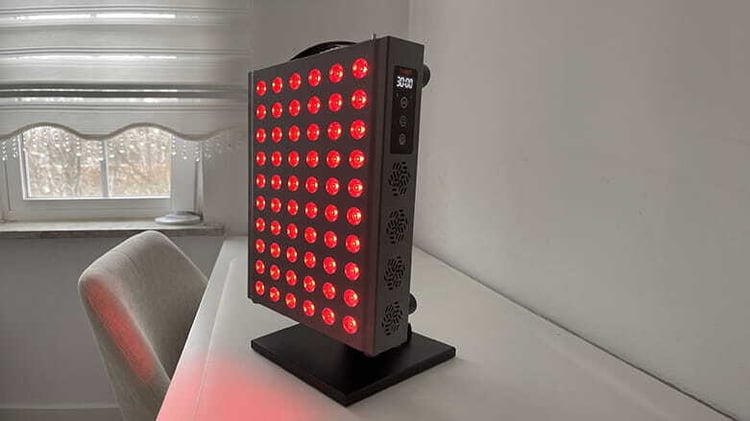
| Key specs | 660nm red light + 850nm near-infrared Compact panel design (approx. 12.7 x 8.6 x 3.1 in) Integrated stand + carry handle Manual controls (no app or Bluetooth) Adjustable session times (5–15 min, manual override possible) Includes protective eyewear Targeted use (face, shoulders, small body areas) Plug-in powered (non-portable) |
I was one of those curious users. That’s how I found the Hooga PRO300 Red Light Therapy Panel. It caught my attention because it promises solid results at a non-premium price.
To test it properly, I used the panel daily over several weeks as part of my routine. I have decided to place it on the sink in my shower room. This made it easy to use for quick sessions while brushing teeth in the morning or winding down at night. Every day, I stood in front of it so the light could cover my face, shoulders, and neck.
In this review, I’ll cover what I have learned about the Hooga PRO300 after testing it, where it feels more budget than premium, how easy it is to use daily, and whether the results justify the price.
Price and rivals: Where Hooga PRO300 stands
It’s fair to say we should start this review by discussing the price point, since that is why I decided to test it. I bought my panel directly from Hooga’s official website, the best place for current pricing, warranty details, and offers. Although it’s available through other marketplaces, I’d still recommend buying from the official site.
That said, I would place Hooga PRO300 in the budget-to-mid tier of the RLT market. That is because it undercuts many premium wellness brands while offering a proper panel rather than a smaller gadget or beauty-only mask like CurrentBody’s Face Mask.
It is also one of the more accessible ways to explore RLT at home without jumping into the $1,000+ category. That is what you’d spend on HigherDOSE’s Full Body Red Light Mat.
If you search for devices most similar to Hooga PRO300, you’ll come across MitoPRO 300+. Design-wise, it looks similar; however, you’ll have to pay more for additional wavelengths and a more feature-rich experience.
Compared to rivals, Hooga PRO300's value comes from its simplicity. You get solid irradiance, dual-wavelength coverage, and a full panel setup at a lower price.
First impressions: Set up and ease of use
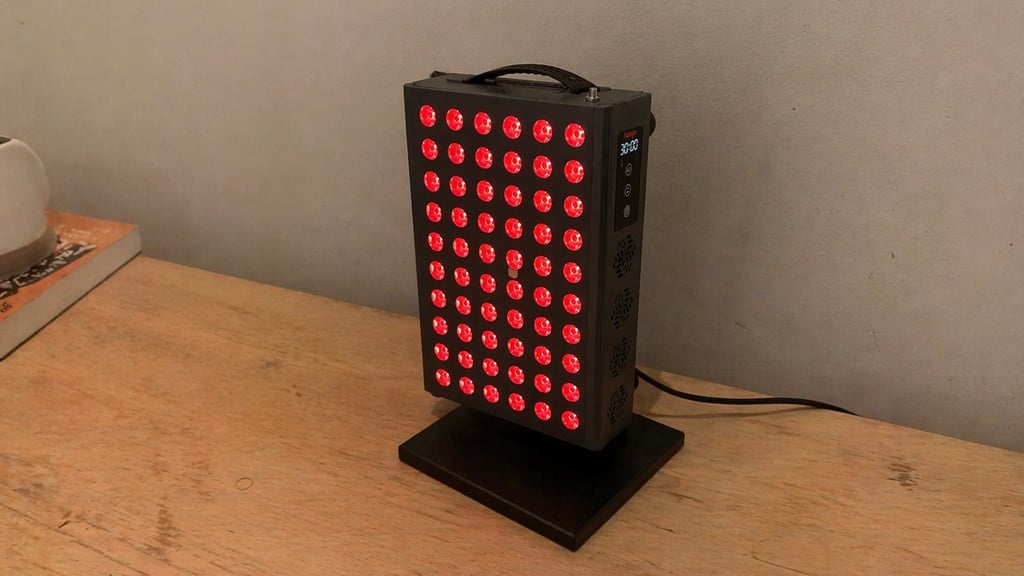
When you open the box, Hooga PRO300 feels solid and well-made. It comes with the panel, a user manual, a power cord, and light-blocking glasses. My first thought was that it’s ready to use right away, not something you need to spend hours figuring out.
Setup is simple, too. Hooga PRO300 can be placed on any flat surface where you feel comfortable. In my case, I keep it on a sink in the shower room. Personally, I find this made it easy to incorporate RLT into a daily routine without scheduling sessions.
Learning to use it is minimal, but some adjustment is needed around distance and timing. For surface treatments like acne, anti-aging, or scars, we recommend you stand 18 inches from the panel for 2–3 minutes. For internal treatments such as pain management, inflammation, joint health, or muscle soreness, stand 6–12 inches away for 6–10 minutes.
These are recommendations based on my testing and the manufacturer's instructions. It doesn’t mean it will work for you, so we encourage you to experiment with distances and timing to find what works best.
Design and build: Simple, functional, but not premium
Hooga PRO300 looks exactly what it is; there are no weird design decisions or hidden features. That’s what I like about it: it’s simple and functional.
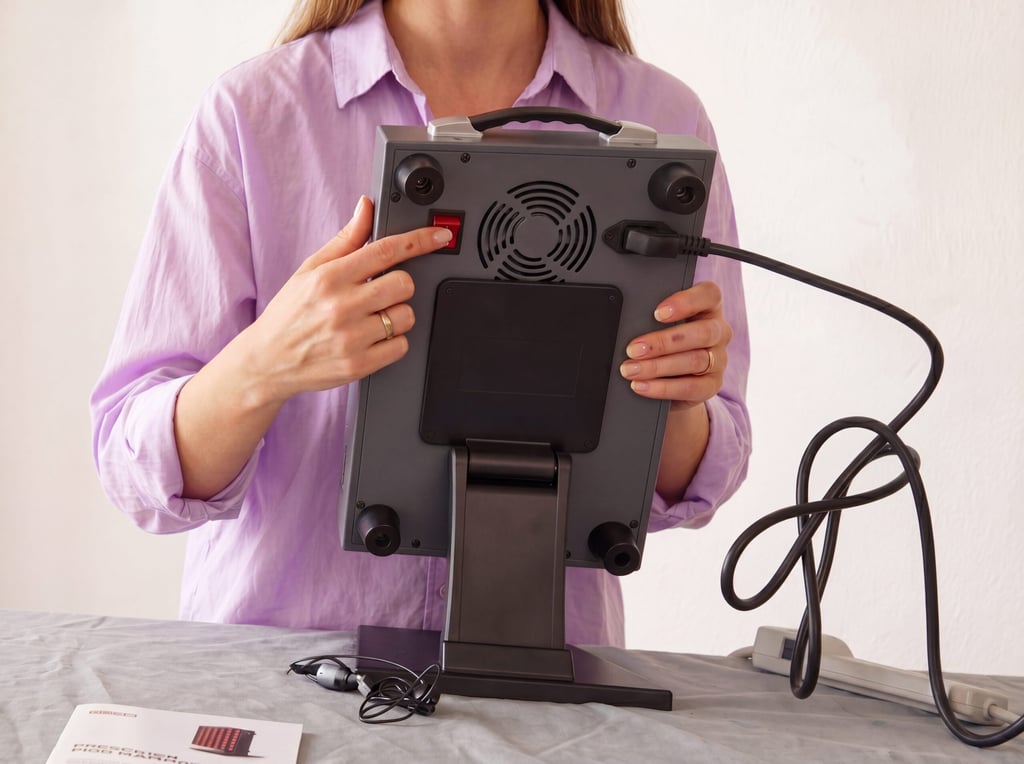
It comes in a clean, rectangular metal body with an integrated tabletop stand and a carrying handle at the top. At around 12.7 x 8.6 x 3.1 inches, it’s small enough to move between rooms or keep on a bathroom counter, desk, or bedside unit without dominating the space. I think that compact size is one of Hooga PRO300's biggest strengths. You can easily have an RLT session anywhere at home.
That said, even though the build quality feels solid, it’s nothing close to luxurious. The casing feels sturdy, the stand is practical, and the controls are simple, but it lacks the polished finish or design flair of pricier rivals.
For example, MitoPRO 300+ feels more refined, while HigherDOSE’s Mat feels like a spa gadget with premium materials. But being honest, it all comes down to your preferences: either the device’s performance is enough, or you also want a glossy presentation.
Integration into daily routine
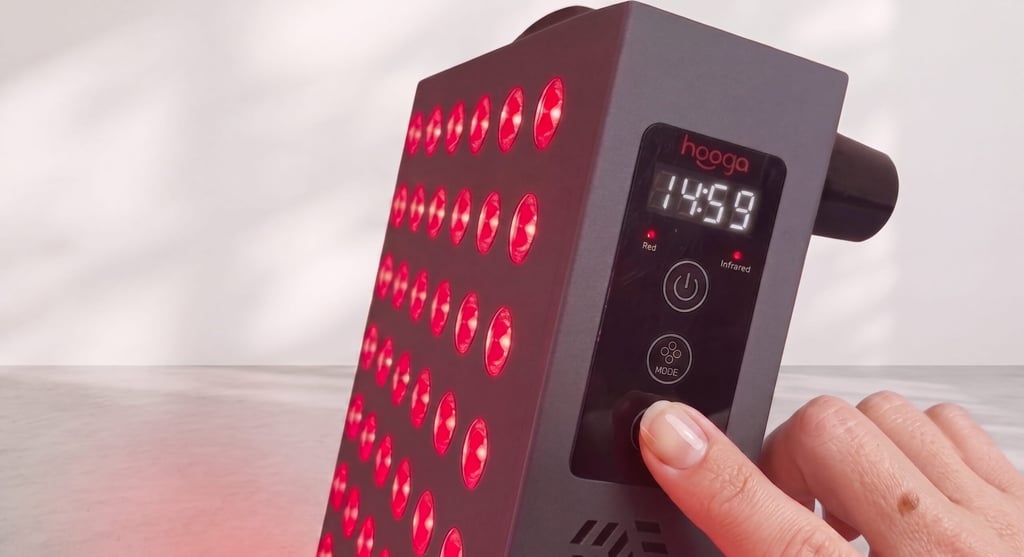
I already spoke about one of the biggest Hooga PRO300 strengths: its compact size. Another is how easy it is to use. There’s no companion app, no Bluetooth pairing, and no smart ecosystem to learn.
Everything is handled through simple manual controls on the panel itself. You just plug it in and turn it on. For those used to controlling devices through apps, it might sound too basic, but I really enjoyed it.
Session timing
Hooga PRO300 uses two common RLT wavelengths: 660nm red light and 850nm near-infrared light. Red light is generally associated with surface-level benefits and may help support skin, while near-infrared is invisible and suggested to penetrate deeper into tissues.
Hooga PRO300 allows you to use them together or separately. I found this convenient since I didn’t want to use red light all the time. Some days, after the gym, I used just near-infrared light, hoping it might help to ease my sore muscles.
Personally, I use Hooga PRO300 for 10 minutes during my daily shower routine. On the panel’s corner, you’ll see buttons to adjust sessions. You can start with 5 minutes and increase to 10 or 15 minutes. If you prefer something in between, you have to leave it without setting the time and turn it off manually. Just be careful not to leave it on too long.
My experience using Hooga PRO300
I had mixed feelings about using Hooga PRO300, so I think it makes sense to break my experience into stages rather than pretend the results were instant. RLT often gets promoted with dramatic before-and-after promises, but in real life, results tend to be slower.
That was the case here. Instead of expecting overnight improvements, I focused on using Hooga PRO300 daily and noticing smaller shifts over time.
1–2 weeks: Building the habit
For the first couple of weeks, my main focus was to include Hooga PRO300 in my daily routine. I kept the panel on the sink in the shower room and used it most mornings while brushing my teeth, and some evenings when I had time.
To be honest, I didn’t notice anything early on. No instant muscle soreness relief, no sudden surge of energy, and no overnight skin glow. At first, it was about learning the distance that worked for me, adjusting to the brightness, and getting used to it. This may disappoint anyone expecting quick fixes, but for me, it just felt realistic.
3–6 weeks: Small changes
By the third week, I was noticing subtle benefits that may be linked to consistent use. On some mornings, my skin looked brighter (but maybe it’s also a new cream I started using), and I noticed it may be useful before workouts.
I started using it before the gym after reading a study that found red or near-infrared light therapy before intense exercise may help to reduce muscle damage without interfering with the body’s natural adaptation to repeated workouts. It’s hard to know whether it actually helped or if it was all in my head because I read it.
That said, Hooga PRO300 shouldn’t be treated as a miracle-level recovery tool. If you have problems with your skin, acne, or pain, consult a healthcare professional before making any decisions.
Safety and things to know before use
While Hooga PRO300 claims may sound promising, there are a few things to keep in mind before using it. First, protect your eyes, as the panel is very bright, especially up close. Some people may be fine with shorter sessions, but I found it more comfortable not to look directly at the LEDs. I recommend using the included light-blocking glasses or just closing your eyes during facial sessions.
Overuse is probably the most common mistake with at-home wellness tools. Longer sessions don’t mean better results and may cause skin irritation or discomfort.
Also, the PRO300 gets warm during longer sessions, though not uncomfortably hot. That’s generally manageable, but it’s another reason to stick to recommended timings rather than assuming more is always better. That said, always read the manual, follow the instructions, and keep in mind that the Hooga PRO300 is a wellness device, not a clinical treatment.
Check out other red light therapy reviews:
Best infrared sauna blankets: Our top picks for your wellness and rejuvenation
Joovv red light therapy review: Is it worth the premium price?
Solawave vs. Omnilux: Which red light therapy device is right for you?
Mito red light therapy review: My results after weeks of use
Hooga PRO300 red light therapy panel: Initial verdict
If you’re new to RLT, on a budget, or just want a small panel, Hooga PRO300 is a solid choice. It’s easy to use, compact, and a good value if you use it often.
However, if you’re an advanced user, you might want features like more wavelength options, app controls, bigger coverage, or a higher-end look. Hooga PRO300 doesn’t offer those, but for many people, using the device regularly is more important than extra features. If you plan to do that, Hooga PRO300 could be a great value.
Just be realistic: results may take time to show up; it’s not going to happen overnight. RLT is less about quick fixes and more about consistent use over weeks, sometimes months. Just have patience.
Resources:
-
The Journal of Strength and Conditioning Research
-
IEEE Journal of Selected Topics in Quantum Electronics.
-
American Academy of Dermatology Association.