Why You Can Trust Wareable
Founded in 2014, Wareable brings together journalists and experts who have reviewed over 1,000 products, including smartwatches, fitness trackers, smart rings, smart home gadgets, and health tech devices.
Our team combines hands-on testing, in-depth research, and expert insights to evaluate product performance, assess manufacturer claims, and help readers make informed decisions.
Inside Runna's plan changes: How sports science is reshaping the training app


Head Coach Steph Kessell walks us through new features landing alongside a major winter redesign
Running coaching platform Runna is rolling out a series of targeted product updates and plan refinements informed by elite sports science, following an audit of more than 800 training plans by academic experts from Loughborough University and Stanford Lifestyle Medicine.
The update delivers the first practical results from the multi-year academic partnership announced in August, in which researchers began auditing the platform's core training logic.
Led by Dr. Richard Blagrove of Loughborough University and Dr. Michael Fredericson of Stanford Lifestyle Medicine, the project analyzes Runna’s algorithms against the latest biomechanical and physiological literature to ensure training intensity and recovery distribution remain sustainable over long-term blocks.
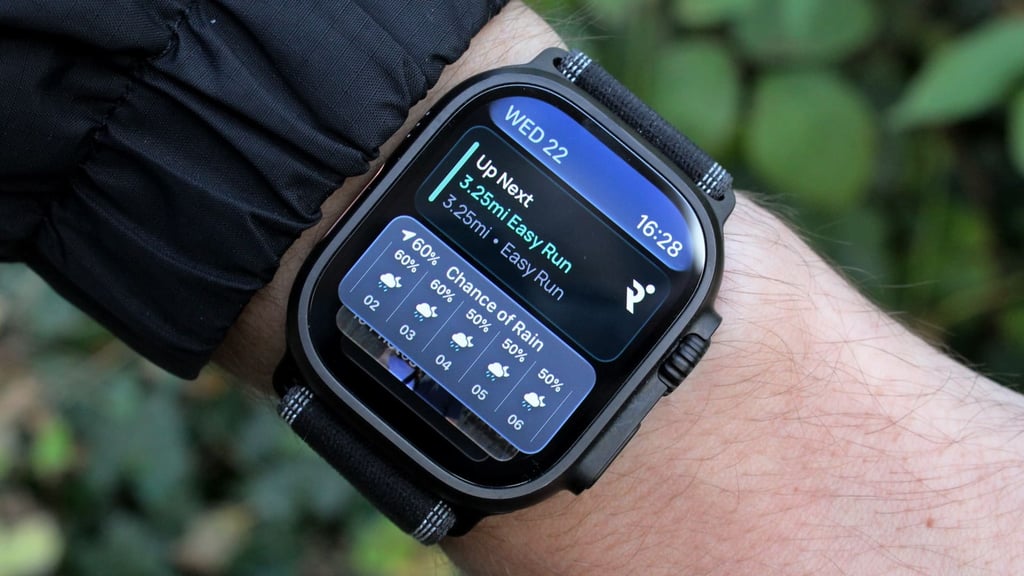
Speaking to Wareable, Runna Head Coach and Team GB Olympic marathoner Steph Kessell highlighted the scope and outcome of the review, saying:
"Working with these academic institutions—which are two of the biggest in the world in terms of sports science research—is us further investing in our coaching. They reviewed over 800 of our plans and came back with two updates that suggest further support for sustainable training.
"We were already confident that runners were improving—seven out of ten runners improve their race time with our training plans, so we were really proud of that stat going in.
"It was more about seeing if there was anything in the research we might be missing that could elevate us even further. They did a really extensive and thorough review, so to come back with only those two recommendations was a really positive outcome for us," Kessell explained.
Refining training loads and recovery
The first phase of the academic partnership has already introduced, as Kessell notes, two practical adjustments to the app.
For runners utilizing high-volume seven-day-a-week schedules, one weekly session is now automatically capped by distance or time—depending on the athlete's individual pace—to prevent overtraining.
Additionally, the app’s 'Holiday Mode' feature has been expanded to provide a gentler, more gradual return to running when users take time off, travel, or suffer unexpected breaks.
Talking of the structural adjustments for high-frequency runners, Kessell said: "We want to make sure that, for people who opt to train seven days, we can give them as safe a plan as possible. And now, with that recommendation, they'll essentially have that de-load day every week, as well as the regular de-load weeks."
Interface rollouts and expanded strength coaching
Beyond the plan tweaks, Runna is also preparing three major interface and tracking updates for later this winter.
These rollouts include a redesigned 'Record' tab optimized for both indoor treadmill workouts and outdoor tracking, updated 'Progress' insights to better track personal bests, and a consolidated 'Home' tab designed to streamline daily in-app navigation.

To support the evolving training framework, Runna is also expanding its coaching roster. USATF coach Percell Dugger joins to lead community engagement and events in the US, while strength specialist Nick Garcia will spearhead an upcoming refresh of the app's integrated strength-training modules.
Answering community pushback on injury rates
The focus on academic validation and structural de-loading follows a wave of community debate over algorithmically generated running plans in the last year or so.
As Runna's user base—now under Strava's umbrella—expanded rapidly, the app faced occasional online criticism from some who argued that its pace targets and week-over-week mileage ramps were too aggressive and contributed to common overuse injuries.
While running inherently carries injury risks regardless of the platform, rigid algorithmic pacing can sometimes lead athletes to push through physical fatigue instead of listening to their bodies.
Runna’s recent product roadmap, in some respects, aims to tackle this friction.
Earlier updates introduced temperature-based 'Adapt for Heat' pacing, alongside 'Upcoming Plans' and revamped Post-Race Recovery structures aimed at replacing rigid rules with fluid, body-first adaptation.
By combining academic plan validation with dedicated strength integration and adaptive recovery tools, Runna is seeking to prove that data-driven coaching can deliver race-day personal bests without burning runners out.
Only time will tell whether these latest plan tweaks—alongside the shiny new UI elements—can do just that.