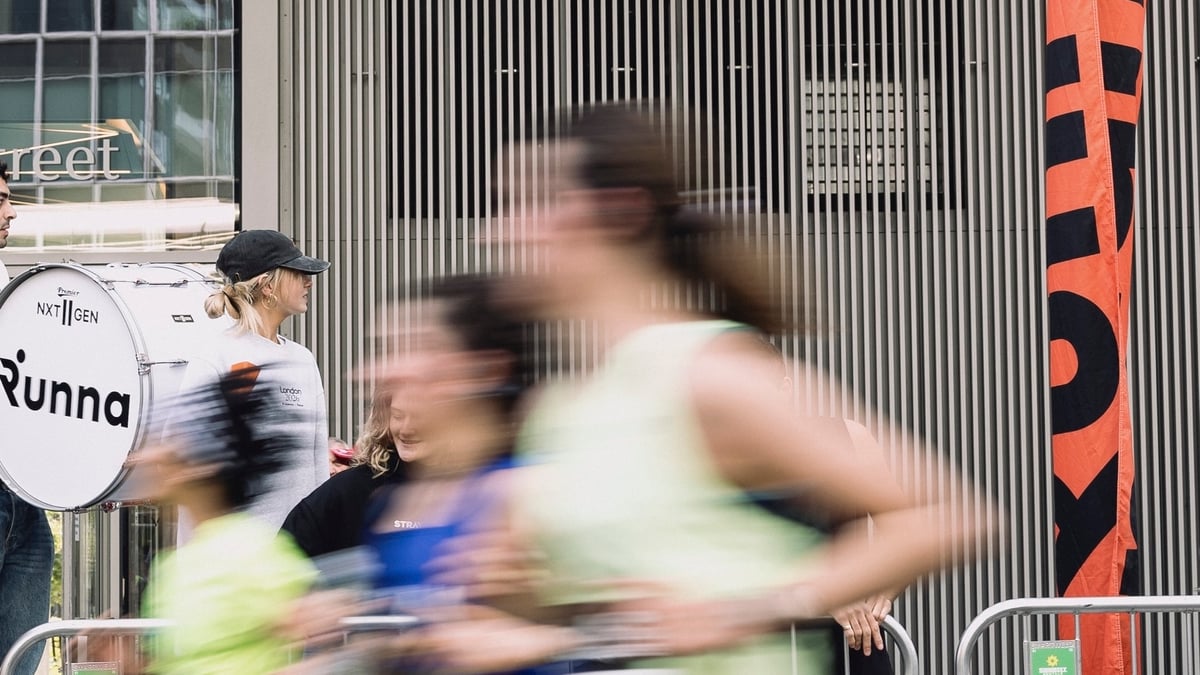
The partnership with Loughborough University will integrate exercise physiology to help users prevent injury
Running app Runna has announced a major partnership with Loughborough University to embed cutting-edge sports science directly into its personalized training logic.
Under the multi-year collaboration, researchers will review the platform's coaching algorithms against the latest academic literature.
The study—led by Dr. Richard Blagrove, Reader in Applied Exercise Physiology at Loughborough—will focus specifically on how the app progresses pace and distance, distributes training intensity, and structures recovery phases.
The move comes as the running boom continues to bring millions of new runners into structured training, where overuse injuries remain a major hurdle.
Runna currently estimates its users experience a 43% lower self-reported injury rate per 1,000 hours compared to established industry benchmarks.
"Running can be a demanding activity with a high risk of overuse injury," Dr. Blagrove said.
"Our work with Runna will build the latest sports science on training load and recovery into their expert coaching logic, offering a best-in-class experience that cannot be replicated by generic AI training plans."
An ever-improving experience
The partnership mirrors a similar sports science push across the digital fitness space, including parent company Strava’s ongoing research collaboration with Stanford University.
By validating its training logic through Loughborough’s academic rigor, Runna will undoubtedly hope to establish an empirical defense against basic algorithm-generated running plans.
At this stage, it naturally remains unclear when the end-user will feel the benefits of the university's recommendation, but the focus appears to be moving in the right direction.
It's not the only thing the brand is delivering to improve the experience, either. Earlier this month, Runna rolled out 'Adapt for Heat' pacing for users on its plans, followed by 'Upcoming Plans' (allowing athletes to stack multiple training blocks up to a year in advance) and a revamped Post-Race Recovery Plan system.