

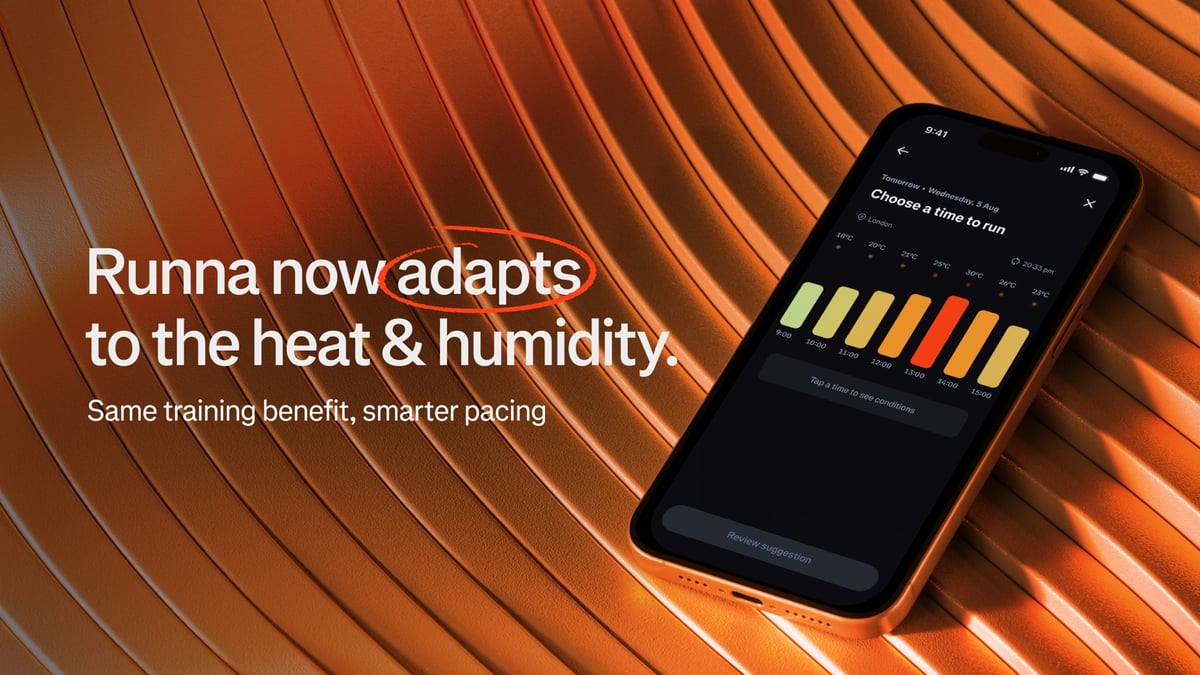
The update dynamically adjusts pace targets based on local forecasts—with two more features arriving in August
Runna has launched a new feature called Adapt for Heat to help runners navigate hot weather without derailing their training schedules.
The update comes as internal research indicates that 80% of Runna’s global community skip or alter workouts during high temperatures. Data from parent company Straca also suggests that recent UK heatwaves highlight similar struggles, with early-morning runs surging by 32% while overall running activity fell by 16% as athletes adapted.
Available for subscribers now, Adapt for Heat uses local forecasts to evaluate feels-like temperatures, session duration, and specific workout goals. Rather than forcing runners to hit unrealistic targets in high heat—and watching heart rate figures soar on their smartwatch or running watch—the app automatically scales back pace requirements.
This ensures users receive the same cardiovascular training benefit as running faster in cooler conditions, with a color-coded hourly heat forecast to help pick optimal workout windows.
More to come
Runna also revealed two additional features launching in August. Upcoming Plans will allow athletes to stack multiple training blocks up to a year in advance.
Meanwhile, a revamped Post-Race Recovery Plan will automatically generate personalized recovery guidance for races from 5k - 50k to protect long-term athletic progress and prevent post-race burnout.
The Wareable take: A welcome change of pace
We've noted for years that running plans—even those that integrate plenty of biometric data from a wearable—still too often treat effort and pacing as a rigid science, ignoring how heat and humidity can spike heart rate. In part, it's what helped fuel the rise of body-temperature tracking, as with devices like the Core 2 Thermal Sensor.
By automating temperature adjustments directly within session targets, Runna spares runners from second-guessing their metrics on scorching days. And, combined with automated post-race recovery and year-round plan stacking, it helps enhance the platform's ability to deliver more sustainable, long-term training.