Why You Can Trust Wareable
Founded in 2014, Wareable brings together journalists and experts who have reviewed over 1,000 products, including smartwatches, fitness trackers, smart rings, smart home gadgets, and health tech devices.
Our team combines hands-on testing, in-depth research, and expert insights to evaluate product performance, assess manufacturer claims, and help readers make informed decisions.
Samsung explores a smart ring with a built-in display and touch sensor

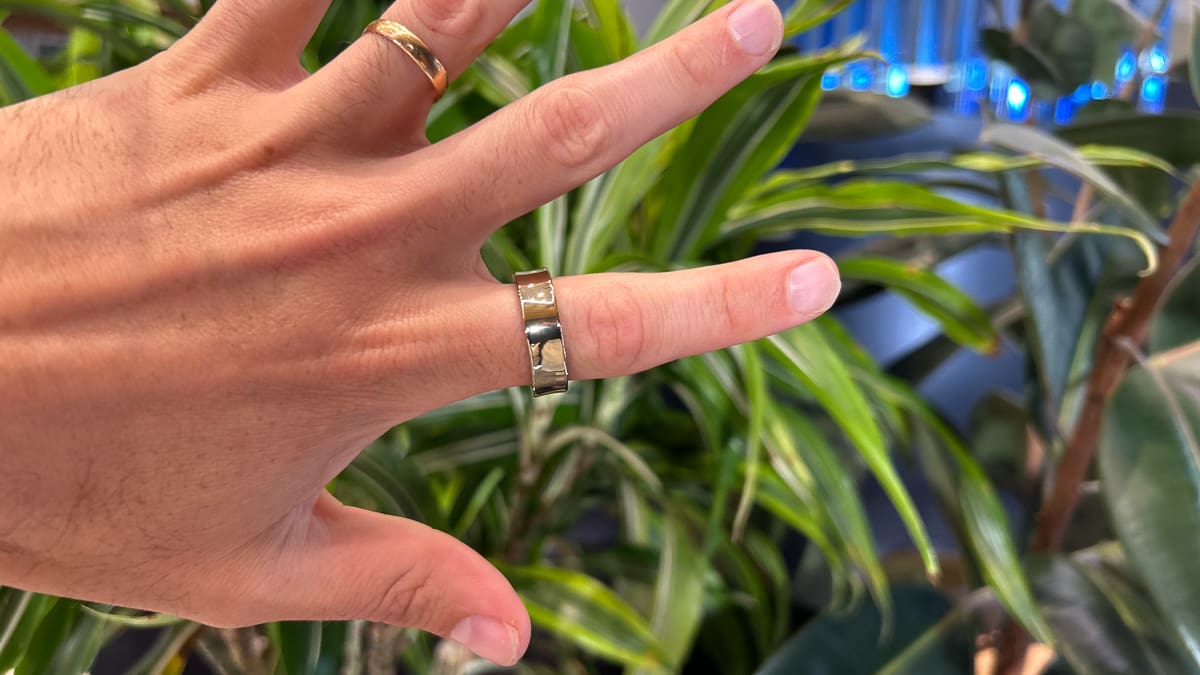
As well as tracking your biometrics, the ring could also let you control calls, music, and alerts with simple finger gestures
Samsung is exploring a ring-shaped wearable with a curved, flexible display designed to read your pulse and detect finger gestures.
First filed last December and granted on 3 November 2026, the patent describes a much more interactive smart ring than what the company currently offers. The device would use a ring- or cylinder-shaped housing with a built-in display panel.
This display would sense in two directions: inward to pick up pulse-wave data from your finger, and outward to detect touch or gestures from another finger.
If this ever becomes a real product, your finger could act as a controller, letting you answer calls, skip tracks, or dismiss alerts without grabbing your phone.
More concept than product—at least for now
Samsung has been looking for some time at how to make its Galaxy Ring more than just a passive tracker, including earlier ideas about gesture control. So this patent isn't completely unexpected.
Still, it seems more like a design experiment than a sign of what’s coming soon. This is partly because it runs counter to what current smart rings aim to be.
Devices like the Galaxy Ring, Oura, and Ultrahuman are screenless, discreet, and easy to forget, while this patent describes a ring with a built-in display that plays a much more active role.
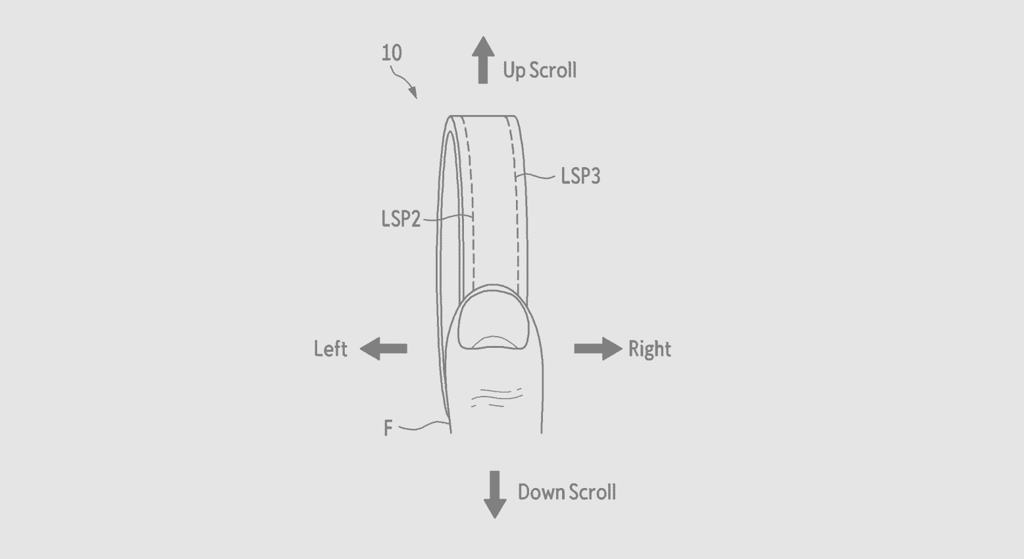
Fitting a curved display, gesture controls, biometric sensors, and enough battery life into a small ring would be a big engineering challenge.
The bigger question is whether people want smart rings to become mini smartwatches. But uncertainty around demand or design stagnation is often exactly what pushes companies to experiment.
As the market gets more crowded and competitive, Samsung may feel pressure to keep trying new ideas that go beyond the current smart ring design.
Whether it ever escapes the patent stage, of course, remains to be seen—but it’s certainly worth watching. We’ll keep you updated if Samsung develops this patent further.