Hume Band review: A new kind of health tracker?

- Entry-level price
- No mandatory subscription
- Distraction-free
- Actionable insights
- Battery life is not as advertised
- Only one design
Hume Health has always offered more affordable wellness and fitness trackers than many of its competitors. While the original Hume Band has now been discontinued and is no longer available to buy, the brand has replaced it with Hume Band 2.0.
Since the two devices are closely related—and the newer model launched at the same price—it’s still worth reading my testing-based review to see where Hume Health’s latest wearable came from and what the original got right (or wrong).
The main proposition is simple: let the band collect data to translate it into easy-to-understand health and fitness trends. Hume Health’s flagship metric—Metabolic Momentum—is promised to do just that and show how their habits may be influencing their overall wellness over time. It's an appealing idea for anyone just starting their fitness journey.
I wore the original Hume Band every day for several weeks, and the question I kept coming back to was: Does this device live up to its promises? Here's what I found.
| Feature | Hume Band 1.0 |
| Battery life | Up to 5 days claimed by the brand, up to 4 days in my testing |
| Water resistance | IP68-rated. Dustproof and water-resistant at depths up to 1 meter for 2 hours |
| Sensors | 5 LEDs and 4 photodiodes |
| Compatibility | Android and iOS |
| Display | Screenless |
| Subscription | Not required, the premium version of the app is $8.99 per month |
- Continue with our Hume Band 2.0 review
What is Hume Band?
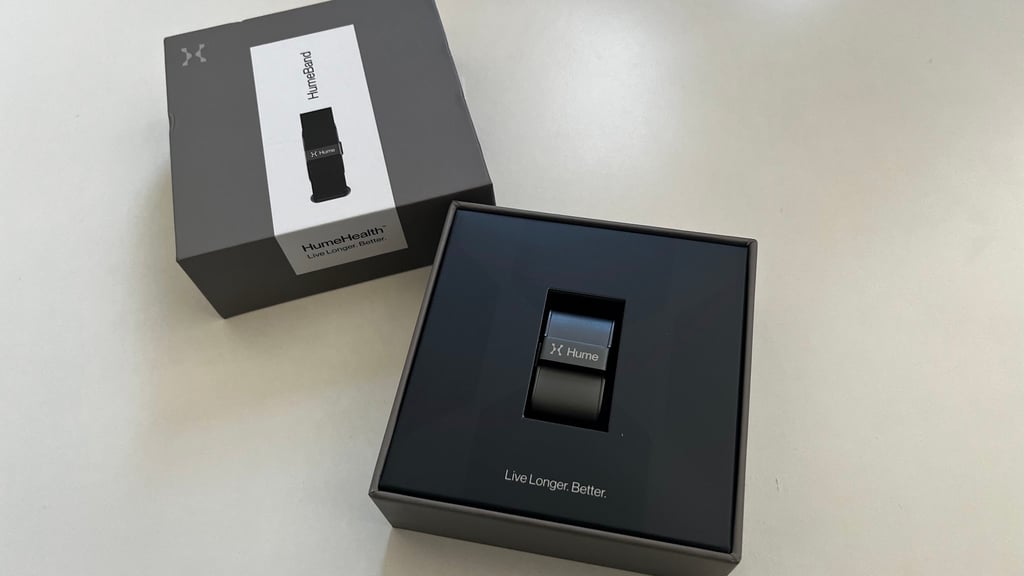
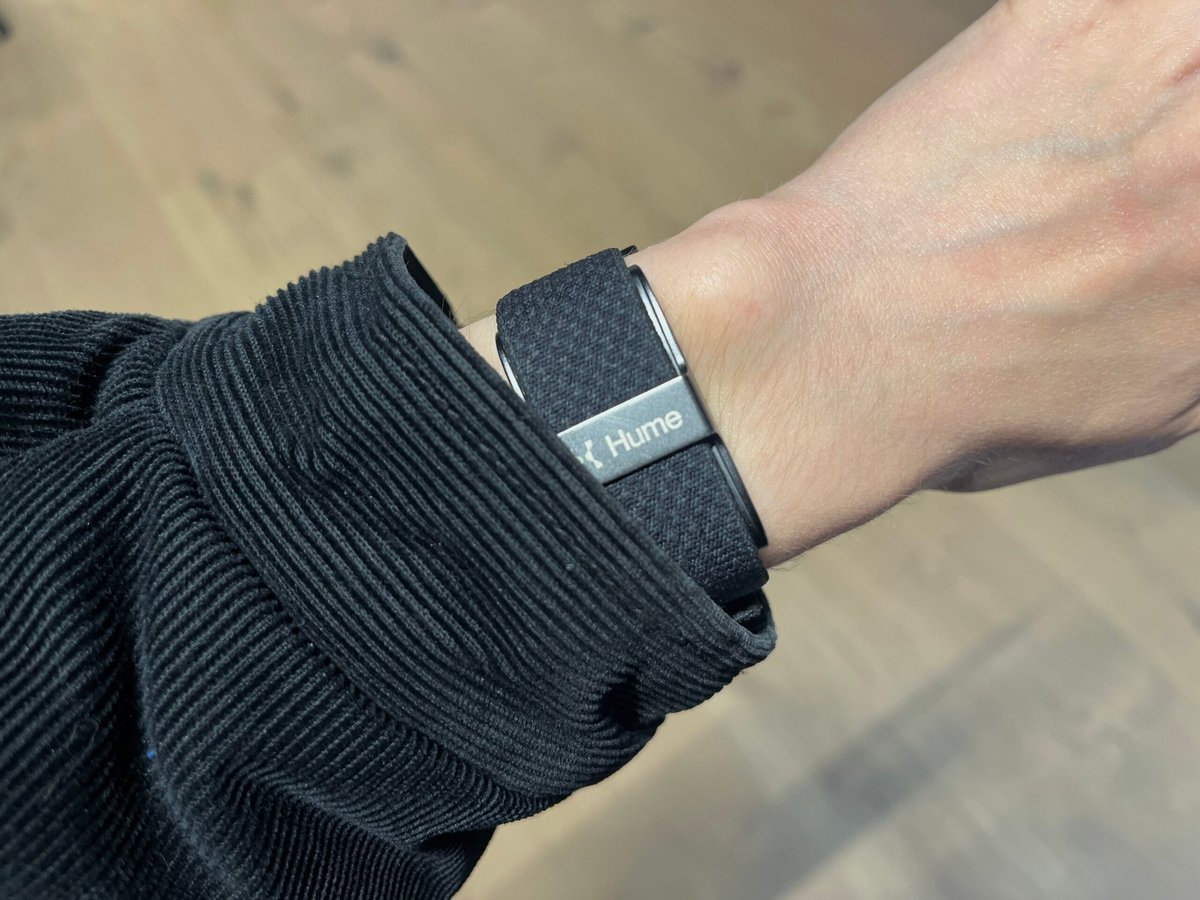
Hume Band is a screenless wrist-worn wellness trend trackers built by Hume Health. The original model was designed to continuously monitor a range of metrics: heart rate, heart rate variability (HRV), blood oxygen saturation, skin temperature, activity, and stress levels.
What set Hume Band apart was its focus. Rather than positioning itself as yet another fitness tracker, it leaned into longevity. It tries to help you understand what the collected data means and how to optimize your routine for your goals.
For instance, both models offer a Metabolic Momentum score, which may reflect either improvements or declines in your recovery, energy, and stress patterns over time.
Essentially, Hume Band aimed to help users assess how their daily habits may influence key wellness metrics over time. It strived to help you stay on the path toward better well-being, one day at a time.
Price, subscription, and availability
The device used to list $356.00 at retail. In comparison, the current discounted price for Hume Band 2.0 is reduced to $249.20.
At that price point, both models outshine most of the competitors. For instance, WHOOP requires an ongoing subscription (from $200.00 to $359.00 per year) just to be functional, and Oura Ring 5 starts at $399 but also lacks full functionality without a membership. With Hume Health's app, you can track your metrics, view trends, and get basic insights without any recurring fees.
This is not to say that Hume Band is totally subscription-free. For $8.99 per month, you can get the premium plan that offers deeper health trend analysis and “personalized longevity coaching”. During my testing, I didn’t feel like something was missing in the base app, so the premium subscription is an extra but not a necessity.
If you are looking for a cheaper alternative, however, Fitbit Charge 6 is probably the closest product. At $159.95, it has a lower upfront cost and can be used without any additional subscription—although Fitbit Premium is an option for $9.99 per month or $99.99 per year, and unlocks daily Readiness, advanced sleep tracking, and long-term data insights.
Design and comfort
The design of the original Hume Band was minimal but intentionally so—screenless, and aimed at a user who does not want an additional display with non-stop notifications.
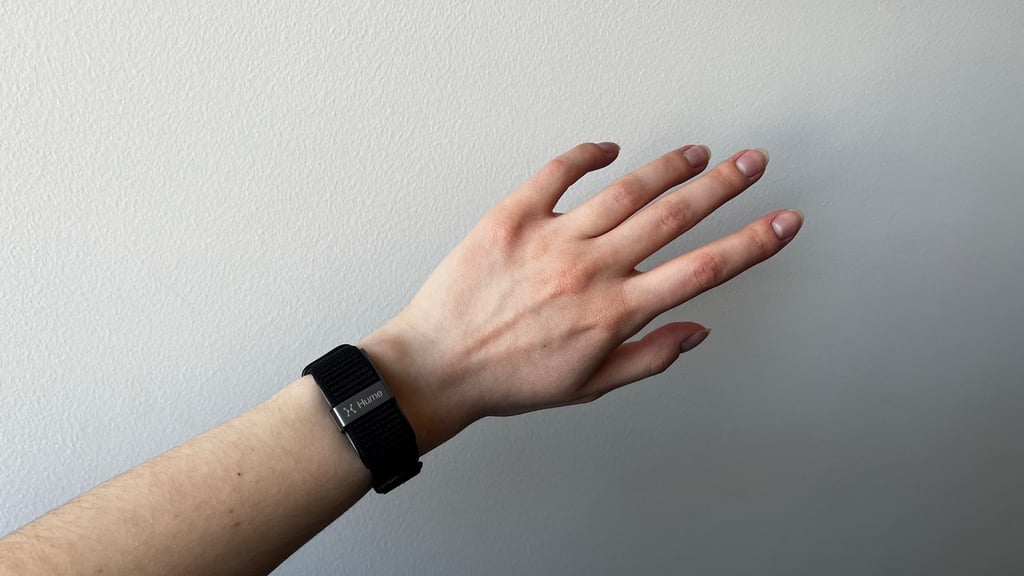
As back then, now Hume Health still doesn’t offer any color options, interchangeable straps, or premium finishes. Overall, Hume Band looked fine, but lacked personalization.
During my testing, I sometimes even forgot that I was wearing a fitness band: being lightweight, inconspicuous, and sitting on your wrist as a fashion accessory, you didn’t need to keep looking at it. I could sleep with it, shower with it (it's IP68 water-resistant), and work out without it getting in the way.
The only thing worth noting that is important for Hume Band owners, is that proper placement matters—if the band shifts too far from its optimal position on your wrist, the sensor readings can become less reliable. Also, during the month I was testing the original model, it once slipped off my wrist during the night, and I am not sure if I was moving a lot or just didn’t strap it properly. These quirks aside, I didn’t encounter any other issues in this regard.
Setup and app experience
Getting started was straightforward. I downloaded the Hume Health app, paired the band via Bluetooth, and it was running.
During the first days of use, I didn’t receive many insights, as the app claimed to be gathering data before it goes into wellness deeper. However, it did give access to the raw data from the get-go, including steps, heart rate, HRV, and body temperature.
Overall, Hume Health app displays its metrics in a clean and intuitive layout. I liked that the app offers practical advice instead of just presenting raw data. For instance, if your skin temperature is higher than typical, it may suggest taking a rest day. On days when your data suggests better recovery, it encourages you to push. In other words, it turns data into something practical—more like a wellness coach than a spreadsheet.
Hume Band can be linked with Apple Health, Google Fit, and Samsung Health, which is convenient as I prefer to see all my data on one platform. I've read some users report connectivity problems, but in my personal experience, that didn’t occur.
Health and fitness tracking features
What used to set Hume Band apart from other basic fitness trackers was its health monitoring features. Beyond heart rate and step counting, it continuously tracked HRV, blood oxygen, respiratory rate, and skin temperature—all of which feed into its recovery and readiness (Metabolic Capacity) scores.
The most standout metric for me was Metabolic Momentum. It’s intended to reflect whether your overall fitness trajectory is moving in the right direction based on your habits. Fascinatingly, I’ve noticed that periods of poor sleep or high stress dragged the score down, and it recovered when I got back on track.
While this is not shocking and makes sense, having it in one place made it feel more tangible. After all, the effects on our daily habits are impossible to measure day to day, and having this number helped to tweak my routine in a more favorable way. Focusing on recovery when needed felt more rewarding, which is something that was hard for me to do, as I would sometimes feel guilty just for taking a rest day.
Sports tracking
For activity tracking, I would say Hume Band was quite basic. The device monitored your daily step count, but not the distance. Moreover, it lacked a built-in altimeter, and consequently, you weren’t able to track elevation metrics, such as how many flights of stairs you have climbed.
Activity tracking with Hume Band was automatic. You could, however, prompt an activity mode through the app and pick from 6 activities, including running and weightlifting. That is way lower than some of the competitors, for example, WHOOP, which can monitor over 150 different activities.
The real value on the fitness side wasn’t in tracking individual workouts—it was in the strain and recovery data. Hume Band helped estimate how much physical stress your body is under and paired that with your recovery scores to suggest whether you should push harder or ease off.
During my testing period, I was also wearing my Apple Watch, and the tracked steps were pretty much in line. The Hume Band tended to read slightly higher on some days, but the gap never exceeded 1,000 steps—well within the margin I'd expect from any two trackers.
Where things got less reliable was automatic workout detection. In my experience, it didn’t always pick up all types of exercise, especially weightlifting.
Moreover, there was no built-in GPS. Hume Band was always more interested in what your body is doing internally than how far you ran.
Sleep tracking
Sleep tracking was one of the areas where Hume Band felt most at home, which makes sense given its claimed longevity-first positioning. The band tracked sleep duration and sleep stages (awake, light, REM, and deep).
In my testing, the data matched closely with what I would see from my Apple Watch data. Total sleep duration lined up closely, and sleep stage breakdowns were similar, though not identical, and Hume Band didn’t seem to accurately detect awakenings during the night as well as Apple Watch does.
Battery life and charging
The brand advertised that Hume Band could last 4–5 days on a single charge, but in my testing, I consistently got less than that. Most weeks, I was charging it every 2.5 to 3 days. This actually matches what many other users have reported, so it doesn't appear to be a one-off issue with my unit.
To be fair, the charging was rather fast—a full charge took up to 90 minutes. So the short battery life wasn’t catastrophic in terms of disruption, but quite annoying, especially if you're tracking sleep and the band dies overnight without warning.
There wasn’t a low-battery warning to save you from a missed night of data, which was frustrating for a device that positioned continuous monitoring as its core value.
However, since Hume Health has recently released the updated version of the band, Hume 2.0, the short battery life may not be an issue anymore: the new model should last up to 14 days on a single charge.
Smart features
Here's the short version: Hume Band didn’t have many. And depending on your perspective, that was either its strength or a weakness.
There was no screen, so there weren’t any notifications, no calls, no apps, no music controls, and no smart alarm. It didn’t try to be a smartwatch, but a dedicated wellness trend tracker that could do one thing—monitor your body.
I found it freeing to wear a device that didn't buzz, light up, or tempt me to check it every few minutes. But if you used an Apple Watch or a Garmin and you're used to glanceable information, quick replies, or even a basic clock face on your wrist, Hume Band felt stripped down.
Hume Band vs competitors
| Hume Band | Fitbit Charge 6 | WHOOP 5.0 | Oura Ring 5 | |
| Sleep tracking | Yes | Yes | Yes | Yes |
| Recovery insights | Yes | Yes, with the premium version | Yes | Yes |
| Display | No | Yes | No | No |
| Subscription | Not required | Not required | Yes | Not required, but extremely limited without it |
| Battery life | Advertised as 4–5 days, 2.5–3 days in my testing | Up to 7 days | Up to 14 | Up to 9 days |
| Body composition | Possible integration with Hume Pod | None | None | None |
Hume Band vs Fitbit Charge 6
Fitbit Charge 6 offers a screen, GPS, and ECG that Hume Band lacked. It's a more versatile tracker for everyday fitness use, but it can’t compare to recovery insights and longevity-focused metrics Hume Band offered.
Hume Band vs WHOOP 5.0
Both are screenless and recovery-focused, but pricing plans are where they differ the most. WHOOP requires an ongoing subscription to access anything at all. Hume Health offers a one-time purchase, and the premium subscription is not required.
Hume Band vs Oura Ring
The biggest difference is form factor: ring versus a wristband. Oura Ring is more discreet and can be called a fashion statement, while Hume Band—more practical. Both offer similar wellness metrics with optional premium tiers. Hume Band provided more functionality on its free app, while Oura wins on design.
Other health trackers reviews:
Hume Band 2.0: Discover the updated version of Hume Band
Best fitness trackers: Our top choices for this year
Best budget smartwatches: Tested and picked by our team
My Hume Band experience verdict
Hume Band occupied an interesting spot in the health tracker market. It wasn’t trying to outperform devices in terms of data depth. Instead, it claimed to offer a middle ground: continuous health trend monitoring with a focus on long-term wellness. On top of that, it didn’t require an ongoing subscription like some rivals.
In my book, the original Hume Band will always stay as a solid wellness tracker that was fun to test. If after reading my review you feel the same, you may want to check out Hume Band 2.0. It’s also a suitable option for someone who is just starting their fitness journey and who does not want to overwhelm themselves with an excessive amount of data, like with WHOOP.
Moreover, it is a great device for those who have not had a fitness tracker before: to get used to wearing one, to learn what insights it can offer and what they mean, and in general, to test the waters out before jumping into committing to a pricier purchase.