- Comfortable to wear all day long.
- You don't need to set aside time for meditation
- You can run sessions without keeping your phone connected
- 30-day money-back guarantee
- Subscription costs apply after the first year
- Results are difficult to measure objectively
- Some people may find the vibrations distracting
I have already compared Apollo Neuro against Pulsetto Lite and Sensate to see which wearable delivers the best overall experience. After spending so much time with Apollo, I realized it deserved a full review of its own.
| Product name | Apollo Neuro |
| Price | $349.00 |
| Verdict | Best for |
| Rating | 4.1/5 |
| Key specs | 7 vibration modes Adjustable vibration strength Scheduled automatic sessions Wrist or ankle wear design |
Instead of tracking your body like a smartwatch or fitness band, Apollo Neuro claims to support it through gentle vibrations designed to promote relaxation, recovery, and better sleep.
As I admitted in my previous comparison reviews, I was skeptical about any device meant to help you relax. However, after using it consistently during work, stressful situations, or right before bed, I began to shift my opinion.
In this review, I’ll talk about my experience with Apollo Neuro, including how comfortable and easy it is to use each day and whether it’s actually worth the hype.
Apollo Neuro explained
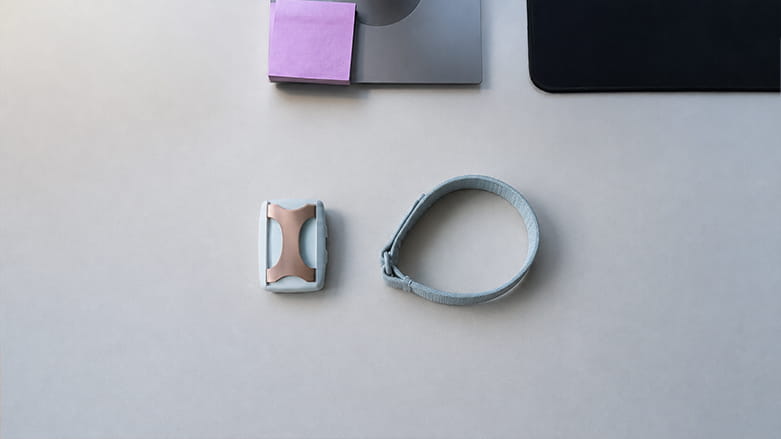
Unlike Pulsetto, which uses electrical pulses to stimulate the vagus nerve directly, Apollo Neuro relies on gentle vibration patterns. The company says certain rhythms may help your body shift from ‘fight-or-flight’ mode to relaxation.
You wear the device on your wrist or ankle, connect it to the app, and choose a program based on your needs, whether it's focus, recovery, relaxation, or sleep. A quick note—as we discussed in the Pulsetto vs. Apollo Neuro comparison article—wearing the device on your ankle can feel almost like house arrest. It might not be pleasant when you're out or at work.
Beyond that, Apollo Neuro is backed by more research than its competitors. According to the company, it has completed 17 clinical trials and published five studies, with one recent study reporting improvements in well-being and burnout scores among students.
That said, much of the research has been funded or supported by the company. While that doesn't discredit the findings, I'd like to see independent studies before making stronger claims about its effectiveness.
My first thoughts about Apollo Neuro
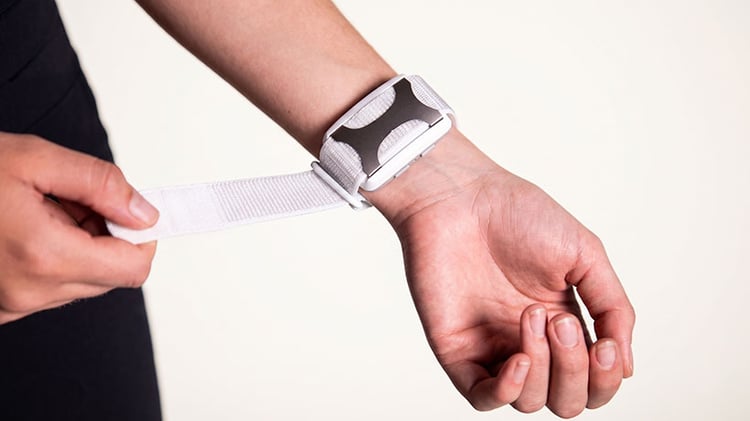
When you first receive Apollo Neuro, the package includes the wearable, an adjustable band, a clip, and a charging cable. The only thing left is to connect it to the app, which is simple. After downloading it, you create an account and pair the device. Then, you can start using it.
Wearing the Apollo Neuro band feels very similar to wearing a smartwatch. The main difference is that it delivers subtle vibrations throughout the day.
For some, that steady vibration on the wrist might take a while to get used to, but the intensity can be adjusted if it feels distracting at first. The cherry on top is that you can start sessions directly from the device once it's on, without needing to stay connected to the app the whole time.
Modes you can choose on the app
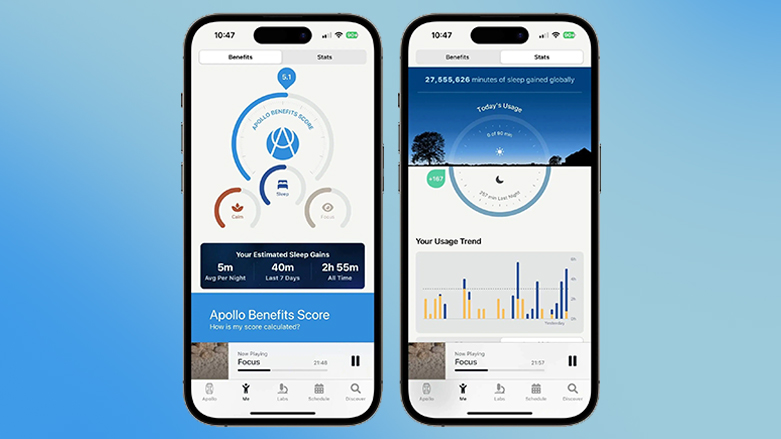
Apollo Neuro offers seven unique vibration modes, and each one is crafted to potentially help you handle different situations with ease:
- Energy: faster vibration patterns designed to potentially boost mood in the morning.
- Social: aims to lift mood and help you feel more open and engaged in social situations.
- Focus: may help reduce mental noise and support concentration during work or study.
- Recover: designed to potentially support the body and mind in recovering from stress and strain.
- Calm: encourages a relaxed state, helping prepare you for meditation or quiet time.
- Unwind: slow, soothing vibrations intended to ease everyday tension.
- Sleep: may help quiet a busy or racing mind to support deeper, more restful sleep.
According to the company, those seven modes make the biggest impact when used daily—around three hours a day, at least five days per week. The good part is that you don't need to constantly think about which mode to use. You can set a daily schedule in the app, and the device will automatically start the selected modes at the times you choose.
My daily experience with Apollo Neuro
Over a few weeks, I gradually tried out the different modes to see which ones helped me most and whether the wearable could fit into my busy schedule.
Week 1–2: Adjusting to the vibrations
Apollo lets you change the vibration intensity, and I quickly found that setting it to 90–100% was too much for me. At that strength, it felt more distracting than relaxing.
After some trial and error, I found that 30–40% intensity was just right. The vibrations were strong enough to notice but gentle enough to ignore once I focused on other things. That seems to be how Apollo is meant to work.
Week 3–4: Becoming part of my routine
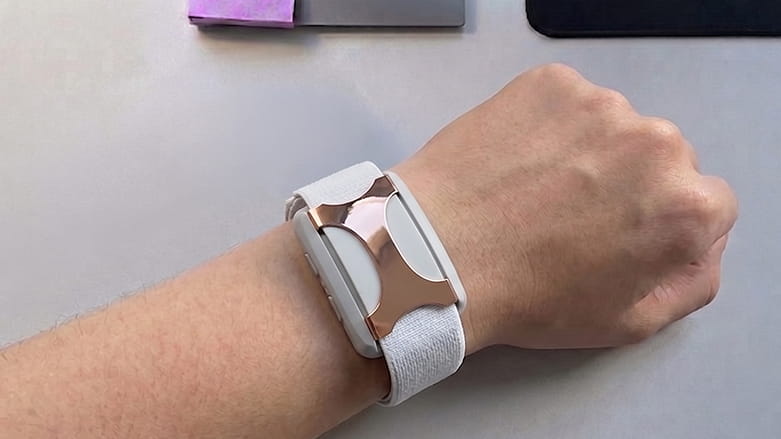
By the third week, Apollo Neuro had naturally become part of my day. If I woke up tired, I’d start with Energy mode for around 30 minutes. During work, I’d switch to Focus when my attention drifted.
After a hard gym session, I’d use Recover, and if the day was stressful, Unwind became my go-to in the evening. Just before bed, I'd usually let Sleep mode run for about an hour.
That was my typical day with the device. Sometimes when I was out, I would turn on Social mode, but that happened rarely, as I usually have the energy to interact with people.
That said, I don’t recommend strictly following my schedule; rather, I recommend discovering what works best for you. Not everyone will need an Unwind session at the end of the day or a Focus one because doing tasks during the day doesn’t have to feel exhausting.
Week 5–8: Long-term use
After nearly two months, I felt I had a good understanding of what Apollo Neuro can and can't do. I noticed my sleep quality seemed slightly better.
As for stress, I can't say I suddenly felt calmer or less anxious throughout the day. Maybe the effects are subtle or different for everyone. Considering this, I strongly suggest trying Apollo Neuro or other devices that may aid relaxation, since you never know—it might prove useful for you.
Does Apollo Neuro work?
This is probably the question most people care about, and unfortunately, it is also the hardest to answer.
According to Apollo Neuro, users experience up to 40% less stress and anxiety, 25% better focus and concentration, and as much as 60 additional minutes of deep sleep per night. Those are impressive claims, but I can't honestly say whether my results matched those numbers.
It’s hard to measure stress, focus, and sleep improvements, unlike step counts or heart rate. What I noticed was that the effects were subtle. I didn’t suddenly become more productive or feel much less stressed after using Apollo Neuro.
However, after using it for a few weeks, I noticed my sleep quality got a bit better. I’m not sure if I actually got more deep sleep, but I usually woke up feeling more rested when I used the Sleep mode.
I also can’t deny the possibility of a placebo effect. When you pay closer attention to your well-being and actively try to improve your habits, it is difficult to separate the impact of the device from the impact of the routine itself.
How much does it cost?
Apollo Neuro costs $349.00, which is not the cheapest option on the market. However, the price includes full access to the app for the first year. Since the subscription costs $99.00 annually, that is a nice bonus.
Moreover, the company also offers a 30-day money-back guarantee, and if something goes wrong, you're covered by a one-year warranty.
Although it is priced like a premium wellness gadget, it sits in the middle compared to its rivals. For example, Sensate starts at $289.00 or $299.00 with a one-year Sensate Plus membership included.
Pulsetto looks cheaper at first, about $278.00 with discounts, but the subscription changes things. After a 7-day trial, premium features cost $99.99 per year or $39.99 per quarter. When you add that up, the total cost can end up even higher than Apollo Neuro.
When you compare all three side by side, Apollo Neuro's pricing starts to feel much more reasonable.
Apollo Neuro vs. alternatives
After testing Apollo Neuro alongside Pulsetto and Sensate, I came to the conclusion that they aren't competing for the same person. While all three support stress management and well-being, they do so in very different ways.
Pulsetto is the most direct. It uses electrical pulses on the neck to stimulate the vagus nerve rather than vibrations. Some people prefer this because the sessions are shorter and feel more active. However, electrical stimulation isn't suitable for everyone and requires more precautions.
Then we have Sensate, which is more similar to Apollo Neuro. Both use vibrations instead of electrical pulses, but the experience is different. Sensate is made for focused relaxation sessions. You wear headphones, listen to calming sounds, slow down, and spend 20–30 minutes on yourself.
Apollo Neuro is more flexible. It doesn’t require you to stop what you’re doing—it just fits into your day. You can wear it while working, commuting, exercising, or relaxing at home. For me, that’s its biggest strength.
In the end, each device offers something unique, so the best choice depends on what you prefer and your budget.
- Check out our full Pulsetto vs. Apollo comparison
- Check out our full Apollo Neuro vs. Sensate comparison
Who should avoid Apollo Neuro
Because Apollo Neuro uses low-frequency vibrations, it’s considered a generally safe wearable. However, for some people, we would recommend using it with caution or consulting a healthcare provider before use:
- People with skin irritation
- People with sensory sensitivities
- Underaged people
- Pregnant people
Verdict: Should you buy Apollo Neuro?
After several weeks of testing, I think Apollo Neuro succeeds at what it sets out to do, but only if you have realistic expectations. I never expected it to magically eliminate stress or transform my sleep overnight. That's probably why I came away with a positive impression.
The biggest advantage is how easy it is to use. Unlike meditation-focused devices that require you to stop what you're doing, Apollo fits into your day. You can wear it anywhere you go.
The app also deserves credit for offering plenty of customization and allowing the device to run sessions without constantly needing a phone connection.
That said, I'd recommend Apollo Neuro to people who struggle to find time for mindfulness exercises but still want to build relaxation into their routine. If you expect dramatic changes within a few days, I'd probably skip it.
References:
-
The American Journal of Medicine.