
The Apple Watch lineup is the best around, but it may not be right for everyone
If you’re an owner of one of the best iPhones, the Apple Watch is the undisputed best smartwatch available for you, offering unmatched integration with your iPhone, a vast app store, and powerful health features.
With the launch of the Apple Watch Ultra 3, Series 11, and SE 3, the 2025 lineup is stronger and more refined than ever. But Apple’s watches aren’t the only options to consider.
The Hume Band takes the crown as our top-ranked smartwatch alternative thanks to its simple yet durable design and strong focus on metabolism wellness. Plus, the market offers many more options you may want to explore—from sport-based wearables to premium hybrid watches.
Here at Wareable, our reviewers have tested every option on the market. Remember that you won’t find anything from Google, Samsung, or other Wear OS vendors here—they’re limited to Android phones and don’t work with Apple’s smartphones. For our top recommendations to pair with your iPhone, check out the options below.
At a glance: Best smartwatch alternatives for iPhone
- Best overall smartwatch alternative: Hume Band
- Most feature-packed sports smartwatch: WHOOP 5.0
- Best smartwatch in Apple’s lineup: Apple Watch Ultra 3
- Easiest integration for iPhone users: Apple Watch Series 11
- Most simplistic smartwatch: Apple Watch SE 3
📢 Limited Time Offer: Buy 1 Hume Band and Get 1 for free!
Hume Band
The best overall smartwatch
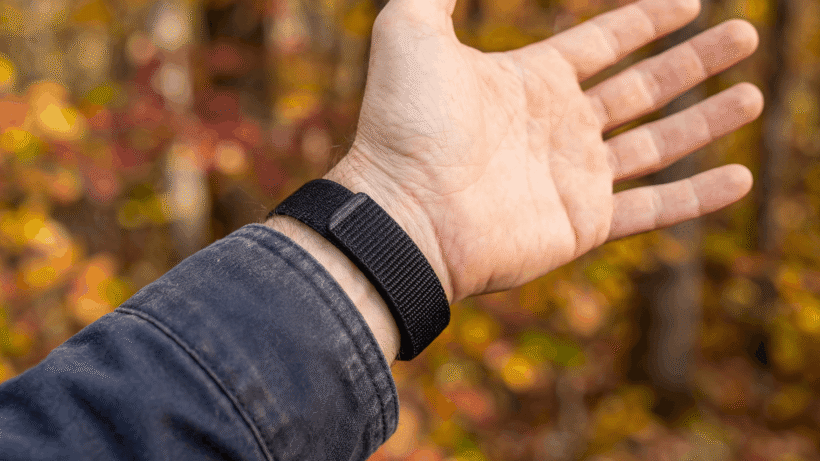
At its core, the Hume Band by HumeHealth is a minimalist-looking device with a strong set of health and fitness-tracking features.
When it comes to wellness monitoring, it’s definitely a solid option. It’s built with a focus on metabolism and recovery, tracking biometrics like heart rate, blood oxygen, skin temperature, daily activity levels, and more. Plus, the 4–5 day battery life fits pretty easily into your daily routine.
Rather than leaving you wondering what to do with all that raw data, the Hume Band translates it into broader estimates like metabolic rate, strain, and recovery status. Over time, it may help to get a clearer view of your overall well-being and change up your habits.
The Hume Health app, available on the App Store, is another amazing benefit. The app offers full functionality without any subscription. However, there is an option to get a membership for more insights into your trends.
The observations in the app are straightforward, with easy-to-understand graphs and interactive buttons. The system itself doesn’t send tens of daily notifications to your iPhone.
Other than technical aspects, the band design is also worth discussing. The Hume Band is modern, with no screen, buttons, or decorative elements to keep the focus on tracking. The SuperKnit material is very soft, stretchable, and surprisingly water-resistant. This comfort-first approach motivates consistent use—all for just $249.
We found it refreshing that the Hume Band doesn’t try to replace a full-feature smartwatch. Instead, it offers an experience centered on health and fitness for you to adjust your lifestyle, which is exactly what we look for in a smartwatch.
| PROS: | CONS: |
|---|---|
| Blends technology with a holistic wellness approach | Suited only for health and fitness tracking |
| Comfortable, lightweight, and durable band | Needs proper fit to work |
| Free companion app, with completely optional subscription | Limited style options |
WHOOP 5.0
Most feature-packed sports smartwatch
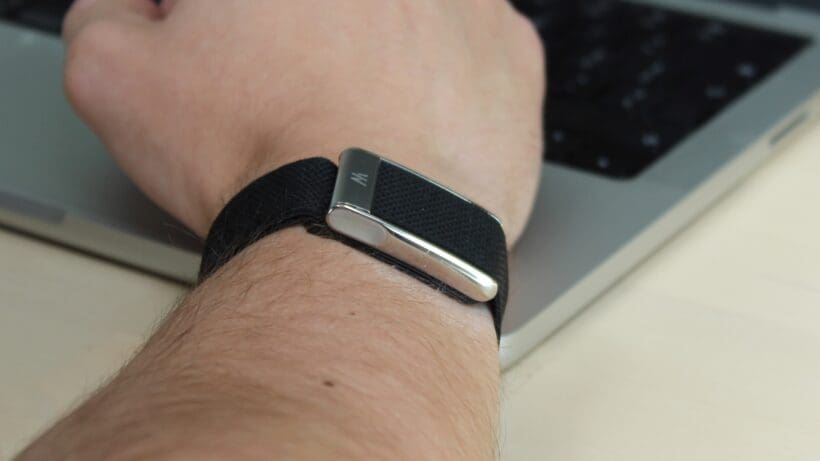
If you’d like a screenless wearable with a performance-first mindset, we recommend checking out the WHOOP 5.0. This smartband is built for people who take their health, fitness, and recovery seriously.
When it comes to fitness, we believe it’s a total powerhouse. This all-rounder band continuously monitors metrics like heart rate, heart rate variability, skin temperature, respiratory rate, and more to turn that into 3 daily scores: Strain, Recovery, and Sleep. Instead of being overwhelming, it feels more like a game.
The WHOOP app is not just a big part of the experience—it’s needed for full functionality. It’s detailed and color-coded, offers AI-driven coaching, and helps you track trends in your workout routine. There’s also a community-building feature, which really motivates you to keep working toward your goals. Sadly, it requires a subscription ranging from $199 to $360 per year.
That said, don’t write the WHOOP 5.0 off just yet. With more than 14 days of battery life and over 20 band designs, the wearable brings a solid feature set. The design is compact, lightweight, and completely screenless, just like the Hume Band.
One really standout aspect is how the band can be worn. With the WHOOP Body garments and clip accessories, you’re not limited to wearing it on your wrist but also your thigh, waist, or upper arm.
In short, the WHOOP 5.0 heavily leans into data and performance tracking. We’d say it’s best suited for those who value engaging and detailed insights, and are in need of a more structured way to track their workouts.
- Check out our WHOOP 5.0 review
| PROS: | CONS: |
|---|---|
| Wide range of customization for the band | Needs ongoing app subscription to use the device |
| Data-driven fitness tracking is engaging | Only focuses on fitness and health tracking |
| Long battery life | App can take time to get used to |
Apple Watch Ultra 3
Best overall smartwatch in the Apple lineup
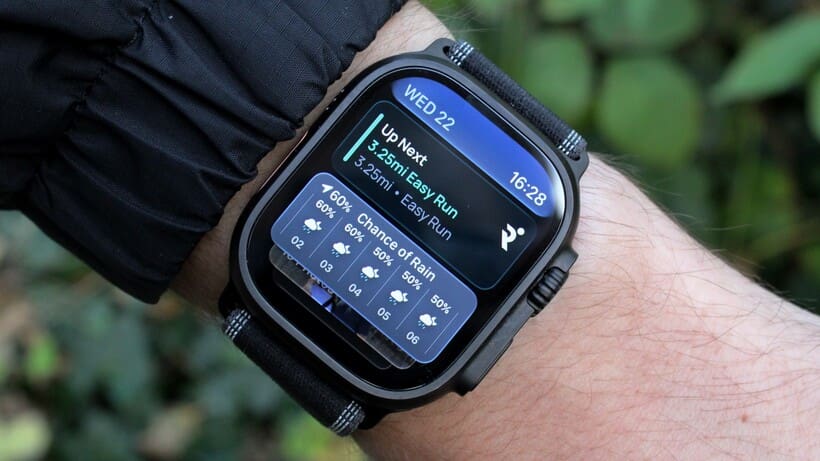
The Apple Watch Ultra 3 is, simply put, the most capable and complete smartwatch an iPhone user can buy from the Apple lineup.
It takes the unparalleled ecosystem integration of the Series 11 and fixes the one long-standing complaint: battery life. This is the pinnacle device, designed for those who want every feature without compromise. Its 2–3 day battery life fundamentally changes how you use the watch, freeing you from the daily charging anxiety and making robust sleep tracking a seamless reality.
This power is built on the foundation of watchOS 26, which integrates flawlessly with your iPhone. Apps, notifications, and data flow perfectly between devices. You can action iMessages, use Apple Pay, control your HomeKit devices, and stream your Apple Music (or Spotify) library directly from your wrist, all with zero friction. The new, larger display (with 5% more screen area) enhances this, giving apps and complications more breathing room.
As for fitness—it combines best-in-class dual-frequency GPS with the most reliable wrist-based heart rate sensor we’ve ever tested, ensuring your data is rock-solid. While its native analysis tools still trail Garmin, the App Store fills the gap with powerful third-party apps like Strava, Runna, and TrainingPeaks that sync perfectly with Apple Health.
The addition of satellite connectivity for off-grid safety also makes it a true adventure-ready extension of your iPhone, justifying its premium starting price of $799 for those who demand the absolute best.
- Check out our full Apple Watch Ultra 3 review
| PROS: | CONS: |
|---|---|
| Larger, brighter display is a superb upgrade | Not an essential upgrade unless you crave satellite features |
| Outstanding GPS and heart rate accuracy | Training analysis is still basic compared to rivals |
| Satellite features are accessible and work smoothly | Battery life changes aren’t transformative |
Apple Watch Series 11
The easiest fit for most iPhone owners
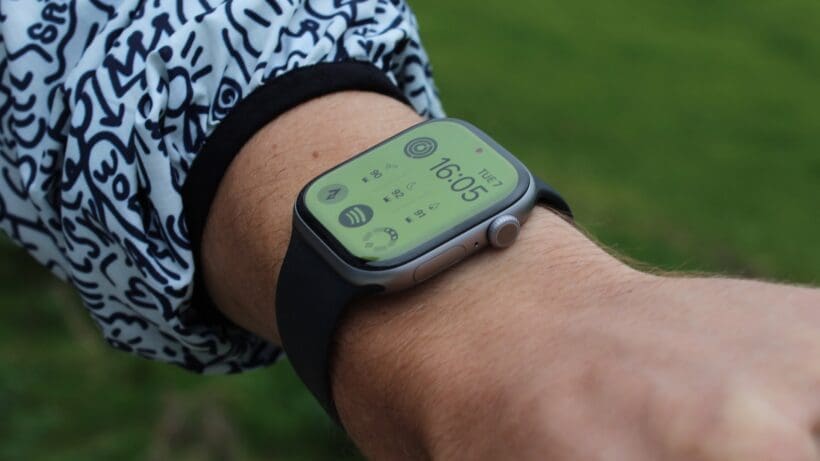
The Apple Watch Series 11 is the quintessential smartwatch for most iPhone users, offering the most polished, integrated, and seamless experience on the market.
Its core strength isn’t just one feature, but the frictionless cross-pollination with the iPhone. Notifications are perfectly mirrored and actionable; you can triage iMessages, check your calendar, and see map directions that are automatically handed off from your phone. It’s less a separate device and more a seamless extension of your phone’s screen.
This year’s watchOS 26 update enhances this with a fluid Liquid Glass design and smarter, AI-powered widgets that surface information when you need it. The new scratch-resistant glass on the aluminum models also adds welcome, practical durability.
For your health, it’s a powerful guardian, effortlessly syncing all its data into the Apple Health app on your iPhone. New features like passive hypertension notifications and a native Sleep Score join the already formidable suite of ECG, SpO2, and sleep apnea alerts.
While it lacks the Ultra’s dual-band GPS, its core tracking accuracy is still excellent for most users. The only trade-off is the familiar one: this is a daily charge device, offering around 25–30 hours of use. It’s a compromise you make to get this unmatched, unified software experience for $399.
- Check out our full Apple Watch Series 11 review
| PROS: | CONS: |
|---|---|
| More scratch-resistant display | Still not true multi-day battery life |
| Excellent GPS and HR accuracy | Lacks dual-frequency GNSS |
| watchOS 26 is polished and seamless | No reason to upgrade for recent buyers |
Apple Watch SE 3
The most simplistic smartwatch for newbies and those on a budget
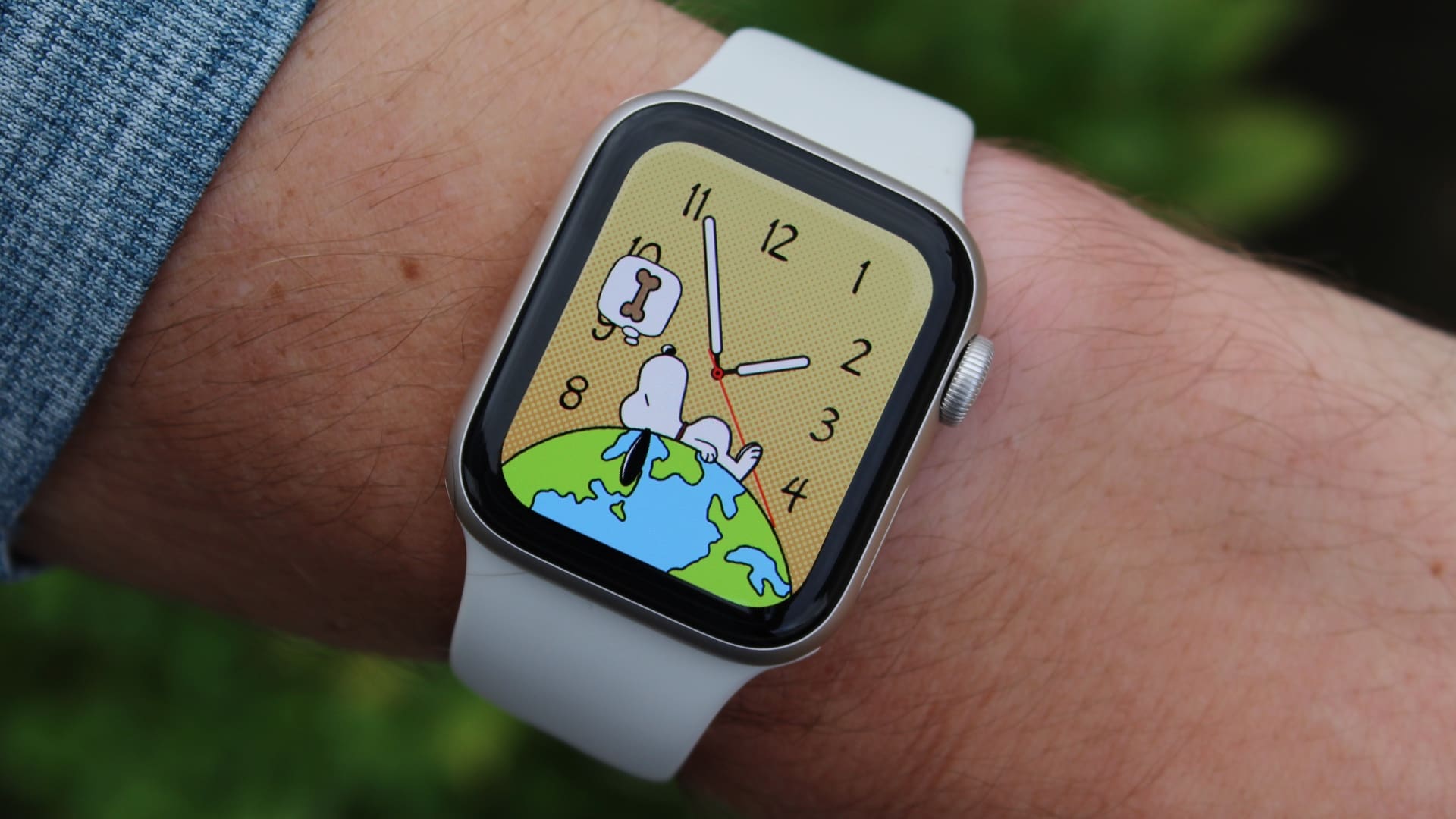
The Apple Watch SE 3 is the best option for iPhone users working on a tighter budget, seeking a smartwatch suitable for kids, or new to smartwatches altogether.
The package is still comprehensive for the price of $249, and the S10 chip—the same one used in the Series 11 and Ultra 3—ensures it can run the latest watchOS 26 software smoothly (and should be able to host updates for the next 3–5 years, at least).
The hardware compromises are obvious. You sacrifice the thinner design, edge-to-edge screen, and the very best health and fitness sensors (and the features they enable).
However, you still get all the incredible sports-tracking and activity-monitoring features of the more expensive Apple Watch models, along with all the benefits of the App Store. This helps elevate the device above its competitors.
- Check out our full Apple Watch SE 3 review
| PROS: | CONS: |
|---|---|
| S10 chip means no performance compromises | Dated design with large bezels |
| Excellent GPS and heart rate accuracy | Single-day battery life |
| Superb value for the price | Lacks key health sensors |
Garmin Venu 3 series
The best alternative to Apple Watch Series smartwatches
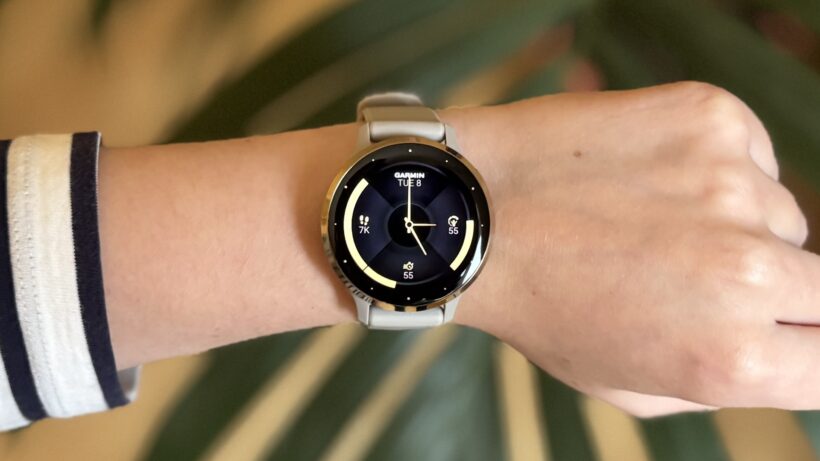
The Garmin Venu 3 is a direct rival to the Apple Watch Series lineup, specifically targeting sports and health enthusiasts. It’s a serious alternative to the mid-range Apple Watch model.
It’s available in two sizes (45mm and 41mm) with options for varied colors and features, including the Sleep Coach and an automatic nap detection mechanism, which personalizes sleep requirements based on numerous metrics.
At its core, the Venu 3 is two things: a sporty fitness tracker and a wellness smartwatch.
Considering it’s a Garmin, it produces quite low-level data for running and cycling, but there are neat insights for activities like HIIT and golf (with 40,000 courses built in). Note that Garmin has omitted its top-tier Multi-Band mode here; however, there is room for some enhanced GNSS functionality, as well as its current-generation Elevate V5 heart rate sensor.
In-depth metrics include the sleep coaching feature, Morning Report, HRV Status, Body Battery, stress tracking, respiration rate, and heart rate, making it a very considered, holistic wearable. It also includes an ECG feature to spot-check heart rhythms for atrial fibrillation (AFib).
Battery life (for the 45mm model) also stretches to 10–14 days, far surpassing what the Apple Watch is capable of, though that shrinks considerably for the smaller Venu 3S (shown above).
For all that, it’s no surprise it’s also expensive—$449.99. If that’s too rich for your taste, the Vivoactive 6 (released in early 2025) is also an option for a fraction of the price.
- Check out our full Garmin Venu 3 review
| PROS: | CONS: |
|---|---|
| Wellness features finally feel useful | Really pricey |
| Top HR accuracy | Sports tracking offers basic metrics only |
| Lovely screen | Some sleep accuracy niggles |
Huawei Watch Fit 4
Our top-rated budget Apple Watch alternative
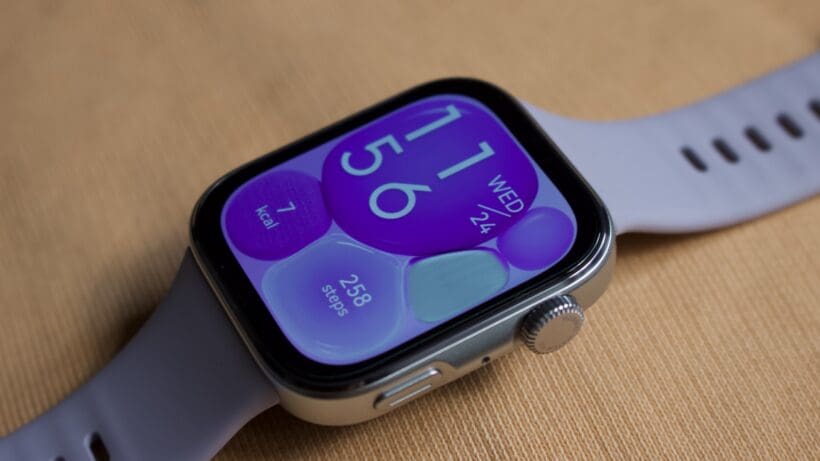
The Huawei Watch Fit 4 is the ideal choice for an iPhone user who loves the Apple Watch aesthetic but is frustrated by the high price and single-day battery life. For the price, it’s a triumph of value, offering a premium, thin aluminum design and a stunningly bright AMOLED display that looks far more expensive than it is.
It’s a fantastic alternative for two key reasons: battery life and sports tracking. Where the Series 11 needs charging daily, the Watch Fit 4 lasts comfortably 4–7 days with typical use. And while it costs less than an Apple Watch SE, it includes high-end sports features like accurate dual-frequency GPS and offline mapping—features Apple reserves for its most expensive Ultra 3.
So, what’s the catch for an iPhone user? Integration. The Watch Fit 4 pairs with your iPhone and syncs data to the Huawei Health app (which can, in turn, share it with Apple Health), but that’s where it stops. You will see notifications, but you can’t reply to iMessages.
There’s also no Apple Pay, no access to the Apple App Store, and no deep integration with Apple services like Music or Maps. It’s a stylish, long-lasting fitness tracker that looks like a premium smartwatch, making it a superb proposition if you’re willing to sacrifice that deep ecosystem connection. It’s also not officially available in the US, so scan further down this list for another budget pick if this one is hard to find.
- Check out our full Huawei Watch Fit 4 review
| PROS: | CONS: |
|---|---|
| Premium-feeling design and bright display | Very limited smart features |
| Excellent battery life | Huawei Health app can be cluttered |
| Impressive sports tracking | No official availability in the US |
Garmin Fenix 8
Best outdoor sports watch alternative
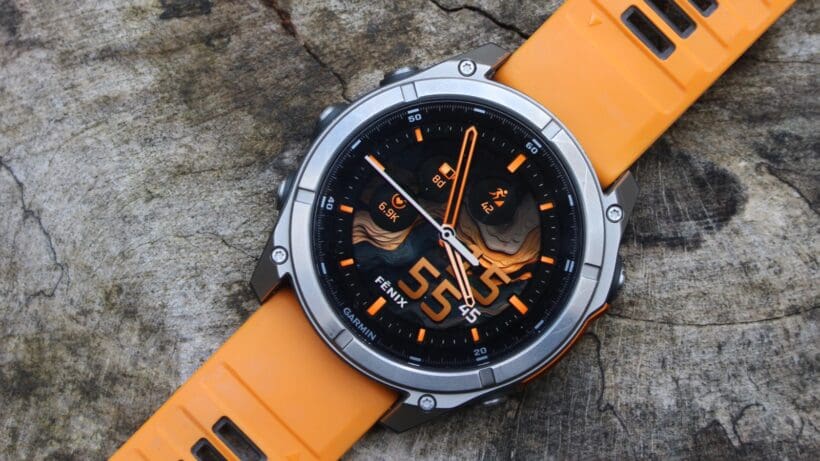
The Garmin Fenix 8 is the latest generation of the popular sports watch range. It brings the best of the brand’s tracking technology and rugged design specs into one premium package of $1,199.99.
The range comprises solar-powered and AMOLED editions, with the latter using the same display tech as the Apple Watch range. There are also multiple case size variations, display glass choices, and finishes to choose from.
The Fenix 8 is defined by its insane array of sports tracking modes, top-notch analytics, mapping on the wrist, training estimates, and recovery insights. It’s incredibly comprehensive and a superb fit for mega-active users—backed up by class-leading AMOLED battery efficiency.
Even with the always-on display enabled, the Fenix 8 consistently lasts seven days, and power-saving modes can help you stretch that to multiple weeks. In this regard, it’s in a different league from the Apple Watch and goes into another stratosphere if you choose the solar-powered model.
The only areas where the Fenix 8’s tracking falters slightly are in how it presents stress and the accuracy of its sleep assessments—but even Apple isn’t much better in this regard. It’s also limited as a smartwatch. You get support for integrations like Spotify, but there’s no LTE (unless you consider the Garmin Fenix 8 Pro edition) or full-fledged app store support.
But, in short, the Fenix 8 is the closest we’ve seen to a no-compromise sports watch—even if it comes with a price tag that can double that of rivals. As a cheaper alternative, don’t rule out the Garmin Fenix 7 Pro or Epix Pro, either—both of which you can now find great discounts on.
- Check out our Garmin Fenix 8 review
| PROS: | CONS: |
|---|---|
| Great AMOLED battery life | It’s a lot more expensive than the Fenix 7 Pro |
| Class-leading mapping and navigation support | Core performance not too dissimilar to previous Fenix |
| A more thoughtful approach to strength training | Heart rate tracking during exercise still not flawless |
Huawei Watch 5 series
A great alternative if you want a classic design
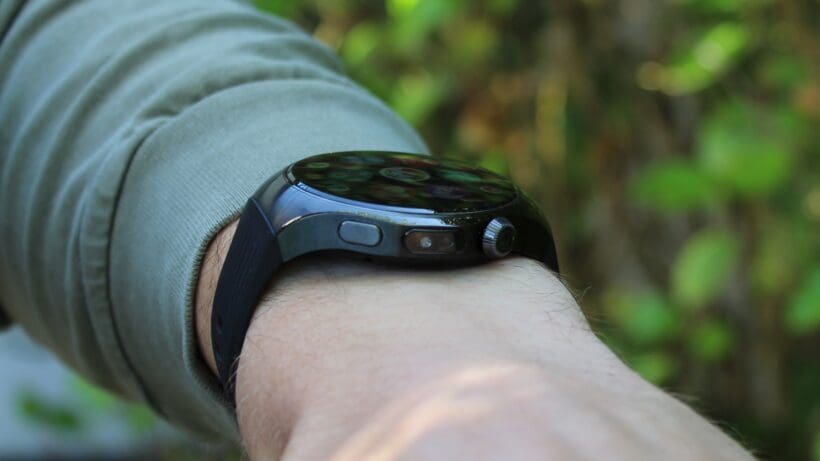
The Watch 5 offers an experience that rivals premium smartwatches like the Apple Watch Series 10. Unlike the brand’s sport-focused GT series, the Watch 5’s 42mm and 46mm designs are classic smartwatch ones, and refinements to the steel and titanium case options mean they’re among the best-designed smartwatches we’ve ever tested.
As ever, this flagship line is more focused on health innovations than anything else. In that sense, the Watch 5’s X-Tap sensor, located on the side of the case, offers the most intrigue for this generation. We found it slightly gimmicky in testing, but there’s no doubt that it’s an interesting application of dual-sensing technology—one that does provide better accuracy and speed for measurements than previous generations.
In typical completeness, the Watch 5 also boasts all of the premium sports features that debuted on last year’s GT line; these make it an excellent fit for golfers, divers, trail runners, and any user who craves thorough and accurate sports tracking.
Still, the lack of a robust ecosystem, particularly in areas such as apps and payments, is noticeable and remains a significant drawback compared to Apple Watch devices. It can’t be understated how you’re essentially getting a fitness tracker in a smartwatch body. Yet, the trade-off for that compromise is much-improved battery life. If you want 10+ days of battery, you’ll need to forego features like the always-on display, but we were able to consistently achieve 4–5 days in a very power-intensive setup.
- Read our Huawei Watch 5 review
| PROS: | CONS: |
|---|---|
| Premium design and build quality | Limited app ecosystem remains |
| Bright and crisp LTPO display | Not top-level workout HR accuracy |
| Superb AOD battery life | X-Tap sensor feels more novel than essential |
Garmin Venu X1
The only true Apple Watch Ultra alternative for iPhone
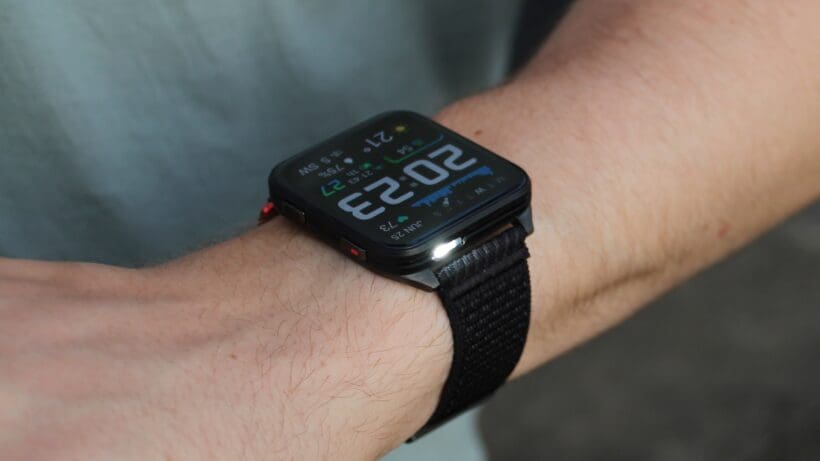
The Garmin Venu X1 is a stunningly designed alternative for iPhone users seeking more advanced insights than those found on the Ultra line. With its incredibly thin titanium case, lightweight feel, and a vibrant AMOLED display that rivals the Apple Watch, it’s a true statement piece for your wrist.
However, if you’re seeking an escape from the Apple Watch’s daily charging routine, the Venu X1 is not the answer. Its biggest compromise is a battery life of just two days with the always-on display active, placing it in the same charging bracket as its Cupertino rival.
So, why choose it? The appeal lies in gaining access to the superb Garmin platform. The Venu X1 offers significantly better sports tracking insights than the Apple Watch, with metrics such as Training Status, Body Battery, and Running Tolerance all joined by tried-and-tested native platforms for offline mapping and coaching. During our testing, its core GPS and heart rate accuracy proved to be outstanding.
At a premium price of $799, and with notable omissions such as an ECG sensor and Multi-Band GPS, the Venu X1 is far from perfect. However, if you’re an iPhone user drawn to Garmin’s fitness platform and find the brand’s Fenix and Forerunner designs too sporty, the Venu X1 is the middle ground option you’ve been waiting for.
- Check out our full Garmin Venu X1 review
| PROS: | CONS: |
|---|---|
| Incredibly thin, light, and comfortable design | Two-day AOD battery life |
| Core sports tracking accuracy is outstanding | No ECG or dual-frequency GPS |
| An LED flashlight—in this design! | No killer smart feature (like LTE) to differentiate it |
Withings ScanWatch 2
The best hybrid smartwatch for iPhone
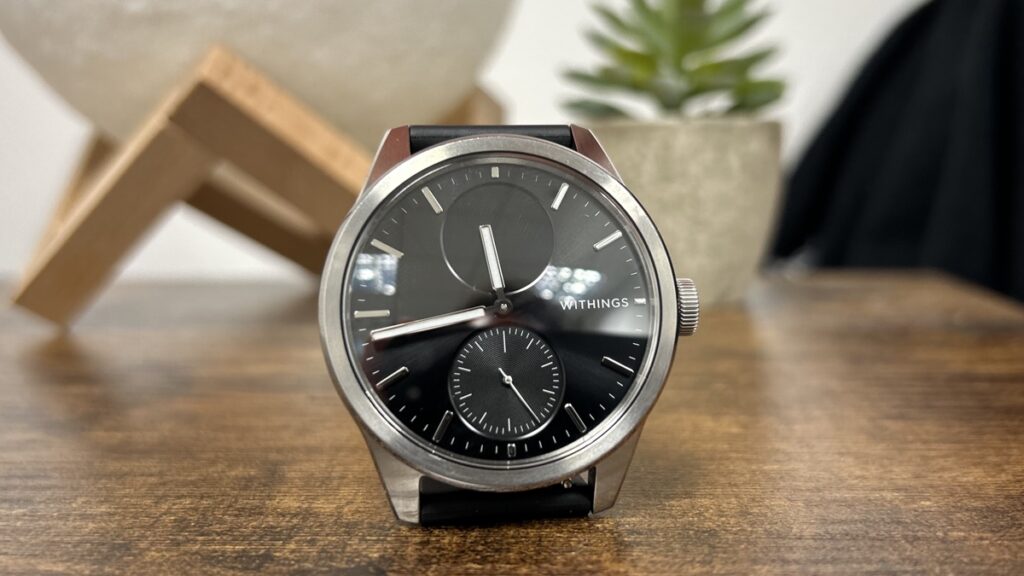
If your priorities lie with the advanced health-tracking capabilities, then the Withings ScanWatch 2 is your best bet.
It is an analog watch that hides its smart features away, allowing for seamless integration into your everyday style. Its pricing starts at $369.95 and can go up a few hundred dollars more depending on style. There is a small screen: a monochrome OLED panel with basic stats and notifications on the dial.
In terms of features, strong heart rate tracking, sleep monitoring, and ECG for detecting Afib round out a health-focused smartwatch. We achieved good accuracy and gained numerous insights during testing. Moreover, Withings ScanWatch 2 will look for breathing issues during sleep and may detect abnormal heart rates. It will also track workouts and even GPS if you take your phone along with you.
That said, we did find a few issues. Automatic workout detection is poor, and sleep accuracy lagged behind its competitors. And, of course, you don’t get things like payments or apps.
Yet, the up to 30-day battery life is also the antithesis of other smartwatches in the lineup. If you don’t want a computer on the wrist, the Withings ScanWatch 2 is a powerful and discreet health tracker.
- Check out our full Withings ScanWatch 2 review
| PROS: | CONS: |
|---|---|
| Premium-looking design | Insights slightly lagging |
| Top battery life | Sleep data is not the most reliable |
| Breathing and temperature data | Rogue workout detection |
Amazfit Active 2
A bonus budget-friendly smartwatch
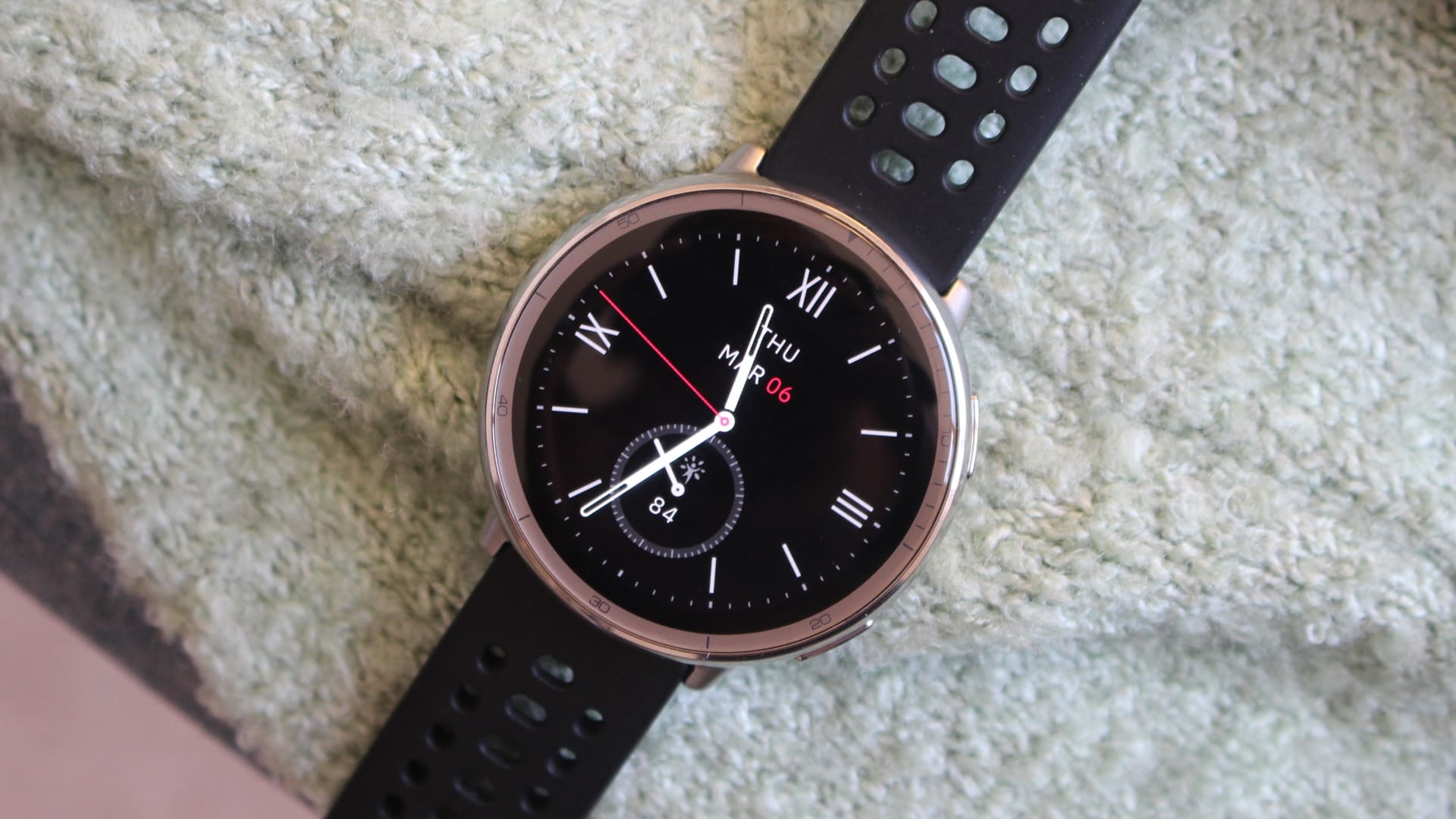
If cost is your main concern, Amazfit Active 2 is another excellent smartwatch to consider.
The brand also offers the Bip 6 for those who prefer a square-case design, but the Active 2 model’s price range of $79.99–$104.99 represents incredible value for money. It boasts full offline mapping, an AI-powered assistant, and plenty of workout insights.
We still had the odd issue with heart rate tracking accuracy during workouts, though you can pair external monitors to remedy this. The Active 2 also performs solidly in GPS-tracked outdoor workouts.
It lacks hardcore health observations, but elements like sleep tracking and readiness insights consistently match the likes of other competitors on the market. The Zepp Health app is also an ever-improving place to review your data.
The battery life has reduced for this generation, which is a bit of a shame, but it still provides solid performance. Even with the always-on display enabled (and with relatively heavy GPS usage), we found it could last four or five days before needing a recharge.
While not a looker, the Amazfit Active 2 is slim, lightweight, and comfortable despite a significant redesign for this second generation. Plus, the full AMOLED display offers good usability in a package that far surpasses the price.
- Check out our full Amazfit Active 2 review
| PROS: | CONS: |
|---|---|
| Large set of features for the price | The design isn’t very appealing to everybody |
| Full mapping and ability to pair external sensors | Software lagging is present |
| Smart features and fitness tracking work well | Heart rate accuracy is not the greatest |
Key considerations when choosing an iPhone-ready watch
1. Battery life
The Apple Watch’s most significant issue is battery life, and the brand generally only promises 18 hours between charges.
This estimate was bumped up by 24 hours for the Series 11, but our real-world testing (and the fine print of Apple’s specific requirements needed to meet this estimate) shows that it’s only a slight bump from previous models.
But it’s not as bad as it seems on paper. We’ve consistently achieved 25–30 hours per charge when testing the last few generations of Series devices, even under relatively heavy use. So, in short—and we go into much more detail on this in our full reviews—this shows that the updated Series 11 battery figures are really just Apple’s official estimation catching up with reality.
Still, you might be surprised to learn that it’s a relative outlier in this regard.
Most smartwatches offer a week or more between charges, which is a good reason to look into Apple’s smartwatch alternatives. Wearables like Hume Band can run for 4–5 days. Even more impressively, Withings ScanWatch 2 can last up to 30 days between charges.
2. Price
The Hume Band is currently priced at $249, and with a seasonal discount this sum may go down even more. Other alternatives vary in pricing depending on style or subscription model. The Amazfit Active 2 is the most affordable, ranging from $79.99 to $104.99, while the WHOOP 5.0 operates on membership, costing between $199 and $360 per year.
Pricing for Apple watches starts at $249 for the Apple Watch SE 3, and steps up slightly to $399 for the Series 11. With the Series line, you can also pay plenty more for LTE support and different case finishes. The Apple Watch Ultra 3 costs the most at $799.
3. Apps and iOS
The Apple Watch is one of the few smartwatches with a burgeoning App Store, and no rival in this aspect that will work with the iPhone.
By opting for an Apple Watch alternative, you might miss out on your favorite third-party services, such as Spotify, Google Maps, or your favorite workout-tracking app. That also extends to features like Apple Pay or LTE, which Apple does better than its rivals.
Keep in mind that screenless wearables like the Hume Band and the WHOOP 5.0 completely rely on their apps to show insights on the trends.
Which smartwatch alternative to choose for your iPhone?
Of course, the smartwatch you choose ultimately depends on your style, budget, and goals. The Apple smartwatch lineup remains a strong contender—particularly if you value simplicity and high compatibility.
That said, the Hume Band is currently our favorite tracking device. It’s easy to use, feels durable, doesn’t irritate the skin, and, best of all, has no annoying notifications. If you’re after a more data-driven fitness wearable, you might want to consider WHOOP 5.0. The ongoing subscription isn’t ideal, but the device offers great features and solid accuracy.
Don’t overlook the other smartwatches on the lineup either, as whichever you choose, it’ll be a companion you carry on your wrist for many years to come.