Apple Watch SE 3 review: Still the best choice for most

- S10 chip means no performance compromises
- Excellent GPS and heart rate accuracy
- Superb value for the price
- Dated design with large bezels
- Single-day battery life
- Lacks key health sensors
Apple Watch SE has quietly become one of Apple’s most important products across its entire spectrum.
The SE line has always had to perform a tricky balancing act: it needs to be compelling enough to be the default Apple Watch for the masses, yet not so good that it cannibalizes its more expensive sibling—in this case, Series 11. Well, with Apple Watch SE 3, the company has just about nailed that balance.
On the outside, this is a smartwatch you’ve seen before. The chassis is a time capsule from 2019, and its feature list omits the health sensors of its flagship counterpart.
But on the inside, it’s a different story. By giving the SE 3 the latest S10 chip—the same brain found in the top-tier Apple Watch Ultra 3—Apple has delivered a smooth, future-proof experience that compromises in the right places.
This isn't a watch for data-obsessed athletes or those who demand multi-day battery life. This is the watch for those just beginning their fitness journey, for kids and teenagers, or for the millions of iPhone users who simply want their notifications, Apple Pay, and phone-free music on the wrist. It's a gateway to the Apple Watch ecosystem, and, for the price, it's very hard to fault. Here's our full review.
Price and competition
At a starting price of around $249, SE 3 maintains its aggressive, entry-level price point, and this context is everything. This cost defines its entire purpose and value.
As with all Apple Watches, the most relevant competition is internal. The brand, as it has for years, is continuing its ‘good, better, best’ tiers through its 2025 releases.
SE 3 is the ‘good’, offering the core experience. For an extra $150, the ‘better’ Series 11 gives you a beautiful, modern design, an edge-to-edge always-on display, faster charging, and a more advanced health suite (ECG and SpO2). At the top, the ‘best’ Ultra 3 offers all that in a rugged, premium build that packs personality, better GPS tracking, and multi-day battery life (up to 36 hours).
Externally, SE 3 goes up against fitness-focused trackers like Huawei Watch Fit 4 and Garmin Forerunner 165. Those devices offer more in-depth training analysis and, crucially, don’t need to be charged every day. But they are fitness trackers, not smartwatches. Their app support is minimal, and their iPhone integration is basic at best.
SE 3’s key skill is that it is a ‘proper’ smartwatch. It delivers the seamless, second-screen experience of Apple’s services, a rich app store, flawless music controls, and deep iOS integration that no competitor at this price can even dream of.
Design and display: One crucial upgrade
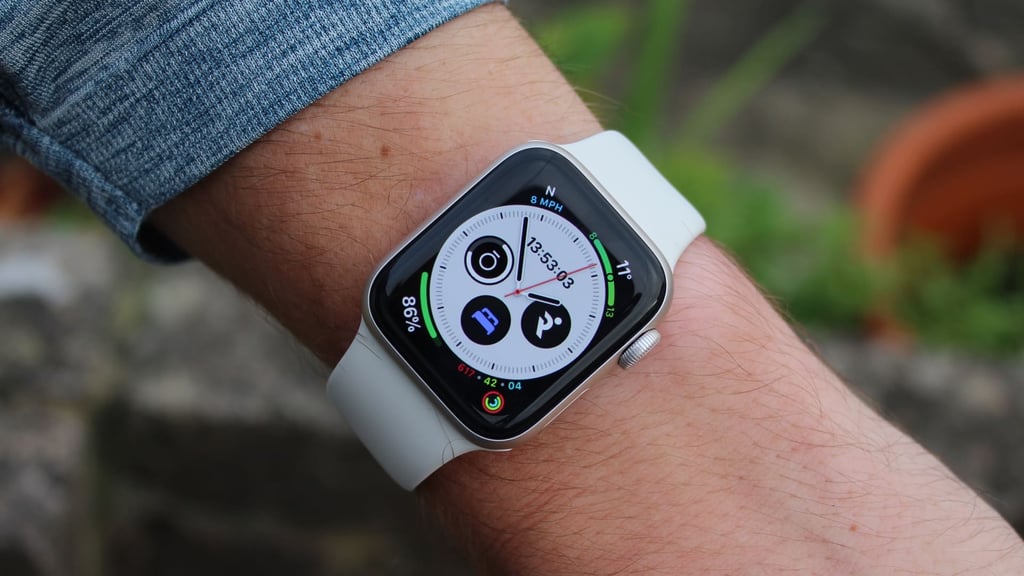
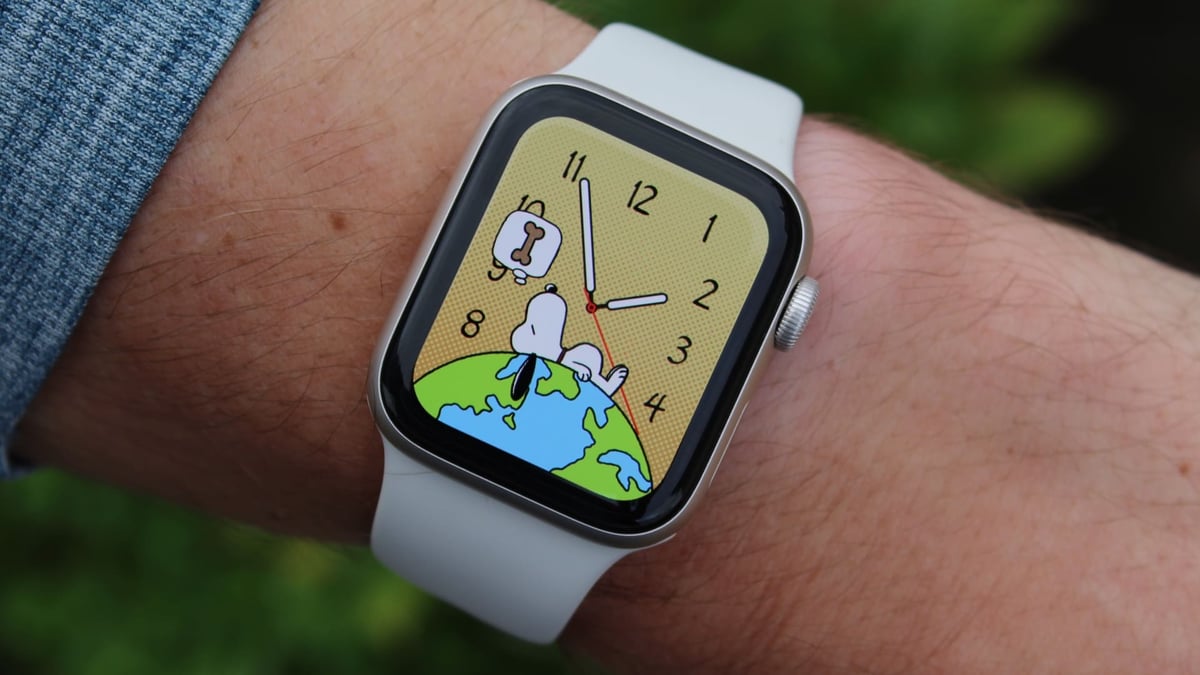
Let’s not mince words: this design is dated. In fact, dated is putting it kindly. This is, for all intents and purposes, the chassis of Apple Watch Series 4, which was first showcased back in the heady days of 2018. In an age of edge-to-edge, razor-thin bezels, the thick, chunky borders surrounding SE 3’s screen are jarring if you’ve ever consistently worn, like I have, any of Apple’s newer models. In truth, I couldn’t wait to put Ultra 3 back on.
But although it's not the most pleasing to look at by modern standards, you also can't escape the fact that it's still a design that performs in an impressively broad amount of use cases. Ultimately, it's one of the most iconic and proven designs in tech history for that very reason.
We tested the 40mm Starlight model, and, while a bit too dainty for my taste, it’s an ideal size for those with smaller wrists or anyone who finds modern flagship watches too large and obtrusive. It's neat, doesn't get caught on cuffs or sleeves, and disappears on the wrist during workouts or sleep.
Stayin' alive
The reason this old design—also used for SE 2—still feels acceptable in 2026 is the addition of one crucial feature: an always-on display (AOD). That makes it, essentially, a Series 5 on the outside—the first Apple Watch to come with the feature.
This is the single biggest functional upgrade from the previous edition, and it finally makes SE feel like a real smartwatch.
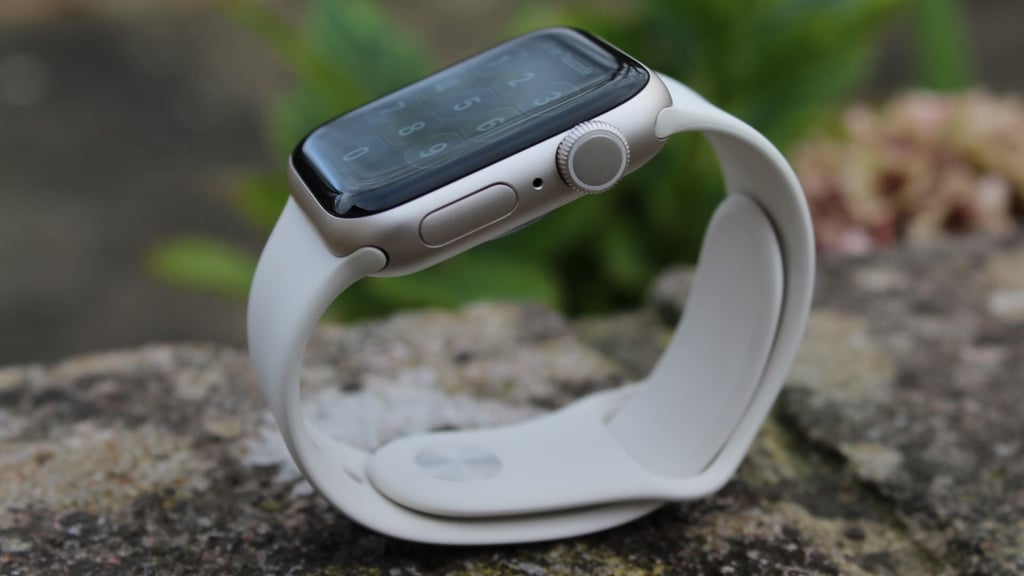
You can now glance at the time without a performative wrist flick. And though the display’s more limited specs mean it doesn’t offer ticking-seconds-hand animations that its more premium running watchOS 26 can, it still feels alive and present.
So, yes, the screen is smaller than Series 11’s. The peak brightness isn’t as high. The Ion-X glass isn’t as scratch-resistant as Ultra’s sapphire crystal screen. But it’s bright enough for all but the harshest sunlight, the screen is perfectly legible, and we’ve picked up zero scratches in our testing. For the price, the display is more than just good enough—it’s great.
Smart features: S10 secret weapon
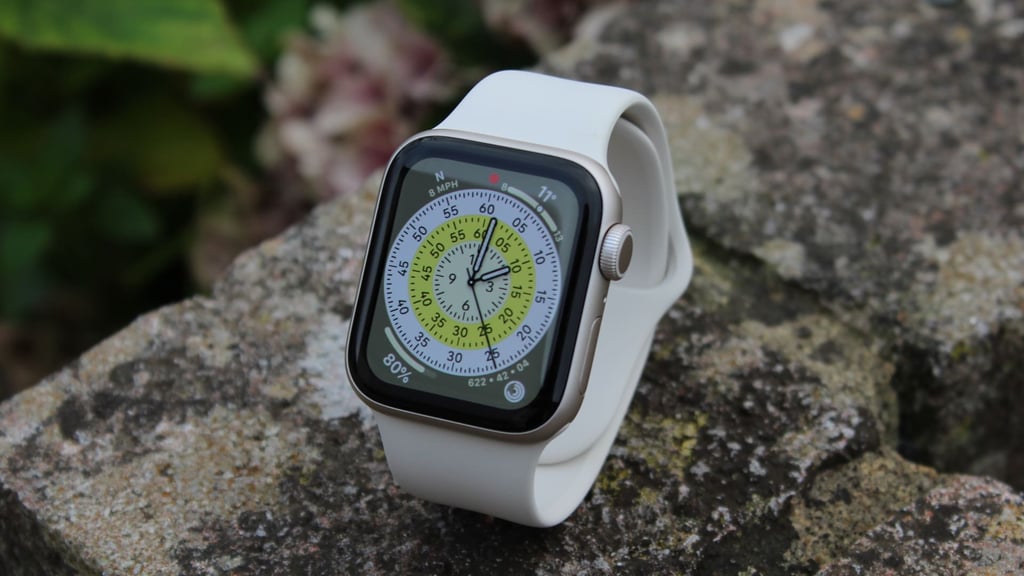
As we’ve already alluded to, the smart features are the real reason to choose SE 3 over competitors. And in a move that mirrors its iPhone SE strategy, Apple has happily avoided putting a nerfed, years-old processor in its budget watch. Instead, it’s given SE 3 the S10 chip, the exact same flagship silicon that powers the $799 Ultra 3.
The result is an experience that, at least in terms of function, feels identical to those higher-priced models. Menus are snappy, apps load almost instantly, and gestures work without fail.
This is about more than just spec-sheet bragging, too; the S10 chip unlocks features that weren’t available on previous models. Double Tap, for example, the one-handed gesture control that was previously a flagship-only feature, is here.
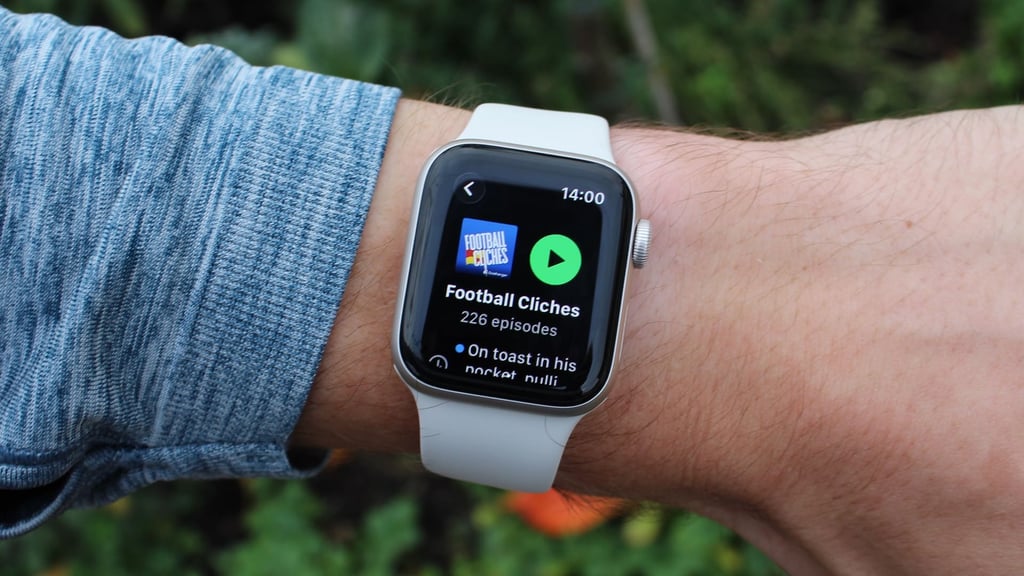
It also has the new wrist-flick gesture for navigating notifications. Neither are game-changing experiences by any stretch, but Apple Watch is ultimately a collection of elegant tricks—and the inclusion of S10 means SE 3 gets the best of them.
The old and the new
The S10 chip helps SE 3 run watchOS 26 smoothly, bringing features such as the neat ‘Liquid Glass’ design, Smart Stack, a set of watch faces, and App Store, which unlocks apps like Runna that can bolster the native fitness tracking.
And all the familiar features are still incredibly compelling, such as Apple Pay for contactless payments and flawless pairing with Apple Music—especially given their exclusivity. It just works, basically, in that clichéd but profoundly true Apple way.
This is what separates SE 3 from every other device in its price range. Huawei Watch Fit 4 has a much more limited app store. Forerunner 165 can’t reply to your messages neatly when paired with an iOS device. And SE 3 is anything but a ‘lite’ smartwatch; it’s just one in an old body.
Health and sleep tracking
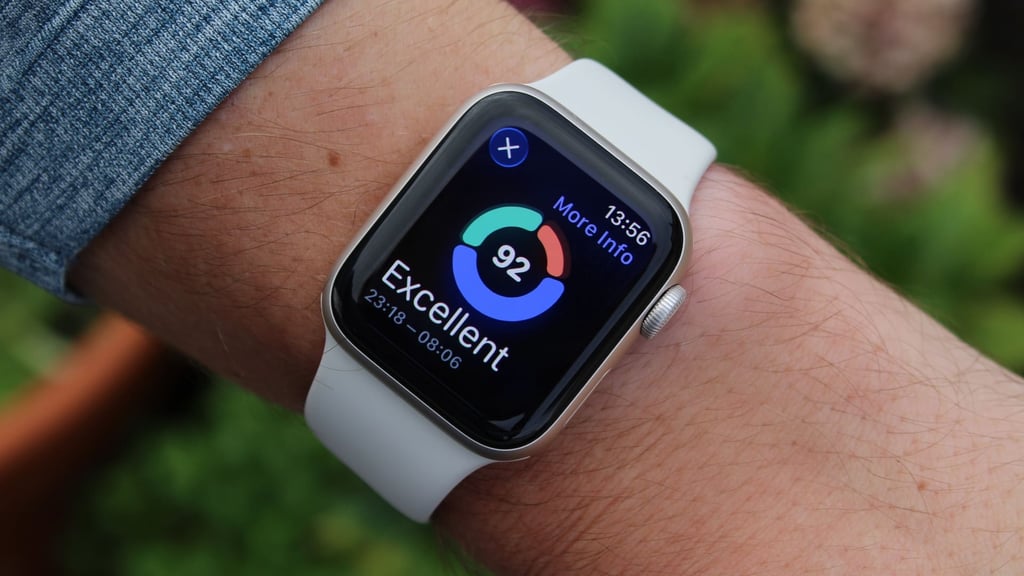
This is where Apple’s balancing act with SE 3 is most apparent. When you take away the form, the health suite is what defines it against Series 11.
So, what’s missing? Well, you don’t get the sensors that power some of Apple’s advanced health features. If you can actually call them ‘advanced’ in 2026, anyway—they are available on an increasing number of watches, both at this price and cheaper, after all.
Either way, there’s no room for the ECG feature (for potential AFib detection) or the Blood Oxygen (SpO2) app. And you don’t get the new-for-2025 passive hypertension notifications. If you have a specific, known heart condition you need to monitor, basically, the SE 3 can’t do that.
Still arriving with a key upgrade
Still, you do get one crucial upgrade—and one that’s arguably the most widely applicable: the temperature sensor. This is a huge boost from the SE 2nd generation, enabling retrospective ovulation estimates for cycle tracking via the Cycle Tracking app and, crucially, populating the wrist-temperature data in the Vitals app.
You also get all the core safety features that have become non-negotiable: Fall Detection, Crash Detection, and high- and low-heart-rate notifications. And thanks to the S10 chip and watchOS 26, you get software-based health features, including Sleep Apnea detection and the new Sleep Score.
While we’ve criticized Sleep Score slightly in our Series 11 and Ultra 3 reviews for being too lightweight, it’s actually right at home on a watch like SE 3. It’s a simpler, more basic insight than you’d get from Garmin or Oura, but it’s built for the average user. It’s reliable at its core—Apple is outstanding at knowing when you fell asleep and when you woke up—and it provides a simple, actionable number. If you’re a beginner, this is more than enough.
Sports and fitness tracking
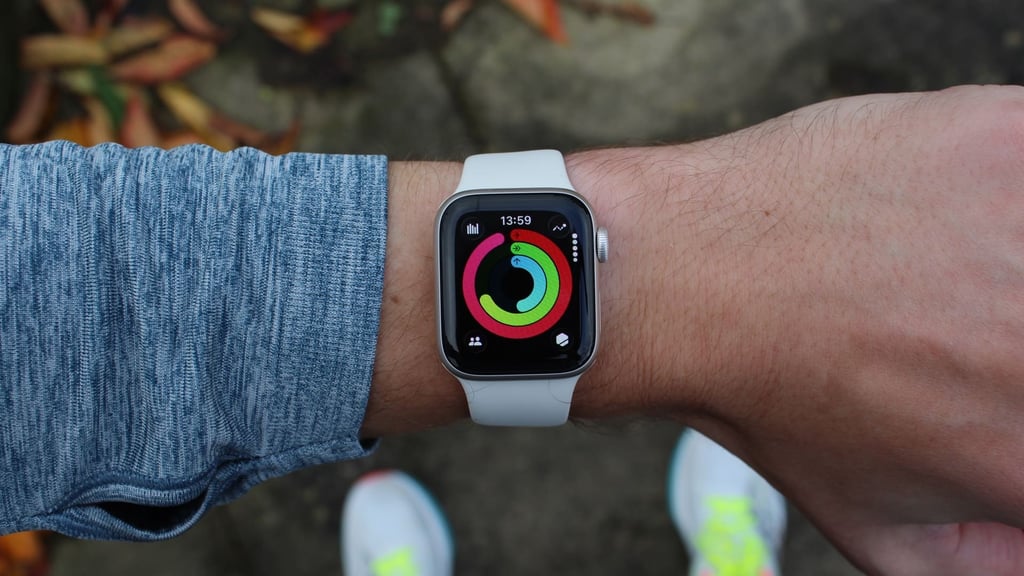
Here’s the other place SE 3 punches wildly above its weight. If you’re a beginner runner, cyclist, or general fitness class-smith, SE 3 delivers a core tracking experience that is functionally very similar to Series 11.
Features like Workout Buddy—Apple’s AI-powered spoken encouragement and insights that sound during each lap—are perfect for beginners. Like Sleep Score, it’s a feature we found slightly basic on a device like Ultra 3, but it feels perfectly placed here.
Meanwhile, tried-and-tested ones like Activity Rings still function as a solid way for those simply trying to move more to check in on their baselines. And if you do ever wish to take things up a notch, the refreshed Workout app still offers more sports tracking profiles than you can shake a stick at.
Thoroughly recommendable GPS
SE 3 uses Apple’s standard single-band L1 GPS, unlike the Ultra 3’s dual-frequency system. But the secret here, as we’ve noted in reviews for essentially the last decade, remains the same: Apple’s single-band GPS implementation is very solid, often performing on a par (or outperforming) the dual-band chipsets found in some budget rivals.
We put SE 3 through its paces on our standard—admittedly easy—test routes over a few weeks, and the performance is, as ever, recommendable. The GPS tracks are definitely a bit more squiggly than a Garmin running its gold-standard Multi-Band tracking, but that’s to be expected. On a run, Garmin tracked at 10.51 miles (shown below, viewable in full here), SE 3 logged 10.54 miles—a difference of less than 50 meters overall.
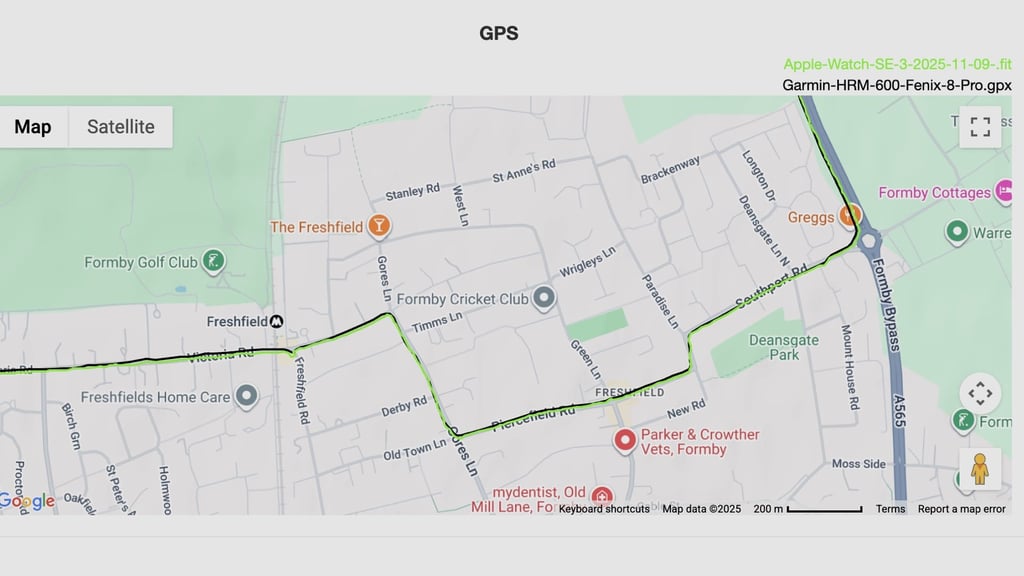
In more demanding conditions, it would undoubtedly suffer a bit more—but, even then, I’ve rarely seen a single-band Apple Watch serve up a catastrophic GPS performance, and that was also true of SE 3 in testing. So, it remains more than reliable enough for anyone who isn’t consistently relying on top-tier tracking in challenging environments like high, double-sided city streets and covered forests.
Reliable heart rate monitoring
It’s the same story for heart rate. The optical sensor here has always been a reliable component of the Apple Watch experience. With SE 3, it delivers results very much in line with the flagship models.
It will, like all optical sensors on the wrist, sometimes have the odd issue with the rapid peaks and troughs of high-intensity interval training—or go slightly erratic in cold and damp conditions. But even in those—like the 10.5-mile run already discussed and shown below—the session averages are in a great place (virtually identical to Garmin HRM 600 over 90 minutes).
The graph shows that the beat-to-beat readings are a little more erratic. But, as we’ve stated in other Apple Watch reviews, there are ways to mitigate this if you really require top real-time accuracy.
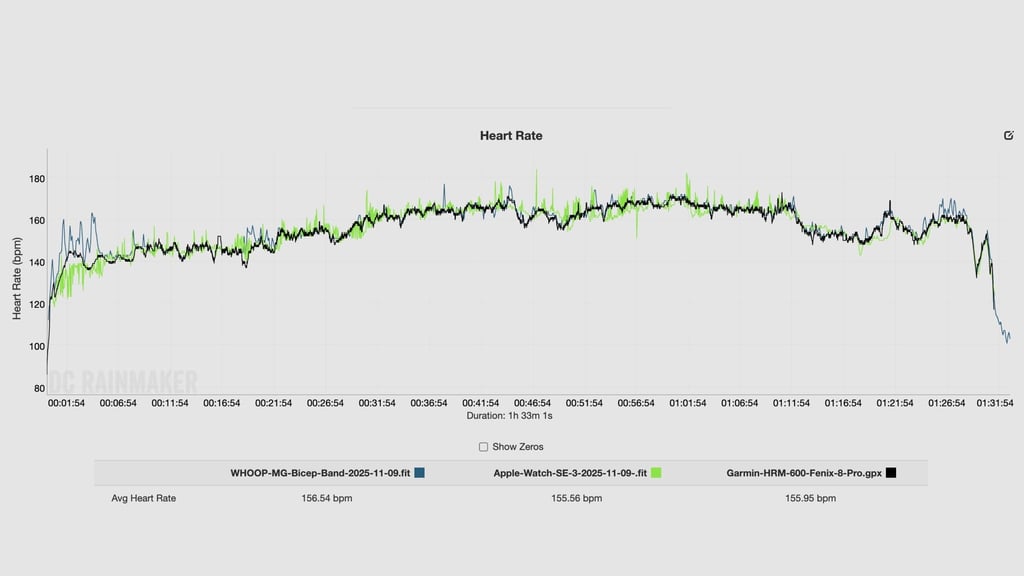
You can also pair an external heart rate monitor chest strap. But perhaps the better solution is to pair Apple Watch with AirPods Pro 3 and combine heart rate data. In our testing, it seemed to be on par with a chest strap. This gives SE 3 owners a ‘pro’ upgrade path that’s very compelling.
Battery life: The remaining major trade-off
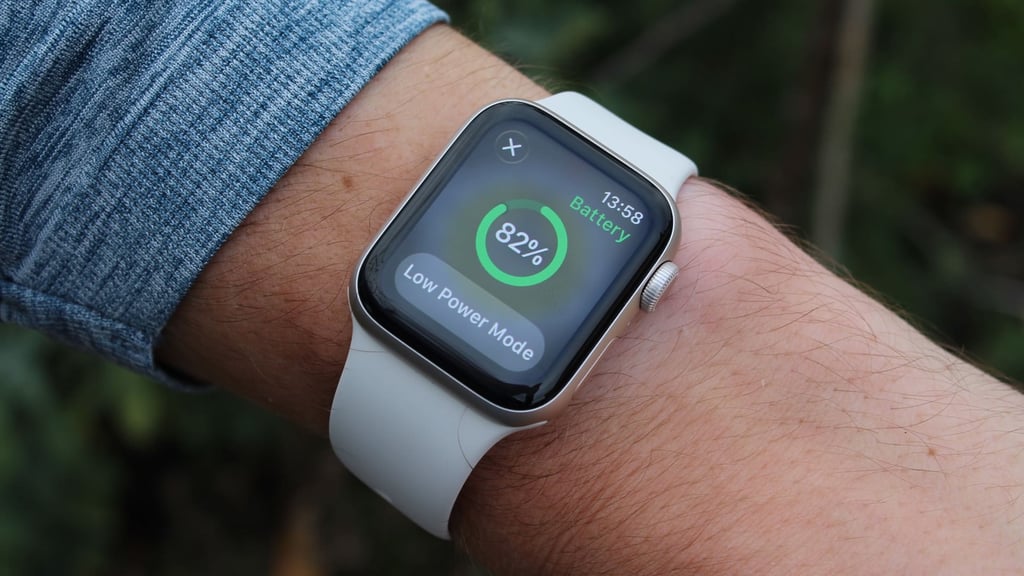
And so, we arrive at Apple Watch SE 3’s biggest functional issue: battery life.
Apple still gives this watch its standard ‘18-hour’ rating. In our testing of the 40mm model, this means it’s a daily-charge device.
If you wear it all day with the always-on display active, track a 30-minute GPS run, and receive notifications, you’ll probably go to bed with around 20% battery left. Fine for getting you through a night of sleep tracking, but you’ll almost certainly have to charge it at some point in the morning.
If you don’t care about sleep tracking, this is a complete non-issue. You wear the watch all day, it does its job perfectly, and you place it on the charger overnight, just like your phone.
If you do want sleep tracking, you’re forced to adopt a charging routine—and constantly have it floating in the back of your mind. Essentially, you’ll need to find a 40–50 minute window every day—perhaps while you’re in the shower or at your desk—to top it up before bed. That’s still better than SE 2, but it’s still not really a fast-charging smartwatch.
This is the central compromise of SE 3. It’s a small bit of life admin in exchange for a device that costs $150 less than Series 11 (which can go that bit longer and charge a bit faster, particularly if you choose the bigger model).
It's a compromise that makes it a poor choice for even a medium-high power user. But for the millions of people this watch is built for, it's a trade-off that is likely well worth making.