Samsung takes us behind the curtain on the flagship smartwatch's radical internal re-engineering process
Even for the wearable tech industry's biggest brands, delivering meaningful annual design presents an incredible engineering challenge. And with the premium smartwatch market more mature than ever, it's no wonder Samsung has shifted its Ultra and Classic lines onto a 24-month cycle in recent years.
Still, even with the extra time to dream up tweaks, new health and wellness insights, and optimized battery modes, there's usually a cap on what can realistically be achieved. Ultimately, designing smartwatches—and any mass-appeal tech—is a high-wire act of balancing all the essential elements.
Every once in a while, a device breaks through the typical barriers. Oura managed it with the recent launch of the Ring 5—a smart ring that's light-years ahead of its competitors (for now, at least). Garmin has done it plenty of times with its Fenix and Forerunner series, too. And, at least in the world of Android smartwatches, the Galaxy Watch Ultra 2 breaks new ground.
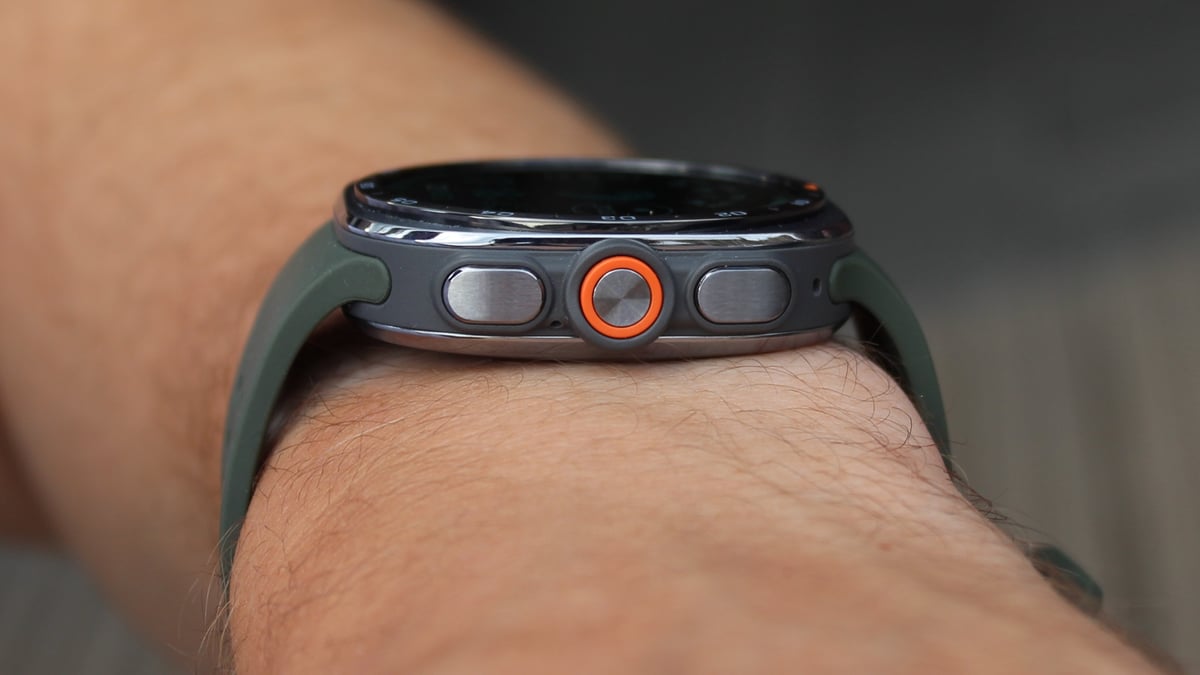
With its launch, Samsung has managed an impressive—and rare—hardware double-play; it's slimmed down the smartwatch's physical profile by more than a millimeter (making it 12% thinner) while expanding the internal battery capacity by 35% to a whopping 800 mAh.
In our extensive, real-world review of the Galaxy Watch Ultra 2, that translated to around four days of battery life in relatively heavy testing conditions. That's just under double what we found when we put the original Galaxy Watch Ultra through the wringer two years ago.
But how has Samsung actually managed to do it? Well, we went straight to the source for the answer.
From the ground up
According to Lee Dinham, the Product Specialist at Samsung who was on stage at Galaxy Unpacked in London last week to detail the brand's new stablecoin support and the expansion of Samsung Wallet, pulling off this form-factor shift meant discarding existing internal blueprints entirely.
"It's all to do with completely resizing the internals. The engineers essentially built the Ultra 2 from the ground up in terms of the internal structure," he told Wareable.
"That involves repositioning some components, shrinking some down—it takes a lot to increase the space inside the watch to get that bigger cell in there. It was a massive feat of engineering."
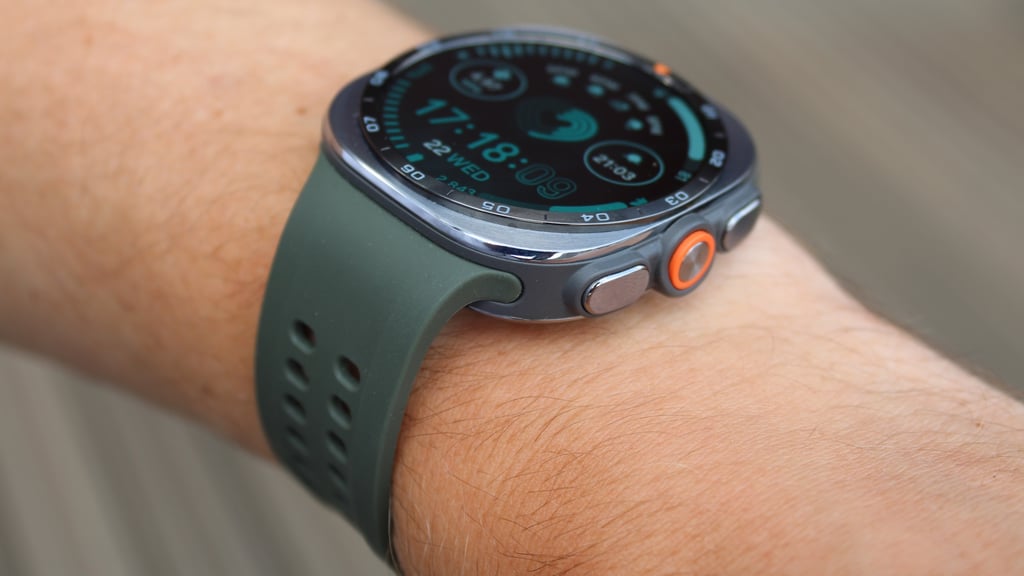
Dinham also suggested that the decision to partner with Qualcomm and include the Snapdragon Wear Elite platform proved crucial in delivering unrivaled power and performance on an Android watch.
"Qualcomm was the best decision for us with this device," Dinham explained.
"They've got an amazing processor—32% faster CPU and 19% faster GPU—while still being incredibly power efficient."
For the end user, this structural and processing optimization translates directly to day-to-day usability. As we found in our initial tests with the Galaxy Watch Ultra 2, the shift to reliable four-day cycles means it's now a smartwatch you can push on long weekends of GPS tracking without worrying about taking your charger.
Pushing onto trails and into the ocean
It's not just battery that benefits from the re-engineering, either; Samsung is leveraging this new processing power to power highly specialized tracking features.
Listening to feedback from users of the original Ultra, Dinham notes the 2.4-fold explosion in trail running interest over the past five years as a big motivation in delivering the Ultra 2's dedicated mode. The feature maps out detailed elevation, climbing progress, and real-time terrain impact to help athletes pace their output.
It's also used to debut the new real-time Nutrition Alert system. By calculating real-time sweat loss relative to the runner's body weight, the watch now tells the user exactly when and how much to hydrate.
Beyond the trails, the Ultra 2's overhaul also makes a significant leap into professional diving territory. Boasting an IP69K dust- and moisture-proof rating, a 10 ATM pressure threshold, and full EN13319 certification, the device functions as a genuine alternative to traditional watches. The moment a user submerges, the device automatically tracks and displays real-time depth, elapsed time, and water temperature.
Samsung has partnered exclusively with Mares—the diving equipment brand—to launch a dedicated Ultra 2 Diving app later this year.
It’s clear proof that Samsung's hardware redesign isn't just about looking sleeker under a shirt cuff; it's about building a device rugged enough to handle the elements, from mountain peaks to open oceans.