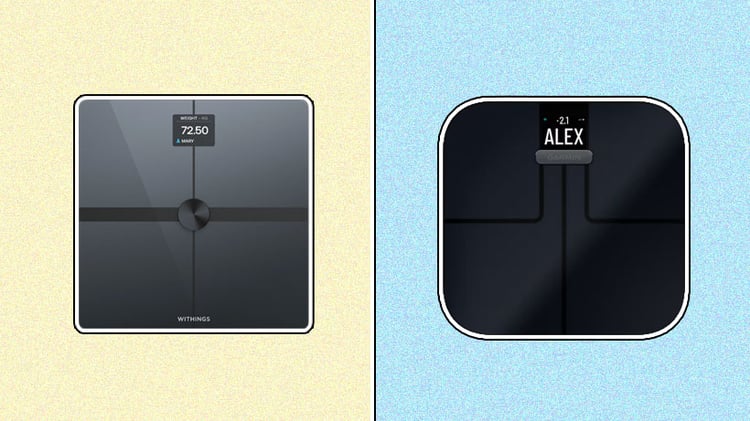
Withings Body Smart is a well-rounded choice for most people, but those who already own Garmin devices might want to choose Index S2—but not without any trade-offs
Smart scales are becoming more widely used—after all, it is not weight loss most people are after, but fat loss.
For those who want a budget-friendly way to monitor body composition trends, Withings Body Smart and Garmin Index S2 appear to be two of the top choices competing for the same buyer: someone who wants a reliable smart scale with Wi-Fi sync, and a decent app. But spend a little time with each, and it becomes clear that they may cater to a different user—and with this article, you will be able to see which one fits your needs better.
Besides that, Garmin Index S2 is slightly pricier—so we compared what it offers and how it matches Withings Body Smart features. Without giving away too much, we found that Garmin Index S2 offers fewer features.
Before digging deeper, here's how they stack up at a glance:
| Withings Body Smart | Garmin Index S2 | |
| Body composition metrics | Muscle, subcutaneous and visceral fat, bone mass | Muscle, fat, bone mass |
| Basal Metabolic Rate | Yes | No |
| Heart rate | Yes | No |
| Batteries | AAA batteries, should last around 15 months | AAA batteries, should last around 9 months |
| Connectivity | Bluetooth and Wi-Fi | Bluetooth and Wi-Fi |
| User profiles | Up to 8 | Up to 16 |
| Modes | Athlete, pregnancy, baby, eyes-closed | None |
| Warranty | 1 year | 1 year |
| Official retailer | Visit Withings Body Smart | Currently listed on Amazon |
Design and everyday use
For the most part, Body Smart and Garmin Index S2 are quite similar, with only a few small differences to discuss in this section.
Design and display
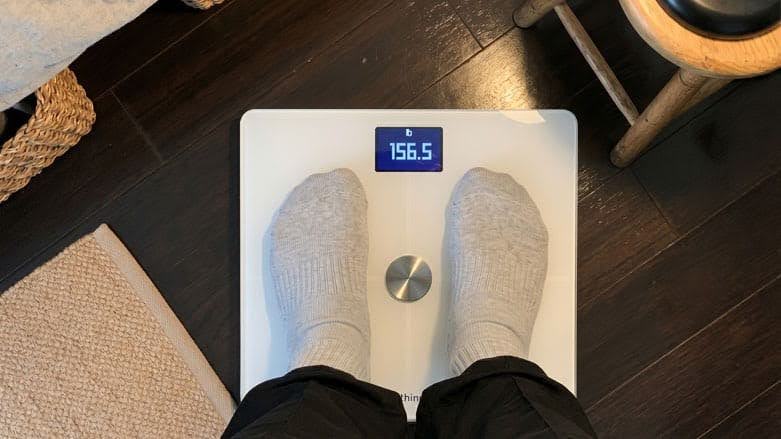
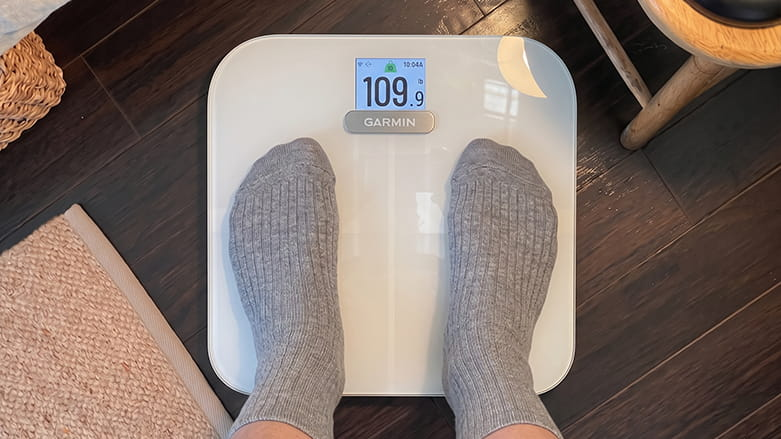
Both scales have a sleek, glass-platform design that looks at home in a modern bathroom. Both are available in black and white, and both feature a color display that shows your metrics directly on the platform after each weigh-in.
Setup and user experience
Setup on both is straightforward: simply download the companion app and connect the device following the instructions. In our testing, we had no trouble connecting these smart scales, although, reading through the online reviews, this is not the case for everyone. It seems like some users may experience connectivity issues, regardless of which device you pick.
Both apps belong to the broader ecosystem, as Withings and Garmin are well-known manufacturers of wellness products. So, if you have any other products, such as smart watches, you will be able to see data in one app.
One difference is battery life. While both use AAA batteries, Withings is more energy-efficient and should last longer than Garmin, approximately 15 months instead of 9. It's a small thing, but having fewer interruptions throughout the process may help with compliance—who hasn’t forgotten to replace the dead batteries?
Multi-user households
Both scales support multiple user profiles with automatic recognition—stepping on the scale is enough for it to identify who's weighing in. Index S2 supports 16 user profiles, which is notably more than Body Smart’s limit of 8.
Winner: Withings Body Smart, although Garmin Index S2 is more suitable for big households (more than 8 people)
Health and body composition tracking
This is where the comparison gets more interesting.
Both scales use bioelectrical impedance analysis (BIA) to estimate the body’s composition, and both use a foot-to-foot measurement method—meaning the electrical current runs from one foot to the other rather than through the entire body. Neither includes a handheld sensor, so neither offers segmental body analysis (measuring limbs individually). This is worth knowing if detailed segmental data is important to you.
Body composition tracking
In terms of core metrics, these scales are closely matched: body fat percentage, muscle mass, bone mass, and body water percentage are covered by both. However, Body Smart adds the visceral fat index, which the Index S2 does not track—a major drawback in our eyes.
Visceral fat is deeper than subcutaneous (under the skin) fat, meaning it is not visible to the eye, nor can you pinch it. What it does is protect your inner organs and contribute to hormone production; however, too much of it is associated with an increased risk of various health conditions, including metabolic syndrome.
While none of these smart scales are diagnostic tools capable of accurately measuring visceral fat, the metric may still be useful as a trend indicator when viewed over time. The number should be treated as an estimate rather than a direct measurement, as BIA-based calculations may be influenced by factors such as hydration, recent exercise, food intake, and individual body characteristics. This applies to all body composition metrics tracked via smart scales.
Modes
Garmin Index S2 doesn’t offer any weigh-in modes, while Withings Body Smart has four: Athlete, pregnancy, baby, and eyes-closed.
Athlete mode adjusts the BIA calculations to account for the physiological differences that come with a higher muscle mass, which can otherwise skew standard estimates. Pregnancy mode disables the BIA current entirely and switches the scale to weight-only tracking. Baby mode lets you weigh yourself while holding an infant, then subtracts your own weight to calculate the baby's. And eyes-closed mode lets you step on the scale without seeing the number on the display—this one was used by one of our team members because they preferred to see weekly trends without hyperfixating on day-to-day changes.
Winner: Withings Body Smart
Accuracy and measurement technology
In our testing, both scales were capable of delivering consistent weight measurements when used under similar conditions. While we saw some fluctuations, these correlate to normal weight changes and we didn’t notice any serious discrepancies.
Body composition metrics, however, are more complicated. Both Body Smart and Index S2 use bioelectrical impedance analysis (BIA) to estimate body composition metrics such as body fat percentage, lean mass, and body water.
The way BIA works is straightforward in principle: the scale sends a low-level electrical current through your body and estimates tissue composition based on how that current travels. The challenge is that BIA readings are estimates—and they are influenced by a surprisingly wide range of variables, including your hydration and food intake before weigh-ins.
Both scales use a foot-to-foot BIA method specifically, meaning the current travels from one foot to the other through the lower body only, and neither scale measures your upper body directly.
Compared to devices that use both hand and foot contacts for full-body or segmental measurements, foot-only scales work with less data—which limits how detailed or reliable the body composition picture can be, particularly for metrics like muscle distribution across different body segments.
In our testing, the consistency of body composition readings was good on both scales. That said, we'd be cautious about putting too much focus on the absolute figures either scale produces.
A body fat reading of, say, 22% should not be taken as a clinical measurement. What matters more is whether that number trends up or down over weeks and months.
Neither scale should be used to diagnose, monitor, or make health decisions regarding any medical condition. If a reading raises a concern, the right step is to speak with a healthcare professional rather than rely on a consumer wellness device.
Used with realistic expectations—tracking trends rather than precise values—both the Body Smart and Index S2 perform well and comparably. Neither has a meaningful edge over the other in terms of the underlying measurement technology.
Winner: Tie
Ecosystem and compatibility
Garmin Index S2 is built to be used with Garmin Connect. If you already wear a Garmin watch and use Garmin Connect to track your workouts and recovery, Index S2 fits in seamlessly.
Every weigh-in syncs automatically, and your trends sit alongside your training data without any extra setup. For dedicated Garmin users, this integration is hard to beat.
The downside is that Garmin Connect is primarily an athletic performance platform. If you don't own a Garmin watch, you'll get access to your scale data—but the app offers relatively little guidance around general health, wellness coaching, or lifestyle-focused tracking. The app is free, all core features are available without a subscription.
If you want to upgrade, Garmin Connect+ is priced at $6.99 per month, or $69.99 per year.
Now, Withings is quite similar in this regard. Their app is also designed as a broader health platform—weight trends, body composition, cardiovascular data, sleep, and more all sit in one place. The interface is easy to navigate, and the app integrates with a wide range of third-party platforms, including Apple Health, Google Fit, and others.
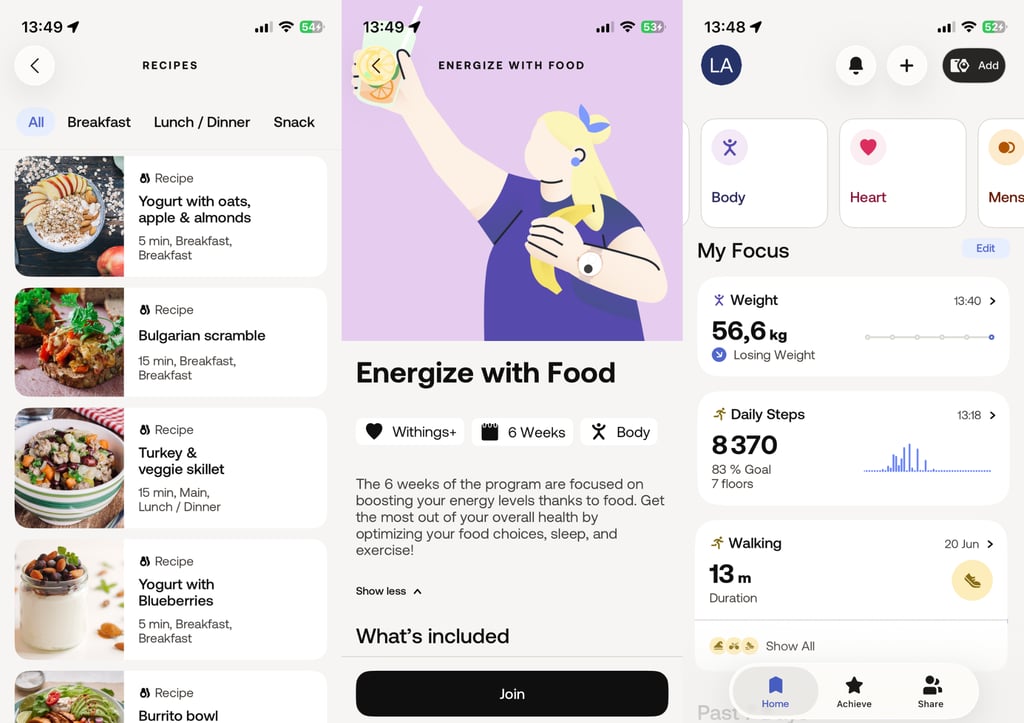
Some of the more advanced features, coaching programs, and deeper insights sit behind the Withings+ subscription, currently priced at $9.95 per month or $99.50 per year, making it slightly more expensive than Garmin Connect+.
Ultimately, the superior choice depends on your existing device ecosystem—though both scales function perfectly as standalone tools without additional hardware.
Connection
Both scales support Wi-Fi syncing, which makes a bigger practical difference than it might seem. Without it, your scale relies on Bluetooth, meaning your phone needs to be nearby and the app open for data to transfer. Having a Wi-Fi connection support removes that friction, and with smart scales, this can help with consistency.
Winner: Tie
Price and value
Body Smart is the more affordable of the two, and when you consider what you get at that lower price point, it represents strong value. More body composition metrics, longer battery life, and specialized user modes—all for less money than Index S2.
Index S2 sits at a slightly higher price, which is harder to justify, as it does not offer any additional features. Its main argument is ecosystem fit: if you're a Garmin user, the integration into Garmin Connect is a genuine selling point.
It's also worth factoring in age. Index S2 launched in 2020 and has not seen a hardware refresh since. Body Smart, on the other hand, was launched more recently: in 2023.
One caveat should be mentioned: both apps have additional subscriptions to consider, and because Garmin+ is cheaper than Withings+, you may also lean towards Garmin more—especially if you already use other Garmin products. However, during our testing, that additional subscription did not appear relevant—it may cater to those seeking more comprehensive health and fitness insights rather than smart scale data analysis.
Winner: Withings Body Smart
Verdict: Which should you choose?
If you are choosing between the two, our recommendation is clear.
Choose Withings Body Smart if:
You are looking for a well-rounded smart scale. It tracks more metrics, lasts longer on a charge, offers a more versatile app, several modes, and costs less—all without requiring you to already be inside a particular ecosystem.
Choose Garmin Index S2 if:
You already have a Garmin device and want to stay in the same ecosystem. For larger households (more than 8 people), Garmin Index S2 remains a viable option. Nonetheless, it has a 16-profile cap, meaning it isn't a choice for public establishments such as gyms.
That said, no matter which one you choose, keep your expectations realistic. Smart scales are not medical devices. The body composition numbers should be viewed as estimates rather than precise medical data. You may use smart scales for trend tracking, not precise measurements.
As an Amazon Associate we earn from qualifying purchases. Product prices and availability are accurate as of the date/time indicated and are subject to change. Any price and availability information displayed on Amazon at the time of purchase will apply to the purchase of this product.
-
The Journal of Steroid Biochemistry and Molecular Biology.
-
Lipids in Health and Disease.
-
JMIR mHealth and uHealth.
-
Journal of Translational Medicine.