TENS machines for labor: Devices to consider during pregnancy and childbirth

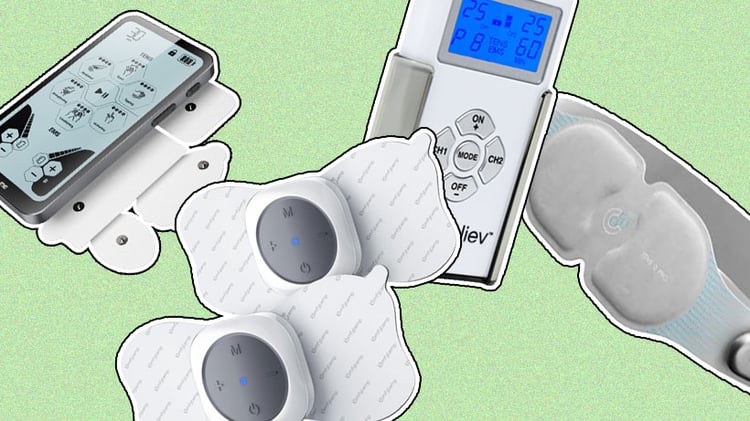
We reviewed top TENS devices to help you find a comfortable and easy-to-use option for labor
While pain and discomfort are a natural part of childbirth, pregnant people have quite a few options for how to manage them. One of the emerging ones is TENS units. By delivering gentle electrical pulses near the nerves, these devices may help support labor discomfort—either on their own or paired with other pain relief methods.
Some users have reported that TENS machines have helped them cope with contractions, and some research shows positive findings regarding their effectiveness in helping manage labor pain.
Just keep in mind that a TENS unit shouldn't replace professional medical advice, so be sure to consult your healthcare provider before adding one to your birth plan.
With that in mind, explore your options in the guide below that compares labor TENS machines based on design, controls, portability, battery life, and labor-specific features.
Quick picks: TENS machines to consider
- Oxiline TENS XS Pro: Wider range of settings
- Oxiline TENS Q Pro: Rechargeable option
- iReliev Premium TENS + EMS Pain Relief & Recovery System: Good overall feature set
- Comfytemp Wireless TENS Unit: Compact design
How we evaluated TENS machines
To ensure the best user experience, our recommendations for labor TENS machines are based on product features, usability, manufacturer information, expert guidance, and user feedback.
We evaluated these devices by focusing on ease of setup, clarity of instructions, and simplicity of controls. Our team also paid close attention to portability, display readability, and battery performance. We additionally assessed the electrode quality, labor-specific settings, and overall build quality.
We recommend only devices that performed well across these criteria and proved easy, durable, and practical to use.
Oxiline TENS XS Pro
Wide range of settings
- Lock function: Yes
- Electrode pads: 4
- Modes: 24 therapy modes, 10 intensity levels
- Channels: Dual channel
- Battery: Rechargeable
- Price: Premium-range
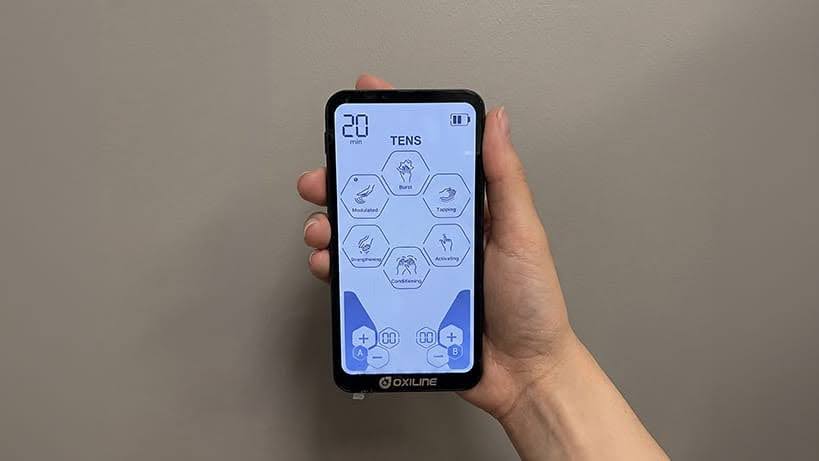
Oxiline TENS XS Pro tops our list for its modern design, user-friendliness, and wide range of settings. This makes it a versatile device that suits most users.
It features four electrode pads, allowing placement in the areas typically recommended for use during early labor. The two output channels can be adjusted independently, giving you the option to target two areas with different intensity levels. You can choose from 24 modes and 10 intensity levels to tailor each session to your preferences and comfort level.
We found that the electrodes adhere well to the skin and are flexible and comfortable to wear. They come in four different shapes and can be reused up to 30 times before they begin to lose their adhesion. When that happens, replacement pads are easy to purchase for around $19 per pack of eight.
While we found the touchscreen easy to navigate, we think it may be less practical than physical buttons for making quick adjustments without looking—an important consideration during labor. It's also wired and weighs around 1lb, which may feel restrictive, especially if there’s a need to move around during early labor.
Fortunately, the built-in screen lock prevents accidental setting changes once your session begins. Additionally, it's rechargeable, lasts up to 24 hours on a single charge, and features a quick-charge function that significantly reduces charging time. Lastly, it comes with a lifetime warranty, making it a reliable long-term investment.
- Lock function
- 4 electrode pads
- Dual channel
- Wide range of settings
- Wired
Oxiline TENS Q Pro
Rechargeable option with longest battery life
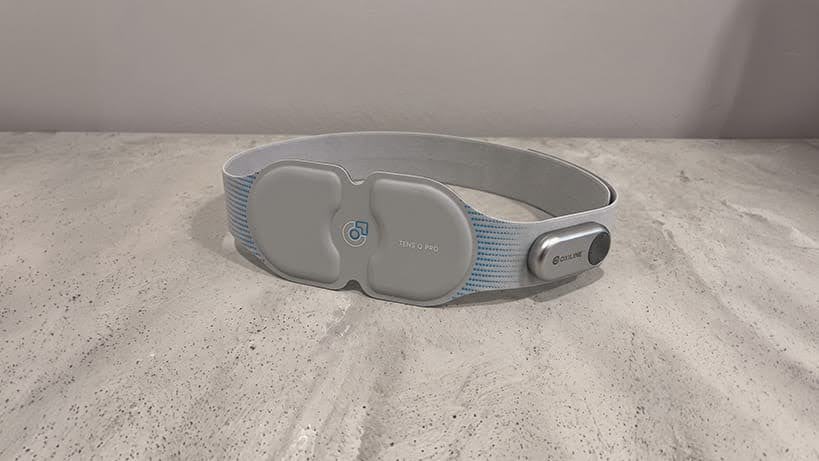
- Lock function: No
- Electrode pads: 4
- Modes: 6 modes, 3 heat levels
- Channels: Integrated pads
- Battery: Rechargeable
- Price: Mid-range
Oxiline TENS Q Pro stands out on this list due to its unique form factor. It’s a thin waistband that wraps around the lower back, which we found to be lightweight yet secure. The sizing is adjustable to accommodate body sizes up to 49.6 inches.
With four electrodes integrated into the waistband, you don’t have to worry about them falling off or needing to be replaced. This makes it a convenient and low-maintenance option. However, it’s only suitable for targeting the lower back, which may not be ideal for the electrode placement recommended during early labor.
Fortunately, the heat function adds another layer of comfort, reaching temperatures of up to 113°F. You can choose from three heat levels and six TENS modes, although it’s not as customizable as our top pick.
Even though it doesn’t have a screen lock function, it’s not a major drawback with this type of device. Since the controller is built into the waistband, it’s unlikely that you’ll accidentally change the settings during use.
It features a rechargeable battery that lasts more than two weeks on a single charge, along with fast recharging. Backed by a lifetime warranty, it’s a good option for anyone specifically looking to target the lower back and appreciate the added soothing effects of heat therapy.
- Wireless
- Heat function
- Long-lasting rechargeable battery
- Targets only lower back
iReliev Premium TENS + EMS Pain Relief & Recovery System
Good overall feature set
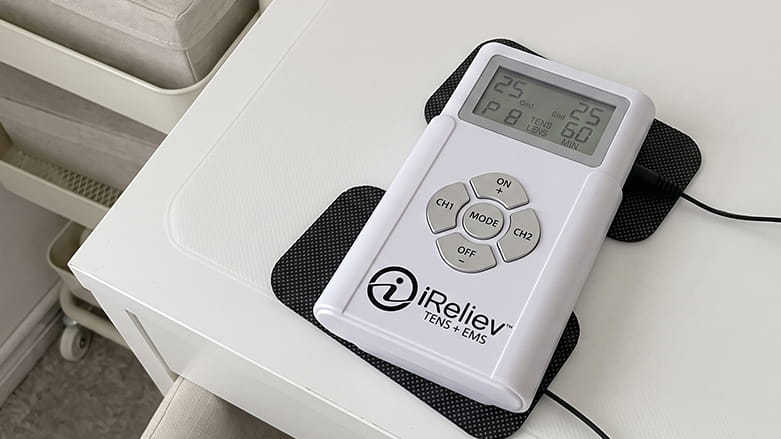
- Lock function: Yes
- Electrode pads: 4
- Modes: 14 modes, 25 intensity levels
- Channels: Dual
- Battery: Battery-operated
- Price: Mid-range
Occupying third place on our list, iReliev Premium TENS + EMS Pain Relief & Recovery System offers an overall good feature set.
The device comes with four flexible electrode pads in two sizes, giving you more positioning options and making it easier to follow the recommended electrode placement for labor pain management. Meanwhile, its dual channels allow you to adjust the stimulation levels for each pair of pads separately.
The pads are flexible and reusable and, according to the band, can be used around 30. Replacement pads are also available when needed for $29.95.
With 14 preset programs and 25 intensity levels (the widest range on this list), the device gives you plenty of control over your sessions. A locking function is also built in, which can help prevent accidental setting changes during use.
The controller clips onto clothing for easier access, although its larger size and wires may feel restricting at times. We also found navigating the controls a little tricky at first, but once you get familiar with them, it becomes easier to use.
The device runs on replaceable batteries, making it convenient to keep powered, and comes with a one-year warranty for added peace of mind.
- Dual channels
- Customizability
- Lock function
- Requires learning curve
Comfytemp Wireless TENS Unit
Compact design
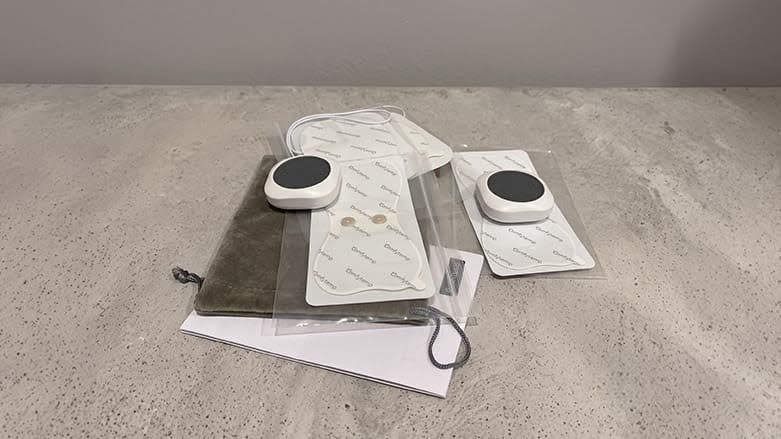
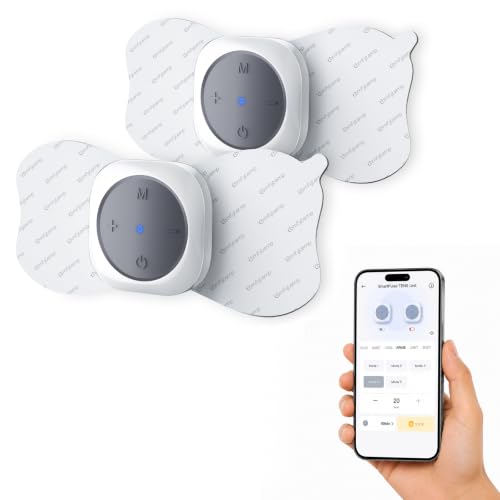
- Lock function: No
- Electrode pads: 4
- Modes: 30 modes, 20 intensity levels
- Channels: Dual
- Battery: Rechargeable
- Price: Budget-range
Taking the final spot on our list is Comfytemp Wireless TENS Unit, the most compact and budget-friendly option among our recommendations. Its greatest strength lies in lightness and comfort. Its two separate wireless units together weigh 9.35 ounces, making it an ideal choice for people prioritizing portable and nonrestrictive design.
However, using the device might take a little getting used to, as it operates differently from traditional TENS units. To get started, you need to charge the controllers, pair them with the app, attach them to the electrodes, and choose your settings.
While you can tailor your session directly on the controllers, we found it much easier to use the app—though we aren't entirely sure how practical navigating an app will be during labor. Regardless, the device is highly customizable, offering 30 modes and 20 intensity levels.
Additionally, the pads are very durable, with the brand reporting they are good for up to 60 uses. When it’s time to replace them, you can order a new set for just $9.99. It is worth noting that the device doesn’t include a lock function, although the compact design and simple controls make accidental changes less of a concern.
With a rechargeable battery that takes around an hour to charge, this wireless TENS unit is a convenient option for users who prioritize portability and affordability.
- Compact and lightweight
- Budget friendly
- Customizable
- App controls might not be practical during labor
What is a TENS machine and why is it used during delivery?
TENS stands for transcutaneous electrical nerve stimulation. It works by delivering low-voltage electrical currents through the skin near nerve pathways. There are two main theories explaining how it may help support pain management.
The first, known as the pain gate theory, suggests that the electrical current may stimulate nerves that help block pain signals from reaching the brain, potentially altering how you perceive pain.
The second, the endorphin release theory, suggests that electrical stimulation may encourage the body to release endorphins—its natural painkillers—which may also help reduce the perception of pain.
Some people have reported finding TENS helpful during early labor, and evidence suggests it may offer benefits for some women.
When is a TENS machine typically used during labor?
Early labor is generally the best time to start using a TENS machine. Many manufacturers recommend using it before contractions become intense, as this gives the body more time to build up endorphins.
Throughout labor, users can adjust the intensity to match their comfort level. Use during later stages may vary depending on personal preference and advice from the maternity care team. Some may discontinue TENS during transition or second stage because they prefer other analgesia or find it less helpful.
How to use a TENS machine during labor?
Pregnant people should familiarize themselves with their TENS machine before labor. It's important to practice using it and learn the correct electrode placement, as positioning the pads is crucial and may not come naturally the first time.
Before applying TENS, manufacturers recommend keeping your skin clean, dry, and free of moisturizer. It’s also advisable to avoid placing the electrodes directly over the spine. Instead, it’s generally encouraged to position one pair at bra strap level, about an inch on either side of the spine. The second pair should be placed in the dimples of the lower back, again about an inch on either side of the spine.
The electrodes should not be placed on the hands, legs below the knees, the tops of the shoulders, the cheeks, or the neck. They should also not be applied to broken, irritated, or inflamed skin.
Once the electrodes are in place, you can then gradually increase the intensity. Also, don’t forget to bring spare batteries or ensure a rechargeable device is fully charged before labor begins. Remember to always follow the manufacturer's instructions and the guidance of your maternity care team.
Can a TENS machine be used during pregnancy?
TENS machines are generally intended for use during labor rather than throughout pregnancy. During pregnancy, electrodes should not be placed on the abdomen unless specifically advised by a healthcare professional.
For pregnancy-related low back pain or pelvic girdle pain, the first treatment options typically aren’t TENS units. If other approaches don’t provide enough relief, some healthcare professionals may recommend TENS in certain circumstances.
In general, recommendations for TENS use during pregnancy vary depending on gestational age and medical history. Because every pregnancy is individual, we encourage you to discuss whether TENS is appropriate for you with your maternity care provider or a licensed physiotherapist before using the device.
What features should you consider in a TENS machine?
While standard TENS devices deliver electrical stimulation, some TENS machines include features that make them easier to use while your focus is on labor. Consider these factors before buying:
- Labor-specific modes. These preset programs help automatically adjust frequency for different stages of labor. This eliminates the need to fine-tune the settings while your mind is on contractions.
- Easy-to-use controls. It’s a non-negotiable feature, as labor is not the time to navigate complicated controls. Look for a device with intuitive buttons that allow you to adjust settings with a quick glance—or even without looking at all.
- Lock function. This feature prevents you from accidentally pushing a button and changing the settings.
- Display visibility. Large icons, readable text, and a clear interface let you quickly check on program, intensity level, or battery life.
- Rechargeable vs. battery-powered. This depends on your preferences, as both options have their own perks. The rechargeable option eliminates the need to bring replacement batteries with you but can run out of charge during longer labor. With battery-powered devices, you can put in new batteries if power runs low. Whichever you choose, simply make sure the device is fully charged or has fresh batteries before your due date.
- Portability. A compact and lightweight TENS unit with a clip is more convenient to wear and stay mobile during labor.
- Electrode quality. Prioritize high-quality electrodes that adhere well to the skin and remain comfortable when used for longer periods. Look for features like thick, sticky hydrogel, a flexible cloth backing, and uniform current.
- Replacement pads. Pads can lose their adhesiveness over time, so check their availability and price before purchasing. It’s helpful if replacements are reasonably priced and easy to find.
- Adjustable intensity. Customizability allows you to tailor your sessions to your own preferences and comfort levels.
- Warranty and customer support. Warranty protects you from additional costs in case the product needs to be repaired or replaced. Meanwhile, customer support can answer any questions if you encounter any issues.
Safety considerations when using a TENS machine during pregnancy and labor
When using a TENS machine, it’s important to follow the manufacturer’s instructions and guidance from healthcare professionals. While TENS machines are generally considered safe for most people, they may cause mild side effects, such as skin irritation from the electrodes.
In some situations, it may be best to avoid TENS units altogether, such as if you have a pacemaker or other implanted electronic devices, epilepsy, or broken or irritated skin. TENS may also not be appropriate for people with bleeding disorders, heart disease, deep vein thrombosis, or cancer.
Additionally, it is not typically recommended for high-risk pregnancies, where additional medical advice may be needed. Always consult your healthcare provider before using a TENS machine, especially if you have any existing health conditions.
Other recovery and wellness guides:
The best TENS unit for home use: Our favorite models and recommendations
Best leg massagers: Tested picks for recovery, circulation, and everyday relief
Best red light therapy devices for pain relief: What actually works
Our pick of the best wireless TENS unit: How to choose?
Final verdict
If you’re looking to add a TENS machine to your birth plan, our top overall recommendation is Oxiline TENS XS Pro. It's easy to use and offers a wide range of settings, making it a versatile option that will suit most users.
Alternatively, we recommend Comfytemp Wireless TENS Unit if your first priority is wireless portability. It combines a compact, cable-free design with good comfort, affordability, and plenty of customization options.
Whichever device you choose, be sure to discuss using a TENS machine with your maternity care provider beforehand to make sure it's a suitable option for you.
Best TENS units for labor: FAQs
No, TENS machines don’t work for everyone during labor. While some people who have given birth report finding them helpful, individual experiences vary, and research on their effectiveness has shown mixed findings.
While you can use a standard TENS machine during labor, a maternityTENS unit includes features specifically designed for childbirth, making it easier and more convenient to use while focusing on labor. Whichever you decide, make sure you clear it with your healthcare provider first.
Many manufacturers recommend starting to use a maternity TENS machine in early labor. This may give more time for the body to build up endorphins, the body’s natural painkillers.
Yes, TENS can usually be used alongside other pain relief options. However, it’s best to consult with your healthcare provider before use.
If you’re planning to use a TENS machine only during labor and don’t expect to use it afterward, renting may be the more cost-effective option. However, if you plan to use it during postpartum recovery or for other types of pain support, buying one may be a worthwhile long-term investment. In the end, whether you should buy or hire a TENS machine depends on your needs and preferences.
3 resources
- BMJ Open. Efficacy and safety of transcutaneous electrical nerve stimulation (TENS) for acute and chronic pain in adults: a systematic review and meta-analysis of 381 studies (the meta-TENS study)
- Pain Management Nursing. Use of Transcutaneous Electrical Nerve Stimulation (TENS) in Labor Pain: An Integrative Review
- The Journal of Perinatal Education. Transcutaneous Electrical Nerve Stimulation