- Easy to travel with
- Discreet design
- Simple sessions
- Battery pack takes a long time to fully charge
- Results are very slow
For many people, hair feels like part of their identity, so noticing thinning, shedding, or changes in density can feel overwhelming. That’s why devices like Kiierr Laser Cap Hair Growth System are gaining attention.
They promise to support hair without leaving your home for appointments. It sounds promising. But is it just marketing, or is it true?
Personally, I’ve never had major hair issues. It’s naturally thick and healthy. But recently, I started noticing more baby hairs around my middle parting, especially near the front. It wasn’t dramatic, but I didn’t like how they stuck out. I also wondered if I was shedding more than usual.
At the same time, I was quite skeptical about laser hair-growth claims. However, after some thought, I decided to test Kiierr Laser Cap to see if it could help with these small changes.
| Product name | Kiierr Laser Cap Hair Growth System |
| Price | From $799 |
| Rating | 3.5/5 |
| Verdict | Best for early-stage thinning |
| Key specs | FDA-cleared Hands-free wearable cap design Rechargeable battery pack |
| Coupons | Kiierr Laser Cap discount code: Save up to $600 |
What is the Kiierr Laser Cap?
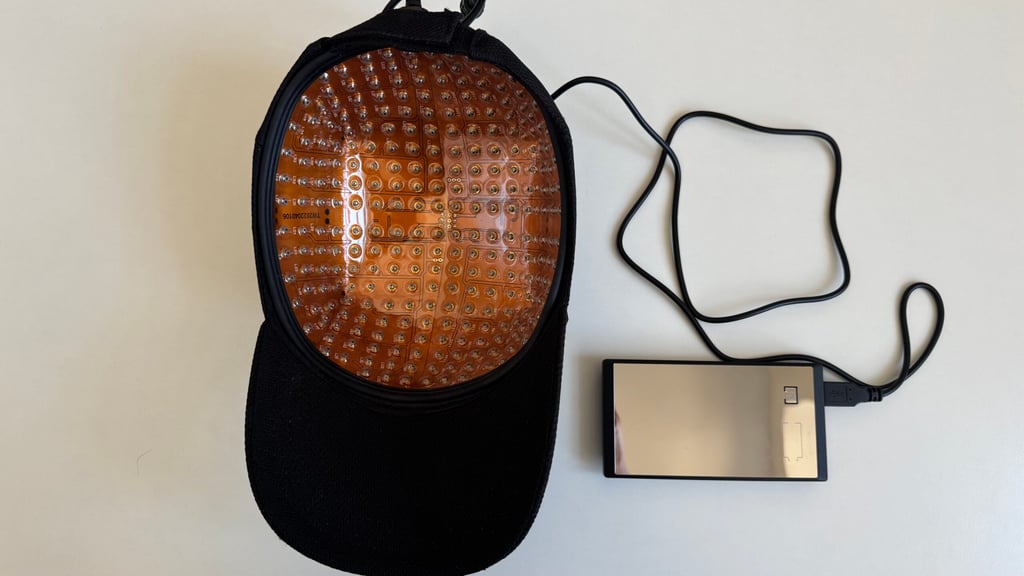
Kiierr Laser Cap uses low-level laser therapy (LLLT), also known as red light therapy (RLT) for hair, which works by shining specific wavelengths of light to potentially stimulate hair follicles and support natural hair growth over time.
The best part is that the Kiierr cap uses lasers instead of standard LEDs. While both LEDs and lasers provide light therapy, lasers are more precise and focused. There is nothing wrong with using LED caps. However, these hats scatter light across a broader area with lower precision and power, so the results might not be as obvious as with laser-based devices.
Plus, Kiierr emphasizes that its device is FDA-cleared, which assures us that it meets important safety standards. That said, as with most hair-growth devices, the success really depends on regular use, individual genetics, and the underlying cause of hair thinning. I highly advise speaking with a trichologist to determine the condition of your hair and develop a treatment plan.
Kiierr Laser Cap claimed benefits:
- Reduced shedding
- Thicker-looking hair
- Healthier follicles
- Fuller appearance
First glimpse at Kiierr Laser Cap
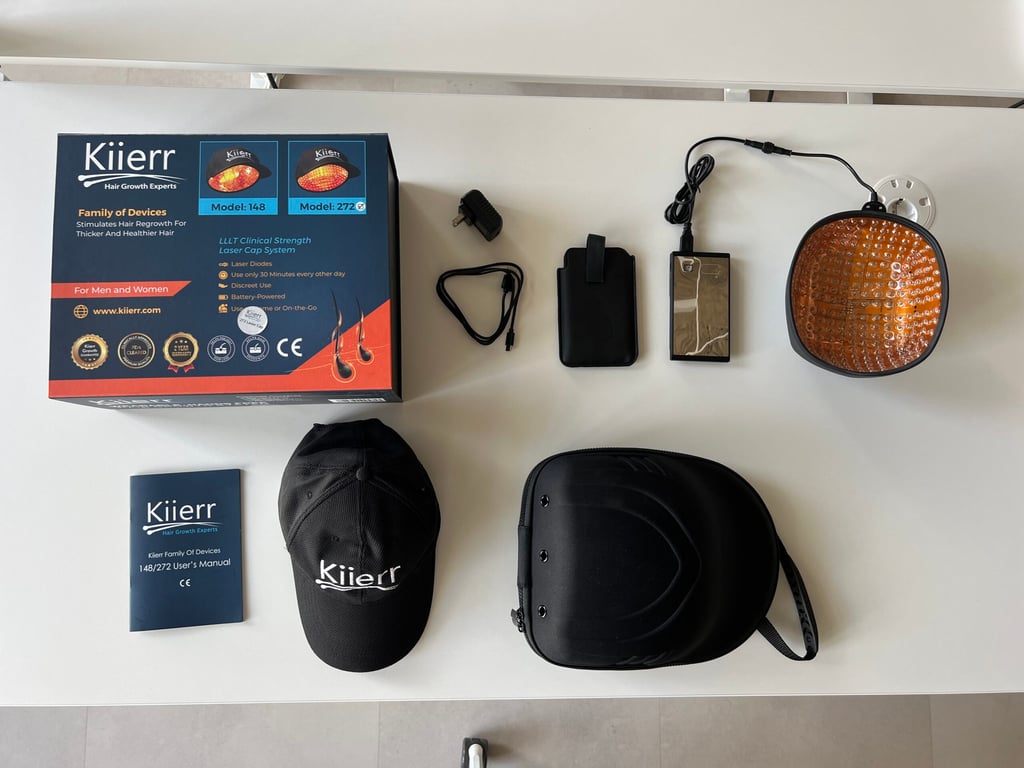
When you receive it, inside the box you’ll find the laser cap itself, a power pack, a charging cable, instructions, and a sturdy storage case.
What surprised me most was how lightweight the cap feels. It’s just around one pound, so it didn’t feel heavy or uncomfortable. Spoiler alert: even after three months of use, I could wear it through full sessions without wanting to take it off early.
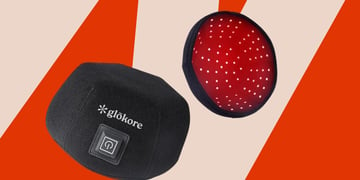
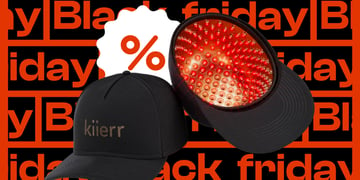
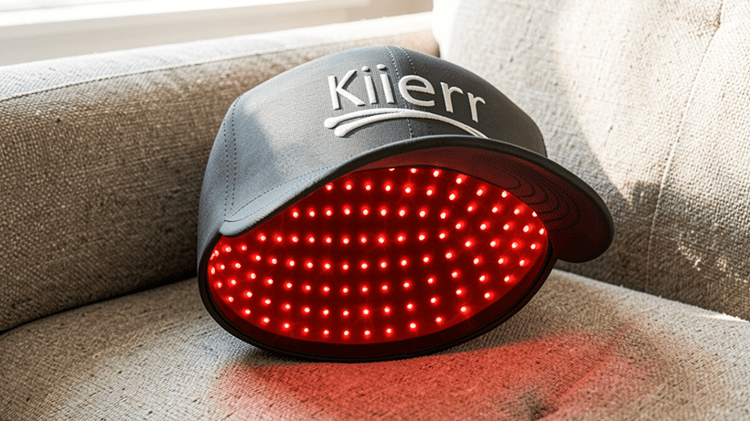
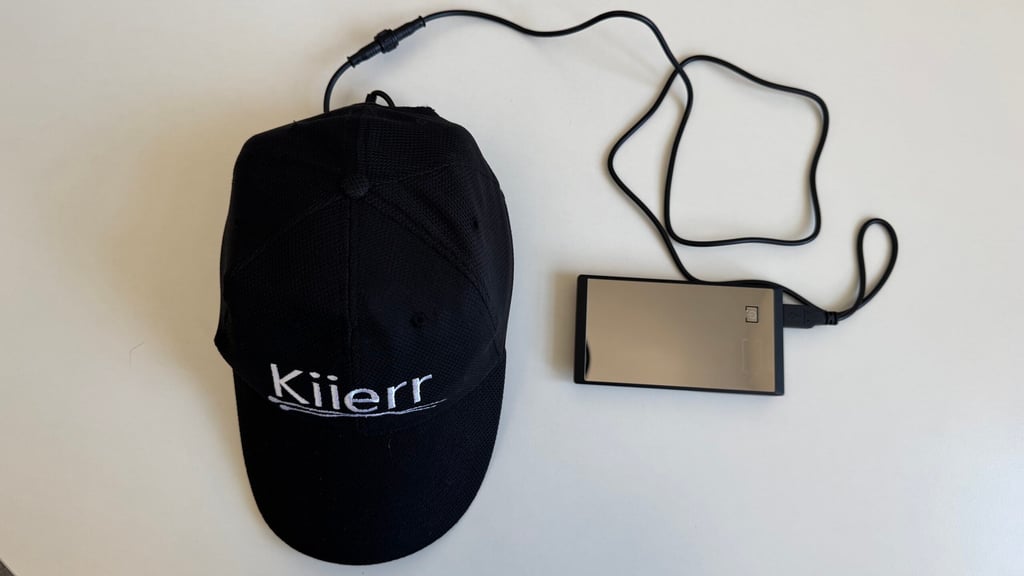
From the outside, it looks like a regular baseball hat. I liked it because it was less intimidating than a bulkier hair-growth helmet. The material feels comfortable, and the cap covers the scalp nicely.
The charging process is easy. Once fully charged, you connect the battery pack to the cap, allowing you to use it without plugging it into a wall. The battery pack has four light indicators, so it’s easy to check the remaining charge.
While the manual doesn’t recommend walking around much while wearing it, I still appreciate the portable setup. Thanks to the included storage box, it’s easy to pack away or travel with.
How easy is it to use every day?
Let’s just rip off the band-aid and start with the thing that annoyed me most. It takes about 10–12 hours to fully charge the power pack, so you need to plan sessions ahead. A few times, I forgot to charge it, went to use the cap, and realized I had to wait almost an entire day before using it again. Honestly, that was frustrating.
You can probably use your own power bank or charge it for a couple of hours and use it. Personally, I don’t have a power bank and wasn’t interested in remembering to grab the power pack after a short charge.
Apart from that, daily use is simple. When you plug the battery into the cap and turn it on, it starts a 30-minute session automatically. After that, it shuts off, so you don’t have to worry about stopping it. It also beeps every 10 minutes, which is useful because you know how far into the session you are without checking the timer.
The price point
Kiierr Laser Cap price starts at $799 for the version with 148 laser diodes and goes up for models with higher diode counts and more scalp coverage. Compared to some competitors, the pricing feels more accessible.
Devices like iRestore Elite cost a lot more, so it’s good that Kiierr offers a more affordable way to try laser-based hair therapy. There are cheaper options too, like the HigherDOSE Red Light Hat, but it uses LEDs instead of lasers, which are less powerful.
Warranty and return policy
The company gives a 2-year warranty that covers manufacturing defects and product failures with normal use. This seems to be standard for RLT devices, based on my experience using them.
What I really appreciate is Kiierr’s 7-month money-back growth guarantee. If you use the cap consistently for about 210 days and don’t see results, you can return it within a specific timeframe for a refund. However, some conditions apply. You need to register the device with before photos within 45 days of receiving it, and refunds may include a fee.
My experience using the Kiierr Laser Cap
Kiierr offers four different laser cap options: 148 Pro, 272 Premier, 272 MD Elite, and 302 MD Ultra Flex. The main difference between them is the number of laser diodes and the size. Since my hair concerns weren’t severe, I decided to test the 148 Pro model.
Weeks 1–2: Getting used to it
I was skeptical at first. Hair-growth devices often make big promises, so I started testing without expecting much to happen.
The cap felt comfortable from the start. The hardest part was remembering to charge the power pack in advance. I forgot a few times, which broke my routine and made me miss some sessions.
Weeks 3–6: Early changes
A few weeks in, it became easier to stick with it. I started remembering to charge the battery. However, I still found it hard to tell if it was affecting my baby hairs.
I also noticed one thing. My scalp felt slightly warm for a few minutes after sessions, which made it feel like something was happening. Thad said, sometimes I was worried this sensation wasn’t a good sign, but nothing bad happened, so I guess it’s fine.
Weeks 7–12: Visible results?
Honestly, I didn’t notice dramatic changes over three months. Some areas around my parting may look slightly fuller, but nothing major enough to claim strong regrowth.
Maybe I’m not the right person for this trial since I don’t have major thinning or shedding, so it’s harder for me to see changes.
Kiierr recommends using the cap for around seven months before expecting noticeable results. Because of that, I am still intrigued and going to use it longer to see if anything happens.
Should you expect instant results?
Just being honest, my answer is no. That’s probably the most important thing to understand before buying a device like Kiierr Laser Cap.
My own results after three months weren’t dramatic or obvious, but that’s normal. You should use it for at least a few months before expecting even subtle changes. Most brands, including Kiierr, suggest waiting closer to seven months for more noticeable improvements.
Studies suggest that RLT may dilate blood vessels, increasing blood flow and nutrient delivery to the scalp. Over time, with regular use, this may help support thinning hair.
However, consistency is key here. The potential benefits depend on long-term use. If you stop using the device, any improvements may gradually fade.
Is it safe to use?
Kiierr Laser Cap is FDA-cleared, which is great news because it meets safety standards for at-home use. But don’t confuse FDA-cleared with FDA-approved. While it is safe to use Kiierr Laser Cap, it doesn’t guarantee results for everyone.
During testing, I noticed my scalp felt slightly warm and sensitive for a few minutes after sessions, which is normal with laser therapy devices. However, if that sensation lasts longer, becomes uncomfortable, or causes irritation, stop using the cap.
Laser therapy may not be suitable for everyone, particularly those who are pregnant, taking medications that increase light sensitivity, or have certain medical conditions. Some people may even experience headaches, which shouldn’t be tolerated.
And most importantly, if you’re experiencing severe or sudden hair loss, instead of impulsively buying Kiierr Laser Cap, talk to your doctor.
Kiierr Laser Cap vs. alternatives
Kiierr Laser Cap vs. iRestore Elite
In my opinion, the biggest difference between Kiierr Laser Cap and iRestore Elite is design. Kiierr’s baseball cap feels more comfortable to wear.
It also wins on portability. You can easily travel with it, while iRestore feels larger and less practical to move. However, feedback from my team says iRestore feels like a more powerful hair-growth device.
Kiierr Laser Cap vs. Capillus PRO
Capillus is quite similar to Kiier, both featuring a baseball cap design. The prices for their 272 diode hats are also quite close. However, Capillus often offers discounts, which can make its cap more affordable.
Without the discount, the Kiierr cap tends to be a more attractive option. Additionally, Kiierr offers a more budget-friendly option like the 148 Pro.
I’ll admit, Capillus has one benefit. It offers a 3-year warranty, which can be useful for those planning to use it long-term.
Kiierr Laser Cap vs. CurrentBody Hair Growth Helmet
CurrentBody Hair Growth Helmet positions itself as a premium device. In my opinion, the design doesn’t feel as premium in person as marketing claims.
However, it has a standout feature: built-in headphones that make sessions more enjoyable. It also only requires 10-minute sessions, compared to Kiierr’s 30-minute routine. Although it has headphones, it’s a bit sad that you only get to enjoy music for 10 minutes.
Other red light therapy reviews:
- Best red light therapy for acne: Tested pick for skin support
- Best red light therapy panels: Wareable picks for full-body treatment
- Best red light therapy for knee pain: Top picks for knee support
- Best red light therapy devices: Tested picks for skin, pain, and recovery
Final thoughts: Who should actually buy the Kiierr Laser Cap?
After comparing Kiierr Laser Cap with other devices on the market, I would say it makes sense to buy it if you have early-stage thinning. It’s less ideal for people with more severe hair loss because this type of device is not a miracle fix and requires long-term use.
Overall, it mostly met my expectations. I did not see dramatic changes quickly, but that is realistic for laser therapy products like this.
In the end, the right choice depends on your needs, budget, and how committed you are to using it regularly over months, not days.
-
Stanford Medicine.
-
American Hair Loss Association.