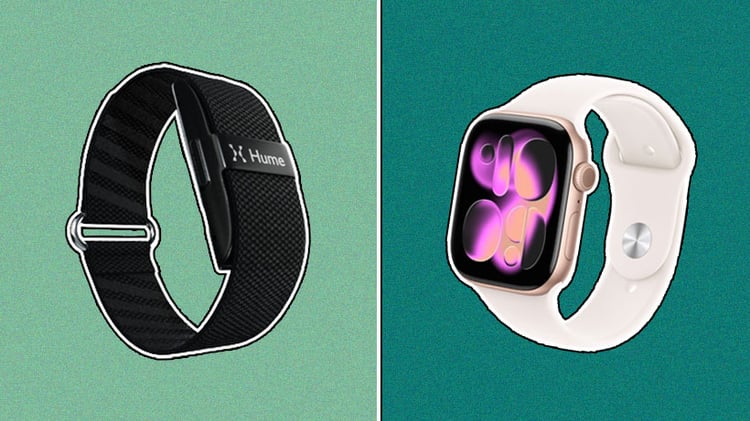
We compare two very different approaches to wrist-worn health tracking—a screen-free longevity band and Apple's flagship smartwatch
There’s no denying that Apple Watch is a powerhouse that has some of the most innovative features on the market. But for some people, Apple Watch is just too much. In a way, it is a miniaturized smartphone that pings and demands your attention all the time.
Hume Band is tailored for longevity and wellness tracking and Apple Watch is a full-fledged smartwatch. Our team has been wearing them daily for some time now, so we put the two side by side to help you figure out which one actually fits your lifestyle.
Hume Band vs. Apple Watch at a glance
| Product | Hume Band 2.0 | Apple Watch Series 11 |
| Subscription | None for core features; optional Hume Premium | None for core features; optional Apple Fitness+ |
| Display | None | Always on Retina OLED |
| Battery life | Up to 14 days (claimed) | Up to 24 hours or up to 38 hours in Low Power Mode (claimed) |
| Water resistance | Water resistance up to 1 meter for up to 2 hours | Water resistance up to 50 meters |
| Sensors | 5 LED sensors, 4 photodiodes | Heart rate, ECG, blood oxygen, temperature |
| Sleep tracking | Yes | Yes |
| Workout tracking | Basic | Yes, with GPS and dedicated workout modes |
| Blood oxygen | Yes | Yes |
| Unique propositions | Translates the metrics into longevity and wellness insights | Smart features (e.g., apps, calls) |
| Warranty | 1-year warranty, can be extended to 10 years | 1-year warranty, can be extended with AppleCare+ |
Hume Band vs. Apple Watch: Key differences
Hume Band 2.0 is a health tracker focused on longevity, while Apple Watch is a smartwatch first. Below, we explain how this influences the experience of using these devices.
Health tracker vs. smartwatch
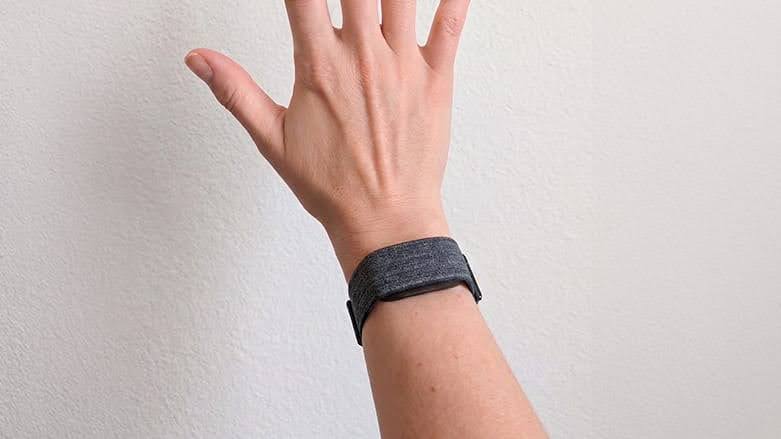
Hume Band 2.0 is not a smartwatch—it tracks your data discreetly. The wearing experience is as minimalistic as it can be: no intrusive notifications or bulky screen to look at. All your data lives in the companion app, which turns your metrics into insights around sleep, recovery, and metabolic health—the core pillars of Hume's longevity-focused approach.
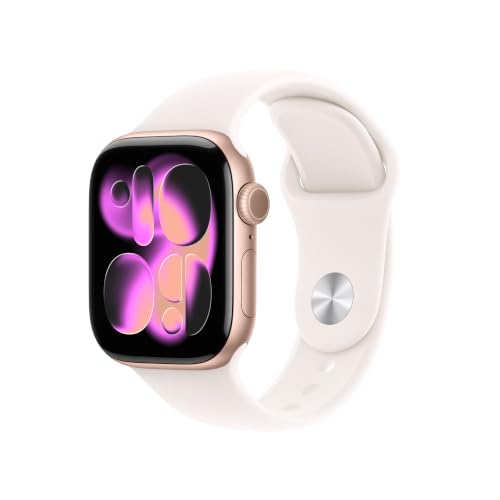
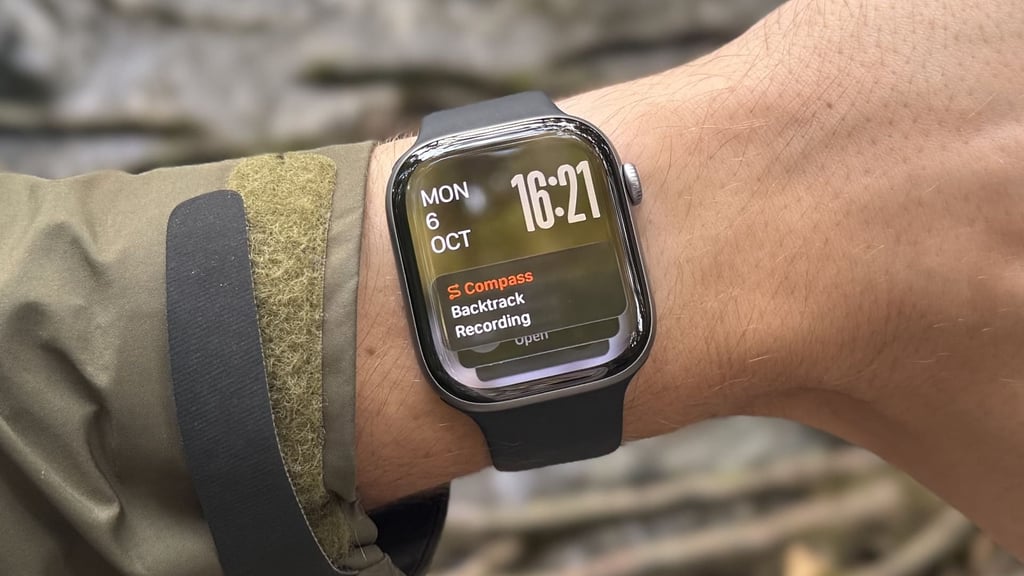
Apple Watch Series 11 is a smartwatch first, and a very capable health tracker second. Besides tracking your data, it also bundles apps, calls, payments, and GPS. It is a mini-phone on your wrist, especially if you go for a cellular version, which allows you to have an eSIM, so you can make calls and use mobile data without your phone close by.
Long battery life vs. richer features
While Apple Watch has a high-quality display and packs a bunch of apps, the battery life is a real concern. You’ll need to remember to charge it every day—a trade-off that can’t be ignored.
With Hume, you’ll be able to track your metrics without constant interruptions during charging. Even if it falls short of its 14-day battery life claim, our team found it lasted roughly a week on a single charge—enough to maintain consistent data both day and night.
Design, comfort, and everyday wear
This is where the two devices diverge.
Hume Band 2.0 is a soft, screen-free band wrapped in Hume's redesigned UltraLux material—lightweight enough to forget you're wearing it, and comfortable enough for continuous day-and-night wear without irritation. That said, it's not entirely frictionless during exercise: some wearers find that it needs to be loosened slightly during high-intensity workouts to avoid chafing.
Apple Watch Series 11 is a traditional smartwatch: an always-on OLED display, aluminum or titanium case options, and a design that hasn't changed much since the Series 10. It is clearly bulkier than Hume Band 2.0, although compared to similar smartwatches, it is still one of the lightest options out there.
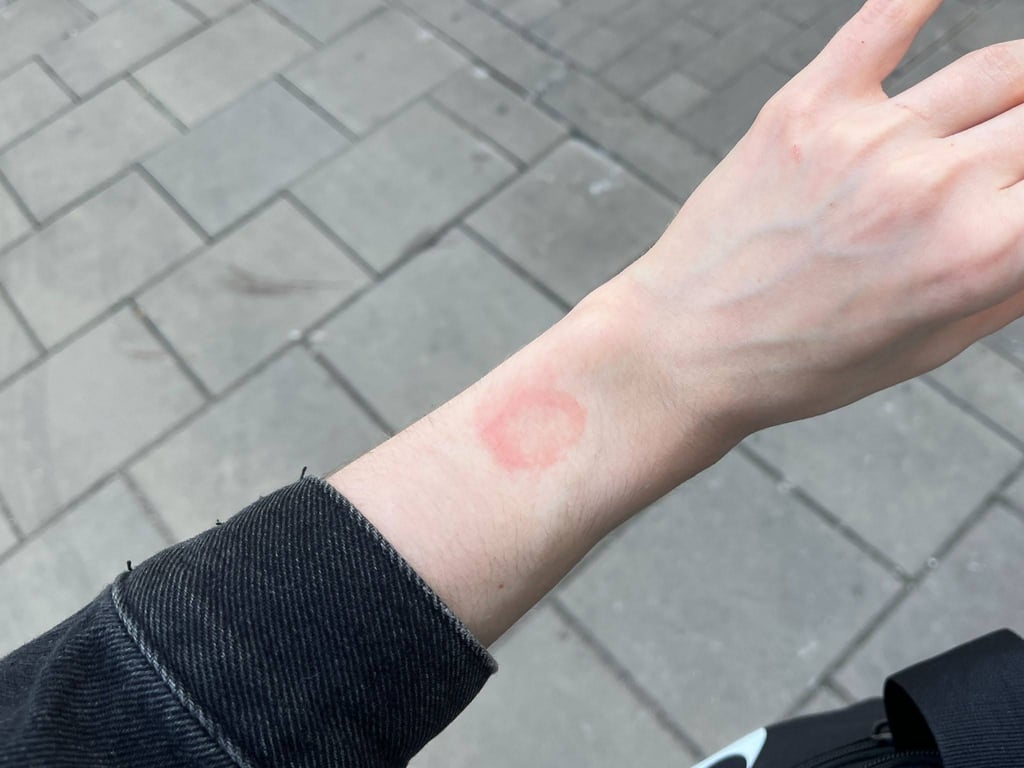
Similar issues, such as potential irritation, apply to Apple Watches as well—and our team noticed redness after more vigorous exercise due to friction.
Again, battery life should be highlighted here: while Hume Band 2.0 lasts around a week, Apple Watch Series 11 needs to be charged daily. Given its combined lightweight comfort, our team found Hume Band 2.0 to be the winner here—it is a device you won’t notice when wearing it.
Winner: Hume Band 2.0
Sensor performance
Hume Band 2.0 packs five LED sensors and four photodiodes, aimed at longevity-oriented metrics: HRV, sleep, skin temperature, and blood pressure trend tracking—a trend indicator based on pulse data, not a clinical reading. Our experts have noted that some inconsistencies in heart rate, sleep, or recovery measurements are still expected.
Apple Watch Series 11 carries a broader sensor suite: an optical heart rate sensor, an electrical heart sensor for on-demand ECG readings, a blood oxygen sensor, and a temperature sensor (added for cycle tracking and sleep insights).
We have tested the heart rate sensor against a chest strap and noticed it holds up impressively even during high-intensity intervals—a scenario where motion interference typically compromises the accuracy of wrist-based sensors.
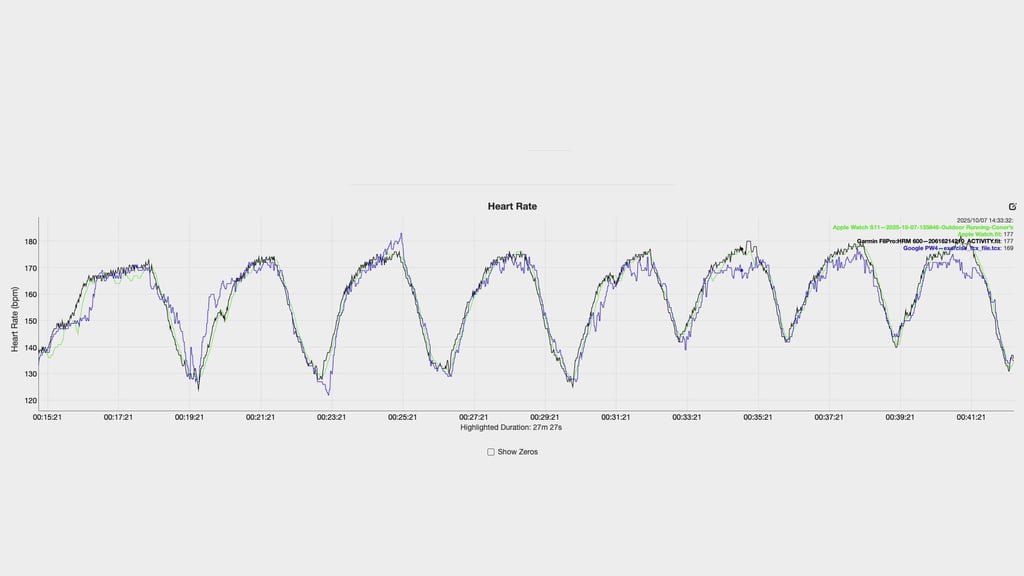
Some hiccups are still expected with Apple Watch as well—for instance, at the beginning of workout sessions, our team observed a few unusual warm-up dropouts.
Winner: Apple Watch Series 11
Wellness insights
Both devices track heart rate, sleep, and recovery-related metrics, but the emphasis differs.
Hume Band 2.0 leans hard into longevity and metabolic health and guides you through the metrics—so you aren’t left with a bunch of raw data. It reminds us of the WHOOP approach, except that it is a subscription-free option
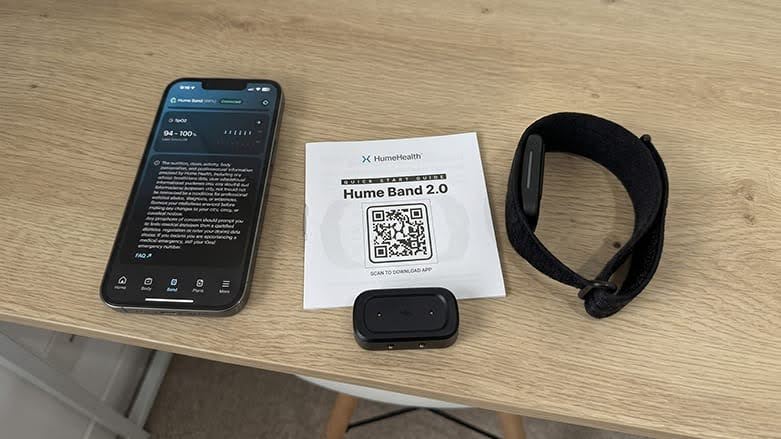
Apple Watch Series 11 covers similar ground, but you will not find much insight into what these metrics mean in your everyday life. They live in Health app—the native Apple app. With no insights into things like stress, strain, and readiness, third-party apps are becoming more popular among Apple Watch users. These apps are designed to give you various wellness insights that are already available in the Hume app without any additional subscription.
If you prefer the native Apple Health app, you can automatically sync metrics from Hume Band 2.0 to it—so if you are switching from an Apple Watch or another device, you can continue tracking through the same app without any gaps.
Winner: Hume Band 2.0
Ecosystem
Apple's ecosystem is one of the broadest in consumer tech, and Apple Watch is just one piece of it. If you're already using Apple hardware, Watch adds another connected touchpoint and extends the potential of features you may use, e.g., unlocking your Mac with your Apple Watch.
One of the drawbacks is that Apple’s products are harder to integrate into other ecosystems. For instance, an Apple Watch won’t connect to an Android phone—although there are workarounds like third-party apps for that.
Hume Band, on the other hand, can be connected to iOS and Android phones without an issue, so if you decide to purchase a different brand of phone, your band will sync and you won’t lose data.
Hume Band 2.0 is also a part of an ecosystem, albeit smaller. Apple's lineup spans phones, laptops, tablets, and audio—general-purpose tech that happens to include a watch. Hume's lineup is built around one mission: longevity. Currently, it includes Hume Health Pod, a smart scale that is designed to track changes in your body that go beyond overall weight. It estimates your body composition, giving you 40+ metrics such as body fat, muscle, and hydration levels.
In summary, Hume Health’s mission is to help their users work on their longevity goals, while Apple is more focused on delivering cutting-edge tech for general use.
Winner: Tie
Mobile app and user experience
Apple splits the data across two apps: Health and Fitness. Both of these are available on iPhones without an Apple Watch—but having one unlocks more metrics.
Health is probably the one you’ll be checking the most often. It collects your health metrics across various platforms—as long you permit it—not only from your watch. For instance, you can connect it to nutrition trackers such as Cronometer, MyFitnessPal, and have the data from it on your Health app as well—so make sure you know where the data comes from, as it might get confusing.
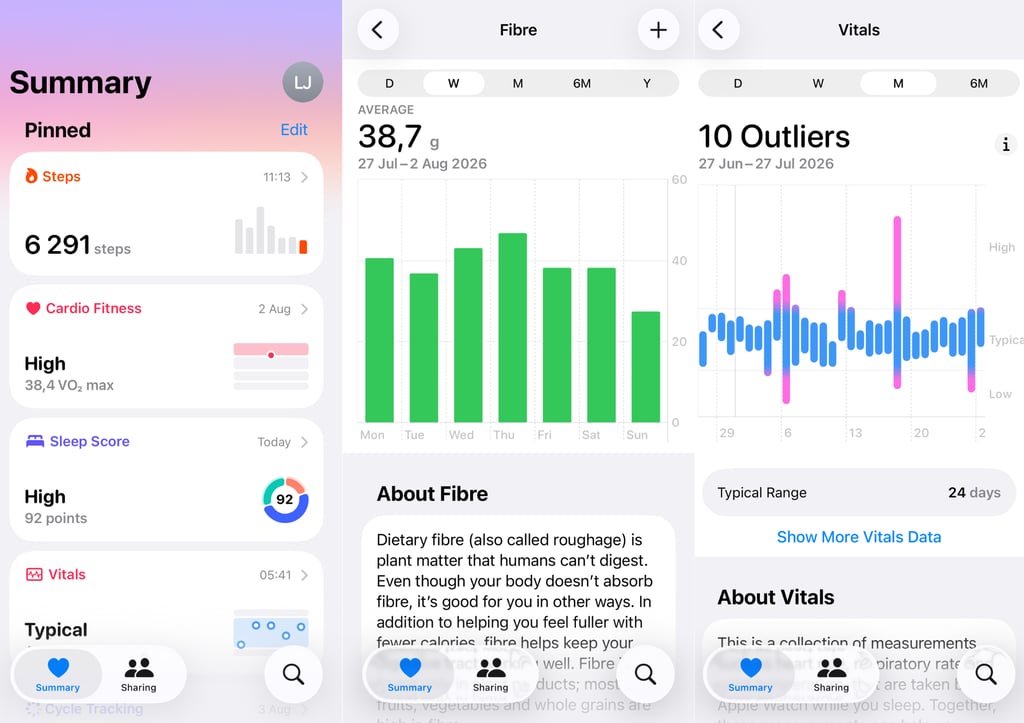
Data from other fitness trackers, including the Hume Band 2.0, can be synced with Health, so you do not need an Apple Watch to use it.
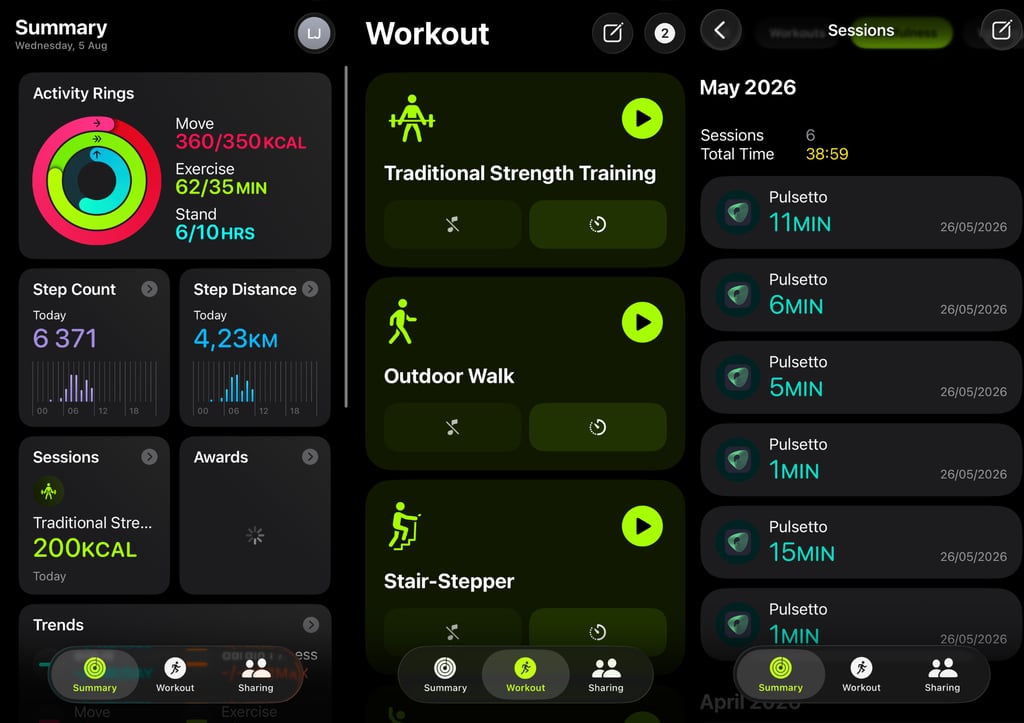
Fitness handles the workout side, which includes activity rings, workouts, and mindfulness history. Again, with your permission, it collects data from various sources as well. You can manually start workouts from it as well.
Hume has a single app. Its dashboard centers on a handful of core scores—sleep, recovery, and metabolic health—pulled from HRV, skin temperature, and pulse data.
Hume Band 2.0 may feel more approachable if your primary goal is understanding your health at a glance. The dashboard reads as more unified. It covers less ground than Apple's combined apps, but does more interpretation.
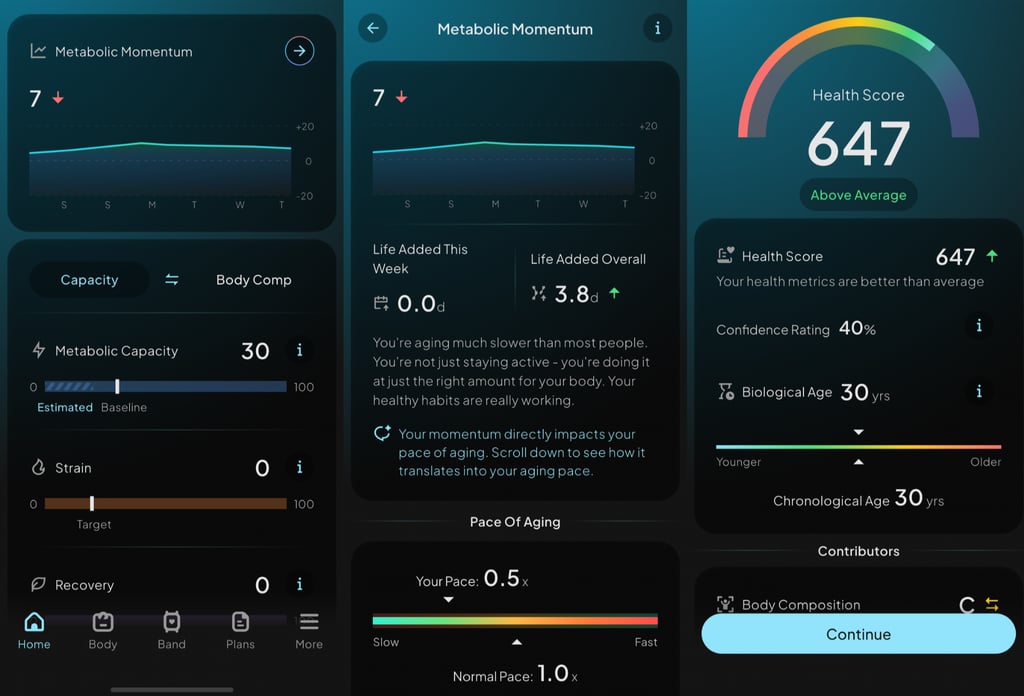
Apple Health can feel dense on first open—lots of categories, lots of history, not much hand-holding on what any of it means day to day. Hume's app is built around a smaller set of headline scores, which makes it easier to open, glance at, and close. The trade-off is depth: Apple's raw data goes deeper for anyone willing to dig, while Hume prioritizes a quick read over exhaustive detail.
Winner: Tie
Battery life and charging
Hume claims up to 14 days of battery life on the Band 2.0. During our testing, it has landed closer to a week of continuous wear. This is still enough for uninterrupted day-and-night tracking without a daily charging routine.
Apple Watch Series 11 is now rated for up to 24 hours, up from the Series 10's 18-hour estimate—but that six-hour jump comes largely from a new testing methodology that factors in six hours of power-efficient sleep tracking, not six additional hours of active daytime use.
In practice, real-world testing found the improvement noticeable but modest: you can comfortably get through a full day plus a night of sleep tracking, but not a second night without a top-up. It remains, fundamentally, a device you'll charge daily. Fast charging helps soften that—about 8 hours of use from a 15-minute top-up—but true multi-day battery life is still reserved for the Ultra line.
Set against Hume's roughly weekly charging cycle, this is the clearest structural trade-off between the two devices: Apple's richer feature set versus Hume's near-total absence of a charging routine.
Winner: Hume Band 2.0
Price, subscription, and long-term value
Hume Band 2.0 is a one-time purchase, with no subscription required for core features—Hume Premium is optional, adding the AI coach and deeper analytics on top of an already functional free tier. It comes with a 45-day money-back guarantee and a 1-year warranty, extendable to 10 years for a flat price of $35.
Apple Watch Series 11 is available at a range of prices depending on case size and connectivity, with GPS-only models sitting at the lower end and cellular models costing more. Core health and fitness features don't require a subscription either. Warranty coverage can also be extended through AppleCare+, though it will cost more than the extended 10-year warranty for the Hume Band 2.0—and will require either monthly or annual payments.
On cost alone, Hume is the lighter commitment. Apple's pricing spans a wider range, and where you land depends on the case size and connectivity option you choose. But since an Apple Watch is more than just a fitness tracker, it offers more features than Hume Band 2.0—so it depends on whether you need these extras.
Winner: Tie
More Wareable reviews
Hume Band vs. Whoop: For those who want a screenless device
Apple Watch SE review: Learn more about the most budget-friendly Apple Watch
Best Apple Watch alternatives: Discover what other options are out there
Final verdict
Hume Band 2.0 and Apple Watch Series 11 aren't really that similar.
Hume Band is built for people who want continuous, low-friction health and longevity tracking without a screen, notifications, or a daily charging habit—it wins on comfort, battery life, and turning raw metrics into digestible wellness insights, all without a mandatory subscription.
Apple Watch Series 11, meanwhile, is the better choice for anyone who wants a smartwatch, a product that doubles as a mini-smartphone on your wrist. All these extras will require more maintenance: expect to charge it every day.
For many people, the two aren't mutually exclusive: Hume Band's data syncs into Apple Health, so you could even use both, leaning on Hume for effortless longevity tracking and Apple Watch for its smart features when you need them.
FAQs
Is Hume Band a good alternative to Apple Watch?
Yes, if you are looking for a more discreet fitness band. It is tailored for people who want a distraction-free device that tracks the metrics in the background.
Does Hume Band require a subscription?
No, you can use Hume Band without any additional subscription. For more in-depth insights and AI-based coaching, you may opt for a Hume premium
Can Hume Band replace an Apple Watch?
Yes, if you do not need smart features like calls, payments, or apps. The data collected via Hume Band can also be sent to the Apple Health app, so you can make a switch without interrupting your data history.