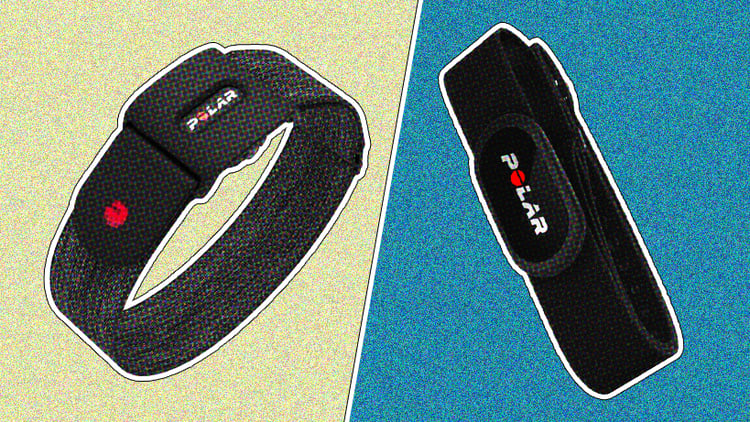
One sits on your chest. The other sits on your arm. So, which one tracks heart rate better?
After covering chest strap heart rate monitors for a while, we started to wonder if they’re really the only way to get accurate heart rate data. Sure, there are smartwatches, rings, and other wearables, but we wanted to try something different.
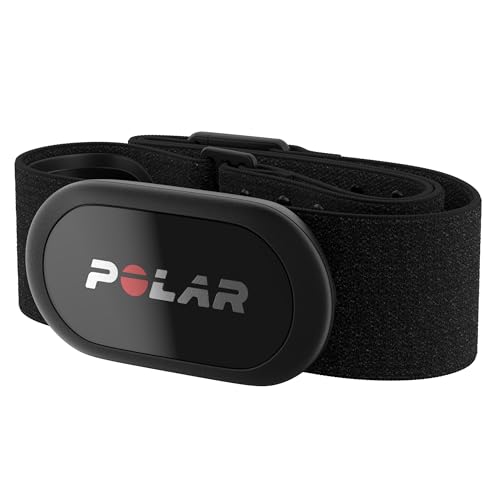
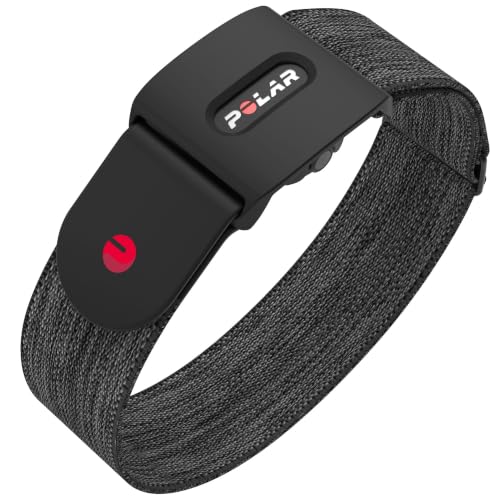
That’s what led us to Polar Verity Sense. Unlike Polar H10, which you wear around your chest, Verity Sense uses an optical sensor that goes on your upper arm or forearm. This is a totally different way to track your heart rate during exercise.
So, we spent a few weeks testing Verity Sense and H10 side by side during different workouts. We paid attention to how comfortable they were, how quickly they picked up changes in effort, and how their readings compared to each other. Our main question was whether we’d rather have the freedom of an armband or stick with the familiar chest strap.
|
|
|
| Title | Polar H10 | Polar Verity Sense |
| Sensor type | Electrical heart rate sensor | Optical heart rate sensor |
| Wearing position | Chest | Upper arm or forearm |
| Bluetooth/ANT+ | Both | Both |
| Onboard memory | Up to 400 hours of training data | Up to 600 hours of training data |
| Battery life | Up to 400 hours | Up to 30 hours |
| Swimming support | Yes | Yes |
| More info | Buy on Amazon | Buy on Amazon |
Polar Verity Sense vs. H10: Key differences
Polar Verity Sense and Polar H10 both track your heart rate, but they do it in different ways. Before choosing between them, it’s worth understanding those differences so you know what to expect once you start training.
Armband vs. chest strap
Let’s start with the most obvious difference: where you wear them. Polar H10 goes around your chest, while Verity Sense fits on your upper arm or forearm.
Some people may find chest straps a bit uncomfortable, especially during long workouts. That’s where Verity Sense might help you. If you’ve worn a smartwatch before, the feeling is pretty familiar. Once the armband is in place, you barely notice it during most workouts.
Two sensors, two different approaches
These devices also track your heart rate in different ways.
Verity Sense uses an optical sensor. It shines light into your skin and looks at changes in blood flow caused by each heartbeat.
H10 takes a different route. It uses electrical sensors, like those in an ECG. Instead of looking at blood flow, it detects the electrical signals produced by your heart as it beats and turns those signals into a heart rate reading.
Each method has its strengths. Verity Sense is more comfortable and flexible, while H10 gives you quick and accurate heart rate data when your effort changes.
Winner: Draw
Comfort during training: Which one did we actually notice?
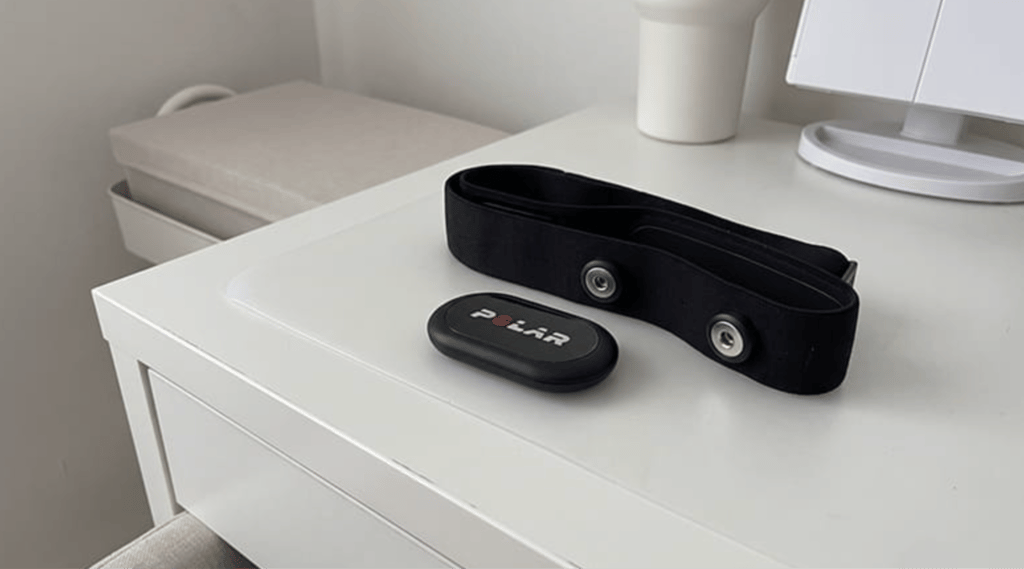
We wanted to really test both sensors, so we tried each one during different workouts. This way, we could see which one we actually noticed and if anything started to bother us.
Indoor cycling: both disappear into the background
We did several indoor cycling sessions, each lasting a couple of hours. We started slowly and then gradually increased the pace.
And honestly, there’s not much to say here. Both H10 and Verity Sense stayed in place and felt comfortable the whole time. Other than reaching for a water bottle now and then, our upper bodies barely moved, so neither sensor was distracting.
Weight lifting: the armband gets tricky
This was a bit of a different experience. How comfortable the sensors felt depended a lot on the exercise and which muscles we were working.
During arm workouts, Verity Sense sometimes felt uncomfortable with heavier weights. If we tightened the band, it squeezed our arm as we moved. If we loosened it, the readings weren’t as consistent because the sensor could shift around.
H10 didn’t have this problem. Once it was in place, it stayed put no matter what exercise we did.
Running: barely noticeable
On outdoor runs, both sensors were comfortable. We hardly noticed Verity Sense on our arm, so it was easy to forget we were even wearing it.
H10 was comfortable too, though sometimes we felt the rubber parts shift a bit when we started to sweat. It wasn’t a big deal, but we did notice it on longer runs.
Spin class: maybe an armband is better?
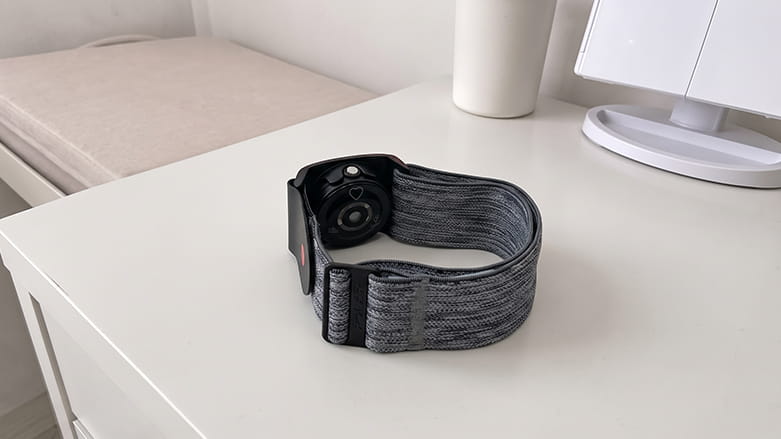
We also tried both sensors in a spin class for fun. It was our first time, and we found that loud music, an energetic instructor, and some dancing on the bike made for a great workout.
That said, with all the extra movement, we liked Verity Sense more. When you move your upper body a lot, you notice the chest strap shifting against your skin. It wasn’t uncomfortable enough to ruin the class, but the armband was easier to forget about.
Winner: Verity Sense
Polar Verity Sense is comfortable, but is it accurate?
Wrist-based monitors and chest straps measure heart rate differently, and where you wear the sensor might affect its accuracy too.
If we are talking about Verity Sense, it has an optical sensor like many smartwatches. Basically, it shines light into your skin and tracks changes in blood flow. Optical sensors only reach a few millimeters into the skin, so things like movement, a loose fit, tattoos, skin tone, or bright light can sometimes throw off the reading.
That said, Polar did some research to maybe change our minds a bit.
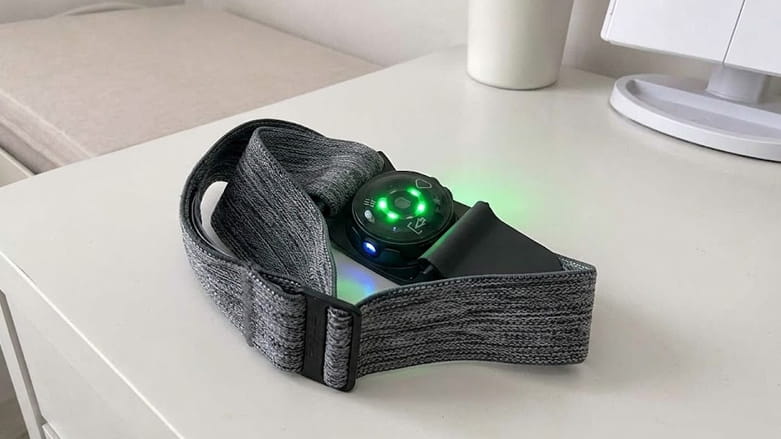
In one study, 39 teenagers did a six-minute HIIT workout while wearing both Verity Sense and H10. It turns out that Verity Sense matched H10 closely, with an average difference of about 4 beats per minute. Even when heart rates went above 80% of maximum, the results stayed similar.
Yes, we agree it sounds promising, but we wouldn’t take one study as proof that an armband can always match a chest strap in every workout.
How was our experience?
We tested both sensors during our workouts. For indoor cycling and running, their results were very similar. Both responded quickly to changes in effort. When we sped up during intervals, both showed our heart rate rising, and when we slowed down, both showed it dropping.
The main problem came up during weightlifting, especially arm exercises. We had to loosen Verity Sense a bit for comfort, and that seemed to affect its accuracy. Sometimes, it showed a heart rate much lower than we expected and way lower than H10 reported.
How about Polar H10?
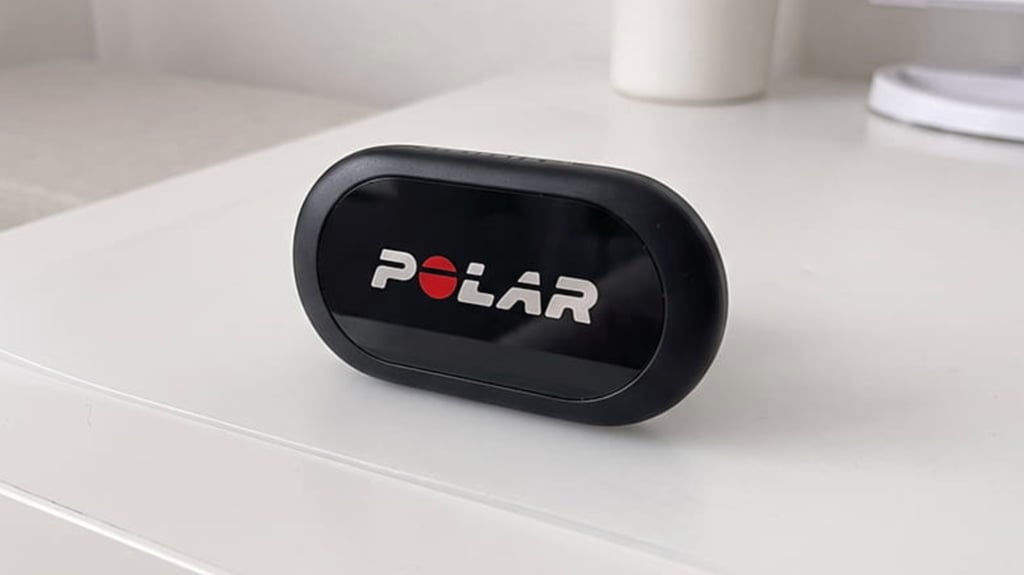
No heart rate sensor is perfect, and even good chest straps can sometimes miss a beat. Still, H10 is known for giving quick readings, especially when your workout intensity changes fast.
Research supports this as well.
In a study with 25 active adults, researchers compared H10 to a 12-lead ECG during rest and harder cycling. H10 matched the ECG closely for both heart rate and RR intervals, even during tough exercises.
Our own experience was just as positive. We didn’t have any major heart rate problems with it. During intervals, it responded quickly when we worked harder and dropped back down when we recovered. Whether we were cycling, running, or even lifting, the readings stayed steady.
Winner: Polar H10
Battery life: fewer charges or fewer battery swaps?
Battery life might not seem like the most valuable feature of a heart rate monitor, but it actually made a big difference for us in this case.
Polar H10 uses a coin-cell battery that you replace when it runs out. While buying and swapping batteries might not appeal to everyone, the upside is that it can last up to 400 hours. For many people, that means you only need to think about it once a year.
But of course, there is one catch. H10 turns on when you attach the sensor to the strap, so if you leave it connected after your workout and toss it in your gym bag, the battery can keep draining.
And then we have Verity Sense. It uses a rechargeable battery, which is more convenient in some ways, but it only lasts up to 30 hours per charge.
That might sound like enough, well, if you don’t exercise that often. In our experience, after a few runs, some indoor cycling, and several weightlifting sessions, we already needed to recharge it.
Because of that, we feel that H10 is the better choice here because 400 hours of battery life means you spend more time training and less time worrying about charging or replacing batteries.
Winner: Polar H10
Connectivity: Which one works better with other devices?
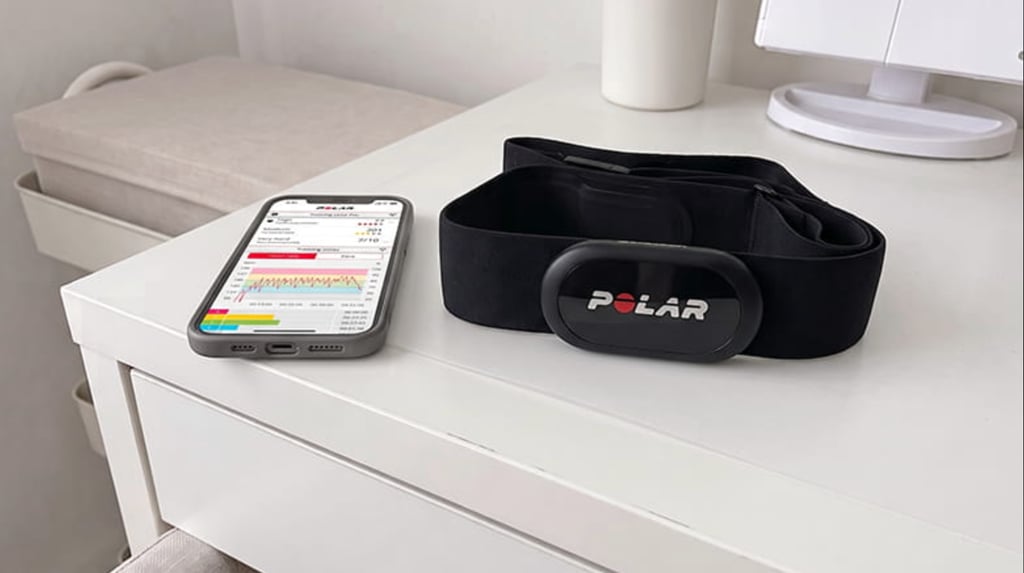
Both Polar Verity Sense and H10 offer flexible connectivity. They work with Bluetooth and ANT+, so you can pair them with Polar watches, Garmin devices, gym equipment, and other fitness apps. You are not limited to just Polar products.
This is especially helpful for indoor workouts. For example, you can connect either sensor to a platform like Zwift to track your heart rate during a workout, while also sending the data to another device.
The main difference is in onboard recording. Verity Sense can store up to 600 hours of training, so you can start a workout with just the sensor and leave your phone or watch behind. But honestly, do you need that many hours? We definitely didn’t. H10 can also record without a connection, but it only stores one session of up to 30 hours.
Winner: Draw
Other heart monitor reviews
Polar H10 vs. Garmin HRM 600: Which chest strap heart rate monitor should you buy?
Garmin HRM 600 review: An unbeatable option for data obsessives
Best chest strap heart rate monitors: Tested for accuracy and performance
Garmin HRM 200 review: The best entry-level chest strap from Garmin?
Best heart rate monitors: Chest straps, watches, and rings we trust
Garmin HRM 200 vs. HRM 600: Which heart rate monitor should you buy?
Verdict: Which Polar heart rate monitor should you choose?
We’ll admit it: unlike some of our other comparisons, choosing a winner here was fairly easy. We’re giving Polar H10 the crown.
It felt more versatile in our daily tests, thanks to its longer battery life and a chest strap that stayed reliable even when our workouts got intense. During intervals, runs, and bike rides, H10 always caught those quick changes in heart rate.
Plus, we didn’t need to charge it after every few sessions, which is a real bonus if you train several times a week.
That doesn’t mean you should skip Polar Verity Sense. It’s still a good sensor, especially if wearing a chest strap bothers you. We particularly liked it for cardio workouts, where it felt comfortable and easy to forget about.
FAQs
Polar did some research on their own. They compared both sensors and found that Verity Sense closely matched H10, with an average difference of about 4 beats per minute. That’s a good sign, though we’d like to see more studies, especially with different workouts and bigger groups. We haven’t done a full research study ourselves, but our experience was positive.
We’d pick H10 for running, especially if you do intervals or often change your speed. Verity Sense worked well for us, but H10 reacted faster when we sped up or slowed down.
It really depends on your preference. We thought H10 was comfortable for cycling and weightlifting, but Verity Sense was so light we barely noticed it during running and cardio. If you don’t like wearing something around your chest, the armband is the clear pick.
Yes, Verity Sense connects to Garmin watches with Bluetooth or ANT+, so you can see your heart rate live on your wrist. You don’t have to use only Polar devices if you already have a Garmin watch.
For us, yes. H10 feels like a better pick if you want quick heart rate tracking, long battery life, and steady performance for different workouts. If you often run intervals, cycle, or lift, it’s the stronger choice. But if you don’t like chest straps, Verity Sense is still a great option.
References
-
ICT Express.
-
Sensors.
-
Journal of Sports Sciences.